
Plants
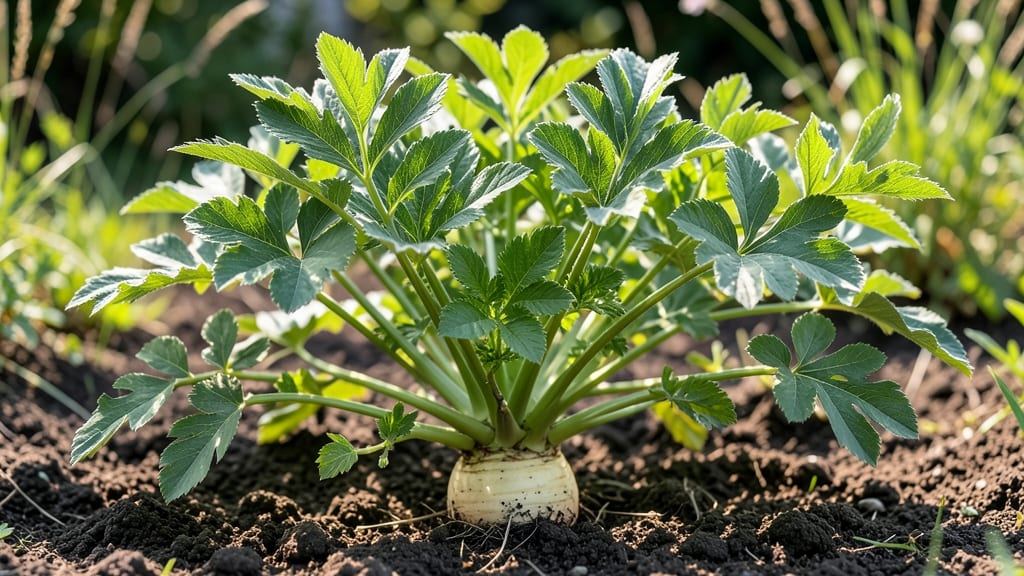
What does a parsnip leaf look like? It resembles delicate ferns with lacy green edges that dance in the breeze. 🌿 The fronds grow in a rosette from the base, with finely divided, feathery foliage that reaches 6-12 inches tall.
Each leaflet has a soft, almost translucent texture—think of a cross between celery and carrot tops, but more intricate and airy. The veins create a network of fine lines that give the leaves their signature filigree pattern.
Young leaves start out lighter green, almost blue-tinged, before deepening to a rich, vibrant green as they mature. This helps distinguish them from carrot leaves, which are broader and less divided. Celery leaves are thicker and less delicate, while dill leaves are deeply serrated and smell entirely different when crushed.
Recognizing these leaves makes weeding easier and helps you spot early signs of pests like aphids or leaf miners. The more you handle them, the more you’ll notice their unique texture and growth pattern—it’s like memorizing a friend’s handwriting.
Understanding Parsnip Leaf Growth
Parsnip leaves take on their distinctive fern-like appearance due to a combination of genetic programming, environmental factors, and developmental biology. While the shape is iconic, variations can occur based on growing conditions. Here’s why parsnip leaves develop their signature lacy, feathery structure—and what influences their exact look.
Parsnips (Pastinaca sativa) belong to the Apiaceae family, which includes other umbelliferous plants like carrots, celery, and dill. Their leaves are a product of compound leaf morphology, where a single leaf is divided into multiple leaflets arranged in a pinnate (feather-like) pattern.
- Leaflet Arrangement: Each parsnip leaf emerges from a central stem (rachis) with 1-3 pairs of leaflets per segment.
The leaflets are further divided into smaller pinnatifid (deeply lobed) sections, creating the fern-like texture. - Genetic Control: The KNOX genes (a family of transcription factors) regulate leaf development in plants.
In parsnips, these genes promote determinate growth, meaning leaflets stop elongating at specific points, forming the characteristic jagged edges. - Why the Lacy Edges? The serrated or lobed margins are a result of uneven cell division in the leaf’s marginal meristem (growth zone at the edges).
This creates the delicate, almost lace-like appearance.
💡 Pro Tip: If you’re growing parsnips and notice leaves that are too smooth or overly broad, it could indicate nutrient imbalances (like excess nitrogen) or crowded planting, which forces leaves to compete for sunlight.
While genetics set the foundation, environmental conditions can tweak a parsnip leaf’s appearance—sometimes for better, sometimes for worse. Here’s how:
| Factor | Effect on Leaves | Why It Happens |
|---|---|---|
| Sunlight | Leaves grow smaller and darker green in full sun; larger and paler in shade. | Photosynthesis efficiency: Low light triggers etiolation (stretched, lighter leaves) to maximize light absorption. |
| Water Stress | Leaves may curl, yellow, or develop brown edges. | Osmotic pressure: Drought causes cells to lose turgor (rigidity), leading to wilting and necrosis. |
| Temperature | Extreme heat → Leaves scorch (brown spots); cold snaps → Purple tinges. | Enzyme activity: Heat denatures proteins; cold disrupts anthocyanin production (purple pigments). |
| Soil Nutrients | Nitrogen deficiency → Yellowing (chlorosis); Magnesium deficiency → Interveinal yellowing. | Chlorophyll production: Nitrogen is key for green pigments; magnesium is central to chlorophyll molecules. |
| Pests/Disease | Aphids or spider mites → Stunted, curled leaves. Fungal infections → Black spots or mold. | Sap sucking (pests) disrupts nutrient flow; pathogens block stomata (leaf pores), causing cellular damage. |
🌡️ Watch Out: Parsnips are biennial, meaning they store energy in their roots the first year and bolt (flower) the second. If exposed to cold temperatures too early, they may prematurely send up flowering stems, altering leaf growth entirely.
Parsnip leaves don’t stay the same throughout the plant’s lifecycle. Their shape changes dramatically as the plant matures:
- Seedling Stage (First Leaves)
- Appearance: Small, oval or heart-shaped, with smooth edges (not yet feathery).
- Why? Early leaves are cotyledons (seed leaves) designed for rapid photosynthesis to fuel root development.
- Vegetative Growth (Mature Leaves)
- Appearance: Deeply lobed, fern-like, with 1-3 sets of leaflets per segment.
- Why? The plant shifts energy to maximizing surface area for light absorption, optimizing growth.
- Bolting Stage (Flowering)
- Appearance: Leaves yellow and wither; new leaves near the flower stalk may be smaller and simpler.
- Why? The plant’s hormonal shift (increased florigen production) redirects resources to reproductive growth over foliage.
✨ Fun Fact: If you pinch back the flowering stalk in the first year, you can encourage larger, healthier leaves in the second season—though this is rare for parsnips, which are typically grown for roots.
How you grow parsnips can intentionally or unintentionally shape their leaves:
- Overcrowding
- Result: Leaves grow smaller and more upright (etiolation) as they stretch toward light.
- Fix: Thin seedlings to 6-12 inches apart for optimal leaf development.
- Pruning or Harvesting
- Result: Removing older leaves can stimulate new, bushier growth (though parsnips are usually grown for roots).
- Fix: If growing for greens, harvest outer leaves to encourage regrowth.
- Organic vs. Synthetic Fertilizers
- Organic (compost/manure): Leaves may develop darker, more robust textures.
- Synthetic (high nitrogen): Leaves grow larger but softer, with less pronounced lobes.
- Why? Organic matter improves soil microbial activity, which enhances nutrient uptake in a more balanced way.
If your parsnip leaves don’t match the classic fern-like ideal, here’s what’s likely going on:
- 🟢 Healthy but Different?
- Variegation (white/yellow streaks): Could be a sport mutation (genetic variation) or viral infection (like cucumber mosaic virus).
- Ruffled edges: Often a genetic trait or calcium deficiency.
- 🟡 Warning Signs (Act Fast!)
- Holes or chewed edges: Slugs, snails, or caterpillars (use beer traps or diatomaceous earth).
- Sticky residue + ants: Aphids (spray with soapy water or introduce ladybugs).
- Mushy, blackened leaves: Fungal disease (remove affected leaves; improve air circulation).
🔥 Emergency Fix: If leaves suddenly wilt and collapse, check for parsnip canker (a fungal disease). Pull affected plants immediately to prevent spread.
Identifying & Fixing Parsnip Leaf Issues
If your parsnip leaves aren’t matching the lush, fern-like green you expected—or if they’re showing signs of distress—don’t panic! Most leaf problems (like yellowing, wilting, or holes) have simple fixes. Below, we’ll break down common issues by their cause and provide easy, actionable solutions to restore your parsnips to their vibrant best. We’ll also share prevention tips to keep them thriving long-term.
Parsnips need consistent moisture but hate soggy roots. Overwatering or underwatering can cause leaves to droop, yellow, or develop crispy edges.
How to Fix It: ✅ 💧 Adjust Your Watering Routine
Underwatered? Water deeply 1–2 inches per week (more in extreme heat).
Stick your finger in the soil—if it’s dry past 1 inch, it’s time to water. - Overwatered? Let the top 2–3 inches of soil dry out between waterings. Improve drainage by adding compost or sand to heavy clay soil.
✅ 🌧️ Use Mulch to Retain Moisture
- Spread 2–3 inches of organic mulch (straw, grass clippings, or shredded leaves) around the base (but not touching the stems) to lock in moisture and prevent evaporation.
✅ 🚰 Check Your Drainage
- If water pools after rain, your soil may be too dense. Amend it with perlite or coconut coir to help excess water drain away.
💡 Prevention Tips:
- Water in the morning to reduce evaporation and fungal risks.
- Avoid wetting leaves when watering to prevent mildew.
- Group parsnips with similarly thirsty plants (like carrots or beets) for efficient care.
Caterpillars, slugs, and aphids love parsnip leaves! Look for irregular holes, silvery trails (slugs), or sticky residue (aphids).
How to Fix It:
🔥 🍳 Handpick or Trap Pests
- Caterpillars/Beetles: Pick them off early in the morning and drop them in soapy water. Neem oil spray (1 tsp neem oil + 1 tsp mild soap per quart of water) works well too.
- Slugs/Snails: Set up beer traps (bury a shallow dish filled with beer) or use copper tape around the garden edge (slugs hate it!).
👨🍳 🌿 Try Natural Repellents
- Crushed eggshells or diatomaceous earth around plants deter slugs.
- Plant companion herbs like thyme, mint, or chives nearby—their strong scents repel pests.
🔪 ⏰ Act Fast for Severe Damage
- If >50% of leaves are eaten, consider row covers (lightweight fabric) to protect young plants until they mature.
💡 Prevention Tips:
- Plant in late summer/early fall when pests are less active.
- Rotate crops yearly to disrupt pest life cycles.
- Encourage beneficial insects like ladybugs (they eat aphids!) by planting marigolds or dill nearby.
Yellowing between veins (chlorosis) often signals iron or nitrogen deficiency, while purple stems or leaves may mean phosphorus or potassium lack.
How to Fix It:
📊 💪 Soil Test First!
- Grab a DIY soil test kit (or send a sample to your local extension office) to identify deficiencies before treating.
🥗 🍎 Boost Nutrients Naturally - For nitrogen (yellow leaves): Add compost or well-aged manure around the base.
A light top-dressing of blood meal (follow package rates) can help too. - For iron (pale leaves): Sprinkle chelated iron granules or use fish emulsion (diluted to 1 tbsp/gallon) as a foliar spray. - For potassium (weak stems): Mix wood ash (1 cup per plant) into the soil or use a balanced organic fertilizer (like 5-5-5).
💡 Prevention Tips:
- Feed soil before planting: Mix in compost or worm castings at planting time.
- Avoid over-fertilizing—parsnips prefer lean soil. Too much nitrogen = leafy growth, but fewer roots!
- Crop rotate every 3 years to prevent nutrient depletion.
Dark spots, powdery white residue, or leaf curl could mean downy mildew, rust, or bacterial leaf spot. These thrive in humid, crowded conditions.
How to Fix It:
🌡️ 🎯 Improve Airflow & Light
- Thin plants so they’re 6–8 inches apart (parsnips need space!).
- Space rows 12–18 inches apart and avoid overhead watering.
🔥 🌿 Treat Fungus Immediately
- Baking soda spray (1 tsp baking soda + 1 quart water + a drop of soap) for mild cases.
- Copper fungicide (organic option) for severe infections—spray in the evening to avoid leaf burn.
- Remove and destroy heavily infected leaves (don’t compost them!).
💡 Prevention Tips:
- Water at the base (not leaves) to keep foliage dry.
- Avoid working in wet gardens—damp tools can spread disease.
- Choose resistant varieties like ‘Hollow Crown’ if fungal issues are recurrent.
With these fixes, your parsnip leaves should bounce back to their signature fern-like, lacy green glory in no time! Remember: consistency is key—whether it’s water, nutrients, or pest control. Happy growing! 🌿💚
Frequently asked questions
How can I tell if a young parsnip seedling's first leaves are different from mature foliage?
Young parsnip seedlings start with small, smooth, heart-shaped cotyledons (first leaves) that look nothing like the later fern-like fronds. These early leaves are solid green with no divisions, while mature leaves develop the signature deeply lobed, feathery structure as the plant grows. Think of it like a baby's first steps—simple at first, then increasingly intricate!
Why do some parsnip leaves look more blue-green than others?
That blue-green tint appears when leaves are growing in cooler temperatures or receiving bright but indirect sunlight. The color comes from anthocyanin pigments that develop under stress or specific light conditions. It's completely normal and doesn't harm the plant—just a natural variation in leaf chemistry!
Can I eat parsnip leaves, and do they taste like the roots?
Yes! Young parsnip leaves are edible and delicious, with a mild, slightly sweet flavor similar to celery but more delicate. They're best harvested young (before the leaves get too tough) and can be used in salads, sautéed like spinach, or added to soups. The taste is completely different from the roots—more herbaceous than sweet.
What's the easiest way to distinguish parsnip leaves from carrot or celery leaves?
Look for the level of division: parsnip leaves are deeply lobed and feathery, while carrot leaves are broader with less pronounced divisions, and celery leaves are thicker and more tubular. Another trick: crush a leaf—parsnip leaves smell mildly aromatic (like celery but subtler), while carrot leaves have a stronger earthy scent.
Will parsnip leaves change appearance if I grow them indoors?
Indoor-grown parsnips will have larger, paler leaves with less pronounced lobes due to lower light intensity. The leaves may also grow taller and more stretched out (a condition called etiolation) as they reach for light. To improve their appearance, place them near a south-facing window or use a grow light for 12-14 hours daily.