
Trees
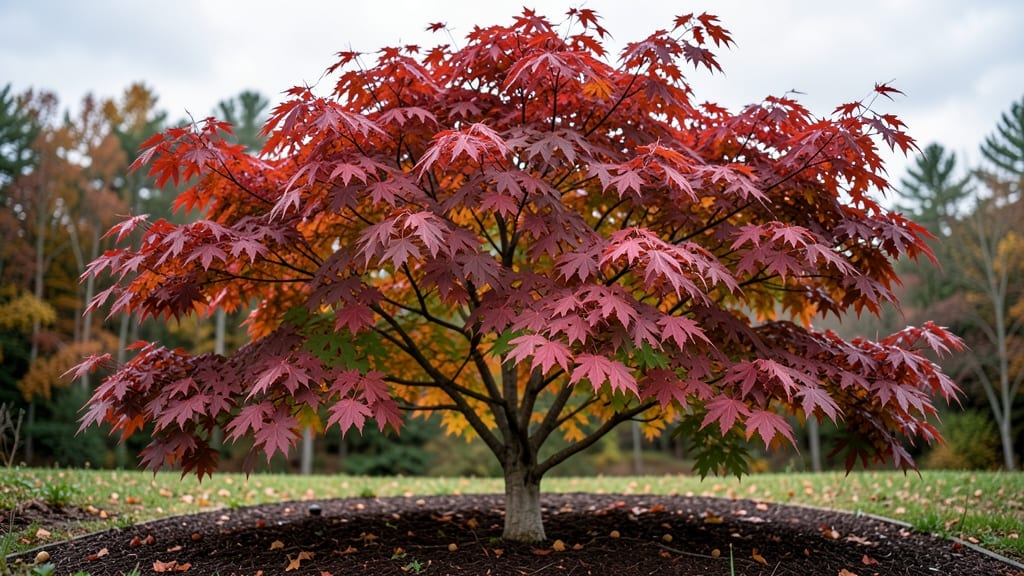
Nothing beats the way red leaf fall trees turn your yard into a fiery masterpiece every October. 🌿 These trees aren't just plants—they're the centerpiece of autumn, with foliage that shifts from summer green to vibrant crimson, deep burgundy, and even burning orange as temperatures drop.
I've seen neighbors stop mid-conversation just to stare at my front yard's fiery display, and I'm here to help you create that same wow factor.
The best part? You don't need a forest to make an impact. A single sugar maple or red oak can transform a small yard, while a cluster of sumacs or Japanese maples creates a dramatic border.
These trees thrive in full sun to partial shade, and most handle average garden soil—meaning you can focus on placement rather than soil prep. The key is choosing varieties that match your yard's size and existing color palette.
Imagine walking past your front window in November, watching sunlight filter through leaves that look like they're on fire. That's the magic of red leaf trees—seasonal drama without the maintenance headaches.
They pair beautifully with evergreens (for contrast) and early spring bulbs (for layered color). The best designs use these trees as focal points, framing paths or anchoring garden beds.
Here's the secret: plant them where you'll see them most—near patios, along driveways, or as standalone specimens. A well-placed red leaf tree becomes the autumn anchor of your landscape, year after year. Let's pick the perfect one for your space!
📚 In This Guide
- What you need
- Instructions
- Tips and common mistakes
- Wrapping up and next steps
What you need
- ● Red Leaf Trees: Choose from varieties like Japanese Maple (Acer palmatum 'Bloodgood'), Sumac (Rhus typhina), or Red Oak (Quercus rubra) (1–3 trees, depending on space).
- ● High-Quality Soil: 2–3 bags of well-draining, acidic soil mix (pH 5.0–6.5 for maples).
- ● Organic Mulch: 1–2 cubic yards of wood chips or bark mulch (3–4 inches deep).
- ● Fertilizer: Slow-release balanced fertilizer (10-10-10) or acid-loving plant food (1–2 bags).
- ○ Watering Supplies: Garden hose (with adjustable nozzle) or drip irrigation system (optional but ideal).
- ● Shovel & Spade: 1 garden spade (for planting) + 1 round-point shovel (for digging).
- ● Pruning Tools: 1 pair bypass pruners (for small branches).
- ● 1 pruning saw (for thicker limbs).
- ● 1 sterilizing solution (70% isopropyl alcohol).
- ● Gloves & Safety Gear: 1 pair cut-resistant gloves + safety goggles.
- ● Measuring Tape: 1 (for spacing plants 15–25 ft apart).
- ● Tree Stakes: 2–4 (for young trees, 4–6 ft tall).
- ● Tree Ties: 1 roll (soft fabric, not wire!).
- ● Soil pH Test Kit: To monitor acidity levels.
- ● Decorative Lights: Solar-powered string lights to highlight foliage at night! 🌟
How to select and plant stunning red leaf fall trees
Here's my go-to method for choosing and planting showstopping red leaf trees that transform your yard into a fiery autumn masterpiece.
🌱 Step 1: Choose the Right Species for Your Climate
First, match your hardiness zone to the perfect red-leafed tree. Japanese maples (Acer palmatum) like 'Bloodgood' or 'Emperor I' thrive in zones 5-8, while sumacs (Rhus typhina) like 'Bailtiger' handle zones 3-9. I always check the USDA map before buying—planting a tropical species in a cold zone guarantees winter kill.
Look for trees with deep red foliage that holds color late into fall. Some varieties, like 'Royal Purple' smokebush (Cotinus coggygria), shift from purple to fiery red, while others like 'September Ruby' sumac stay consistently bold. Visit local nurseries in late summer to see which varieties perform best in your area—color can vary dramatically between regions.
☀️ Step 2: Select the Perfect Planting Location
Most red leaf trees need full sun to partial shade (6-8 hours of direct light daily) for maximum color intensity. I plant mine where they'll get morning sun and afternoon shade—this prevents leaf scorch while ensuring vibrant fall hues. Avoid deep shade spots where leaves turn dull green or yellow.
Consider mature size too. A dwarf Japanese maple like 'Dragon's Blood' stays under 6 feet, while a sumac can reach 15 feet. Measure your space and plant accordingly—nothing ruins a landscape like a tree that outgrows its home. For small yards, I opt for columnar varieties like 'Red Baron' hawthorn.
🪴 Step 3: Prepare the Planting Site
Dig a hole twice as wide as the root ball but only as deep. Amending the native soil with 2-3 inches of compost improves drainage and nutrient availability—red leaf trees perform best in well-draining, slightly acidic soil (pH 5.0-6.5). I always mix the compost into the bottom and sides of the hole before planting.
Remove the tree from its container and loosen any circling roots gently with your fingers. Position the tree so the top of the root ball sits 1-2 inches above ground level—this prevents water from pooling around the trunk. Backfill with native soil mixed with compost, tamping lightly every few inches to eliminate air pockets.
💧 Step 4: Water and Mulch for Establishment
Water deeply right after planting to settle the soil and eliminate air gaps. I use 1-2 gallons for small trees and 5-10 gallons for larger specimens. Keep the soil consistently moist (but never soggy) for the first 4-6 weeks—this critical period determines whether your tree thrives or struggles.
Apply 2-3 inches of mulch (wood chips or shredded bark) around the base, keeping it 6 inches away from the trunk to prevent rot. Mulch conserves moisture and regulates soil temperature—essential for young trees developing strong root systems. I reapply mulch annually to maintain this protective layer.
✂️ Step 5: Prune and Maintain for Long-Term Color
Prune in late winter or early spring before new growth begins. Remove any dead, diseased, or crossing branches first, then thin out crowded areas to improve airflow. For Japanese maples, I avoid heavy pruning—they respond poorly to aggressive cuts. Instead, I shape lightly to maintain their natural form.
Fertilize in early spring with a balanced 10-10-10 formula (follow package rates). Red leaf trees generally don't need heavy feeding, but an annual boost ensures vibrant foliage. Watch for pests like spider mites or scale insects—treat early with horticultural oil if you spot them. With proper care, your tree will reward you with stunning autumn color for decades.
Tips & tricks for perfect red leaf fall trees
Transforming your yard into a fiery autumn masterpiece starts with these game-changing insights that'll ensure your red leaf trees thrive and dazzle.
Species Selection Secret: When visiting nurseries, don't just look at the leaves—check the undersides for signs of pests or disease. I've seen perfectly red foliage on trees that were actually struggling with spider mites. Also, ask when the trees were grown from seed versus grafted—grafted varieties like 'Bloodgood' Japanese maple consistently deliver more vibrant color because they're clones of parent plants with proven traits.
Lighting Strategy: The 6-8 hours of sunlight requirement in Step 2 is non-negotiable for maximum color intensity, but here's the pro move: position your tree where it gets morning sun and afternoon shade. This prevents leaf scorch while ensuring those fiery autumn hues. For small spaces, consider 'Royal Purple' smokebush—it thrives in partial shade and still delivers stunning purple-to-red color shifts. I've seen it perform beautifully under large oak trees where other varieties would fade.
Root Ball Prep: In Step 3, when loosening circling roots, be gentle but thorough—these roots can strangle the tree as it grows. I like to use my fingers to tease them apart rather than cutting, which can damage the root tissue. Also, if your tree comes in a plastic pot, score the bottom to encourage root growth outward rather than circling. This single step can double your tree's chances of thriving in its new home.
Watering Wisdom: The 4-6 week watering window is critical, but here's what nobody tells you: water deeply every 2-3 days rather than daily shallow waterings. This encourages deep root growth. I use a rain gauge to measure—aim for about 1 inch of water per week. For larger trees, I even install a soaker hose that waters slowly at the base without disturbing the mulch. This method saves time and ensures consistent moisture.
Pro Tips for Red Leaf Fall Trees
- Transforming your yard into a fiery autumn masterpiece starts with these game-changing insights that'll ensure your red leaf trees thrive and dazzle.
- Species Selection Secret: When visiting nurseries, don't just look at the leaves—check the undersides for signs of pests or disease.
- Lighting Strategy: The 6-8 hours of sunlight requirement in Step 2 is non-negotiable for maximum color intensity, but here's the pro move: position your tree where it gets morning sun and afternoon shade.
Frequently asked questions
Got questions about those stunning red leaf fall trees that turn neighborhoods into autumn postcard scenes? You’re not alone! Here are answers to the most common queries—from timing to troubleshooting—so you can make the most of your fiery foliage.
What causes trees to turn bright red in the fall?
Red fall foliage is a mix of anthocyanins (pigments produced as leaves shut down) and carotenoids (always present but masked by green chlorophyll in summer). Cooler temps, shorter days, and sunlight trigger this dazzling color shift. Trees like Japanese maples and red oaks are masters of this art!
When is the best time to plant red leaf trees for fall color?
For instant impact, plant in early spring (March–April) so roots establish before summer heat. But if you’re chasing fall color, late summer to early fall (August–September) works too—just water deeply to help them acclimate. Young trees need 2–3 years to show their best hues!
Are there drought-tolerant red leaf trees for dry climates?
Try redbud trees (native to the U.S.) or Chinese pistache—both handle drought once established. For low-maintenance drama, sumac (like Staghorn sumac) thrives in poor soil and needs minimal water. Always check your USDA hardiness zone for matches!
Why did my red leaf tree’s leaves turn brown instead of red?
Brown leaves often signal stress—check for underwatering, over-fertilizing, or pests (like spider mites). If soil is too dry or roots are shallow, leaves may crisp up instead of blushing red. Mulch heavily and water deeply 1–2x/week in dry spells to revive vibrancy.
Can I mix red leaf trees with other fall colors for a layered look?
Yes! Pair reds with golden ginkgo, purple smoke trees, or orange spicebush for a rainbow effect. For contrast, add evergreens like blue atlas cedar to ground the drama. Just space trees 10–15 feet apart to avoid root competition and ensure each gets sunlight.
Still stumped? Drop your tree’s name in the comments—we’ll help you troubleshoot or celebrate your foliage wins!
Wrapping up and next steps
Red leaf fall trees aren’t just a seasonal spectacle—they’re a celebration of nature’s artistry, turning ordinary landscapes into breathtaking masterpieces. Whether you’re a gardener, homeowner, or simply an admirer of autumn’s magic, these bold foliage stars bring joy, color, and even practical benefits to your space. 🍂
Ready to embrace the season? Start small—plant a single Japanese Maple or Red Oak in your yard, or plan a larger garden transformation. Visit a local nursery, research native species, and take the first step toward creating your own autumn haven.
The best time to plant is now—your future self (and your neighbors!) will thank you.