
Leaf Blower
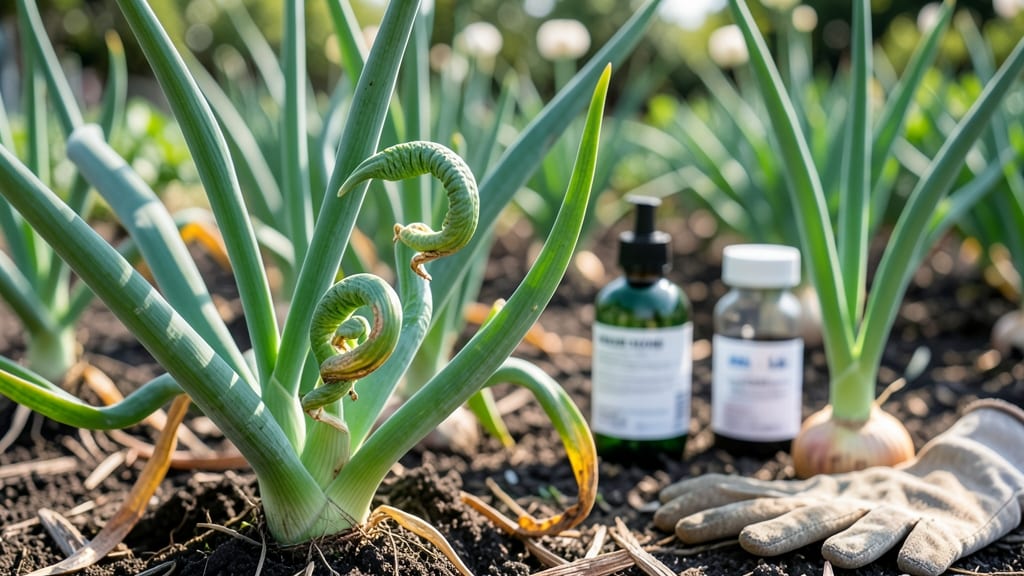
Your crispy-edged onions just turned into sad, curled messes. 🌱 Onion leaf curl virus is a sneaky thief that turns vibrant green leaves into brittle, yellowed scraps—but there’s hope with copper spray and smart prevention. This isn’t just about spraying copper (though that helps).
The real fix starts with removing infected plants immediately and controlling aphids, those tiny green pests that spread the virus like gossip at a garden party. Crop rotation and resistant varieties keep future crops safe too.
By acting fast, you’ll save your harvest and keep next year’s onions looking crisp and proud. The key is early detection—check leaves regularly, especially in spring when aphids are most active. Affected onions? Safe to eat, but flavor and texture suffer.
Let’s get your garden back to crisp perfection with these actionable steps!
Root Causes of Leaf Distortion
Onion leaf curl isn’t just a cosmetic nuisance—it’s a sign your plants are under siege. Understanding the why behind the wavy, curled, or stunted leaves is the first step to fixing it. Below, we break down the primary culprits causing this frustrating issue, backed by science and actionable insights.
Onion leaf curl is most commonly triggered by viruses, particularly the Onion Yellow Dwarf Virus (OYDV) and Onion Curl Virus (OCV).
These pathogens spread via: - Aphids (tiny sap-sucking insects that transmit viruses while feeding). - Contaminated tools, soil, or seeds (viruses can linger on equipment or infected plant debris). - Wind or water splashes (though less common, viruses can spread mechanically).
Why it happens: Viruses hijack plant cells, disrupting normal growth hormones like auxins and cytokinins. This causes abnormal cell division, leading to curled, thickened, or stunted leaves. Infected plants may also show yellowing (chlorosis) or stunted bulbs.
Actionable fix:
- Remove infected plants immediately (burn or dispose of them—do not compost).
- Use reflective mulch or insect barriers to deter aphids.
- Apply neem oil or insecticidal soap to control aphid populations.
Onions are heavy feeders, and deficiencies or excesses in key nutrients can trigger leaf curl. The most critical imbalances include:
| Nutrient | Deficiency Symptoms | Excess Symptoms |
|---|---|---|
| Nitrogen (N) | Pale, yellowing leaves (older first) | Dark green, soft leaves; weak growth |
| Potassium (K) | Yellowing leaf edges, weak stems | Leaf scorch, curling, stunted growth |
| Calcium (Ca) | Blossom-end rot, curled young leaves | None (toxic only in extreme cases) |
| Magnesium (Mg) | Interveinal chlorosis (yellow between veins) | Rare, but can cause leaf distortion |
Why it happens:
- Potassium deficiency is a top culprit—it regulates osmotic balance and water movement in cells. Without enough K, leaves lose turgor pressure, leading to curling.
- Nitrogen excess can cause rapid, weak growth, making leaves more susceptible to physical stress (like wind or pests).
- Calcium deficiency disrupts cell wall formation, especially in young leaves.
Actionable fix:
- Test your soil (a simple DIY kit or lab test will reveal deficiencies).
- Amend soil with:
- Compost or well-rotted manure (for nitrogen).
- Wood ash or greensand (for potassium).
- Crushed eggshells or lime (for calcium).
- Use a balanced fertilizer (like 10-10-10) early in the season to prevent deficiencies.
Onions are cool-season crops, and extreme or fluctuating conditions can cause leaf curl without any pathogens or nutrient issues.
Heat or Drought Stress
- Why it happens: Onions thrive in cool (60–70°F) temperatures.
When exposed to sudden heat (above 85°F), they bolt (send up a flower stalk) or develop thick, curled leaves as a survival mechanism. - Actionable fix: - Provide shade cloth (30–50%) during heatwaves. - Mulch heavily (straw or grass clippings) to retain moisture. - Water deeply but infrequently (1–1.5 inches per week) to encourage deep roots.
Cold or Frost Damage
- Why it happens: Freezing temps rupture cell membranes, causing waterlogging and curling as the plant tries to recover.
- Actionable fix:
- Use row covers in early spring or late fall.
- Plant in well-drained soil to prevent frost heave.
Wind or Physical Damage
- Why it happens: Onions have delicate, broad leaves that curl in response to strong winds or mechanical injury (like hail or rough handling).
- Actionable fix:
- Plant in sheltered areas (near fences or windbreaks).
- Stake tall varieties if needed.
While less common than viruses, fungal and bacterial infections can mimic leaf curl symptoms.
Purple Blotch or Stemphylium Leaf Blight
- Why it happens: Fungi like Alternaria porri thrive in warm, humid conditions, causing purple-brown spots that distort leaves.
- Actionable fix:
- Rotate crops (avoid planting onions in the same spot yearly).
- Apply copper fungicide (like Bordeaux mixture) at the first sign of spots.
Bacterial Leaf Blight
- Why it happens: Xanthomonas campestris bacteria cause water-soaked lesions that curl and dry into scabs.
- Actionable fix:
- Remove infected plants and sterilize tools with bleach (1 part bleach to 9 parts water).
- Avoid overhead watering to reduce bacterial spread.
Surprising fact: Onions require copper for proper enzyme function and cell wall synthesis. A deficiency can cause:
- Copper-chlorosis (yellowing between veins, similar to iron deficiency but with thickened, curled leaves).
- Weakened immunity to pests and diseases.
Why it happens:
- High soil pH (alkaline conditions) binds copper, making it unavailable.
- Overuse of phosphorus fertilizers can compete with copper uptake.
Actionable fix:
- Apply copper sulfate (1 tsp per gallon of water as a foliar spray).
- Lower soil pH with sulfur or peat moss if your soil test confirms alkalinity.
- Use chelated copper for a gentler, more effective solution.
How to Fix Wrinkled Onion Leaves
If your onions are sporting those unsightly curled, twisted leaves, don’t toss them just yet! With the right approach, you can often restore their crisp, healthy appearance—or even prevent future issues.
Below, we’ve mapped out practical solutions based on the most common causes of leaf curl, from viral infections to environmental stress. Follow these steps to revive your onions and keep them thriving.
If Onion Yellow Dwarf Virus (OYDV) or Onion Leaf Curl Virus (OLCV) is the culprit, act fast to stop the spread.
- 🔪 Snip and toss: Remove any plants showing severe curling, yellowing, or stunted growth. Place them in a sealed bag and discard them in the trash not the compost—viruses can linger and reinfect.
- 🌱 Quarantine healthy plants: If other onions in your garden look fine, isolate them from the infected area for at least 2–3 weeks to monitor for new symptoms.
- 🧼 Sterilize tools: Clean pruners, gloves, and containers with a 10% bleach solution (1 part bleach to 9 parts water) to kill any residual virus particles.
💡 Pro Tip: If you suspect a viral infection, test a few samples by sending them to your local Cooperative Extension Service for confirmation. Knowing the exact cause helps tailor your treatment.
If leaf curl is caused by Botrytis squamosa (purple blotch) or Pseudomonas (bacterial leaf blight), copper-based sprays can be a game-changer.
- 🛒 Choose the right spray: Opt for a fixed copper fungicide (like Copper Sulfate or Copper Hydroxide). Avoid homemade remedies—store-bought sprays are more effective and safer.
- 👨🍳 Mix and apply:
- Follow label instructions for dilution (typically 1–2 tbsp per gallon of water).
- Spray early in the morning or late afternoon to avoid burning leaves in direct sunlight.
- Cover both sides of the leaves and the soil around the base. Repeat every 7–14 days or as directed.
- ⏰ Timing matters: Start spraying preventatively at the first sign of stress (e.g., after rain or high humidity) rather than waiting for symptoms to appear.
⚠️ Warning: Copper can be toxic to plants if overused. Never apply when temperatures exceed 85°F (29°C), and avoid spraying edible parts just before harvest.
Environmental stressors like extreme heat, drought, or poor soil can trigger leaf curl. Tweak these factors to give your onions the ideal growing conditions.
| Issue | Fix |
|---|---|
| Heat Stress (leaves curl upward in hot, dry weather) |
|
| Overwatering (leaves curl downward, yellowing) |
|
| Nutrient Deficiency (curls + stunted growth) |
|
Once you’ve addressed the immediate problem, take these steps to keep your onions leaf-curl-free next season.
- 🌱 Rotate crops: Avoid planting onions (or other alliums like garlic and leeks) in the same spot for at least 3–4 years to break virus cycles.
- 🛡️ Use certified disease-free seeds: Purchase seeds from reputable suppliers labeled as virus-tested. Avoid saving seeds from infected plants.
- 🐞 Control pests: Aphids and thrips spread viruses. Spray with neem oil or introduce ladybugs to keep populations in check.
- 🌿 Practice good hygiene: Clean tools between gardens, remove plant debris after harvest, and disinfect containers to minimize virus spread.
✨ Bonus Tip: Try resistant varieties like ‘Red Baron’ or ‘Sweet Spanish’ onions, which are bred to tolerate common leaf curl pathogens better.
With these targeted fixes, your onions should bounce back with crisp, straight leaves in no time. Remember: early action is key—whether you’re battling viruses, fungi, or just a little environmental stress! 🌱
Frequently asked questions
Can I still harvest onions with leaf curl?
The bulbs themselves are generally safe to eat even with leaf curl, but flavor and texture may be compromised. For best results, harvest onions showing mild symptoms early. Severely infected plants may produce smaller, less flavorful bulbs. Remove all infected foliage before storage to prevent further spread.
How do I tell if leaf curl is from a virus or nutrient deficiency?
Viral leaf curl typically appears as thickened, distorted leaves with yellowing between veins, often accompanied by stunted growth. Nutrient deficiencies cause curling too, but usually with other clear signs: potassium deficiency shows as yellowing edges, while calcium deficiency affects younger leaves first. Test your soil for confirmation.
Will copper spray work on all types of leaf curl?
Copper sprays are most effective against fungal infections like purple blotch, not viral causes. For viral leaf curl, copper won't cure the problem—focus on removing infected plants and controlling aphids. Use copper preventatively during wet seasons when fungal risks peak, applying every 7-10 days as directed.
Can I save seeds from leaf curl-affected onions?
Never save seeds from infected plants—viruses can persist in the seed, ensuring future crops get sick too. Always use certified disease-free seeds from reputable suppliers. For next season, choose resistant varieties like 'Red Baron' or practice 3-4 year crop rotation to break disease cycles.
How long until I see results from my copper spray?
You may notice improved leaf health within 3-5 days if using copper for fungal issues, but full recovery takes 2-3 weeks of consistent application. For viral infections, copper won't reverse damage—focus on removing infected plants and aphid control for prevention. Always follow label instructions for timing and concentration.