
Watering
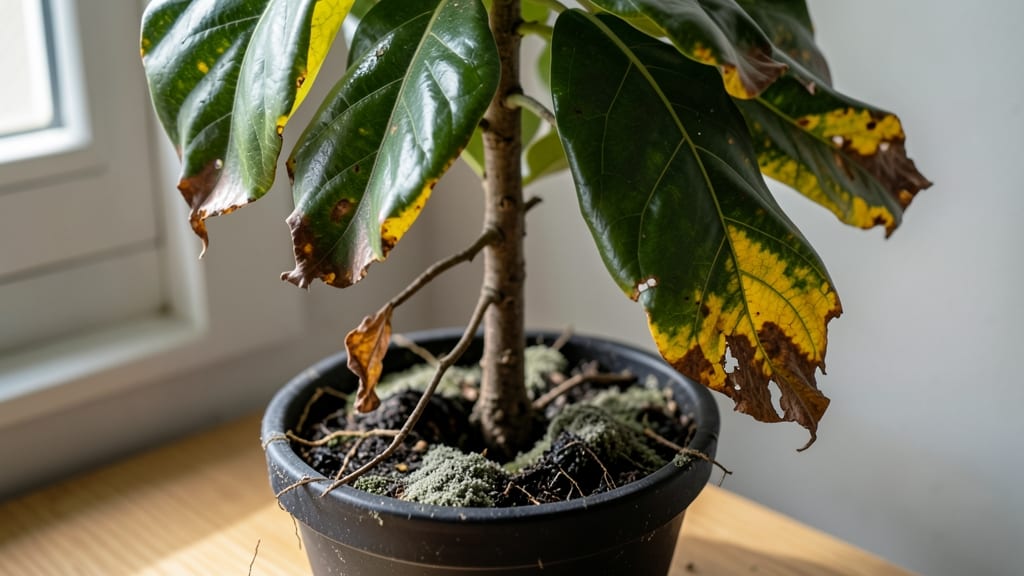
Your fiddle leaf fig’s drooping leaves aren’t a death sentence—just a cry for help. 🌿 I’ve nursed back more overwatered figs than I’d like to admit, and the secret is catching the problem early before root rot takes over.
The first sign? Yellowing leaves that feel mushy when you touch them, paired with soil that smells sour instead of earthy.
Here’s the good news: fixing it is simpler than you think. Start by letting the soil dry out completely between waterings—stick your finger in the top 2 inches of soil first, and only water if it’s bone-dry.
If the roots are already rotting, you’ll need to trim the damaged ones and repot into fresh, well-draining mix. Most plants bounce back within 4-6 weeks with proper care.
What you’ll end up with is a revived plant that’s lush, vibrant, and thriving again. The leaves will firm up, new growth will emerge, and you’ll learn exactly how much water your fiddle leaf fig actually needs. Trust me, once you master this, your plant will stay healthy for years.
This method works for any overwatered fiddle leaf fig, whether it’s in a sunny window or a dim corner. The key is consistency—check those roots regularly, and you’ll never have to worry about soggy soil again. Let’s get your plant back on track!
Common Causes Of Overwatering
Overwatering your fiddle leaf fig—Ficus lyrata—can turn your lush green companion into a sad, drooping mess. But why does this happen? Often, it’s a mix of well-intentioned mistakes and environmental factors that disrupt the plant’s delicate balance.
Let’s break down the science behind the soggy soil syndrome and how to avoid it.
Fiddle leaf figs thrive in well-draining soil, but many pots—especially decorative or unglazed ones—lack proper drainage holes. When water pools at the bottom, roots suffocate from anoxia (lack of oxygen), triggering:
- Root rot: Fungal pathogens like Phytophthora and Pythium multiply in waterlogged conditions, breaking down root cell walls.
- Nutrient uptake failure: Roots can’t absorb water or minerals efficiently, leading to wilting despite "wet" soil.
- Toxic buildup: Excess salts and chemicals in tap water accumulate, creating a hypertonic environment that dehydrates roots.
Actionable fix: Repot into a container with drainage holes and use a cactus/succulent mix blended with perlite or orchid bark (20-30% by volume) to improve aeration.
Fiddle leaf figs are drought-tolerant natives of West African rainforests—but their roots hate sitting in soggy conditions. Many growers water on a schedule (e.g., every 7 days) instead of checking soil moisture. Here’s what happens when you overlook these cues:
- False "thirst" signals: The plant may droop even when soil is damp, mimicking underwatering. This is a stress response to oxygen deprivation.
- Leaf yellowing (chlorosis): Excess water displaces oxygen in root zones, disrupting chlorophyll production in leaves.
- Stunted growth: Roots prioritize survival over expansion, leading to compact, weak stems.
Actionable fix: Stick your finger 2-3 inches deep into the soil—if it’s moist, wait. Use a moisture meter for precision, or opt for the plate test: Place the pot on a saucer of water for 10 minutes, then drain. If water sits for >2 hours, your soil is too dense.
Even with perfect watering habits, your fiddle leaf fig’s environment can sabotage its health. Low light, humidity swings, and temperature extremes force the plant to compensate—often by holding onto water longer than ideal.
| Stressor | How It Triggers Overwatering Risks | Solution |
|---|---|---|
| Low light | Reduces transpiration (water loss via leaves), so roots stay soggy longer. Leads to edema (waterlogged leaf tissue). | Move to bright, indirect light (east/west windows). Supplement with a grow light 12-14 hrs/day if needed. |
| High humidity (>60%) | Slows evaporation, keeping soil damp for days. Fungal spores thrive in these conditions. | Use a dehumidifier or place a fan nearby for airflow. Aim for 40-50% humidity. |
| Cold drafts (<60°F) | Chills roots, reducing their ability to absorb water efficiently. Leads to osmotic shock when overwatered. | Keep temps between 65-85°F. Avoid placing near AC vents or glass doors. |
Fertilizer burns and excess salts don’t just scorch leaves—they disrupt root function, making plants more vulnerable to overwatering. Here’s the science:
- Salt buildup: Synthetic fertilizers leave behind sodium and chlorine, which raise soil osmotic pressure. Roots expend energy to expel excess water, leading to dehydration.
- Microbial imbalance: High nitrogen levels feed harmful bacteria/fungi faster than beneficial microbes, accelerating root rot.
- False growth signals: Lush new leaves trick growers into watering more, but the roots are not keeping up.
Actionable fix:
- Flush soil quarterly with reverse osmosis (RO) water to leach salts.
- Switch to organic fertilizers (e.g., fish emulsion or worm castings) and dilute to half-strength.
- Water before fertilizing to dilute salts in the root zone.
Most growers check soil moisture at the surface—but roots need air deep down. For accurate readings:
- 👆 Insert a clean finger 3-4 inches into the soil (past the top layer).
- 🧵 Grip the soil firmly—if it crumbles slightly but holds shape, it’s ideal. If it’s slick or gummy, wait.
- 💧 Water only when the bottom 50% is dry—this mimics the plant’s natural drought tolerance.
Why it works: Fiddle leaf figs store water in their petioles (leaf stems) and roots. By the time the topsoil feels dry, the roots may still be hydrated—but the oxygen balance is critical.
Reviving Your Fiddle Leaf Fig
Fiddle leaf figs are stunning, statement plants—but when they’re overwatered, they can quickly go from lush to limp. The good news? With the right steps, you can nurse them back to health.
Below, we’ll break down how to diagnose the problem and what to do next, tailored to the root cause of your plant’s distress.
The first rule of reviving an overwatered fiddle leaf fig? Cut off the water. Keep it dry for at least 7–10 days to let the roots recover. If the soil is soggy, resist the urge to water—your plant is drowning, not thirsty.
💡 Pro Tip: Stick your finger 2–3 inches deep into the soil. If it’s damp, wait longer. If it’s bone-dry, you’ve been underwatering (but that’s a different problem!).
Not all overwatering symptoms require the same fix. Check for these signs and match them to the solution:
🍂 Yellowing Leaves (Early Warning Sign)
Cause: Root rot hasn’t set in yet, but the plant is stressed. Fix:
- Repot the plant in fresh, well-draining soil (more on this below).
- Trim any yellow leaves at the base with clean, sharp scissors.
- Move to bright, indirect light (no direct sun yet—it’ll stress the plant further).
💀 Brown, Crispy Leaves (Advanced Rot)
Cause: Roots are rotting, and the plant can’t absorb nutrients. Fix:
- Remove the plant from its pot and gently rinse the roots under lukewarm water to wash away excess soil.
- Trim black, mushy roots with sterilized scissors (healthy roots are firm and white).
- Repot in a clean container with fresh, chunky potting mix (see soil tips below).
- Hold off on watering for 2+ weeks—let the roots recover before reintroducing moisture.
🌡️ Drooping but Still Green (Temporary Stress)
Cause: The plant is waterlogged but not yet rotting. Fix:
- Let the soil dry out completely before watering again.
- Prop up drooping leaves with a small stick or chopstick to prevent breakage.
- Mist the leaves lightly (but avoid soggy soil) to increase humidity while it recovers.
If your fiddle leaf fig’s roots are rotting or the soil is compacted, repotting is non-negotiable. Here’s how to do it right:
🛒 Choose the Right Soil Mix
Fiddle leaf figs hate soggy soil. Use a mix that drains fast:
- 50% high-quality potting soil (like Miracle-Gro or Fox Farm)
- 30% perlite or pumice (for aeration)
- 20% orchid bark or coco coir (for structure)
❌ Avoid: Garden soil, peat-heavy mixes, or anything that stays wet.
🏺 Pick a Proper Pot
- Drainage holes are a must—no exceptions.
- Size matters: If repotting, go no more than 1–2 inches larger than the old pot (big pots hold too much moisture).
- Terracotta pots (unglazed) help wick away excess water—great for fiddle leaf figs.
🌱 Repotting Process
- Empty the old soil and gently loosen the roots.
- Trim dead roots (black, mushy, or slimy = bad).
- Add a layer of fresh soil to the new pot, place the plant in, and fill around it.
- Water lightly only if the soil is completely dry after repotting.
Once your fiddle leaf fig is back on track, prevent future overwatering with these habits:
✅ Water only when the top 2–3 inches of soil are dry (stick your finger in—it’s the best tool!). ✅ Water deeply but infrequently—soak the soil until water runs out the drainage hole, then empty the saucer. ✅ Adjust for seasons: Water less in winter (growth slows) and more in spring/summer (growth speeds up). ✅ Humidity helps: Fiddle leaf figs love 40–60% humidity.
Use a pebble tray or humidifier if your air is dry. ✅ Light matters: Bright, indirect light is key—no dark corners or harsh sun.
💡 Final Reminder: Patience is key! It can take weeks for an overwatered fiddle leaf fig to bounce back. Stick to the plan, and your plant will be thriving in no time. 🌿✨
Frequently asked questions
How do I know if my fiddle leaf fig is overwatered vs. underwatered?
Check the soil first—stick your finger 2-3 inches deep. If it's damp, you're likely overwatering. Look for yellow leaves with brown edges, mushy stems, or a foul smell from the soil. Underwatered plants have crispy, dry leaves that pull away from the stem and soil that's completely dry at all levels.
Can I save a fiddle leaf fig with root rot?
Yes, but act fast! Gently remove the plant from its pot and rinse the roots under lukewarm water. Trim away all black, mushy roots with sterilized scissors, keeping only firm white roots. Repot in fresh, well-draining soil and withhold water for 2-3 weeks to let the roots recover. Place it in bright, indirect light during this time.
Why does my fiddle leaf fig droop after watering?
This is often a sign of overwatering or root stress. When roots can't absorb water properly due to soggy conditions, the plant can't support itself, causing drooping. Let the soil dry out completely before watering again. If the drooping persists after drying, check for root rot by gently inspecting the roots.
How often should I water my fiddle leaf fig after recovery?
Once recovered, water only when the top 2-3 inches of soil are completely dry. In spring/summer, this might be every 7-10 days, while winter watering should be every 3-4 weeks. Always use a pot with drainage holes and empty saucers after watering to prevent waterlogging.
Will pruning help my overwatered fiddle leaf fig recover faster?
Yes, but focus on removing only the most damaged leaves. Cut back yellow or brown leaves at the base with clean scissors to redirect the plant's energy to healthy growth. Avoid heavy pruning—remove no more than 25% of the foliage at once. This helps reduce water loss while the roots recover.