
Watering
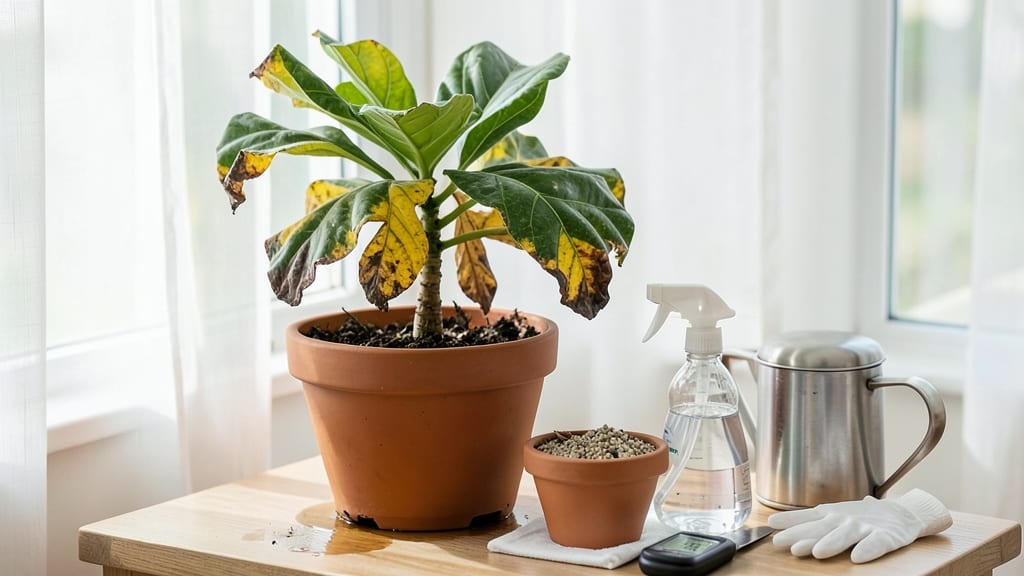
How to fix an overwatered fiddle leaf fig—your plant might look sad now, but it’s not too late to save it. 🌱 Overwatering is the #1 killer of these stunning plants—and I’ve nursed more than my share back to health with these three simple steps that actually work. The first sign? Yellow leaves, mushy stems, or soil that smells like a swamp. That’s root rot setting in, but don’t panic—we can still fix it. Start by letting the soil dry out completely between waterings, and switch to a pot with drainage holes if it doesn’t have them. Within 2-3 weeks, you’ll see new growth as the roots recover. The secret is patience and consistency: check soil moisture with your finger before watering, and avoid letting the plant sit in saucers of water. This method works for any overwatered fiddle leaf fig, whether it’s in a sunny window or under grow lights. Let’s bring it back to life!
Root Causes of Overwatered Figs
Your fiddle leaf fig isn’t just a victim of clumsy watering—it’s reacting to hidden environmental and biological factors that disrupt its delicate balance. Understanding these root causes (pun intended!) helps you diagnose the issue faster and prevent future mishaps.
Let’s break down the science behind why your plant’s roots might be drowning.
Fiddle leaf figs (Ficus lyrata) are tropical natives, but their roots hate soggy conditions. When planted in containers without proper drainage, excess water pools at the bottom, suffocating roots and blocking oxygen. Here’s why this happens:
- Clogged pots: Over time, soil compacts, reducing porosity. Without drainage holes, water has nowhere to escape, creating a waterlogged "bathtub" effect. 🚿
- Heavy or clay-based soils: These retain moisture like a sponge, slowing evaporation. Fiddle leaf figs thrive in well-aerated, chunky mixes (like 50% potting soil + 30% perlite + 20% orchid bark) that allow roots to breathe.
- Trapped humidity: Plastic pots or sealed saucers trap moisture, increasing ambient humidity around roots. In hot climates, this mimics a steam room—ideal for fungal growth but deadly for roots.
Pro Tip: 🔍 Test your pot: Fill it with water and time how long it takes to drain. If it sits for more than 10–15 minutes, your plant’s roots are at risk.
Even with great drainage, human error is the #1 cause of overwatering. Fiddle leaf figs are drought-tolerant, but many gardeners assume "more water = happier plant." The truth? These trees evolved in seasonal climates with dry spells, not constant moisture. Here’s the science:
| Mistake | Why It Fails |
|---|---|
| Watering on a schedule (e.g., every Monday) | Plants don’t follow calendars! Soil moisture depends on temperature, humidity, and pot size. A 6" pot dries faster than a 12" one. |
| Ignoring the "finger test" | Sticking your finger 1–2 inches into the soil tells you the real story. If it’s damp, wait. Overwaterers often rely on surface dryness, which is misleading. |
| Using ice cubes or misting leaves | While trendy, these methods increase soil moisture unpredictably. Ice cubes melt into the root zone, and misting can raise humidity around the soil, tricking roots into thinking it’s wetter than it is. |
Key Insight: Fiddle leaf figs prefer 60–70% humidity but can handle dry soil. The danger zone? Consistently wet soil for >48 hours—this triggers anaerobic conditions, where roots suffocate and harmful bacteria thrive.
Your home’s climate might be silently sabotaging your plant. Fiddle leaf figs thrive in 65–75°F (18–24°C), but extremes—especially cold drafts or high humidity—disrupt their water needs. Here’s how:
- Cold roots: Below 60°F (15°C), soil cools and evaporates moisture slower. Roots stay wet longer, increasing rot risk. 🧊
- High humidity + warm temps: In a steamy bathroom or near a humidifier, transpiration (water loss through leaves) slows. The plant "thinks" it’s dry and drinks more—but the soil stays soggy.
- Sudden temperature swings: Moving a plant from a cool windowsill to a hot kitchen changes evaporation rates. Roots can’t keep up, leading to waterlogged stress.
Fix It: 🌡️ Use a hygrometer to monitor humidity. Keep it below 70% if temps are warm, or above 50% in dry climates. A pebble tray (not touching the pot) adds humidity without drowning roots.
Now that you know why your fiddle leaf fig is drowning, the next step is reviving its roots—without repeating the same mistakes. Stay tuned!
Revive Your Fiddle Leaf Fig
Now that you know the signs and causes of overwatering, it’s time to roll up your sleeves and bring your fiddle leaf fig back to life! The good news? With the right steps, you can nurse your plant back to health—even if it’s looking a little worse for wear.
Below, we’ll map out practical fixes based on the most common symptoms and causes, plus prevention tips to keep your plant thriving long-term.
Cause: Overwatering (obviously!) Fix: The first rule of revival? Cut off the water. No more H₂O until the soil is dry to the touch. This prevents root rot from spreading further and gives your plant a chance to recover.
- Test the soil: Stick your finger 2-3 inches deep into the soil. If it’s damp or mushy, hold off on watering. - Skip the schedule: Fiddle leaf figs hate consistency when they’re stressed.
Wait until the top 1-2 inches of soil are bone-dry before watering again. - Pro tip: 💡 If your plant is in a pot with no drainage holes, repot it ASAP (more on that below).
Cause: Root rot (yellow leaves, drooping, black/mushy roots) Fix: If your plant’s roots are turning brown, black, or mushy, they’re rotting—and they need attention. Here’s how to diagnose and treat:
- Remove the plant from its pot carefully. Shake off excess soil to inspect the roots.
- Trim the damage: 🔪 Use sterilized scissors or pruning shears to cut away any black, mushy, or soft roots. Healthy roots are firm and white or tan.
- Rinse the roots (if soil is still clinging) with room-temperature water to remove debris.
- Let them dry: Place the plant in a shady spot for 1-2 hours to allow any cuts to callous over.
> ⚠️ Warning: If more than 50% of the roots are rotten, your plant may not recover. In that case, consider propagating healthy stems to save the plant.
Cause: Compacted or waterlogged soil Fix: Even if the roots look salvageable, the old soil might still be harboring bacteria or fungi. Repot your fiddle leaf fig in a clean mix to give it a fresh start.
- Choose the right pot: Select a container 1-2 inches larger than the current one with drainage holes (no exceptions!). - Use the right soil: A well-draining mix is key.
Try: - 50% potting soil - 30% perlite or pumice (for aeration) - 20% orchid bark or coco coir (for moisture control) - Repotting steps: 1. Fill the new pot 1/3 full with fresh soil mix. 2.
Place your plant in the center, ensuring the root crown sits just above soil level (burying it can cause rot). 3. Add more soil around the roots, gently pressing down to eliminate air pockets. 4. Water lightly only if the soil feels very dry.
> 💡 Pro tip: If you don’t want to repot right away, top-dress with a 1-inch layer of perlite or orchid bark to improve drainage while keeping the plant in its current pot.
Cause: Stress from poor recovery conditions Fix: While your fiddle leaf fig recovers, light and humidity play a huge role in its comeback.
- Light: Move your plant to bright, indirect light (east or north-facing windows are ideal). Avoid direct sun, which can stress a weak plant. - Humidity: Fiddle leaf figs love 40-60% humidity.
If your home is dry: - Place a humidifier nearby. - Group plants together to create a microclimate. - Mist the leaves lightly (but avoid soggy soil). - Temperature: Keep it warm (65-80°F) and away from drafts (AC, heaters, or cold windows).
Now that your plant is on the mend, let’s prevent future overwatering disasters:
| Mistake | Solution | How to Do It |
|---|---|---|
| Watering on a schedule | Water only when topsoil is dry | Stick your finger in the soil—if it’s dry 1-2 inches down, water. |
| Using the wrong soil | Switch to fast-draining mix | Add perlite, pumice, or orchid bark to regular potting soil. |
| No drainage holes | Repot immediately | Always use pots with holes; if stuck, drill them yourself. |
| Overpotting | Choose pots only 1-2 inches larger | Bigger pots = more soil = more water retention = rot. |
| Ignoring yellow leaves | Trim and adjust care | Yellow leaves = overwatering or nutrient issues. Act fast! |
> ✨ Bonus tip: Invest in a moisture meter ($10 on Amazon) to never guess if your soil is too wet again.
- 1-2 weeks: You might see new growth at the stem’s base.
- 3-4 weeks: Leaves should stop yellowing and may even perk up.
- 2-3 months: Your fiddle leaf fig could be fully revived—if the roots were salvageable!
Patience is key! Some plants bounce back faster than others, but with these steps, you’re giving yours the best shot at a full recovery. 🎉
Next up: [How to Keep Your Fiddle Leaf Fig Happy Long-Term](link) (if this were a full article).
Frequently asked questions
How do I know if my fiddle leaf fig has root rot from overwatering?
Check for these key signs: black, mushy roots (healthy roots are firm and white/tan), yellowing leaves that drop easily, and soil that smells foul or stays soggy for days. If you see these symptoms, trim the rotten roots immediately and repot in fresh, well-draining soil.
Can I save my fiddle leaf fig if more than half its roots are rotted?
It depends! If 50%+ roots are mushy/black, recovery is unlikely—but you can still try propagating healthy stems. Cut a 4-6 inch stem with 2-3 leaves, let it dry for 1-2 hours, then place in water or moist perlite. New roots should appear in 2-4 weeks if the stem is healthy.
Why does my fiddle leaf fig keep getting overwatered even after fixing it?
Most people overwater because they rely on schedules instead of the finger test. Stick your finger 1-2 inches deep—if it feels damp, wait! Also, check your pot: plastic traps moisture longer than terracotta. For extra help, use a moisture meter ($10 on Amazon) to track soil conditions accurately.
How long should I wait before watering my fiddle leaf fig after repotting?
Wait 7-10 days before watering after repotting—this gives roots time to adjust without drowning. After that, water only when the top 1-2 inches of soil are completely dry. Use room-temperature water and avoid letting the plant sit in saucers of water longer than 15 minutes.