
Leaf Blower
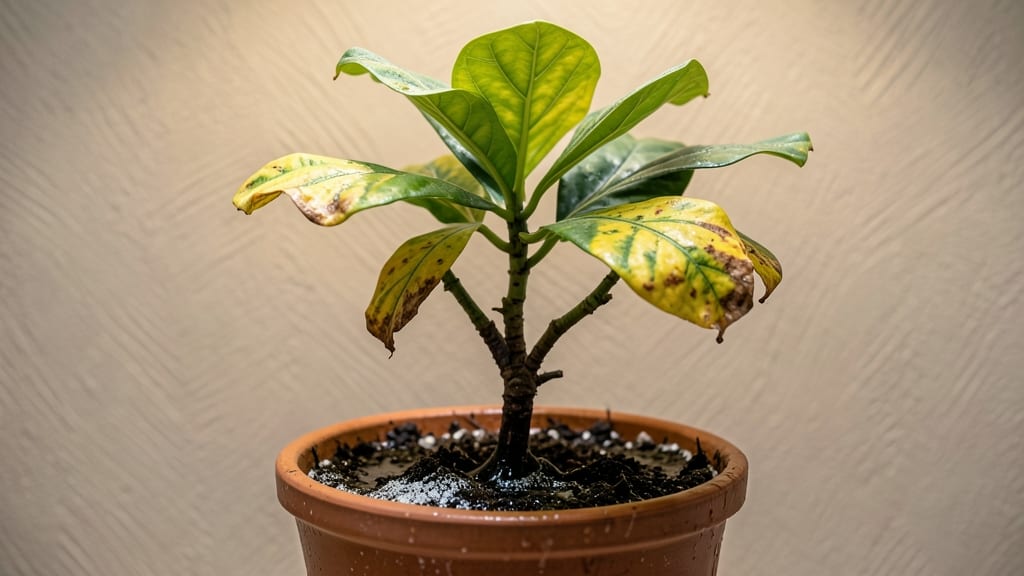
What does an overwatered fiddle leaf fig look like? Those sad droops and yellowing leaves aren’t just wilting—they’re screaming "I’m drowning." 🌿 Overwatering turns lush green foliage into a mushy mess, and the signs are harder to spot than you’d think. The leaves start yellowing at the edges, stems feel squishy, and the soil smells like a swamp, not earthy and fresh.
Root rot is the real villain here, gnawing away at your plant’s life force. Check the roots—if they’re brown, mushy, and smell foul, that’s your answer.
The soil stays clinging to the roots instead of falling away cleanly, and your fig might even lean or wobble because it can’t support itself. Don’t panic yet—this is fixable, and I’ll show you how.
First, stop watering immediately and let the soil dry out completely. Repot in fresh, well-draining mix and trim any black, rotten roots with clean scissors. Within weeks, you’ll see new growth pushing through, and those sad stems will perk back up.
The key is balance—your fiddle leaf fig wants to drink, but it doesn’t want to bathe.
Prevent future heartbreak by testing the soil with your finger before watering. Stick it in 2 inches deep—if it’s damp, wait another week. A well-draining pot with drainage holes and a mix designed for fiddle leaf figs will save you from this drama again.
Trust me, your plant will thank you.
Root Causes Of Overwatering
Overwatering your fiddle leaf fig (Ficus lyrata) is like giving it a bath every day—too much of a good thing can drown its roots and suffocate its growth.
Understanding why this happens helps you prevent it before your plant starts showing distress. Let’s break down the science and common mistakes that lead to soggy soil and unhappy leaves.
Fiddle leaf figs are tropical plants, but they don’t thrive in constantly wet conditions. Their roots need oxygen to absorb nutrients and water efficiently. When you water too often—especially without checking soil moisture—you create a waterlogged environment that cuts off oxygen supply.
- Why it happens: Most beginners follow a rigid watering schedule (e.g., every 7 days) without accounting for humidity, season, or pot drainage.
In reality, fiddle leaf figs prefer dry soil between waterings—think of it like a sponge that needs time to wring out excess moisture. - Actionable fix: Stick your finger 1–2 inches deep into the soil. If it feels damp, wait.
If it’s bone-dry, water thoroughly until it drains from the bottom. Adjust frequency based on your home’s conditions (e.g., less in winter, more in summer).
Even if you water sparingly, poor drainage turns every watering into a root-drowning session. Fiddle leaf figs hate sitting in standing water, yet many growers use containers without drainage holes or compacted soil that traps moisture.
- Why it happens:
- No drainage holes: Water pools at the bottom, suffocating roots.
- Heavy or clay soil: Retains moisture like a sponge, preventing airflow.
- Overpotting: Large pots hold excess water longer, slowing evaporation.
- Actionable fix:
- Upgrade your pot: Use terracotta or fabric pots with drainage holes.
- Amend your soil: Mix in perlite, orchid bark, or coco coir (20–30%) to improve aeration.
- Repot if needed: If your current pot lacks holes, transfer your plant to one with proper drainage.
Fiddle leaf figs love humidity (40–60% is ideal), but high humidity slows evaporation, keeping soil wet longer. Combine that with cool temperatures, and your plant’s roots struggle to dry out between waterings.
- Why it happens:
- Low-light + high humidity: Slows transpiration (water loss through leaves), so roots stay soggy.
- Winter watering: Cooler temps reduce evaporation, making soil stay damp for weeks.
- No airflow: Crowded spaces or closed rooms trap moisture around the plant.
- Actionable fix:
- Monitor humidity: Use a hygrometer and add a humidifier if levels drop below 40%.
- Adjust watering in winter: Reduce frequency by 30–50%—roots grow slower when temps dip.
- Improve airflow: Place your plant near a window (but not in direct drafts) or use a small fan on low.
Not all watering is equal. Pouring water lightly and often (e.g., a little every day) mimics a drizzle—ideal for some plants, but disastrous for fiddle leaf figs. Their roots need deep, thorough hydration followed by a dry spell.
- Why it happens:
- Surface watering: Only wets the top inch, encouraging shallow root growth that’s prone to rot.
- Bottom-watering without drainage: Traps water at the roots without escape.
- Overhead watering: Can cause fungal issues (like root rot) if leaves stay damp.
- Actionable fix:
- Water deeply: Until water runs out the drainage holes, then empty the saucer.
- Bottom-watering (with caution): Place the pot in a tray of water for 10–15 minutes, then drain. Only do this if your soil is uniformly moist—never if the top is dry.
- Avoid wetting leaves: Water at the soil line to prevent fungal buildup.
Fiddle leaf figs grow faster in spring/summer and slow down in fall/winter. Watering needs shift dramatically—yet many gardeners keep the same routine year-round.
- Why it happens: - Summer growth spurt: More leaves = more water used.
If you don’t adjust, soil stays wet longer. - Winter dormancy: Metabolism slows, so roots need far less water to avoid rot. - Actionable fix: - Spring/Summer: Water when the top 2–3 inches of soil are dry (every 7–10 days). - Fall/Winter: Water every 3–4 weeks or when soil is completely dry (test with your finger!).
By the time you see yellow leaves or drooping, root rot may already be setting in. Fungal pathogens like Phytophthora thrive in waterlogged conditions, attacking roots within days.
- Why it happens:
- Silent rot: Roots decay before leaves show symptoms.
- Delayed action: Even if you stop watering, damaged roots can’t recover quickly.
- Actionable fix:
- Inspect roots: Gently remove the plant from its pot every few months. Healthy roots are firm and light brown; rotted roots are mushy, black, or smell foul.
- Prune rot: Trim away black/mushy roots with sterilized scissors, then repot in fresh, dry soil.
Tap the pot gently—if it sounds dull or heavy, it’s likely waterlogged. A hollow or lighter sound means it’s dry and ready for water. Use this quick trick to avoid guesswork!
How to Fix Droopy, Waterlogged Fiddle Leaf Figs
Now that you’ve spotted the signs—yellowing leaves, mushy stems, or a pot that feels like a swamp—it’s time to take action! The good news? With the right steps, your fiddle leaf fig can bounce back to its lush, vibrant self.
Below, we’ve mapped out cause-specific fixes and prevention tips to keep your plant thriving.
If your fiddle leaf fig’s leaves are turning yellow (especially starting at the edges or bottom), the roots are likely drowning. Here’s how to revive it:
🔥 Step 1: Stop Watering Immediately - Pause all watering for at least 5–7 days to let the soil dry out.
This breaks the cycle of excess moisture. - Pro Tip: 🌡️ Use a moisture meter or stick your finger 2–3 inches deep into the soil—if it’s damp, wait longer.
🍳 Step 2: Repot in Fresh, Well-Draining Soil - Remove the plant gently from its current pot and inspect the roots.
Healthy roots are firm and white; rotten roots are mushy and black/brown. - Trim away any mushy or discolored roots with sterilized scissors (dip them in hydrogen peroxide for 10 minutes to prevent infection). - Repot in a slightly larger container (only 1–2 inches bigger) with fresh, chunky potting mix.
A blend of peat, perlite, and orchid bark works best—avoid heavy garden soil!
👨🍳 Step 3: Adjust Your Watering Routine - Water only when the top 2–3 inches of soil are bone-dry.
Stick to a schedule like every 7–10 days (adjust based on humidity and light). - Water deeply but infrequently: Drench the soil until water runs out the drainage holes, then empty the saucer to prevent soggy roots. - Pro Tip: 💡 Bottom-watering (placing the pot in a tray of water for 10–15 mins) encourages roots to grow downward and reduces surface moisture.
If your fiddle leaf fig’s stems are limp or wilted (even after watering), the roots may be suffocating. Here’s how to firm them up:
🔪 Step 1: Prune Damaged Foliage
- Snip off severely yellowed or mushy leaves with clean scissors to redirect the plant’s energy to healthy growth.
- Don’t panic if it looks sparse—new leaves will grow back once the roots recover!
⏰ Step 2: Improve Airflow and Light
- Move your plant to a brighter spot (but avoid harsh direct sun, which can scorch stressed leaves). A south- or west-facing window is ideal.
- Increase airflow by placing a small fan nearby (on low setting) or opening windows occasionally.
This helps roots dry faster.
🌿 Step 3: Support the Stem Temporarily
- If the stem is too weak to stand, prop it up with a soft stake or chopstick wrapped in a cloth to avoid scratching the bark.
- Mist lightly (but sparingly) to boost humidity—just avoid soggy leaves!
If your fiddle leaf fig’s stem feels soft to the touch or the roots are black and smelly, it’s in critical condition. Act fast:
🔥 Step 1: Root Pruning and Hydrogen Peroxide Soak
- Trim all black/mushy roots down to firm, white sections.
- Soak the remaining roots in a 3% hydrogen peroxide solution (1 part peroxide to 4 parts water) for 10 minutes to kill bacteria.
- Rinse with clean water and let them air-dry for 30 minutes before repotting.
🌱 Step 2: Repot in Sterile, Fast-Draining Mix
- Use a new pot (sterilize with bleach if reusing) and a cactus/succulent mix (or add extra perlite/pumice to regular soil).
- Plant at the same depth as before—burying the stem too deep can cause rot.
💡 Prevention Tips for the Future
- 🎯 Upgrade your pot: Terracotta pots dry out faster than plastic—switch if your current pot holds moisture too long.
- ✨ Use a moisture meter: These $10 tools take the guesswork out of watering.
- 🌡️ Monitor humidity: Fiddle leaf figs thrive in 40–50% humidity.
A pebble tray or humidifier helps in dry climates. - 🍃 Fertilize lightly: Wait 4–6 weeks after repotting before fertilizing. Use a balanced, diluted liquid fertilizer (half-strength) every 2–3 months.
With proper care, your fiddle leaf fig should show signs of improvement in 2–4 weeks:
- Week 1–2: New growth may appear at the base.
- Week 3–4: Leaves should stop yellowing and start firming up.
- Month 2+: Your plant will regain its glossy, happy look—if you keep the watering consistent!
Remember: Overwatering is the #1 killer of fiddle leaf figs, but with these fixes, you’re now equipped to bring your plant back to life. Stay patient, adjust your habits, and soon you’ll have a thriving, leafy friend again! 🌿✨
Frequently asked questions
Can my fiddle leaf fig recover from overwatering?
Yes! With immediate action, many overwatered fiddle leaf figs bounce back. Start by stopping all watering for 5–7 days to let the soil dry completely. Remove the plant, trim any black/mushy roots, and repot in fresh, well-draining mix. Within 2–4 weeks, you should see new growth if the root damage wasn't severe.
Why do fiddle leaf fig leaves turn yellow when overwatered?
Yellowing leaves (especially at the edges or bottom) signal root suffocation from excess moisture. Overwatering cuts off oxygen to roots, causing them to rot and release toxins that travel up the stem. The plant sheds leaves to conserve energy—like a distress signal. Check the roots: if they're mushy and brown, that confirms overwatering.
How do I know if my fiddle leaf fig has root rot?
Gently remove your plant from its pot and examine the roots. Healthy roots are firm and light tan; rotten roots are black, mushy, and smell foul. If more than 30% of roots are affected, act fast—trim the bad roots with sterilized scissors, repot in fresh soil, and adjust your watering habits immediately.
What's the best soil mix to prevent overwatering?
Use a chunky, airy mix designed for fiddle leaf figs or tropical plants. A good blend includes 50% peat or coconut coir, 30% perlite or pumice, and 20% orchid bark. This combination improves drainage while retaining enough moisture. Avoid garden soil—it compacts and holds too much water.
Can I save my fiddle leaf fig if the stem is soft and wobbly?
It depends on how severe the damage is. If the stem feels mushy but the roots still have some healthy sections, you can try saving it. Prop up the weak stem with a soft stake, trim all black roots, and repot in sterile, fast-draining soil. Keep humidity up (but avoid soggy conditions) and monitor closely. If the stem collapses completely, propagation from healthy cuttings may be your best option.