
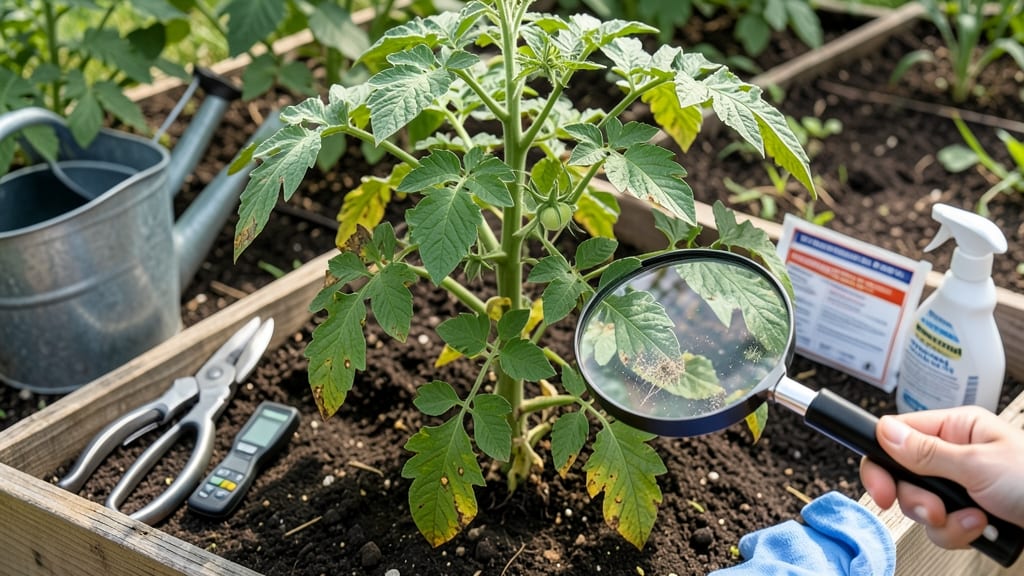
Diagnosing Tomato Leaf Problems: Visual Guide to Spot Diseases Early

Vegetables

Diagnosing Tomato Leaf Problems: Visual Guide to Spot Diseases Early

Diagnosing leaf problems in your tomato plants is like reading a secret code—and those spots, curls, and yellow patches are the clues. 🌱 They’re never saying "I’m fine."

I’ve spent years translating tomato plant SOS signals, and the right diagnosis means the difference between a 50-pound harvest and a sad, wilted bush by July. Start by checking the leaf surface: powdery white? That’s likely powdery mildew. Yellowing between veins? Probably nutrient issues.

Tiny holes? Bugs. The key is acting fast—most problems spread within 48 hours if you ignore them. I’ll walk you through the visual clues, what’s really causing them, and exactly how to fix them without harsh chemicals.

What you’ll get is a plant that looks healthy from the ground up, with thicker stems and darker green leaves by next week. The best part? These fixes work for container tomatoes, raised beds, and in-ground gardens alike—no matter where your plants live.

We’ll also cover the 3 most common misdiagnoses that waste time and money. Let’s get those leaves talking again—properly this time.

Root Causes Behind Leaf Troubles

Tomato leaves don’t just wilt or spot out of nowhere—they’re sending you clear signals about what’s gone wrong. Understanding the why behind these issues is the first step to fixing them.

Below, we break down the most common culprits, from hidden pests to environmental stressors, with the science that explains their damage.

Tomatoes thrive in a narrow comfort zone—when conditions stray too far from ideal, leaves react fast. These issues are often preventable with simple adjustments.

  • Extreme Heat or Cold: Tomatoes prefer 70–85°F (21–29°C). Heat stress causes leaf scorch (brown, crispy edges) or sunscald (white/yellow patches), while cold snaps trigger chilling injury (purple-black spots, stunted growth). Why? High temps disrupt photosynthesis, while cold damages cell membranes, blocking nutrient flow.
  • Water Overload or Drought:
    • Overwatering: Soggy soil cuts off oxygen, leading to root rot (yellow leaves, foul smell). Fungi like Pythium exploit this, clogging roots.
    • Underwatering: Leaves curl inward (to conserve moisture), turn leathery or pale, and may develop necrotic spots (dead tissue) from dehydration stress.
  • Poor Airflow: Humid, stagnant air (common in greenhouses or dense plantings) traps pathogens and pests. Why? High humidity slows evaporation, creating a film of moisture on leaves—perfect for fungal spores to germinate. Early blight and powdery mildew thrive here.

Pro Tip: 🌡️ Use a soil moisture meter to avoid guesswork, and space plants 18–24 inches apart for airflow. Mulch with straw to regulate soil temp and reduce evaporation.

Some invaders chew, others suck sap, and a few inject toxins—all leaving distinctive damage. Here’s how they strike:

Pest Damage Signs Why It Happens
Japanese Beetles 🐞 Irregular holes, skeletonized leaves (veins remain). Black, sticky frass (poop) on foliage. Adults strip chlorophyll for sap, while larvae feed on roots, starving the plant. Peak damage: June–August.
Spider Mites 🕷️ Tiny yellow stipples, webbing on undersides, leaves turn bronze. They pierce cells to suck sap, triggering oxidative stress (leaf discoloration). Drought weakens plants, making them ideal hosts.
Aphids 🐜 Curled, sticky leaves (from honeydew), black sooty mold (fungus growing on honeydew). They inject saliva toxins that distort growth and transmit viral diseases like cucumber mosaic virus.
Tomato Hornworms 🐛 Large, ragged holes; green droppings on leaves. Caterpillars consume 80% of leaf tissue in days. Why? They’re generalist feeders with no natural predators early in the season.

Pro Tip: 🔥 Handpick hornworms (they’re easy to spot—look for green with white stripes) and drop them in soapy water. For mites, blast leaves with water to dislodge them (they hate humidity!).

Most leaf diseases start microscopically—spores or bacteria hitch a ride on wind, tools, or even your shoes. Once they land in the right conditions, they explode.

  • Early Blight (Alternaria solani) 🍅💀:
    • Symptoms: Concentric target-like spots (brown with yellow rings) on lower leaves.
    • Why it spreads: The fungus overwinters in soil and splashes onto leaves via rain or irrigation. Warm (75–85°F), humid nights (>75% humidity) are ideal for spore germination.
  • Septoria Leaf Spot (Septoria lycopersici) 🌧️:
    • Symptoms: Small, round spots with feathery edges; leaves yellow and drop early.
    • Why it spreads: Spores survive in plant debris and require free water (4+ hours) to infect. Overhead watering is a major risk factor.
  • Bacterial Spot (Xanthomonas perforans) 🔬:
    • Symptoms: Water-soaked spots that turn tan/yellow with dark borders; leaves may crinkle.
    • Why it spreads: Bacteria enter through wounds (pruning cuts, hail) and thrive in warm, wet conditions (80–90°F). No cure—focus on prevention.

Pro Tip: 🎯 Rotate crops (don’t plant tomatoes in the same spot yearly) to starve soil-borne fungi. For bacterial spot, water at the base (never overhead) and remove infected leaves immediately (don’t compost them!).

Yellowing, curling, or purple-tinged leaves often scream nutrient starvation. Tomatoes are heavy feeders, and soil imbalances show up fast.

Fixing Tomato Leaf Troubles Fast

Tomato plants are tough, but their leaves can still throw a fit—whether from pests, diseases, or environmental stress. The good news? Most issues have simple fixes if you catch them early. Below, we’ve mapped out practical solutions for each common problem, plus prevention tips to keep your plants thriving.

Cause: Overwatering, poor airflow, or contaminated soil. Fix:

  • Prune infected leaves immediately with clean scissors (🔪), then disinfect them with rubbing alcohol.
  • Improve airflow by spacing plants 18–24 inches apart and removing lower leaves to reduce humidity near the soil.
  • Apply fungicide (copper-based or neem oil) every 7–10 days until the problem clears. For organic growers, a baking soda spray (1 tsp baking soda + 1 quart water + a drop of dish soap) works wonders.
  • Water at the base in the morning to let foliage dry quickly.

Prevent: Rotate crops yearly, sterilize tools, and avoid overhead watering.

Cause: Aphids, spider mites, or whiteflies sucking sap. Fix:

  • Blast them off with a strong spray of water (💦) to dislodge pests.
  • Introduce beneficial insects like ladybugs or lacewings—they’re natural predators!
  • Spray neem oil (mix 2 tbsp neem oil + 1 tsp dish soap + 1 quart water) or insecticidal soap weekly.
  • Use row covers early in the season to block pests before they arrive.

Prevent: Inspect new plants before transplanting and remove weeds (they harbor pests).

Cause: Lack of nitrogen, magnesium, or other key nutrients. Fix:

  • Yellow leaves? Add nitrogen-rich fertilizer (like fish emulsion or compost tea).
  • Brown edges? Boost potassium with banana peel tea or wood ash.
  • Pale or yellow veins? It’s likely magnesium deficiency—sprinkle Epsom salt (1 tbsp per gallon of water) at the base.
  • Slow-release granules (like 10-10-10) applied at planting time can prevent future issues.

Prevent: Test soil before planting and amend with compost or balanced fertilizer.

Cause: Too much sun, heat, or cold damage. Fix:

  • Sun scorch? Move plants to partial shade (especially in extreme heat) or use shade cloth (30–50% coverage).
  • Cold damage? Protect young plants with row covers or move containers to a sheltered spot.
  • Windburn? Create a windbreak with burlap or plant tall crops (like corn) as a barrier.

Prevent: Choose heat-tolerant varieties (like ‘Solar Fire’) and mulch to regulate soil temperature.

Cause: Herbicide drift or over-fertilization. Fix:

  • Rinse leaves with water to remove residue.
  • Move the plant to uncontaminated soil if possible.
  • Avoid fertilizing until new growth appears—let the plant recover first.

Prevent: Never spray herbicides near tomato plants and follow fertilizer instructions carefully.

  • Rotate crops every 3 years to prevent soil-borne diseases.
  • Mulch heavily (straw or grass clippings) to retain moisture and block weeds.
  • Harvest regularly—overripe tomatoes stress the plant and attract pests.

With these fixes, your tomato leaves will bounce back faster than you’d expect. Act fast, stay consistent, and soon you’ll be enjoying juicy, problem-free tomatoes! 🍅✨

Frequently asked questions

1

How do I tell if my tomato leaves have a fungal disease vs. a nutrient deficiency?

Check the leaf pattern: fungal diseases like early blight show concentric rings (target-like spots), while nutrient deficiencies create uniform yellowing (often starting between veins). Fungal spots may also have white or gray mold on undersides, while deficiencies leave crispy edges or purpling. Test soil pH—fungi thrive in 6.0-7.0 ranges, while deficiencies often occur in unbalanced soil.

2

Why are my tomato leaves curling but the plant still looks healthy?

Curling often signals pest activity (like spider mites) or environmental stress (heat or drought). Look for tiny webs (mites) or check soil moisture—underwatered plants curl to conserve water. If leaves feel rough or have stipples, it’s likely mites. Try blasting leaves with water first—mites hate humidity! If no pests appear, adjust watering or provide afternoon shade.

3

Can I save my tomato plant if the lower leaves are completely brown and crispy?

Yes! Remove the damaged leaves immediately (they won’t recover) and focus on the upper foliage. The plant can still produce fruit from new growth. Check for root rot (smell the soil)—if it’s foul, reduce watering. For crispiness, it’s likely heat stress or over-fertilization. Mulch with straw and water deeply at the base in the morning only.

4

What’s the fastest way to confirm if my tomato plant has bacterial spot?

Look for water-soaked spots that turn tan/yellow with dark borders—bacterial spot’s signature look. If leaves also crinkle, it’s likely bacterial. Confirm by checking for no mold growth (unlike fungi). There’s no cure, but you can prune infected leaves and water at the base only to prevent spread. Remove all plant debris after harvest.

5

Will neem oil work for both pests AND fungal diseases on tomato leaves?

Neem oil is a dual-purpose hero! It disrupts pests’ life cycles (aphids, mites) and has fungicidal properties when used correctly. Mix 2 tbsp neem oil + 1 tsp dish soap + 1 quart water, spray both leaf surfaces at dusk, and reapply every 7-10 days. For severe fungal issues, combine with copper fungicide for better results.

★★★★★4.8(4 reviews)
Categories Vegetables