
Trees
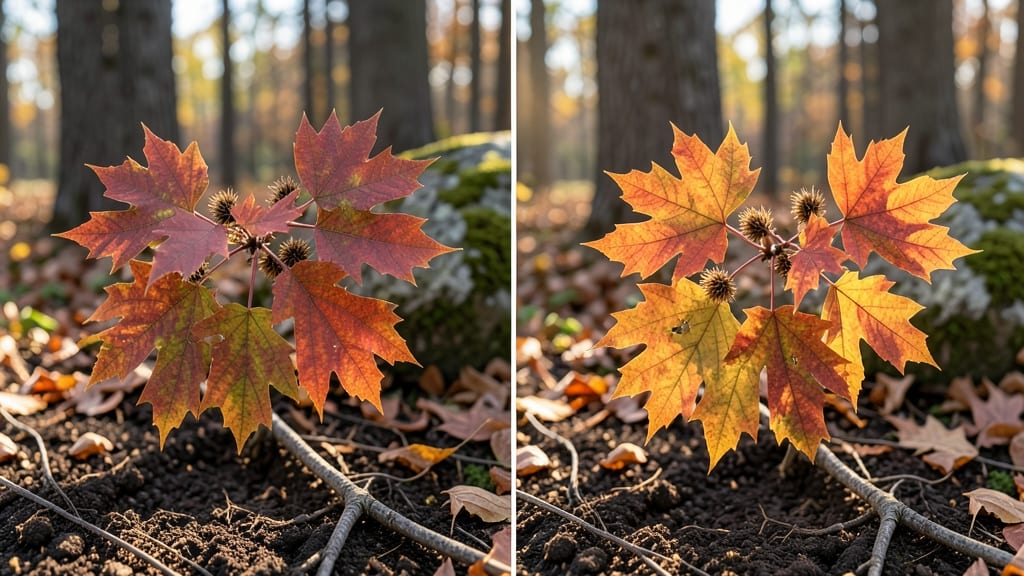
The sweet gum leaf vs. maple leaf debate is all about which bold foliage will steal the show in your garden. 🌿 While maples deliver classic lobed elegance, sweet gums bring dramatic star-shaped drama that turns heads in every season—especially when those leaves blush crimson in fall.
Both trees offer shade and structure, but their leaf shapes and seasonal color shifts create completely different moods in your landscape.
Sweet gum (Liquidambar) leaves are the showstoppers with their five- to seven-pointed star shapes, almost like nature's origami. They start bright green, morph into golden-yellow or fiery red in autumn, and sometimes even linger as dried, papery skeletons through winter.
Maples, on the other hand, offer refined lobed leaves that range from delicate Japanese varieties to bold sugar maple shapes, with fall colors spanning every shade from orange to purple.
For year-round impact, sweet gums win for dramatic seasonal change and winter interest, while maples provide timeless sophistication. Pair sweet gums with evergreens to highlight their color shifts, or plant maples near hydrangeas for a refined, layered look.
Both trees thrive in similar conditions, but your choice hinges on whether you want bold statement foliage or classic elegance.
Consider your garden's personality: sweet gums for high-impact drama, maples for refined beauty. Either choice will elevate your landscape, but they'll create entirely different moods—just like choosing between a bold red dress and a classic black one. Which vibe matches your outdoor space?
The first product explained
Meet the Liquidambar styraciflua—better known as the Sweet Gum Tree! 🌳✨ This standout star of the hardwood world is a year-round powerhouse with a bold personality, making it a top contender in the sweet gum leaf vs maple debate. Whether you're a landscape designer, a homeowner craving curb appeal, or just a nature lover, this tree delivers big on beauty and easy on maintenance.
📏 Specs & Features
Sweet Gum Trees are fast growers (1-2 feet per year under ideal conditions) and can reach heights of 40-70 feet with a spread of 30-50 feet. Their star attraction?
Those glossy, star-shaped leaves that turn a stunning mix of purple, orange, and red in fall—often outshining maple leaves in vibrancy. Plus, their spiky seed pods (don’t worry, they’re harmless!) add a unique texture to winter landscapes.
- Leaf Shape: 5-7 pointed "star" (unlike maple’s classic "hand" shape)
- Foliage Color: Deep green summer → fiery fall hues
- Growth Rate: Moderate to fast
- Sunlight Needs: Full sun to partial shade
- Soil Tolerance: Adaptable (clay, loam, or sandy soil)
- Drought Resistance: Moderate (once established)
🎯 Who’s It For?
Sweet Gum Trees are versatile crowd-pleasers, perfect for:
- Urban & Suburban Landscapes: Thrives in small yards or as a statement tree in city settings.
- Erosion Control: Deep roots stabilize soil on slopes.
- Wildlife Lovers: Attracts birds and squirrels (though those seed pods can be a nuisance! 🐿️).
- Low-Maintenance Gardeners: Few pests or diseases—just watch for anthracnose in wet climates.
💰 Price Point & Availability
Sweet Gum Trees are budget-friendly compared to prized maples, with prices varying by size:
| Size | Price Range (USD) |
|---|---|
| 1-3 gallon (small) | $40–$80 |
| 15-30 gallon (mature) | $150–$350 |
| Balled & Burlapped (large) | $400–$800+ |
Pro Tip: 💡 Spring or early fall is the best time to plant for optimal root growth!
The second product explained
If you're looking for a bold, fast-growing tree that delivers year-round visual impact—without the fuss of messy seeds or invasive roots—then the Sweet Gum (Liquidambar styraciflua) is your star player. 🌲✨ This Southern native isn’t just a pretty face; it’s a powerhouse of texture, color, and adaptability, making it a top contender in the "Sweet Gum Leaf vs Maple" debate.
🌿 Key Specs & Features
The Sweet Gum steals the show with its:
- Striking foliage: Star-shaped leaves (5–7 lobes) that turn spectacular shades of purple, orange, or red in fall—often earlier and more vibrant than maples.
- Year-round interest: Spiky, golf-ball-like seed pods add winter texture, while smooth, exfoliating bark offers winter charm.
- Sunlight flexibility: Thrives in full sun to partial shade, adapting to urban landscapes, parks, or rural settings.
- Soil tolerance: Handles clay, sand, or loam—even drought once established—though it prefers moist soil.
- Growth rate: Moderate to fast (2–3 feet per year), reaching 40–70 feet tall at maturity (dwarf varieties available).
- Wildlife magnet: Attracts birds and butterflies with its seeds and nectar-rich flowers.
🎯 Who’s It For?
This tree is a versatile MVP for:
- Homeowners who want low-maintenance drama—no pruning required for seed pods (though they can be messy in fall! 🍂).
- Urban planners seeking shade trees for streets or parks with limited space (choose compact cultivars like 'Dwarf Sweet Gum').
- Nature lovers who adore textural contrast in gardens (pair with hostas or ferns for a lush combo).
- Eco-conscious gardeners: Native to the U.S., it supports local ecosystems without invasive tendencies.
💰 Price Point & Availability
Sweet Gum trees are budget-friendly compared to prized maples, with prices varying by size and cultivar:
| Size | Price Range (USD) | Best For |
|---|---|---|
| 1–3 ft (container-grown) | $30–$70 | Small yards, new plantings |
| 4–6 ft (balled & burlapped) | $80–$150 | Immediate impact, larger landscapes |
| Dwarf cultivars (e.g., 'Rotundiloba') | $50–$120 | Urban gardens, containers |
Pro tip: 💡 Buy from local nurseries in fall for discounted bare-root options—and check for disease-resistant varieties like 'Worley Gold' for fewer pests.
⚠️ Watch Out For...
While Sweet Gum is a low-maintenance champ, it’s not perfect:
- Seed pods: Can be messy in fall (rake them up if you hate cleanup!).
- Aggressive roots: Avoid planting near sidewalks or foundations (though less invasive than willows).
- Vulnerability: Young trees may need mulch and water to establish roots in dry climates.
Head-to-head comparison
Ready to dive into the foliage face-off? Let’s break down the key differences between sweet gum leaves and maple leaves in a side-by-side comparison. Whether you're a gardener, landscaper, or just a nature enthusiast, this breakdown will help you decide which tree steals the spotlight in your yard! 🌿✨
🌳 1. Appearance & Aesthetic Appeal
First impressions matter, and these two trees deliver in very different ways:
- Sweet Gum (Liquidambar styraciflua):
- ✅ Star-shaped leaves (3-6" long) with 5-7 pointed lobes, giving them a dramatic, almost alien-like look.
- ✅ Color palette: Bright green in spring/summer, transitioning to spectacular shades of purple, red, and orange in fall. Some varieties even turn neon pink!
- ✅ Spiky seed pods (aka "gumballs") add texture and intrigue—but can be a nuisance if they litter your lawn. 🌟
- Maple (Acer spp.):
- ✅ Classic lobed leaves (3-6" long) with 3-5 pointed tips, offering a timeless, elegant silhouette.
- ✅ Color palette: Vibrant green in spring/summer, then deep reds, oranges, and yellows in fall. Some varieties (like Japanese maples) have lace-like foliage or purple-black leaves.
- ✅ Smooth bark (especially in mature trees) adds winter interest, while samaras (helicopter seeds) are a fun bonus. 🍁
Winner for drama? Sweet gum takes the crown for uniqueness, while maple wins for classic elegance. Choose based on your style!
🌿 2. Seasonal Performance
How do these trees hold up across the seasons? Let’s compare:
| Sweet Gum | Maple | |
|---|---|---|
| Spring | Moderate growth; leaves emerge later than maple (due to slower sap flow). | Early leaf-out; fast growth in spring. Some varieties (like Norway maple) can shade out other plants. 🌱 |
| Summer | Drought-tolerant once established; glossy green leaves stay vibrant. | Requires consistent moisture (especially Japanese maples); some varieties (like sugar maple) are high-maintenance. |
| Fall | Longer-lasting color (weeks longer than maple in many climates). Purple-red hues are a showstopper! 🍂 | Stunning but shorter peak color (typically 2-3 weeks). Sugar maple is iconic, but red maple fades faster. |
| Winter | Deciduous; bare branches can look sparse (unless planted with evergreens). | Some varieties (like Amur maple) have orange-red stems for winter interest. Sugar maple loses leaves completely. |
Pro tip: 💡 If you love fall color, sweet gum outperforms most maples in duration. For year-round interest, pair a maple with an evergreen!
🌱 3. Growth Habit & Size
Space planning is key! Here’s how these trees mature:
- Sweet Gum:
- 📏 Height: 50–75 ft tall (can reach 100 ft in ideal conditions).
- 📏 Spread: 30–50 ft wide; pyramidal when young, spreading with age.
- 🌱 Growth rate: Moderate to fast (1–2 ft per year).
- 🌳 Best for: Large yards, parks, or as a specimen tree in open spaces.
- Maple:
- 📏 Height: Varies widely:
- Sugar maple: 40–70 ft
- Japanese maple: 15–25 ft (dwarf varieties exist!)
- Norway maple: 40–60 ft
- 📏 Spread: 30–50 ft (wider than height in some cases, like Norway maple).
- 🌱 Growth rate: Slow to moderate (Japanese maples grow very slowly).
- 🌳 Best for: Small gardens (dwarf varieties), urban landscapes, or as a shade tree.
- 📏 Height: Varies widely:
Winner for small spaces? Japanese maple is the clear choice. For bold statements, sweet gum or sugar maple deliver.
💰 4. Cost & Maintenance
Your wallet (and lawnmower) will thank you for knowing these details:
| Sweet Gum | Maple | |||||||||
|---|---|---|---|---|---|---|---|---|---|---|
| Price (Average) | $40–$100 for a 5-gallon container; larger trees can cost $200–$500+. | $50–$200 for a 5-gallon container (Japanese maples are pricier: $100–$300+). Dwarf varieties can exceed $500. | ||||||||
| Planting Cost | Lower upfront cost; fewer specialty varieties to choose from. |
Which one should you choose?So, which bold beauty takes the crown in your garden or landscape? The choice between sweet gum leaf and maple depends on your priorities—whether it’s dramatic foliage, low-maintenance charm, or year-round interest. Let’s break it down by scenario so you can confidently pick your winner! 🌿✨ 🌳 Pick Sweet Gum Leaf If...
🍁 Pick Maple If...
🏆 Final Verdict: Who Wins?There’s no one-size-fits-all answer—it’s all about your vision! Use this quick guide:
Still torn? Why not plant both? Pair a sweet gum as a focal point with a maple for soft contrast—your landscape will thank you! 🌈🌿 |