
Pruning
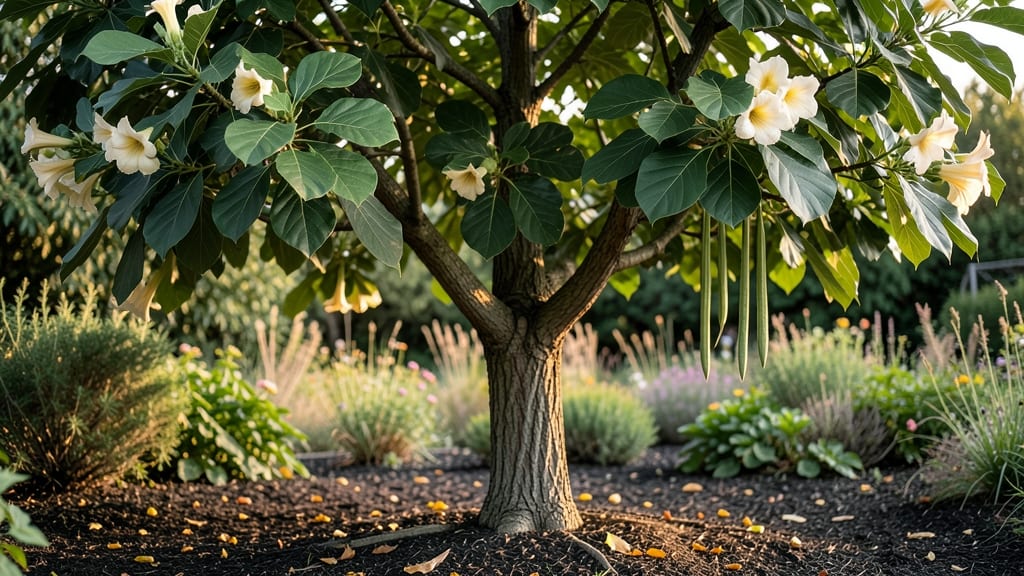
Your trumpet leaf tree could be the star of your landscape year-round—if you prune it right. ✂️ I’ve learned the hard way that skipping this step leads to leggy branches and sparse foliage, but the right cuts unlock that lush, tropical look we all crave.
The key is timing: late winter or early spring, just before new growth kicks in.
You’ll need sharp pruning shears, gloves, and a clear day to see what you’re doing. Focus on removing dead or crossing branches first—those are the easy wins. Then, cut back overgrown stems by about a third to encourage bushier growth.
Think of it like giving your tree a haircut: less is more, and patience pays off.
What you’re aiming for is a balanced shape with sunlight reaching all the way to the center. Those vibrant trumpet-shaped leaves will start popping in just a few weeks, and the tree will reward you with year-round greenery that turns heads.
The best part? Proper pruning also keeps pests at bay by improving airflow.
Works for both tropical climates and milder zones with winter protection. Even in colder areas, a well-pruned trumpet leaf tree can handle 10-15°F with the right care. Let’s get those branches looking their best!
📚 In This Guide
- What you need
- Instructions
- Tips and common mistakes
- Wrapping up and next steps
What you need
- ● Pruning shears: Bypass pruners (sharp, clean) for small branches (1/4"–3/4" diameter). Must be sterilized with rubbing alcohol to prevent disease spread.
- ● Loppers: 1 pair (for branches 3/4"–2" in diameter). Look for ratcheting or bypass types for ease.
- ● Pruning saw: 1 handheld saw (for thicker branches, 2"+). A bow saw or pruning saw with a curved blade works best.
- ● Gloves: Heavy-duty gardening gloves (cut-resistant, like mechanics gloves) to protect hands from thorns and sap.
- ● Disinfectant: 70% isopropyl alcohol or a 10% bleach solution (1 part bleach to 9 parts water) to sterilize tools between cuts.
- ● Trash bags or bucket: 1–2 large bags/bucket for collecting pruned branches and debris.
- ○ Ladder (optional but helpful): Extendable ladder (16–20 ft) if the tree is tall (6+ ft). Safety first! Use a stable, 3-sided ladder and have a spotter.
- ● Hand pruners: Compact bypass pruners for fine-tuning small twigs.
- ● Rubbing alcohol wipes: For quick tool sterilization on the go.
- ● Sealing wax: Tree wound sealant (like Tanglefoot Tree Wound Pruning Sealer) to protect large cuts (controversial—skip if unsure!).
- ● Notebook & pen: To jot down pruning notes (e.g., branch locations, growth patterns).
- ● Safety glasses: To shield eyes from debris, especially when using a saw.
- ○ Tree growth regulator: Optional fertilizer (like fish emulsion) to boost recovery post-pruning.
How to prune a trumpet leaf tree for lush, year-long foliage
Here's the pruning method I use to keep trumpet leaf trees (Cryptocarya massoia) thriving with vibrant leaves all year.
✂️ Step 1: Time Your Pruning for Optimal Growth
Prune your trumpet leaf tree in late winter or early spring before new growth begins. This timing ensures you remove dead or weak branches while encouraging fresh, vigorous foliage to emerge. Avoid pruning during fall—new growth won’t harden off before winter, making the tree vulnerable to cold damage.
I always check for bud swell (tiny bumps on branches) as my signal to prune. These buds indicate the tree is preparing for spring growth, so cutting back now won’t harm the plant. If you miss this window, wait until early summer, but expect slightly less dramatic regrowth.
✂️ Step 2: Remove Dead, Diseased, or Crossing Branches First
Start by inspecting the tree for dead branches—they’ll snap easily when bent or appear gray/brown instead of green. Use clean, sharp pruning shears to cut these back to the main trunk or a healthy lateral branch. This step improves airflow and prevents disease from spreading to healthy wood.
Next, look for branches rubbing against each other or growing inward. These crossing branches compete for sunlight and nutrients, weakening the tree. Remove the smaller of the two branches at its base. I like to step back every few cuts to visualize the tree’s shape—this helps me spot hidden problem branches.
✂️ Step 3: Thin the Canopy for Light Penetration
Trumpet leaf trees thrive with dappled sunlight, but dense canopies block light from reaching lower branches. Selectively remove 10-20% of the tree’s foliage by cutting back branches that are growing too thickly. Focus on branches that are thinner than a pencil—these are easier to replace and won’t leave large gaps.
When thinning, make cuts just above a leaf node (the bump where leaves attach) to encourage outward growth. Avoid cutting into old wood—new growth will emerge from the node, keeping the tree full. If you’re unsure where to cut, trace the branch back to its origin and trim just beyond the next outward-facing bud.
✂️ Step 4: Shape for Balance and Airflow
Step back and assess the tree’s overall shape. Trumpet leaf trees have a natural, slightly weeping habit, so I aim to maintain a slightly rounded silhouette while keeping the center open. Cut back any branches that are growing too upright or crowded toward the center—they’ll steal light and energy from the rest of the tree.
For larger branches (thicker than your thumb), use pruning saws to make clean cuts at a 45-degree angle about ¼ inch above a bud or lateral branch. Smoother cuts heal faster and reduce the risk of disease. Wipe your tools with rubbing alcohol between cuts to prevent spreading sap-borne infections.
🌿 Step 5: Clean Up and Monitor Recovery
After pruning, rake up all clippings and debris from the base of the tree. Leaving these behind can harbor pests or fungi, especially in humid climates. Dispose of diseased branches immediately—don’t compost them, as pathogens can survive and reinfect your garden.
Water the tree deeply after pruning to help it recover. You’ll see new growth within 4-6 weeks if conditions are right. If the tree looks stressed (yellowing leaves, wilting), it may need more frequent watering or protection from direct afternoon sun while it recovers. Keep an eye out for suckers (shoots growing from the base)—remove them to redirect energy to the main structure.
Tips & tricks for pruning a trumpet leaf tree
These simple but game-changing tricks will help you achieve that perfect balance between maintenance and growth for your trumpet leaf tree.
Timing Secret: If you're unsure about the exact timing in late winter or early spring, use the bud swell as your guide. These tiny bumps appear when the tree is ready for pruning. I've found that checking branches around mid-February gives me a good window to spot bud swell before new growth starts. This is especially helpful in regions with unpredictable weather patterns.
Tool Technique: When cutting larger branches (thicker than your thumb), make sure your pruning saw is sharp and clean. A dull blade can crush the wood fibers, which slows healing and invites disease. I like to make a 45-degree angle cut about ¼ inch above a bud—this creates a natural shield that protects the cut from rain. Always wipe your tools with rubbing alcohol between cuts to prevent spreading sap-borne infections.
Visual Cue for Canopy Thinning: When thinning the canopy in Step 3, imagine you're looking through the tree at the sky. You should be able to see dappled sunlight reaching the ground through the branches. For branches thinner than a pencil, focus on removing those that are growing too densely—these are the ones that will regrow easily and maintain the tree's shape. I typically remove about 15% of the foliage during this step to maintain that perfect balance.
Recovery Strategy: After pruning, don't just water the tree—give it a deep soak. I use a hose with a gentle spray attachment to water the root zone thoroughly. This helps the tree recover faster and encourages strong new growth. Watch for new shoots within 4-6 weeks as a sign that your pruning was successful. If you notice yellowing leaves or wilting, it might be a sign the tree needs more frequent watering or protection from harsh afternoon sun during its recovery period.
Pro Tips for Trumpet Leaf Tree
- These simple but game-changing tricks will help you achieve that perfect balance between maintenance and growth for your trumpet leaf tree.
- Timing Secret: If you're unsure about the exact timing in late winter or early spring, use the bud swell as your guide.
- Tool Technique: When cutting larger branches (thicker than your thumb), make sure your pruning saw is sharp and clean.
Frequently asked questions
When is the best time to prune a trumpet leaf tree?
The ideal time is late winter or early spring, just before new growth begins. This timing minimizes stress on the tree and encourages lush, vibrant foliage. Avoid heavy pruning in summer or fall, as it can disrupt the tree’s natural cycle. Pro tip: If you must prune outside this window, do light shaping—never more than 25% of the canopy at once.
How often should I prune my trumpet leaf tree?
Light maintenance pruning (removing dead or overgrown branches) can be done annually. For structural shaping, prune every 2–3 years. Over-pruning weakens the tree, so focus on selective cuts to maintain airflow and sunlight penetration. Think of it like a haircut—regular but not extreme!
Can I prune a trumpet leaf tree too much?
Over-pruning stresses the tree, leading to stunted growth, disease susceptibility, or even death. Stick to no more than 25% of the canopy per year. If you’ve already trimmed too aggressively, reduce future cuts and fertilize to help recovery. Signs of over-pruning: Yellowing leaves, sparse regrowth, or weak stems.
What if my trumpet leaf tree isn’t growing after pruning?
Slow growth could mean poor soil, lack of nutrients, or root damage. Check these first:
- Soil health: Amend with compost or organic matter.
- Watering: Ensure consistent moisture (but avoid soggy roots).
- Light exposure: Trumpet leaf trees thrive in partial shade—too much sun can scorch.
- Pests/disease: Inspect for aphids, scale, or fungal spots.
Are there alternatives to pruning for shaping my trumpet leaf tree?
If pruning feels too invasive, try these gentler methods:
- Pinching: Lightly snip new growth tips to encourage bushier growth (best for young trees).
- Thinning: Remove only the most obstructive branches to improve airflow.
- Support structures: Use stakes or cages to guide growth naturally.
Wrapping up and next steps
The trumpet leaf tree is a stunning addition to any garden, and with the right pruning techniques, you can keep it thriving year-round! 🌿 By following the steps outlined—timing, tools, and techniques—you’ll encourage vibrant growth, better airflow, and even more beautiful blooms.
Remember, patience and consistency are key, so don’t rush the process.
Now that you’re armed with knowledge, go ahead and give your trumpet leaf tree the care it deserves. Grab your pruners, step outside, and enjoy the rewarding experience of nurturing this magnificent plant. Happy pruning! 🌟