
Aphids
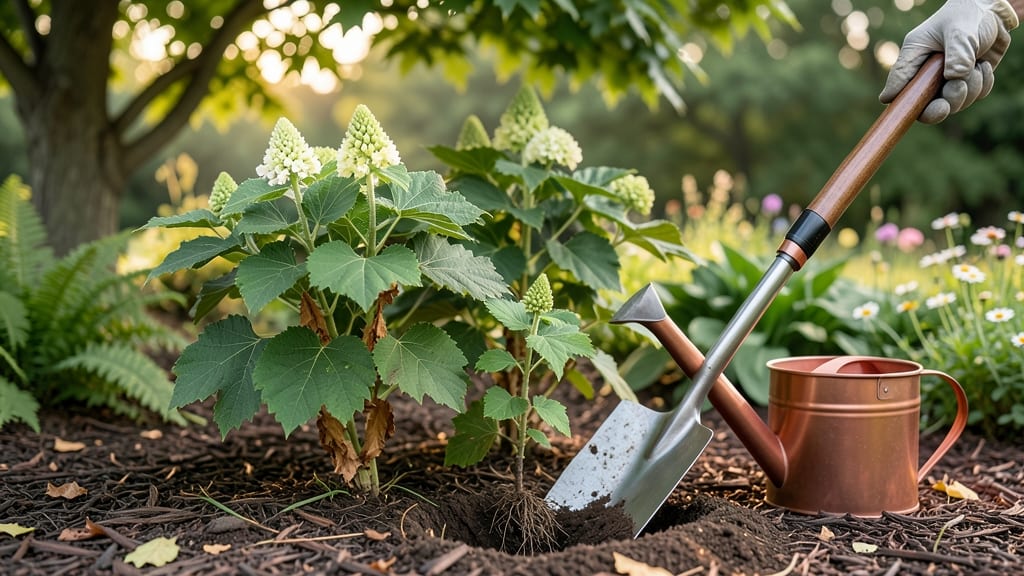
Planting oakleaf hydrangeas transforms your garden into a year-round foliage show with almost no pruning work. 🌿 The secret lies in their adaptability—these shrubs thrive in partial shade, handle poor soil better than most, and put on a spectacular fall color display that outshines any other hydrangea.
My first oakleaf hydrangea started as a struggling nursery plant, but after the right planting spot and a little patience, it became the star of my shade garden.
You’ll need a spot with morning sun and afternoon shade, well-draining soil (even rocky or clay works), and space for them to spread 6-8 feet wide over time.
The planting process itself is simple: dig a hole twice as wide as the root ball, mix in compost, and water deeply before setting the plant. Oakleaf hydrangeas reward minimal care—just mulch around the base and water when the top inch of soil feels dry.
What makes them special is how they change with the seasons: spring brings lush green leaves, summer offers delicate white blooms, and fall delivers fiery reds and purples.
Unlike other hydrangeas, they don’t need heavy pruning—just a light cleanup in late winter to shape them. Once established, they’re drought-tolerant and resist pests better than most shrubs.
Perfect for beginners who want low-maintenance beauty or experienced gardeners looking to fill tricky spots. The key is patience—oakleaf hydrangeas take 2-3 years to reach their full glory, but the wait is worth every dramatic foliage shift. Let’s get yours planted right!
📚 In This Guide
- What you need
- Instructions
- Tips and common mistakes
- Wrapping up and next steps
What you need
- ● Oakleaf Hydrangea plants (3–5 gallon containers, 2–3 plants for full impact)
- ● Well-draining potting mix (or native soil amended with compost—3 parts soil, 1 part compost)
- ● Organic mulch (2–3 inches of shredded bark or pine needles)
- ● Slow-release fertilizer (balanced 10-10-10 or hydrangea-specific)
- ● Watering can or hose with gentle spray nozzle
- ● Garden trowel or spade (for digging)
- ● Gloves (to keep hands clean and protected)
- ● Pruning shears (sterilized, for minimal shaping)
- ● Measuring tape or ruler (to space plants 3–5 feet apart)
- ○ Garden stakes or cages (optional, for support as they grow)
- ● A sunny to partially shaded spot (6+ hours of light for best blooms)
- ● Well-draining soil (Oakleaf Hydrangeas hate soggy roots!)
- ● Patience (they grow slow but steady—think long-term payoff!)
- ● Epsom salt (for vibrant foliage—mix 1 tbsp per gallon of water monthly)
- ● Aluminum sulfate or liquid lime (if you want to tweak bloom color)
- ● Drip irrigation system (for consistent moisture)
- ● Decorative rocks or pebbles (to enhance mulch and aesthetics)
Step-by-step instructions for planting oakleaf hydrangea
Here's how I plant these showstopping shrubs for vibrant, low-maintenance foliage that steals the show year-round.
🌱 Step 1: Choose the Perfect Planting Spot
Oakleaf hydrangeas thrive in partial shade to full sun, but the key is morning sun and afternoon shade in hotter climates. I always scout the site first: look for areas where leaves stay cool in summer afternoons but get 4-6 hours of direct light before noon. The foliage's fiery fall colors develop best with this balance.
Check soil drainage by digging a 12-inch deep hole and filling it with water. If it drains in under an hour, the site's perfect. If water pools after 2 hours, amend the soil with 3-4 inches of compost to improve drainage. Oakleaf hydrangeas hate soggy roots but love rich, moist soil.
🪴 Step 2: Dig and Prepare the Planting Hole
Dig a hole twice as wide as the root ball but only as deep—planting too deep suffocates the roots. I use a garden fork to loosen the soil at the bottom of the hole, creating space for roots to spread. Mix the excavated soil with half a cup of bone meal and 1 cup of compost to give the plant a nutrient boost.
Gently remove the hydrangea from its container and loosen any circling roots with your fingers. This encourages outward growth rather than root-bound circles. Place the plant in the hole so the top of the root ball sits 1 inch above ground level. The plant's natural growth will settle it properly over time.
💧 Step 3: Backfill and Water Thoroughly
Fill the hole with the amended soil mixture, pressing gently but not compacting. I like to add a 2-inch layer of mulch on top, keeping it 3 inches away from the stem to prevent rot. Water deeply until the soil 6 inches down feels saturated. You'll know it's right when water runs out the bottom of the hole.
Let the water absorb for 30 minutes, then water again. This ensures the roots make full contact with the soil. Oakleaf hydrangeas establish best with consistent moisture during their first year. After planting, I check soil moisture weekly—if the top 2 inches feel dry, it's time to water.
☀️ Step 4: Stake and Protect Young Plants
If your hydrangea has tall stems or is in a windy area, insert a 5-foot stake next to the plant and tie the main stems loosely with soft plant ties. This prevents flopping without restricting growth. I always use 3-4 ties spaced evenly up the stem—too few can cause damage, but too many restrict airflow.
For the first 2-3 weeks, protect young plants from harsh afternoon sun with 50% shade cloth if temperatures exceed 90°F. Watch for wilting—if leaves droop by midday, it's a sign the plant needs more shade. Oakleaf hydrangeas are tough once established, but young plants need gentle care to avoid transplant shock.
⏰ Step 5: Schedule First Pruning and Fertilization
Wait until late winter or early spring before pruning—this is when the plant's energy is focused on new growth. Remove any dead or crossing branches first, then cut back the remaining stems by one-third to encourage bushier growth. I always prune just above a leaf bud or outward-facing branch to maintain the plant's natural shape.
Apply a balanced 10-10-10 fertilizer in early spring, following package instructions. Oakleaf hydrangeas don't need heavy feeding, but a light boost in spring ensures vibrant foliage. Avoid fertilizing in fall—it encourages tender new growth that won't survive winter frost.
Tips & tricks for perfect oakleaf hydrangea planting
Between us, planting these beauties right means your oakleaf hydrangea will reward you with stunning foliage for years. Here's what nobody tells you about making this process foolproof.
Site Selection Secret: The 4-6 hours of morning sun is non-negotiable for those signature fall colors, but here's the trick: if your area gets intense afternoon sun, consider planting near a structure or taller plants that will naturally provide shade. I've seen oakleaf hydrangeas planted against north-facing walls thrive when they'd wilt in open afternoon sun. The key is keeping those leaves cool after noon.
Root Health Rescue: If your soil test shows poor drainage (water still present after 2 hours), don't just add compost—mix in 20% perlite or coarse sand to the amended soil. This creates those tiny air pockets roots need while still maintaining moisture. I've saved several plants from root rot by making this adjustment during planting. The 1-inch above-ground level for the root ball is critical too—any deeper and you'll suffocate the plant.
Watering Wisdom: That 30-minute absorption period after initial watering is your chance to check root contact. Press your finger 2 inches down—if it feels dry, gently loosen the soil around the edges and water again. Oakleaf hydrangeas establish best when the soil stays consistently moist but never soggy. I set a reminder to check soil moisture weekly during the first year, especially during heatwaves. A simple moisture meter makes this foolproof.
Staking Strategy: For those 5-foot stakes, I recommend using galvanized metal stakes rather than wooden ones—they won't rot and provide better support. When tying with soft plant ties, leave just enough room to slide your finger between the tie and stem. Too tight restricts growth, too loose won't prevent flopping. I always make a point to check these ties monthly during the growing season to ensure they're still doing their job.
Pro Tips for Planting Oakleaf Hydrangea
- Between us, planting these beauties right means your oakleaf hydrangea will reward you with stunning foliage for years.
- I've seen oakleaf hydrangeas planted against north-facing walls thrive when they'd wilt in open afternoon sun.
- Root Health Rescue: If your soil test shows poor drainage (water still present after 2 hours), don't just add compost—mix in 20% perlite or coarse sand to the amended soil.
Frequently asked questions
Got questions about planting and caring for your Oakleaf Hydrangea? Here are some of the most common ones—plus expert answers to help you grow stunning foliage with ease!
When is the best time to plant Oakleaf Hydrangea?
The ideal time to plant is in early spring or fall when temperatures are mild (50–70°F). This gives roots time to establish before extreme heat or cold. Pro tip: If planting in summer, water deeply daily for the first 2–3 weeks to reduce transplant shock!
How much sun does Oakleaf Hydrangea need?
These hydrangeas thrive in partial shade (morning sun + afternoon shade) but tolerate full sun in cooler climates. In hot zones, too much sun can scorch leaves. Watch for: Yellowing leaves = too much sun; pale green = too little light.
Why aren’t my Oakleaf Hydrangea blooms showing up?
Oakleaf Hydrangeas bloom on old wood, so prune after flowering (late summer/fall). If no blooms appear, check for:
- Over-pruning (cut back only dead/diseased wood).
- Poor soil (amend with compost for nutrients).
- Stress (ensure consistent watering and mulch).
Can Oakleaf Hydrangea survive winter in cold climates?
Yes! They’re hardy to USDA Zones 5–9. In colder areas, mulch heavily (3–4 inches) around the base in late fall. Bonus: Their foliage turns stunning red/purple in winter—no pruning needed!
What’s a good alternative if I can’t grow Oakleaf Hydrangea?
Try these low-maintenance, shade-tolerant shrubs with similar drama:
- Dwarf Fothergilla (fragrant spring blooms, fiery fall color).
- Abelia (evergreen-like, blooms summer–fall).
- Pieris Japonica (glossy foliage, early spring flowers).
Wrapping up and next steps
Planting an oakleaf hydrangea is a rewarding way to add year-round beauty to your garden with minimal fuss! 🌿 Whether you're drawn to its vibrant fall foliage, fragrant blooms, or sturdy structure, this versatile shrub thrives with just the right care.
Now that you know the essentials—from soil prep to pruning—grab your gloves and get growing!
Ready to take the next step? Start by choosing a sunny spot in your yard and mark your planting zone. Then, head to your local nursery to pick out your oakleaf hydrangea—and soon, you’ll be enjoying its lush charm for seasons to come!