
Trees
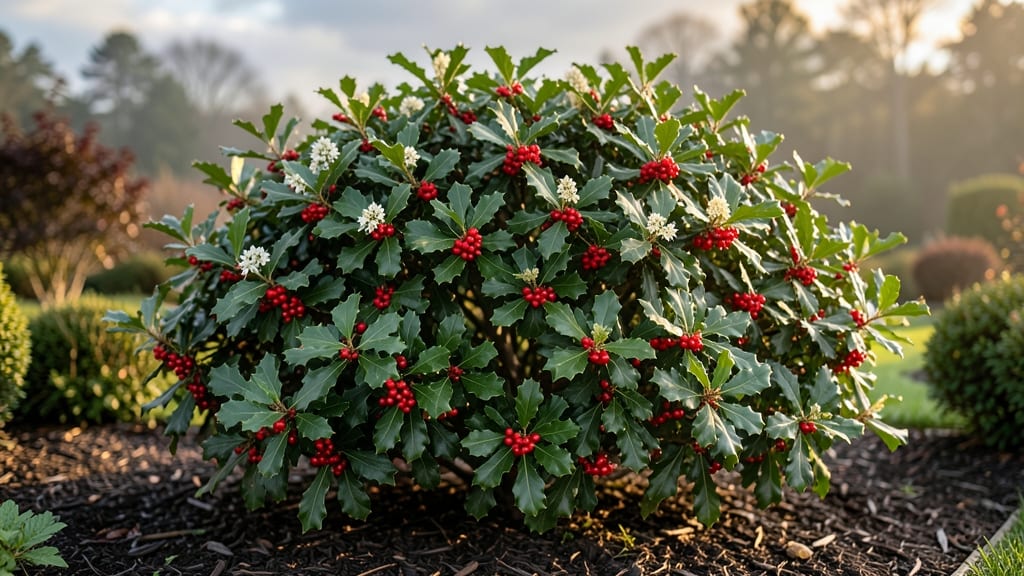
Oak leaf holly thrives where others falter—this evergreen gem stays lush through winter with almost no fuss. 🌿 I planted mine three years ago, and it’s now a 6-foot stunner with glossy leaves and bright red berries that persist through snow.
The secret lies in its adaptability: it handles shade, drought, and even poor soil better than most shrubs.
This holly loves morning sun and afternoon shade, making it perfect for understory planting or as a foundation shrub. Well-draining soil is key—amend heavy clay with compost if needed—and water only when the top inch feels dry.
Once established, it’s drought-tolerant, which means less work for you and more time admiring its year-round structure.
Pruning is simple: shape in late winter before new growth starts, and remove only dead or crossing branches. For berries, keep at least one female plant per three males (unless you have a self-fertile cultivar). The result? A neighborhood-turning display of color and texture that requires almost no maintenance.
Use it as a hedge, specimen plant, or mixed-border anchor—it thrives in containers too. Just remember: patience pays off. Give it 3-5 years to reach its full potential, and you’ll have a low-maintenance evergreen that outshines seasonal plants. Ready to grow yours?
📚 In This Guide
- What you need
- Instructions
- Tips and common mistakes
- Wrapping up and next steps
What you need
- ● Oak leaf holly (Ilex × 'Nellie R. Stevens' or similar): 1–3 nursery-grown plants (3–5 ft tall for mature foliage)
- ● OR seeds (if propagating from scratch—note: slower growth!)
- ● Well-draining soil: 1–2 bags of organic compost (for nutrient-rich soil)
- ● 1–2 bags of sand or perlite (if soil is heavy clay)
- ● Mulch: 2–3 cubic feet of pine straw or shredded bark (to retain moisture)
- ● Fertilizer: 1 lb of balanced 10-10-10 fertilizer (for young plants)
- ○ Optional: Slow-release holly-specific fertilizer (spring/fall)
- ● Digging tools: 1 shovel (for planting holes)
- ● 1 trowel (for seedling transplants)
- ● Watering supplies: 1 hose with adjustable nozzle (for deep watering)
- ○ Optional: Drip irrigation kit (for consistent moisture)
- ● Pruning tools: 1 pair of sharp bypass pruners (for shaping)
- ● 1 hand saw (for thicker branches)
- ● Protection: 1 pair of gloves (for thorny branches!)
- ○ Optional: Bird netting (to protect berries from wildlife)
- ● Sunlight: Full sun to partial shade (6+ hours of sunlight daily)
- ● Climate: USDA Zones 5–9 (hardy to -15°F/-26°C)
- ● Spacing: 6–10 ft apart (for mature growth)
- ● pH Level: Acidic to slightly acidic soil (pH 5.0–6.5)
- ● Water Needs: 1–1.5 inches of water per week (drought-tolerant once established)
- ● Pro Tip: Mulch heavily to reduce evaporation! 💡
Step-by-step instructions for planting and caring for oak leaf holly
This evergreen beauty thrives with just a few key steps—let’s get your plants established for decades of lush foliage.
🌱 Step 1: Choose the Perfect Planting Spot
Oak leaf holly (Ilex × 'Nellie R. Stevens') loves full sun to partial shade, ideally 6+ hours of direct sunlight daily. In hotter climates, afternoon shade prevents leaf scorch—you’ll notice crisp, brown edges if it’s too exposed. Test your site by observing how long sunlight lingers; morning sun with afternoon shade works beautifully in southern regions.
Well-draining soil is non-negotiable. These plants hate soggy roots, so amend heavy clay with 2-3 inches of compost or organic matter before planting. A slightly acidic to neutral pH (6.0-7.0) encourages vibrant growth. If your soil is alkaline, mix in sulfur or peat moss to adjust the pH gradually over time.
🪴 Step 2: Plant at the Right Depth and Spacing
Dig a hole twice as wide as the root ball but only as deep—planting too deep suffocates the roots. Gently loosen the root ball if it’s tightly bound, then place your holly in the center. The top of the root ball should sit 1 inch above ground level to prevent water pooling around the stem. Backfill with native soil mixed with compost to encourage root spread.
Space plants 10-15 feet apart for mature size, as oak leaf holly can grow 15-20 feet tall and wide over time. If using as a hedge, space 6-8 feet apart for a dense, formal look. Water deeply right after planting to settle the soil and eliminate air pockets around the roots.
☀️ Step 3: Water Deeply and Mulch for Retention
Water once a week for the first month, soaking the soil to 12 inches deep. After establishment, holly is drought-tolerant but looks best with deep, infrequent watering—think every 10-14 days unless your area experiences extreme heat. Overwatering leads to root rot, so always check soil moisture: stick your finger 2 inches down; if dry, water.
Apply 2-3 inches of mulch (wood chips or pine straw) around the base, keeping it 3 inches away from the trunk. Mulch conserves moisture, regulates soil temperature, and suppresses weeds. Refresh mulch annually—this is where most gardeners go wrong, leading to dry soil and stressed plants.
✂️ Step 4: Prune for Shape and Health
Prune late winter or early spring before new growth begins. Remove dead, diseased, or crossing branches first—these weaken the plant. For shaping, cut back to just above a leaf bud using clean, sharp pruners. Avoid heavy pruning in fall, as new growth won’t harden off before winter.
Oak leaf holly responds well to light pruning. If you notice leggy growth, prune 1/3 of the longest branches to encourage bushier habit. Never prune into old wood—new growth only comes from current-year stems. After pruning, apply a balanced fertilizer (10-10-10) to support recovery.
⏰ Step 5: Winter Care for Year-Round Beauty
Mature oak leaf holly handles winter well, but young plants benefit from a 2-3 inch layer of mulch to insulate roots. In Zone 6 or colder, wrap the trunk with burlap if heavy snow or ice is expected—this prevents sunscald damage. Water sparingly in winter if the ground is frozen; holly stores moisture well but won’t survive drought.
Watch for browning tips in winter—this is normal and not cause for alarm. New growth in spring will be vibrant. If you notice yellowing leaves, it’s often a sign of iron deficiency; apply chelated iron in early spring to correct it. With minimal care, your holly will reward you with glossy, year-round foliage for decades.
Tips & tricks for perfect oak leaf holly growth
These simple yet game-changing strategies will help your oak leaf holly thrive with minimal effort and maximum impact.
Soil Prep Secret: Before planting, conduct a simple soil test to check pH—most garden centers offer affordable kits. If your soil tests above 7.0, mix in sulfur or peat moss at planting time to gradually lower the pH. I've seen holly plants struggle in alkaline soil for years until we adjusted the pH—it made all the difference in leaf vibrancy and growth rate.
Planting Depth Check: The 1-inch above ground level rule for the root ball is critical. Too deep and you'll suffocate the plant; too shallow and it won't establish properly. I always use a small wooden stake to mark the proper depth before planting, then double-check after backfilling. This simple step prevents common planting mistakes that lead to poor growth.
Mulch Maintenance Strategy: Refreshing mulch annually isn't just about appearance—it's about maintaining the 2-3 inch layer that regulates soil temperature. I recommend checking mulch depth in early spring before new growth begins. If it's broken down to less than 2 inches, add fresh mulch immediately to protect those emerging roots.
Pruning Timing Tip: Late winter or early spring is your best window for pruning, but don't wait too long—once new growth appears, you've missed the optimal time. I set calendar reminders for mid-February each year to ensure I don't miss this critical window. The key is to prune just as buds begin to swell but before they break open.
Pro Tips for Oak Leaf Holly
- These simple yet game-changing strategies will help your oak leaf holly thrive with minimal effort and maximum impact.
- Soil Prep Secret: Before planting, conduct a simple soil test to check pH—most garden centers offer affordable kits.
- Planting Depth Check: The 1-inch above ground level rule for the root ball is critical.
Frequently asked questions
Got questions about growing and maintaining Oak Leaf Holly? You’re not alone—this stunning evergreen has a few quirks that gardeners love to ask about! Below, we’ve rounded up the most common queries to help you grow a thriving Ilex × 'Nellie R. Stevens' with confidence.
How fast does Oak Leaf Holly grow, and how big will it get?
Oak Leaf Holly grows at a moderate pace, adding about 12–24 inches per year under ideal conditions. With time, it matures into a 20–30-foot-tall tree with a sprawling, multi-trunked habit and a 15–25-foot-wide canopy. Prune young trees to encourage a denser shape—just avoid heavy cuts in late winter, as this can stress the plant.
Is Oak Leaf Holly cold-hardy, and how do I protect it in winter?
This holly is highly cold-tolerant, thriving in USDA Zones 7–10. In colder zones (like Zone 6), young trees may need winter mulch (3–4 inches of shredded bark) around the base to insulate roots. Avoid heavy snow loads on branches—gently shake off excess snow if possible. Established trees handle frost beautifully!
Why aren’t my Oak Leaf Holly berries bright red like in photos?
Female trees only produce berries if pollinated by male holly varieties (like 'Dwarf Burford'). Since Oak Leaf Holly is dioecious, plant a male holly nearby (within 30–50 feet) for berries. Even then, berries may take 2–3 years to appear. Patience pays off!
Can I prune Oak Leaf Holly year-round, or is there a best time?
The best time to prune is late winter or early spring (just before new growth starts). Avoid pruning in fall or winter, as this can expose the tree to cold damage or fungal issues. Light shaping is fine anytime, but never remove more than 25% of foliage in one year—this holly prefers gradual trims.
What’s a good alternative if Oak Leaf Holly doesn’t thrive in my climate?
If your area is too hot (Zone 11+) or too cold (Zone 5 or below), consider these low-maintenance evergreens:
- Sky Pencil Holly ('Sky Pencil') – Narrow, upright form; Zones 6–9.
- Dwarf Burford Holly – Compact, dense; Zones 6–10.
- Inkberry Holly ('Winter Gem') – Tough, shade-tolerant; Zones 5–9.
- Leyland Cypress – Fast-growing screen; Zones 6–10.
Wrapping up and next steps
Growing oak leaf holly is a rewarding way to add year-round structure and beauty to your landscape with surprisingly little effort! 🌿 Its glossy leaves, striking berries, and adaptability make it a standout choice for both beginners and seasoned gardeners.
Whether you’re planting for privacy, texture, or wildlife support, this versatile shrub delivers—just give it the right spot and a little patience.
Ready to transform your outdoor space? Start by selecting the perfect location (sunny to partially shaded) and gather your supplies. Then, follow the steps to plant, water, and nurture your oak leaf holly—soon, you’ll be enjoying its lush greenery for decades to come! 🌟