
Pruning
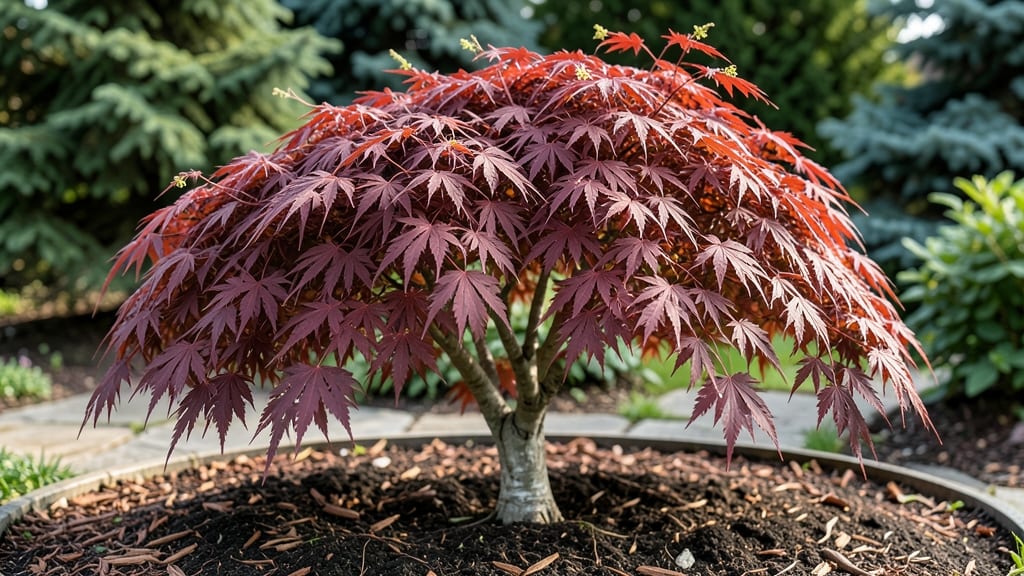
Your laceleaf weeping Japanese red maple tree deserves the same care you’d give a prized painting—gentle shaping preserves its delicate, cascading beauty. ✨ This variety (Acer palmatum 'Bloodgood') thrives when pruned to encourage its signature weeping habit, but too much cutting back turns it into a tangled mess.
The secret lies in strategic cuts that maintain its graceful silhouette while promoting vibrant foliage year-round.
Start with the right tools: sharp bypass pruners for clean cuts and a sturdy ladder if your tree’s branches reach higher than your shoulders. Prune in late winter or early spring before new growth begins—this timing prevents stress during the dormant season.
Focus on removing dead, crossing, or overcrowded branches first, then thin out the canopy to let light filter through those stunning laceleaf fronds.
What you’ll end up with is a tree that looks like it belongs in a botanical garden, not just your backyard. The deep red foliage stays lush longer, and the weeping branches create a natural focal point that’s perfect for small spaces.
Even better? Proper pruning extends its lifespan by decades, so you’ll enjoy its beauty for generations.
This method works for both young saplings and mature trees—just adjust the intensity. For established trees, limit pruning to no more than 25% of the canopy per year to avoid shock.
And here’s the best part: once you master the technique, your laceleaf maple will reward you with nearly year-round color, even in winter when its branches glow against a snowy backdrop.
📚 In This Guide
- What you need
- Instructions
- Tips and common mistakes
- Wrapping up and next steps
What you need
- ● Pruning shears: Sharp, bypass-style shears (for cuts under ½ inch thick). Recommended: Felco F-2 or similar.
- ● Loppers: Bypass or anvil-style (for branches ½–1½ inches thick). Look for ergonomic handles for comfort.
- ● Pruning saw: Curved-tooth saw (for branches 1½+ inches thick). Avoid cheap saws—they tear wood.
- ○ Hand pruners (optional):strong> For fine-tuning small branches (¼–½ inch). Great for detail work!
- ● Disposable gloves: Nitrile or leather (to protect against thorns and sap).
- ○ Tree wound dressing (optional): Pruning sealant (only for cuts larger than ½ inch—controversial but some swear by it!).
- ● Ladder or step stool: Sturdy, extendable (if your tree is over 6 feet tall). Safety first!
- ● Bucket or tarp: For collecting debris (keep your workspace clean!).
- ● Rag or paper towels: To clean tools between cuts (prevents sap buildup).
- ● Best timing: Prune in late winter or early spring (before buds swell) for minimal stress. Avoid heavy pruning in fall.
- ● Weather check: Choose a dry, overcast day (wet tools = slippage; direct sun = sap dripping everywhere).
- ● Safety gear: Eye protection (goggles) and closed-toe shoes (just in case!).
- ● Tool sharpening: Hone shears/saws before starting—dull tools crush branches, causing damage.
- ● Tree health check: Inspect for diseased or dead branches first. Remove those before shaping!
Instructions for pruning your laceleaf weeping Japanese red maple
Here's how I shape mine—keeping those iconic cascading branches elegant all year.
🪴 Step 1: Time Your Pruning for Optimal Growth
Prune your laceleaf weeping Japanese red maple in late winter or early spring before new growth begins. This timing ensures you're not removing next season's blooms or disrupting the tree's energy reserves. I wait until after the last frost but before buds swell—usually February to early March in most climates. Avoid pruning in fall, as late cuts can stimulate tender new growth that won't survive winter.
If you must prune in summer, do it after flowering but before July to prevent excessive late-season growth that won't harden off properly. You'll notice fresh, sticky sap when making cuts—this is normal and just means the tree is actively growing. Always use clean, sharp pruners to minimize sap oozing and potential disease entry.
✂️ Step 2: Remove Dead, Diseased, or Crossing Branches First
Start by inspecting the tree for dead branches—they'll be dry, brittle, and snap easily when bent. Next, look for diseased wood (discolored, oozing, or fungal growth) and crossing branches that rub together. These should be removed first, as they compromise the tree's health and structure. I make my cuts just outside the branch collar—that swollen area where the branch meets the trunk—to promote proper healing.
For larger branches, use three-step pruning: First make an undercut on the underside of the branch about 6 inches out from the trunk. Then make a top cut about 2 inches further out. Finally, remove the stub by cutting just outside the branch collar. This prevents tearing the bark. You'll see the branch's weight shift naturally when you cut correctly—no forcing needed.
☀️ Step 3: Thin the Canopy for Light Penetration
This is where the laceleaf's weeping habit comes into play. Focus on thinning branches from the inside out to improve airflow and light penetration. Remove up to 25% of the canopy in one session—never more, as this stresses the tree. Look for overcrowded branches growing toward the center and water sprouts (fast-growing, upright shoots). These compete with the graceful weeping form you want to maintain.
I target branches that are one-third the diameter of the trunk or smaller for removal. For larger branches, consider heading back (cutting just above a bud) instead of removing entirely. You'll know you've achieved good thinning when you can see light filtering through the canopy and the tree's silhouette looks balanced from all sides. Avoid "lion's tailing"—cutting back to a stub—unless you're intentionally shaping a specific branch.
🌿 Step 4: Shape the Weeping Habit
To enhance the weeping form, selectively prune upright-growing branches that disrupt the cascading effect. Aim to keep the outer branches longer than the inner ones, creating that elegant curtain effect. For branches growing too vertically, cut just above an outward-facing bud to encourage horizontal growth. You'll see new shoots emerge in the direction of the bud within 4-6 weeks—this is your signal the pruning worked.
Never remove more than one-third of a branch's length in one cut, as this can shock the tree. For dramatic shaping, spread cuts over 2-3 years. After pruning, step back and visualize the tree's silhouette—it should look balanced and harmonious, not hacked or lopsided. The laceleaf's vibrant red foliage will reward your efforts with year-round color, even in winter.
💧 Step 5: Clean Up and Protect the Tree
After pruning, sterilize your tools with rubbing alcohol to prevent spreading disease. Remove all pruned debris from the base of the tree and dispose of it properly—never leave branches on the ground where they can harbor pests. I also apply a wound sealant to larger cuts (over ½ inch in diameter) to reduce sap loss and potential infection, though smaller cuts don't need sealing.
Water the tree deeply after pruning to help it recover, especially if you've made significant cuts. Monitor the tree for new growth in spring—healthy shoots will be bright green and vigorous. If you notice yellowing leaves, wilting, or excessive sap, these could be signs of stress or disease. In that case, adjust your pruning approach for the next season. With proper care, your laceleaf weeping Japanese red maple will maintain its graceful form and stunning foliage for decades.
Tips & tricks for pruning your weeping Japanese maple
Here's what I've learned after years of shaping these stunning trees—these details make all the difference.
Timing is Everything: If you're unsure about the exact frost date in your area, check your local weather service or use a simple frost calendar. The window between last frost and bud swell is usually just 2-3 weeks, so don't wait until the last minute. I've seen trees stressed when pruned too late—buds start swelling around early March in most zones, so aim to finish pruning by mid-February. For summer pruning, mark your calendar for right after flowering but before July 1st. The tree's natural sap flow tells the story—when you see fresh, sticky sap, that's your cue the tree is actively growing and ready for shaping.
Branch Selection Strategy: In Step 2, when identifying crossing branches, look for those rubbing spots that create wounds—these are prime infection sites. I use a simple test: if two branches cross and create a "V" shape where they meet, one of them needs to go. For the three-step pruning on larger branches, I always make my undercut first—this prevents the bark from tearing when the branch falls. The weight shift you feel when cutting correctly is your confirmation you're doing it right. If you feel resistance, you're cutting too close to the trunk.
Canopy Thinning Visual: When thinning in Step 3, imagine you're looking at the tree through a window—you want to see light coming through. I step back frequently to check my progress, aiming for that "light dappling" effect through the branches. For water sprouts, they're easy to spot—they grow straight up like broccoli stalks and compete with your weeping form. These can be removed entirely, but always cut at the base to prevent regrowth from lower buds. The 25% canopy removal rule is non-negotiable—this tree is delicate and can't handle more stress than that.
Shape Maintenance Secret: For shaping in Step 4, I always look for those outward-facing buds when making cuts. These buds will grow in the direction you want new branches to go. The 4-6 week wait for new growth is worth it—you'll see fresh, bright green shoots emerging exactly where you cut. When spreading shaping over 2-3 years, I mark my progress with colored flags on the branches I've already worked on. This prevents over-pruning in any single area and helps me visualize the long-term shape I'm creating.
Pro Tips for Laceleaf Weeping Japanese Red Maple Tree
- Here's what I've learned after years of shaping these stunning trees—these details make all the difference.
- Timing is Everything: If you're unsure about the exact frost date in your area, check your local weather service or use a simple frost calendar.
- Branch Selection Strategy: In Step 2, when identifying crossing branches, look for those rubbing spots that create wounds—these are prime infection sites.
Frequently asked questions
Got questions about keeping your laceleaf weeping Japanese red maple stunning year-round? We’ve got answers!
Whether you’re a pruning pro or a curious newbie, these FAQs will help you maintain your tree’s elegant weeping form with confidence.
When is the best time to prune my laceleaf weeping Japanese red maple?
The ideal time is late winter to early spring (before buds swell) or summer after flowering. Avoid pruning in fall or winter when the tree is dormant—it’s more vulnerable to disease. For minor shaping, summer pruning works well, but heavy cuts should wait for dormancy to minimize stress.
How much can I trim without harming the tree?
Never remove more than 25% of the canopy in one season. Over-pruning weakens the tree and can lead to dieback. Focus on selective thinning to improve airflow and light penetration. If your tree looks sparse, prune lightly over 2-3 years instead of aggressively all at once.
What should I do if my laceleaf maple has dead or diseased branches?
Remove affected branches immediately using sterilized tools to prevent spread. Cut back to healthy wood (look for green tissue inside the branch). Dispose of debris in the trash—not your compost! If fungal issues persist, apply a copper fungicide as a precaution.
Can I shape my laceleaf maple into a more formal weeping form?
Use selective pruning to encourage a denser weeping habit—focus on trimming upright growth while preserving the graceful cascading branches. Avoid heavy topping (cutting back to a flat top), as this disrupts the tree’s natural beauty. Patience is key! It may take years to refine.
Will pruning affect my tree’s vibrant red fall colors?
Pruning after fall color fades (winter) won’t impact next year’s display. However, avoid heavy cuts in late summer—this can reduce sugar storage, which fuels fall foliage. Light pruning in early spring is safest for maintaining those stunning red leaves.
Wrapping up and next steps
The laceleaf weeping Japanese red maple is a stunning addition to any garden, offering year-round beauty with its delicate foliage and vibrant colors. With the right pruning techniques—like shaping in late winter and removing dead branches—you’ll keep its graceful form thriving for decades. 🌿
Ready to give your tree the care it deserves? Roll up your sleeves, grab your tools, and start pruning today! For even more expert tips, explore our advanced pruning guide or connect with local arborists to refine your skills.