
Pruning
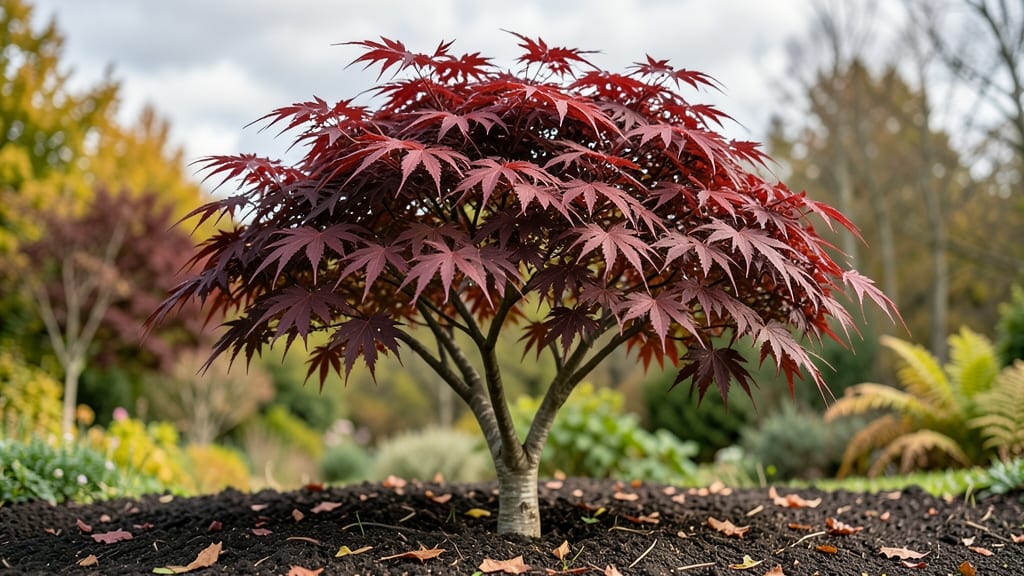
Your Japanese red leaf maple tree (Acer palmatum 'Atropurpureum') could transform your garden from ordinary to showstopping—if you prune it right. 🌿 The secret isn't just cutting branches; it's understanding how this tree's vibrant foliage responds to shape, light, and timing.
I've spent years perfecting the technique that keeps mine looking like a living painting all year, even through winter's dullest months.
The key starts with the right tools: sharp bypass pruners, rubbing alcohol for sterilization, and a ladder if your tree grows over 10 feet tall.
You'll want to prune in late winter or early spring before new growth begins, but don't skip summer shaping—it's when you can correct any winter damage while the tree's growth patterns are still active.
Most people make one critical mistake: they prune too late in the season, which stunts next year's color development.
What you'll end up with is a tree that stays compact, vibrant, and healthy through all four seasons. The red leaves deepen in fall, the branches maintain perfect symmetry, and you avoid the leggy, sparse look that plagues so many maples.
Even better, this technique works for both container-grown and in-ground specimens—no experience needed beyond basic gardening skills.
Whether you're dealing with a mature tree that's lost its shape or a young sapling you want to train, these pruning secrets apply. The best part? You'll notice the difference within just one growing season—no waiting years for transformation. Let's get those branches looking intentional!
📚 In This Guide
- What you need
- Instructions
- Tips and common mistakes
- Wrapping up and next steps
What you need
- ● Pruning shears: Bypass pruners (sharp, clean, and sterilized with rubbing alcohol to prevent disease). Recommended: Felco F-2 or Corona Tools.
- ● Loppers: For thicker branches (1–2 inches in diameter). Look for bypass-style loppers with a long handle (30+ inches) for reach.
- ○ Pruning saw: Optional but helpful for branches >2 inches thick. A curved-tooth saw minimizes tear-out.
- ● Gloves: Heavy-duty gardening gloves (cut-resistant, like Mechanix Wear) to protect hands from thorns and sap.
- ● Disposable pruning bags: 2–3 mesh bags (10–15 gallons) to collect clippings and debris.
- ● Ladder: Extender ladder (16–20 ft) with non-slip feet for tall trees. Safety first!
- ● Rubbing alcohol (70%+): Small bottle to sterilize tools between cuts.
- ○ Sealing wax or pruning paste: Optional for large cuts (>½ inch) to prevent disease entry.
- ● Best time to prune: Late winter/early spring (just before buds swell) or immediately after leaf drop in fall.
- ● Weather check: Choose a dry, calm day (no rain forecast for 24 hours). Avoid pruning in extreme heat or cold.
- ● Tree health assessment: Inspect for diseased or dead branches (they’ll snap easily). Remove these first.
- ● Safety gear: Sunglasses (to shield from sap), closed-toe shoes, and a long-sleeve shirt.
- ● Water & snacks: Pruning is hard work—stay hydrated! 💧
Step-by-step pruning guide for Japanese red leaf maple trees
Here’s how I keep my Japanese red leaf maple vibrant through every season—no matter the weather.
✂️ Step 1: Time Your Pruning for Optimal Growth
Prune your Japanese red leaf maple in late winter or early spring, just as new buds begin to swell. This timing ensures you remove dead growth while encouraging fresh, colorful foliage for spring and summer. Avoid pruning in fall or winter when the tree is dormant—it won’t respond well to cuts during colder months.
If you notice dead or damaged branches at other times, remove them immediately to prevent disease or pests from spreading. But for structured shaping, stick to the late winter/early spring window. You’ll see new leaves emerge within 4-6 weeks, signaling the tree is healing and growing strong.
✂️ Step 2: Use the Right Tools and Technique
Grab sharp, clean pruning shears (for small branches) and loppers (for thicker stems up to ½ inch in diameter). Disinfect your tools with rubbing alcohol before and after pruning to prevent bacterial or fungal infections. For branches thicker than ½ inch, use a pruning saw—never force shears or loppers, as this can tear the bark and damage the tree.
Make cuts just outside the branch collar (the swollen area where the branch meets the trunk). This ensures the tree seals the wound properly. Avoid leaving stubs—these invite rot and weaken the tree. Angle your cuts slightly away from the branch collar to help water run off, preventing moisture buildup that can cause decay.
✂️ Step 3: Remove Dead, Diseased, or Crossing Branches First
Start by identifying and removing dead, diseased, or damaged branches—these are the easiest to spot. Dead branches snap when bent; diseased ones may have discolored bark or oozing sap. Crossing branches (where two stems rub against each other) should also go first, as they create wounds and weak points. Cut these back to the branch collar to maintain the tree’s natural shape.
Next, look for water sprouts (fast-growing, vertical shoots) and suckers (shoots growing from the base). These compete with the main structure for nutrients. Trim them back to a bud or lateral branch to redirect the tree’s energy into stronger growth. You’ll notice the canopy opens up immediately, allowing more light to reach the inner branches.
✂️ Step 4: Shape for Balance and Airflow
Step back and assess the tree’s overall shape. Japanese red leaf maples thrive with an open, airy canopy—this prevents fungal issues and ensures even sunlight exposure. Focus on thinning out overcrowded branches by removing up to 25% of the smallest growth in the center. This improves airflow and reduces humidity, which is key for preventing leaf spot diseases.
For a more structured look, prune to maintain a natural, tiered shape—this highlights the tree’s stunning foliage. Avoid heavy pruning (never remove more than 25% of the canopy at once). If you’re unsure, prune conservatively and observe the tree’s response over the growing season. You’ll see the branches fill in with fresh, vibrant leaves by mid-summer, proving the cuts were beneficial.
⏰ Step 5: Finish with Aftercare for Strong Recovery
After pruning, water the tree deeply to help it recover from the stress of cutting. A slow, thorough soaking (about 10-15 gallons for a mature tree) encourages root growth and stabilizes the tree. Avoid fertilizing immediately—wait until new growth appears (usually 4-6 weeks later) to give the tree time to heal.
Monitor the pruning wounds for 3-4 weeks to ensure they’re sealing properly. Healthy wounds will darken and callus over time. If you notice oozing sap or discoloration, apply a wound dressing (like tree sealant) to protect the area. With proper care, your Japanese red leaf maple will reward you with bold, vibrant foliage all season long.
Tips & tricks for perfect Japanese red leaf maple pruning
These little-known tricks will help you transform your pruning routine into a game-changer for your tree's health and beauty.
Timing is Everything: The late winter/early spring window isn't just about avoiding dormancy—it's about catching the tree when it's ready to burst with new growth. I've seen dramatic differences when pruning just as buds begin to swell versus waiting until leaves appear. That 4-6 week window for new leaves to emerge? It's your confirmation that the tree is actively healing and growing strong. Watch for those first tiny buds to pop—this is your cue that the tree is ready for shaping.
Tool Precision Matters: I can't stress enough how important it is to use the right tool for each branch size. That ½ inch diameter cutoff isn't arbitrary—it's based on the physics of clean cuts. When you're using loppers on branches thicker than ½ inch, you risk crushing the bark instead of making a clean cut. For branches over that size, a pruning saw gives you the control to make precise cuts without damaging the tree. And always disinfect your tools—this simple step prevents spreading diseases between cuts.
Visual Cues for Perfect Cuts: When making your cuts, look for the branch collar—the swollen area where the branch meets the trunk. This isn't just a technical detail; it's the tree's natural healing mechanism. Cutting just outside this collar ensures the tree can seal the wound properly. For the angle, imagine a line slightly away from the branch collar—this helps water run off the cut, preventing moisture buildup that can lead to rot. The goal is to make the cut look like it was designed by the tree itself, not by human hands.
Aftercare Makes All the Difference: That deep watering isn't just about quenching thirst—it's about giving your tree the stability it needs after the stress of pruning. The 10-15 gallons recommendation is for mature trees, but even smaller trees benefit from thorough watering. And here's a pro tip: water in the morning so the tree can absorb moisture before the heat of the day. The 3-4 week wound monitoring period is your chance to catch any issues early. If you see oozing sap or unusual discoloration, a quick application of tree sealant can make all the difference in preventing long-term damage.
Pro Tips for Japanese Red Leaf Maple Tree
- These little-known tricks will help you transform your pruning routine into a game-changer for your tree's health and beauty.
- Timing is Everything: The late winter/early spring window isn't just about avoiding dormancy—it's about catching the tree when it's ready to burst with new growth.
- Tool Precision Matters: I can't stress enough how important it is to use the right tool for each branch size.
Frequently asked questions
Got questions about keeping your Japanese Red Leaf Maple stunning year-round? Here are some of the most common ones—plus expert answers to keep your tree thriving!
When is the best time to prune a Japanese Red Leaf Maple?
The ideal time is late winter or early spring (just before new growth starts). Avoid pruning in fall or winter when the tree is dormant—this can stress it and reduce vibrant foliage. For minor touch-ups, late summer works, but never prune during extreme heat or cold. Pro tip: Always use sterilized tools to prevent disease!
How much can I trim without harming the tree?
Never remove more than 25% of the canopy in a single session—this ensures the tree retains energy for recovery. For mature trees, light pruning (10-15%) annually is best. Focus on dead, crossing, or overcrowded branches first. If you’re aggressive, spread pruning over 2-3 years. Warning: Over-pruning can cause weak growth or even tree death.
Why are my leaves turning brown or yellow after pruning?
Brown/yellow leaves often signal stress from improper cuts (e.g., jagged edges, sealing wounds with pruning paste—never use this!). Ensure cuts are clean and at a 45° angle, ¼” above a bud. If stress persists, check for pests (like spider mites) or fungal issues. Water deeply post-pruning and avoid fertilizing for 4-6 weeks.
Can I grow a Japanese Red Leaf Maple in a pot?
Yes! Dwarf varieties (like ‘Bloodgood’ or ‘Shishigashira’) thrive in containers (15+ gallons for mature trees). Use well-draining soil and a pot with drainage holes. Repot every 2-3 years and prune roots if they circle. Place in partial shade (6+ hours of sun). Note: Potted maples need winter protection (move indoors or wrap the pot in burlap).
What’s a good alternative if I want a red-leafed tree but the Japanese Maple is too high-maintenance?
Try these low-maintenance red-leafed trees:
- Sumac (Staghorn Sumac): Drought-tolerant, vibrant red foliage, and no pruning needed!
- Smoke Tree (Cotinus): Purple-red leaves, fast-growing, and pest-resistant.
- Crape Myrtle: Heat-loving, blooms summer-fall, and sheds bark naturally.
- Dwarf Ninebark: Compact, red stems, and thrives in poor soil.
All offer year-round interest with less fuss!
Bonus Tip: How do I encourage more vibrant red leaves?
Red foliage intensifies with sunlight and balanced nutrients. Ensure your tree gets morning sun + afternoon shade (avoid harsh afternoon rays). Apply a low-nitrogen, high-potassium fertilizer in early spring. Hydration matters: Consistent moisture (but no soggy soil) keeps colors bold. Mulch with wood chips to retain moisture and cool roots.
Wrapping up and next steps
The Japanese Red Leaf Maple (Acer palmatum) isn’t just a seasonal beauty—it’s a year-round star with the right care, especially when it comes to pruning.
By mastering the art of timing, technique, and tool selection, you’ll unlock vibrant foliage, strong structure, and a tree that steals the show in every season. Whether you’re trimming for health, shape, or sheer drama, your efforts will pay off in bold reds, fiery oranges, and lush greens.
Ready to elevate your tree’s potential? Start small: pick one pruning session this month—spring or late winter—and observe how your maple responds. Over time, you’ll build confidence and a routine that keeps your tree thriving. Your future self (and your maple) will thank you! 🌿✨