
How To
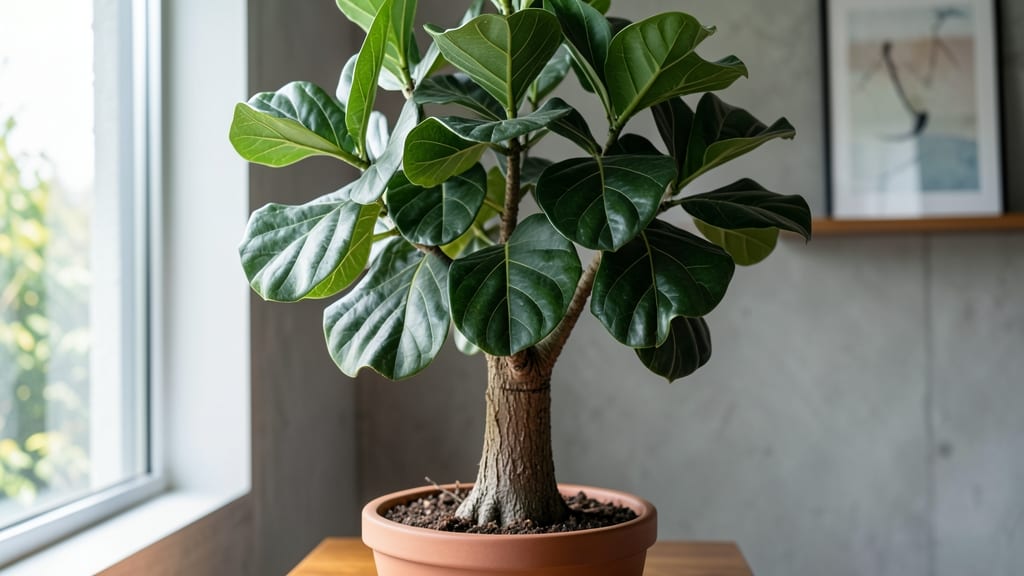
A fiddle leaf fig 🌿 can grow between 10 and 15 feet tall indoors with proper care, though most gardeners never let it get that big.
Picture this: your ceiling fan now has a leafy rival, and you’re scrambling to find a new home for your once-charming houseplant. That’s the reality for many who underestimate how fast this tropical beauty stretches skyward when given the right conditions.
The good news? You’re not stuck with a jungle in your living room. With the right pruning techniques and light management, you can keep your fiddle leaf fig at a manageable height—whether you want it as a statement piece or a compact centerpiece.
In this guide, I’ll break down exactly how tall your fiddle leaf fig will grow at each stage, how to control its height, and the most common mistakes that turn a small plant into a vertical takeover.


Fiddle leaf fig height by growth stage: what to expect indoors
Your fiddle leaf fig (Ficus lyrata) starts as a tiny sapling but can become a stunning indoor statement piece. Understanding its height progression helps you plan care and space. Indoors, growth slows compared to outdoor conditions, but with ideal light and humidity, it can still reach impressive heights.
In their native tropical habitats, fiddle leaf figs grow 10-15 feet tall over decades. Indoors, they rarely match this height unless left completely unpruned. Most homeowners keep them between 5-10 feet, making them perfect for tall ceilings or corner spaces.
The key to controlling height lies in pruning and growth stage awareness.
Growth stages dramatically impact height. A 1-year-old plant might only reach 2-3 feet, while a 5-year-old fiddle leaf fig can tower over 8 feet if neglected. Let’s break down the realistic expectations for each stage.
During the seedling stage, your fiddle leaf fig focuses on root development rather than height. The first year is when you’ll see the most dramatic changes, with 2-3 feet of growth possible under ideal conditions.
This includes bright indirect light, consistent humidity, and well-draining soil. Without these, growth stalls or becomes leggy.
By year 2-3, your plant enters its juvenile phase, where growth slows but the leaves become larger and more distinctive. This is the perfect time to introduce light pruning to encourage bushier growth. Without intervention, heights can exceed 6 feet, which may require ceiling clearance or relocation.
For mature plants (4+ years), height becomes more predictable if you maintain a pruning schedule. Left unchecked, a fiddle leaf fig can easily reach 10 feet or more indoors.
However, with strategic pruning every 1-2 years, you can keep it between 5-8 feet, making it manageable for most homes.
Light exposure is the #1 factor affecting height. A fiddle leaf fig in a north-facing window may grow 2 feet shorter than one near a south-facing window.
The difference comes from photosynthesis efficiency—more light means faster, taller growth. Rotate your plant quarterly to ensure even light distribution and balanced height.
Humidity plays a surprising role too. Low humidity causes leaf drop and stunted growth, while high humidity (60%+) encourages faster vertical growth. Use a humidifier or pebble tray if your home stays dry. This small adjustment can add 1-2 feet to your plant’s height over a year.
Soil quality matters less for height but affects overall health. A fast-draining mix with perlite or orchid bark prevents root rot, which can halt growth entirely. Repot every 2-3 years to refresh nutrients, giving your fiddle leaf fig the energy to grow taller.
If you want a compact fiddle leaf fig, prune the top 2-3 inches in early spring. This triggers lateral branching, reducing height while increasing fullness. For a taller specimen, avoid pruning and focus on vertical support like a moss pole.
How to control fiddle leaf fig height: pruning and care tips
Your fiddle leaf fig (Ficus lyrata) can reach 10–15 feet tall indoors if left unchecked, but with the right pruning techniques and growth habits, you can shape it into a compact, bushy plant.
The key is understanding when and how to trim to encourage horizontal growth instead of vertical spikes. I’ve pruned mine for years, and here’s what works best.
Pruning isn’t just about cutting back height—it’s also about stimulating new growth and maintaining your plant’s health. When done correctly, pruning can make your fiddle leaf fig 30–50% bushier while keeping it at a manageable height.
The best time to prune is during the spring growing season, when your plant is actively producing new leaves. Avoid heavy pruning in fall or winter, as this can stress the plant.
Before you grab your sterilized pruning shears, know this: where you cut matters. Pruning just above a leaf node (the bump where leaves grow) encourages branching, while cutting too close to the stem can lead to bare spots.
For a bushier look, aim to trim back 1/3 of the stem length at a 45-degree angle. This simple technique makes all the difference!
Step-by-Step Pruning Guide for Fiddle Leaf Figs
- Step 1: Choose the Right Time – Prune in early spring (March–April) when new growth begins. Avoid pruning in winter or late fall, as the plant is dormant.
- Step 2: Identify Leaf Nodes – Locate the leaf nodes (bumps on the stem) where new branches can grow. These are your pruning targets.
- Step 3: Cut at a 45-Degree Angle – Use sterilized shears to make a clean cut 1/4 inch above a leaf node. This prevents water from pooling and causing rot.
- Step 4: Encourage Bushiness – If you want a fuller plant, trim back 1/3 of the tallest stems. This redirects energy to side branches.
- Step 5: Propagate Cuttings (Optional) – Use your pruned cuttings to grow new plants! Place them in water or moist soil until roots form.
- Step 6: Monitor Growth – After pruning, place your plant in bright, indirect light and maintain consistent watering to support recovery.
Pruning isn’t the only way to control your fiddle leaf fig’s height. The light conditions you provide play a huge role too. If your plant is stretching toward light (a sign of etiolation), it’s likely not getting enough bright indirect light.
Move it to a south-facing window or use a grow light for 6–8 hours a day. This helps keep stems stocky and compact instead of leggy.
Another pro tip? Rotate your plant every 2–3 weeks. This ensures even light exposure all around, preventing one side from growing faster than the other. I rotate mine near my east-facing window, and the difference in growth symmetry is noticeable within a few months.
Pair this with regular pruning, and you’ll have a fiddle leaf fig that stays under 6 feet tall even after years of growth.
Remember, patience is key. Fiddle leaf figs grow about 1–2 feet per year under ideal conditions, but with consistent pruning and care, you can keep it at a height that fits your space—whether that’s 3 feet for a shelf or 8 feet as a statement piece.
The choice is yours, and the tools are simple: shears, light, and a little green thumb! 🌿