
Pruning
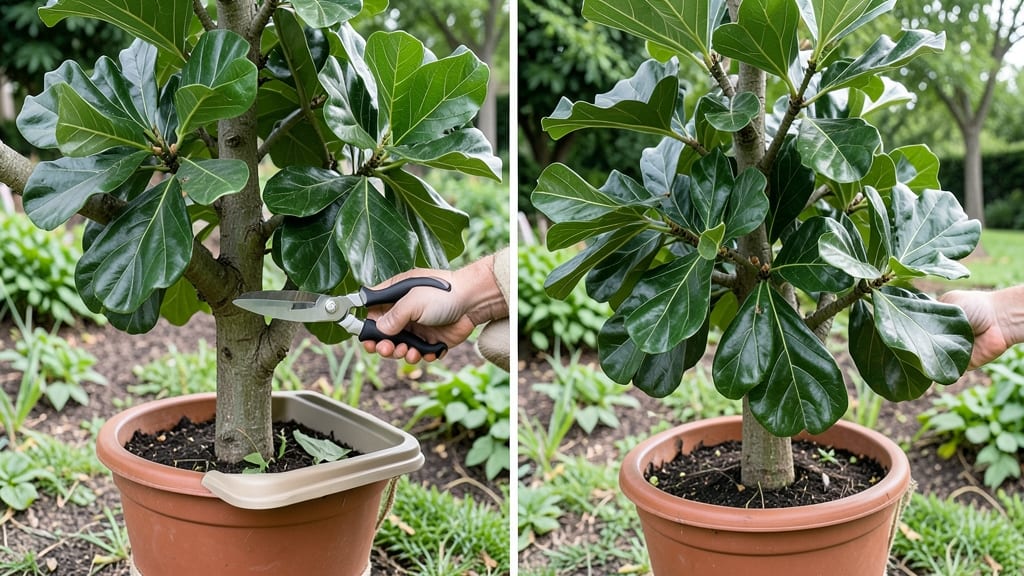
Your fiddle leaf fig tree pruning decisions determine whether it thrives or struggles—this is how to make cuts that encourage lush, healthy growth all year. ✂️ I’ve learned the hard way that pruning isn’t just about shaping; it’s about directing energy where your plant needs it most.
The right cuts can double your tree’s foliage in a season, while the wrong ones send it into decline. Start with the basics: sterilized pruners, a clean workspace, and a clear goal—whether it’s removing dead leaves, encouraging bushier growth, or opening up the canopy.
Prune in spring or early summer when the tree is actively growing, and always cut just above a leaf node where new growth can emerge. Avoid heavy pruning in fall or winter, as the plant needs all its energy to recover.
You’ll end up with a fiddle leaf fig that looks fuller, grows faster, and resists pests better. The key is patience—don’t rush to trim everything at once. Focus on one-third of the plant at a time, and you’ll see dramatic improvements in just a few months.
Even advanced gardeners can benefit from these foundational techniques. This method works for both small potted plants and larger floor-standing trees. The principles stay the same, whether you’re dealing with a leggy sapling or a mature, overgrown specimen. Let’s get those branches looking intentional!
📚 In This Guide
- What you need
- Instructions
- Tips and common mistakes
- Wrapping up and next steps
What you need
- ● Clean, sharp pruning shears – Bypass pruners (4-6 inch blades) for small stems; anvil pruners (for thicker branches, but avoid crushing sap). Sterilize with rubbing alcohol before and after use!
- ● Pruning saw – A curved-tooth handsaw or folding pruning saw for branches thicker than ½ inch.
- ● Gloves – Heavy-duty gardening gloves (preferably nitrile-coated) to protect against sap irritation and sharp edges.
- ● Disposable pruning bags or bucket – To collect trimmings and reduce mess.
- ● Rubbing alcohol (70% or higher) – For sterilizing tools between cuts.
- ● Horticultural sealant – Pruning wax or tree sealant to coat large cuts (prevents sap oozing and disease entry).
- ● Ladder or step stool – If your fiddle leaf fig is tall (6+ feet). Safety first!
- ● Spray bottle with water – To mist cuts and reduce shock (especially for large prunes).
- ● Confirm your fiddle leaf fig is healthy (no pests, yellowing leaves, or mushy stems). Prune only when the tree is actively growing (spring/summer).
- ● Have a clear plan – Sketch or mentally map out which branches to trim (aim for 1/3 of the tree’s foliage max per session).
- ● Work in bright, indirect light – Avoid pruning in direct sun or harsh conditions.
Step-by-step guide to pruning your fiddle leaf fig tree
Healthy growth starts with the right cuts—here's how to prune like a pro.
✂️ Step 1: Choose the Right Time and Tools
Prune your fiddle leaf fig in late winter or early spring before new growth begins. This timing gives the tree energy to recover and grow strong new branches. Avoid pruning during fall or winter when the plant is dormant—it needs all its energy stored for survival.
Use sharp, clean pruning shears or scissors to make precise cuts. I like to disinfect my tools with rubbing alcohol between cuts to prevent spreading any potential diseases. A small pair of gloves also helps protect your hands from the tree's mild sap.
✂️ Step 2: Identify and Remove Dead or Damaged Leaves
Start by removing any yellow, brown, or crispy leaves—these are clear signs of stress or disease. Look for leaves that feel dry to the touch or have visible holes and discoloration. These leaves won't recover and will only drain energy from the healthy parts of your tree.
Gently twist or snip off dead leaves at their base. If a leaf is still somewhat green but clearly struggling, you can leave it for now—sometimes fiddle leaf figs can revive if given better light or water. But if it's completely brown and brittle, it's time to say goodbye.
✂️ Step 3: Prune for Shape and Airflow
Now it's time to shape your tree. Fiddle leaf figs grow best with good airflow, so aim to create an open, airy structure. Start by trimming any branches that are crossing or rubbing against each other—they can damage the bark and create entry points for pests.
Look for branches that are growing inward or downward. These can block light from reaching the inner leaves and create a shady, humid microclimate that encourages fungal growth. Cut these back to just above a leaf node where new growth can emerge. You'll see the leaf nodes as small bumps or notches on the stem.
✂️ Step 4: Encourage Bushier Growth
To encourage your fiddle leaf fig to grow fuller, you can prune the tips of some branches. When you cut just above a leaf node, the plant will often send out new growth from that point, creating a bushier appearance. This is especially useful if your tree has become too leggy or top-heavy.
Focus on the upper third of the tree first, as this is where new growth will be most visible. Make your cuts at a slight angle, about ¼ inch above a leaf node. This angle helps water run off the cut and prevents it from sitting and rotting. Avoid cutting too close to the node—you want to leave enough stem for new growth to develop.
💧 Step 5: Post-Pruning Care
After pruning, give your fiddle leaf fig a good drink of water. The tree will need extra hydration as it recovers and starts growing new leaves. Water thoroughly until you see water running out of the drainage holes in the pot, but avoid letting the plant sit in standing water.
Place your tree in a spot with bright, indirect light for the first week after pruning. This helps it recover without the added stress of direct sunlight. You'll notice new growth starting in about 4-6 weeks, depending on your plant's health and the season. Keep an eye out for any signs of stress, like yellowing leaves or wilting, and adjust your care routine as needed.
Tips & tricks for perfect fiddle leaf fig pruning
A few subtle adjustments can transform your pruning from routine maintenance into a growth-boosting ritual.
Timing is Everything: Late winter or early spring is non-negotiable for pruning—this is when your fiddle leaf fig naturally prepares for new growth. I've learned the hard way that pruning during dormancy (fall/winter) stresses the plant by forcing it to heal when it should be conserving energy. Think of it like giving your tree a fresh start before spring's growth spurt.
Tool Prep Matters: Disinfecting your pruning shears between cuts prevents fungal spread—this is especially critical if your tree has any signs of disease. I keep rubbing alcohol handy and wipe down tools after every 3-4 cuts. For stubborn branches, use a small saw or sharp knife instead of dull shears, which can crush stems and invite infections.
Leaf Node Location: When pruning for bushier growth in Step 4, focus on cutting just above a leaf node at a 45-degree angle. This angle helps water runoff and prevents rot. Pro tip: Leaf nodes are those little bumps on the stem—cut too close and you risk stunting new growth; leave too much stem and you lose the branching effect.
Post-Pruning Recovery: The first week after pruning is critical—place your tree in bright, indirect light and avoid fertilizing. I've seen plants recover beautifully when given this gentle recovery period, but I've also watched others struggle when rushed back into direct sunlight or fertilized too soon. Think of it as a healing phase for your tree.
Pro Tips for Fiddle Leaf Fig Tree Pruning
- A few subtle adjustments can transform your pruning from routine maintenance into a growth-boosting ritual.
- Timing is Everything: Late winter or early spring is non-negotiable for pruning—this is when your fiddle leaf fig naturally prepares for new growth.
- Tool Prep Matters: Disinfecting your pruning shears between cuts prevents fungal spread—this is especially critical if your tree has any signs of disease.
Frequently asked questions
Got questions about pruning your fiddle leaf fig? You’re not alone! Here are some of the most common concerns—and straightforward answers—to help you keep your plant thriving.
When is the best time to prune my fiddle leaf fig?
The ideal time is early spring (just before new growth begins) or late winter. Avoid pruning in fall or winter, as the plant is dormant and may struggle to recover. If you spot dead or yellowing leaves year-round, snip them off gently—just don’t overdo it!
How do I know if I’m pruning too much?
If more than 20-30% of the foliage is removed at once, your fiddle leaf fig may go into shock. Signs of over-pruning include drooping leaves, stunted growth, or excessive leaf drop. Stick to strategic cuts—focus on dead branches, leggy stems, or overcrowded areas.
Can I propagate my fiddle leaf fig from pruned cuttings?
60% of pruned cuttings
can root successfully if you follow the right steps. Dip the cut end in rooting hormone, plant in well-draining soil, and keep humidity high (use a plastic bag or propagator). Roots typically form in 4-8 weeks—perfect for expanding your plant collection!
Why are my fiddle leaf fig leaves turning brown after pruning?
Brown leaves post-pruning usually mean stress from overwatering, underwatering, or sudden temperature changes. Check the soil moisture (it should be slightly dry before watering) and avoid placing the plant near drafts or heat sources. If only the tips brown, it’s likely low humidity—mist leaves or use a pebble tray.
Do I need to sterilize my pruning tools?
Yes!
Dirty tools can spread bacterial or fungal infections (like leaf spot or root rot). Wipe blades with rubbing alcohol or a 10% bleach solution before and after pruning. Sharp, clean tools also make cuts heal faster—your fiddle leaf fig will thank you!
Wrapping up and next steps
Pruning your fiddle leaf fig tree doesn’t have to be intimidating—it’s all about strategic cuts to encourage lush, vibrant growth! 🌿 With the right tools, timing, and techniques, you’ll help your plant thrive year-round while keeping its stunning silhouette.
Remember, confidence comes with practice, so start small and observe how your tree responds.
Now that you’re armed with knowledge, grab those shears and give your fiddle leaf fig the care it deserves! 🌱 For extra inspiration, check out pruning success stories or explore other houseplant care guides to keep your green thumb growing.