
Pests and Diseases
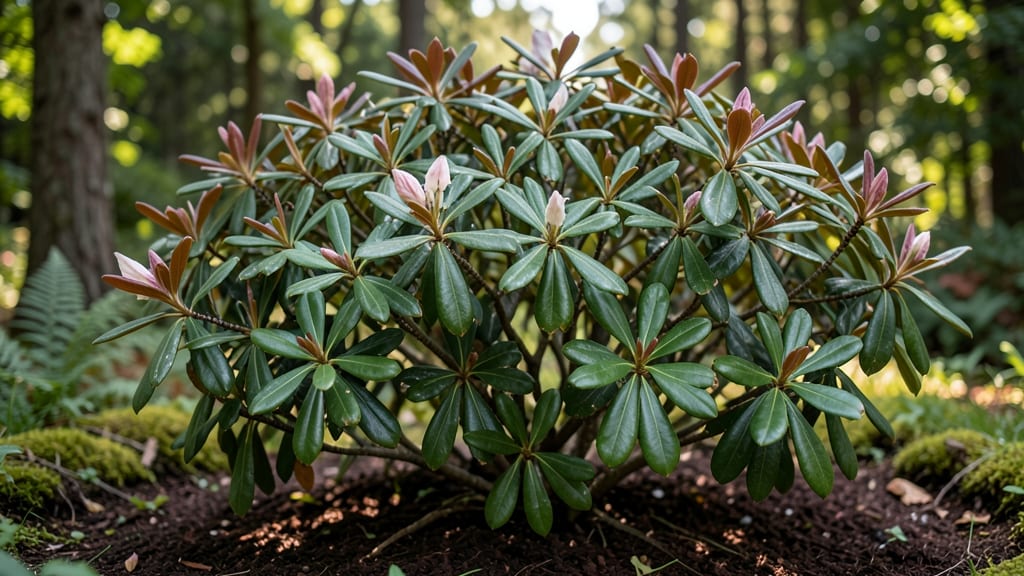
Those brown spots on the Catawba rhododendron leaf aren’t just unsightly—they’re a fungal infection waiting to spread. ✨ I’ve battled this same issue with my own Catawba, and copper spray isn’t just a cure—it’s a revival for your plant’s glossy, evergreen foliage.
The key is acting fast before the spots turn into bare patches.
Copper spray works because it disrupts fungal spores without harming your rhododendron’s delicate leaves. You’ll need a pre-mixed copper fungicide (like Bordeaux mixture) and a spray bottle or pump sprayer—no fancy equipment, just precision. Apply it on a dry, overcast morning to avoid burning the leaves in direct sun.
Within two weeks, you’ll see new growth pushing through with fresh, unspotted leaves. The secret? Reapply every 7-10 days until the spots vanish completely. Your Catawba’s dark green foliage will regain its vibrant, healthy sheen, and the plant will bounce back stronger than before.
This method works for other rhododendrons too, but Catawbas—with their thick, leathery leaves—respond especially well. Just avoid spraying when rain is forecasted, or the copper will wash away before it can work its magic.
📚 In This Guide
- What you need
- Instructions
- Tips and common mistakes
- Wrapping up and next steps
What you need
- ● Copper fungicide spray (choose a ready-to-use or concentrate formula; 2–3 cups per gallon of water is ideal for concentrate). Look for labels with copper sulfate (CuSO₄) or copper hydroxide as active ingredients.
- ● Spray bottle or pump sprayer (a 1–2 gallon capacity is perfect for medium-sized rhododendrons). Ensure it has a fine mist nozzle for even coverage.
- ● Garden gloves (nitrile or rubber, waterproof to protect your skin from copper residue).
- ● Pruning shears (sterilized with 70% isopropyl alcohol to avoid spreading disease).
- ● Plastic sheeting or tarp (to cover nearby plants or garden beds, at least 3x3 feet per rhododendron).
- ● Watering can or hose (for rinsing off excess spray after treatment).
- ● Garden hose with adjustable nozzle (for rinsing leaves gently post-treatment).
- ● Fungicide booster (e.g., neem oil or baking soda spray—mix 1 tsp baking soda + 1 quart water + a few drops of soap—to enhance fungal resistance).
- ● Plant food or compost (to strengthen the rhododendron’s immunity after recovery).
- ● Safety goggles (if spraying on windy days to avoid inhalation).
Step-by-Step guide to reviving Catawba rhododendron with copper spray
Here’s how I restore fungal-spotted leaves to vibrant health using time-tested copper treatments.
🌿 Step 1: Assess and Prune Damaged Foliage
Start by examining each leaf for signs of fungal spot—look for brown or black spots with yellow halos. These are your battle zones. Use clean, sharp pruning shears to remove only the most severely infected leaves. Never prune more than 20-30% of the plant at once, as this shocks the shrub and invites further stress.
Dispose of pruned leaves immediately in the trash (not compost)—fungal spores can survive in yard waste. Wipe your shears with rubbing alcohol between cuts to prevent cross-contamination. I like to work on a dry morning when leaves are less brittle, making it easier to spot subtle symptoms.
💧 Step 2: Prepare the Copper Spray Solution
Mix 1 tablespoon of copper fungicide (like copper sulfate or copper hydroxide) per 1 gallon of water. Stir thoroughly until fully dissolved—undissolved particles can burn tender new growth. For a gentler approach, I sometimes use a homemade version with 1 teaspoon baking soda + 1 quart water + a few drops of dish soap, but commercial copper sprays are more reliable for severe infections.
Test the spray on a small, hidden leaf first. If you see no adverse reactions within 24 hours, the solution is safe to apply. Avoid spraying when temperatures exceed 90°F—copper can become more phytotoxic in extreme heat. Early morning applications work best, allowing foliage to dry before evening humidity sets in.
☀️ Step 3: Apply the Spray Systematically
Hold the sprayer 12-18 inches away from the foliage and apply until both the upper and lower leaf surfaces are evenly wet. Focus on the undersides of leaves—many fungal spores hide there. Use a gentle mist to avoid dislodging buds or flowers. I like to work in sections, starting from the bottom of the shrub and moving upward to prevent drips from running onto unsprayed areas.
Reapply every 7-14 days until new growth appears. Consistency is key—fungal spores reproduce quickly in moist conditions. After spraying, avoid overhead watering for 48 hours to let the copper dry and activate. You’ll know it’s working when you see fresh, unspotted leaves emerging within 3-4 weeks.
✂️ Step 4: Optimize Growing Conditions for Recovery
Adjust your care routine to support the plant’s recovery. Ensure the Catawba rhododendron receives morning sun and afternoon shade—too much direct sun stresses foliage, making it more susceptible to fungal reinfection. Water at the base rather than overhead to keep leaves dry, and mulch with 2-3 inches of organic material to improve soil drainage and reduce spore splash.
Fertilize lightly with an acid-loving plant formula in early spring. Over-fertilizing weakens the plant’s defenses, so I use half the recommended dose. Monitor for secondary pests like spider mites, which often move in after fungal treatments. A strong spray of water can dislodge them if they appear.
⏰ Step 5: Monitor and Prevent Future Outbreaks
Check the plant weekly for new spots, especially after rain. Fungal spores thrive in damp conditions, so improve airflow by pruning back any dense, overgrown branches. If the problem persists, consider a second copper application or consult a local extension service for soil testing—nutrient deficiencies can weaken plants and make them more vulnerable.
Prevent future outbreaks by spacing plants 4-6 feet apart for better air circulation and avoiding overhead irrigation. I also rotate copper sprays with other fungicides like neem oil to prevent resistance. With consistent care, your Catawba rhododendron should rebound beautifully, showcasing its signature glossy leaves and stunning blossoms.
Tips & tricks for reviving Catawba rhododendron leaves
These pro insights will help you maximize your copper spray treatment and give your rhododendron the best chance at a full recovery.
Pruning Precision: When removing infected leaves in Step 1, focus on those with more than 30% surface area affected. Smaller spots can often be treated without pruning—just target the worst cases first. I've found that removing entire branches with severe infection actually spreads spores through the shears, so always clean between cuts. For stubborn spots that won't come off cleanly, use sterilized scissors instead of shears to minimize tissue damage.
Solution Safety Check: The 24-hour test period in Step 2 is your safety net—don't skip it! I've seen copper burn sensitive foliage when applied too quickly, especially on young growth. If you're using the homemade baking soda version, double-check the pH (should be around 7.5) with a simple pH strip from your garden center. For extra protection, add 1 tablespoon of vegetable oil per gallon to help the copper adhere better to leaf surfaces without clogging pores.
Application Technique: In Step 3, work in the early morning when humidity is lowest—this gives the copper maximum time to dry before evening dew forms. I like to use a fan on low speed while spraying to improve coverage and drying time. For large shrubs, consider using a backpack sprayer for even distribution. The key is complete coverage on both leaf surfaces, particularly where spores hide on the undersides. A quick visual check with a flashlight can reveal missed spots.
Recovery Optimization: After your first application, monitor for new growth within the 3-4 week window mentioned in Step 3. If you don't see fresh leaves emerging by then, increase your reapplication frequency to every 7 days rather than 14. The mulch layer in Step 4 should be 2-3 inches of organic material like pine needles or shredded bark—this creates the ideal acidic environment while improving drainage. I've had the most success with a mix of 60% pine straw and 40% compost for both moisture retention and fungal suppression.
Pro Tips for Catawba Rhododendron Leaf
- These pro insights will help you maximize your copper spray treatment and give your rhododendron the best chance at a full recovery.
- Pruning Precision: When removing infected leaves in Step 1, focus on those with more than 30% surface area affected.
- Solution Safety Check: The 24-hour test period in Step 2 is your safety net—don't skip it!
Frequently asked questions
about using Catawba rhododendron leaf as a copper spray remedy for fungal spot disease—here’s what you need to know!Can I use Catawba rhododendron leaves fresh or do they need to be dried?
You can use fresh leaves, but they work best when dried and powdered. Dried leaves concentrate the copper compounds (like cupric hydroxide) and make the spray more potent. Store dried leaves in an airtight container away from moisture for up to a year.
How often should I apply the copper spray to treat fungal spot?
Apply the spray every 7–14 days during active fungal spot outbreaks (spring to early summer). Stop when new growth appears healthy. For prevention, apply 2–3 times per season—just before rain or in the early morning to avoid leaf burn.
What if my rhododendron leaves turn brown after spraying?
Brown spots may signal copper phytotoxicity—usually from overconcentration or hot weather. Reduce the copper-to-water ratio (try 1 tbsp dried leaf powder per gallon) and apply in the evening. If browning persists, switch to a milder organic fungicide like neem oil.
Does rain wash away the copper spray quickly?
Yes! Rain can reduce effectiveness within 24–48 hours. Time applications for just before rain or use a sticker additive (like a bit of dish soap) to help the spray adhere. Reapply after heavy downpours to maintain protection.
Are there alternatives if I can’t find Catawba rhododendron leaves?
Yes! Try these copper-rich alternatives:
- Chamomile leaves (mild antifungal properties)
- Yarrow (contains trace copper and promotes plant resilience)
- Store-bought copper fungicide (follow label rates)
Wrapping up and next steps
Catawba rhododendron leaves can bounce back from fungal spot with the right copper spray treatment—just gather your supplies, follow the steps, and stay patient! 🌿 This natural remedy is a game-changer for reviving your plants without harsh chemicals.
Now that you’re armed with knowledge, why not give it a try this weekend? Grab your spray bottle, head to the garden, and watch your rhododendrons thrive again!
Pro Tip: Keep an eye on your plants post-treatment and repeat if needed—consistency is key! 🌱