
How To
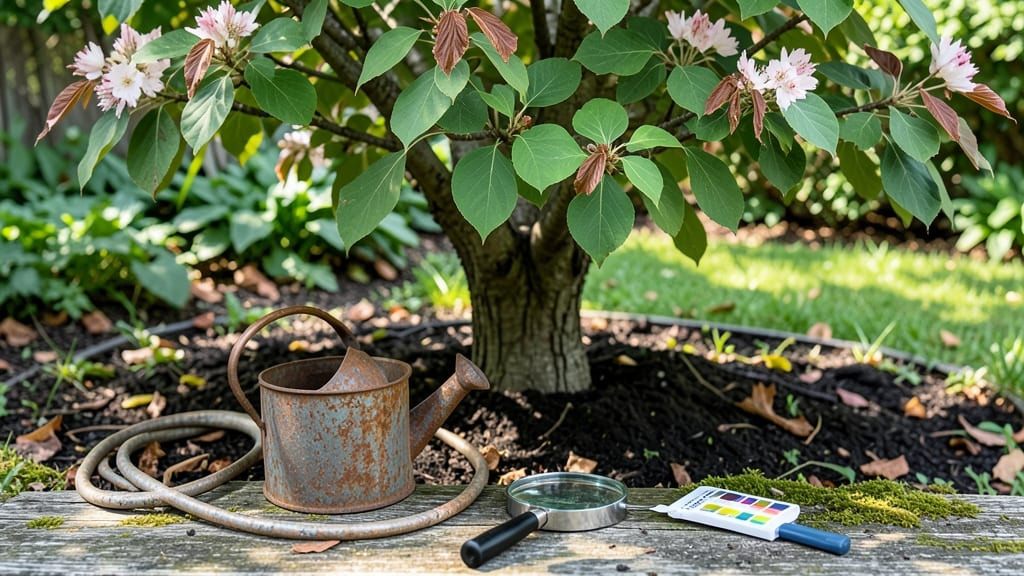
Brown leaf tips on your dogwood tree? 🌿 That crunchy, crispy look isn’t just cosmetic—it’s a cry for help from your plant.
I’ve nursed back dogwoods with this exact problem, and the fix comes down to three targeted steps that address the real culprits: water stress, nutrient gaps, or hidden pests.
Most people assume it’s just underwatering, but overwatering (or salt buildup from tap water) causes the same symptoms. Check the soil—if it’s dry 2 inches down, water deeply; if it’s soggy, hold off.
Spider mites or fungal infections often start with tiny brown spots that spread to the edges, while nutrient deficiencies show up as yellowing between veins first.
Pruning the damaged tips removes stress points, while a balanced fertilizer with micronutrients (like iron or magnesium) revives the foliage in 2-3 weeks. For fungal issues, a copper-based spray stops the spread. The key? Act fast—dogwoods bounce back faster than you’d expect when you address the right problem.
This method works for both Cornus florida and Cornus kousa varieties, whether your tree is in full sun or partial shade. The secret’s in the details—like watering at the base (not overhead) and choosing the right fertilizer for your soil type. Let’s turn those crispy edges into lush, green growth.
Root Causes Behind Browning Tips
Understanding why your dogwood tree’s leaves develop brown tips is the first step to restoring its health. These issues often stem from environmental stressors, cultural mismanagement, or underlying health problems.
Below, we break down the most common culprits—each with a clear scientific explanation and actionable insights to help you diagnose the problem accurately.
Dogwood trees thrive in well-drained, consistently moist soil, but imbalances in watering can trigger brown leaf tips. Here’s how it happens:
- Underwatering: When soil moisture drops too low, the tree struggles to transport water and nutrients through its vascular system.
This causes osmotic stress, where cells at the leaf edges (the last to receive moisture) dry out and turn brown. - Signs: Crispy, brittle tips; soil pulling away from the pot (if potted) or dry topsoil. - Fix: Water deeply 1–2 times per week (more in extreme heat).
Use a moisture meter or the "finger test" (insert your finger 2–3 inches into the soil—if dry, water).
- Overwatering: Dogwoods hate soggy roots. Excess water displaces oxygen in the soil, leading to root suffocation and nutrient deficiencies (like potassium or calcium).
The tree responds by shedding damaged cells at leaf margins. - Signs: Yellowing between veins (chlorosis), mushy stems, or foul-smelling soil. - Fix: Ensure proper drainage (raise pots, amend clay soil with compost). Water only when the top 1–2 inches of soil are dry.
- 💡 Pro Tip: Mulch properly—apply 2–3 inches of organic mulch (like wood chips) around the base (but not touching the trunk) to retain moisture and prevent soil compaction.
Dogwoods are sensitive to sudden environmental shifts, which can scorch leaf tips faster than the tree can recover.
- Heat Stress: High temperatures (especially above 90°F/32°C) increase transpiration rates, causing water loss at the leaf edges.
This is common in full-sun exposures or after pruning (more surface area = more water loss). - Signs: Brown tips on south- or west-facing leaves; wilting during the day. - Fix: Provide afternoon shade (use shade cloth if needed) or mulch heavily to cool root zones.
Water early in the morning to reduce evaporation.
- Windburn: Strong winds desiccate (dry out) leaf edges, mimicking underwatering. Young trees or those in exposed areas are most vulnerable. - Signs: Tips brown uniformly on all exposed leaves; no other symptoms. - Fix: Plant dogwoods sheltered from prevailing winds or use windbreaks (like evergreen hedges).
Prune to improve airflow if branches are crowded.
- Salt Burn: If your tree is near a salted road, sidewalk, or fertilized lawn, sodium and chloride ions accumulate in the soil, disrupting water uptake. - Signs: Brown tips only on lower leaves; soil looks crusty or white. - Fix: Flush the soil with water (slow drip for 30+ minutes) and apply gypsum (calcium sulfate) to neutralize salts.
Avoid fertilizers high in sodium.
Dogwoods need a balanced diet, and deficiencies often show up as brown tips before other symptoms appear.
| Deficiency | How It Shows Up | Quick Fix |
|---|---|---|
| Potassium (K) | Brown, crinkled tips (often with yellow edges). | Apply potassium sulfate or a balanced 10-10-10 fertilizer in early spring. |
| Calcium (Ca) | Tips turn brown and brittle; new growth is stunted. | Add crushed eggshells or lime (if soil pH is too low). |
| Magnesium (Mg) | Brown scorched patches between veins (like a "V" shape). | Use Epsom salt (1 tbsp/gallon of water) as a foliar spray or soil drench. |
| Iron (Fe) | Yellowing between veins (chlorosis) with brown tips. | Apply chelated iron or sulfur (if soil pH is too high). |
- 🔥 Warning: Over-fertilizing (especially with nitrogen) can also cause tip burn by imbalancing nutrient ratios. Always follow package rates!
While less common, pests and diseases can weaken your dogwood, making it susceptible to brown tips as a secondary symptom.
- Spider Mites: These tiny pests pierce leaf cells, causing stippling and browning at the edges.
They thrive in dry, hot conditions. - Signs: Fine webbing on undersides of leaves; leaves look "speckled." - Fix: Spray with water (forceful stream to knock them off) or neem oil (1 tsp per gallon of water).
- Scale Insects: These sap-sucking bugs excrete honeydew, which fosters sooty mold (a black fungal growth). The tree’s weakened state leads to tip burn.
- Signs: Sticky residue on leaves; white/brown bumps on stems.
- Fix: Prune infested branches and treat with horticultural oil in dormant season.
- Fungal Leaf Spot: Fungi like anthracnose (common in wet springs) cause brown spots with yellow halos, which can spread to leaf edges. - Signs: Spots enlarge with target-like rings; leaves may drop prematurely. - Fix: Remove fallen leaves and prune for airflow.
Apply copper fungicide at first sign.
Improper pruning or mechanical injury can stress the tree, leading to browning at cut edges or along leaf margins.
- Over-Pruning: Removing too much foliage at once (especially in late summer) reduces the tree’s ability to photosynthesize, causing nutrient starvation in remaining leaves.
- Fix: Prune only in late winter/early spring (dormant season). Remove no more than 25% of the canopy in one year.
- Shearing or Ragged Cuts: Jagged cuts or over-trimming expose more surface area, increasing water loss and susceptibility to disease.
- Fix: Use clean, sharp pruners and make cuts just above a bud or branch collar.
- Hail or Frost Damage: Physical trauma from ice or hail can bruise leaves, leading to brown tips.
- Fix: Protect young trees with frost cloth in winter. Remove damaged leaves to reduce stress on the tree.
Fixing Dogwood Leaf Stress
Now that you know the likely causes behind those unsightly brown leaf tips on your dogwood tree, it’s time to roll up your sleeves and take action! 🌿 The good news? Most solutions are simple, cost-effective, and can restore your tree’s health in just a few steps.
Below, we’ll map out targeted fixes based on the root cause—plus prevention tips to keep your dogwood thriving long-term.
If soggy soil is the culprit, your dogwood is essentially drowning. Here’s how to rescue it:
Step 1: Check the Soil Moisture 👨🌾 Test the soil 2–3 inches below the surface. If it feels damp or mushy (like a wrung-out sponge), your tree is getting too much water. Dogwoods prefer well-drained soil—they hate "wet feet."
Step 2: Improve Drainage
- Amend the soil with compost or organic matter (like peat moss or coconut coir) to loosen heavy clay.
- Raise the soil level slightly around the base if your yard floods easily. A 1–2 inch mound can help water run off.
- Install a French drain if water pools persistently near the roots.
Step 3: Water Smarter 💡 Pro Tip: Water deeply but infrequently. Aim for 1–1.5 inches per week (including rain), delivered in long, slow sessions (e.g., 20–30 minutes every 5–7 days). Avoid shallow sprinkling, which encourages surface evaporation.
Step 4: Mulch Correctly
- Apply 2–3 inches of mulch (wood chips or shredded bark) around the base, but keep it 6 inches away from the trunk to prevent rot.
- Replenish mulch annually to maintain moisture retention without suffocating roots.
Dogwoods with crispy, sun-scorched edges often need a little shade relief. Try these fixes:
Step 1: Provide Afternoon Shade 🌳 Move potted dogwoods to a spot with morning sun and afternoon shade, especially in hot climates. If planted in the ground, consider lightweight shade cloth (30–50% coverage) during peak summer heat.
Step 2: Increase Humidity (Temporarily)
- Mist the leaves daily during heatwaves (early morning or evening).
- Group plants together to create a microclimate with higher humidity.
- Use a humidity tray for container-grown dogwoods (fill a saucer with pebbles and water, placing the pot on top).
Step 3: Adjust Watering for Heat 💦 Water in the early morning to reduce evaporation. If your dogwood is in a windy or dry area, increase watering slightly (but avoid soggy soil).
Brown tips can signal a hunger for key nutrients. Here’s how to fix it:
Step 1: Test Your Soil 📊 Use a soil test kit (available at garden centers) to check pH and nutrient levels. Dogwoods prefer slightly acidic soil (pH 5.5–6.5).
Step 2: Apply the Right Fertilizer
- For iron deficiency (yellowing between veins): Use an iron chelate (spray or granular).
- For general weakness (slow growth, brown edges): Choose a balanced, slow-release fertilizer (like 10-10-10 or 20-20-20) in early spring.
- For potassium deficiency (weak stems, poor cold hardiness): Switch to a potassium-rich fertilizer (like 0-0-50) in late summer.
Step 3: Feed at the Right Time ⏰ Avoid fertilizing in extreme heat or drought—this stresses the tree. Best times:
- Early spring (before new growth starts)
- Early fall (to prepare for winter)
Step 4: Use Organic Amendments 🌿 Boost soil health with:
- Compost tea (homemade or store-bought)
- Fish emulsion (for nitrogen)
- Banana peels (buried in holes near roots for potassium)
If insects or pathogens are to blame, act fast with these solutions:
Step 1: Identify the Culprit
- Scale insects or spider mites? Look for sticky residue (honeydew) or tiny webs.
- Fungal issues (like anthracnose)? Check for dark spots on leaves or cankers on stems.
Step 2: Treat Pests 🔥 For insects:
- Neem oil spray (mix 1 tbsp neem oil + 1 tsp mild soap + 1 quart water; spray undersides of leaves).
- Horticultural oil (apply in early spring before buds swell).
- Beneficial insects (release ladybugs or lacewings to prey on pests).
Step 3: Fight Fungal Issues
- Prune infected branches (sterilize shears with rubbing alcohol between cuts).
- Apply fungicide (copper-based or sulfur-based) at first sign of disease.
- Improve air circulation by thinning dense foliage.
Step 4: Prevent Future Outbreaks 💡 Pro Tip:
- Clean up fallen leaves (burn or compost them away from the tree).
- Water at the base (avoid wetting foliage to reduce fungal spores).
- Space trees properly (3–5 feet apart for good airflow).
If dead or damaged leaves are beyond saving, prune with care:
Step 1: Remove Only the Necessary
- Cut back only brown, crispy leaves (healthy green leaves stay put!).
- Trim dead branches at the branch collar (the swollen area where the branch meets the trunk).
Step 2: Sterilize Your Tools 🔪 Wipe shears with rubbing alcohol between cuts to prevent spreading disease.
Step 3: Time It Right ⏰ Prune in late winter or early spring (before new growth) for best results.
To avoid future brown tips, follow this year-round care plan:
| Season | Task | Why It Helps |
|---|---|---|
| Spring | Apply balanced fertilizer | Boosts growth for the season |
| Summer | Mulch & water deeply | Retains moisture, cools roots |
| Fall | Prune & test soil pH | Removes weak growth, preps for winter |
| Winter | Protect from salt/wind | Prevents winter burn |
Final Thought: 🌟 Most dogwoods bounce back quickly with the right care. Start with one or two fixes based on your tree’s symptoms, then monitor progress.
Within a few weeks, you should see lush, green leaves replacing those brown tips! If problems persist, consult a local arborist for a deeper diagnosis.
Frequently asked questions
Why do only the newer leaves have brown tips while older leaves stay green?
This pattern often signals a nutrient deficiency, particularly magnesium or potassium. Newer leaves show symptoms first because the tree redirects its limited resources to older foliage. Check for brown "V" shapes between veins (magnesium) or crispy, curled edges (potassium). Apply Epsom salt (for magnesium) or a potassium-rich fertilizer to restore balance.
Can I prune off the brown tips to help the tree recover faster?
Yes, but do it strategically! Only remove fully brown, crispy leaves—never healthy green tissue. Use sterilized shears to cut just above a leaf node or bud. Prune in late winter/early spring to avoid stressing the tree during active growth. Never prune more than 25% of the canopy in one season.
How do I tell if my dogwood has spider mites vs. just heat stress?
Spider mites leave telltale signs: Look for fine webbing on leaf undersides and tiny yellow speckles (stippling) that spread to edges. Heat stress causes uniform browning only on exposed tips, with no webbing. Shake a branch over white paper—if you see tiny moving dots, it’s mites. Treat with neem oil or a strong water spray to dislodge them.
Will my dogwood recover if I fix the problem now, or is the damage permanent?
Most dogwoods recover remarkably well when you address the root cause! If the issue is water/nutrients, new growth will emerge within 2-3 weeks with lush green leaves. For pests/disease, expect 4-6 weeks for full recovery. The key is acting early—once leaves drop entirely, the tree’s energy reserves deplete, making recovery slower.
Can I use coffee grounds to fix brown tips caused by nutrient deficiencies?
Coffee grounds can help with acid-loving plants like dogwoods, but they’re not a complete nutrient fix. While they add organic matter and slightly lower pH, they lack key micronutrients. For deficiencies, pair them with Epsom salt (for magnesium) or a balanced fertilizer. Work grounds into the top 2 inches of soil only—never pile them against the trunk.