
Leaf Blower
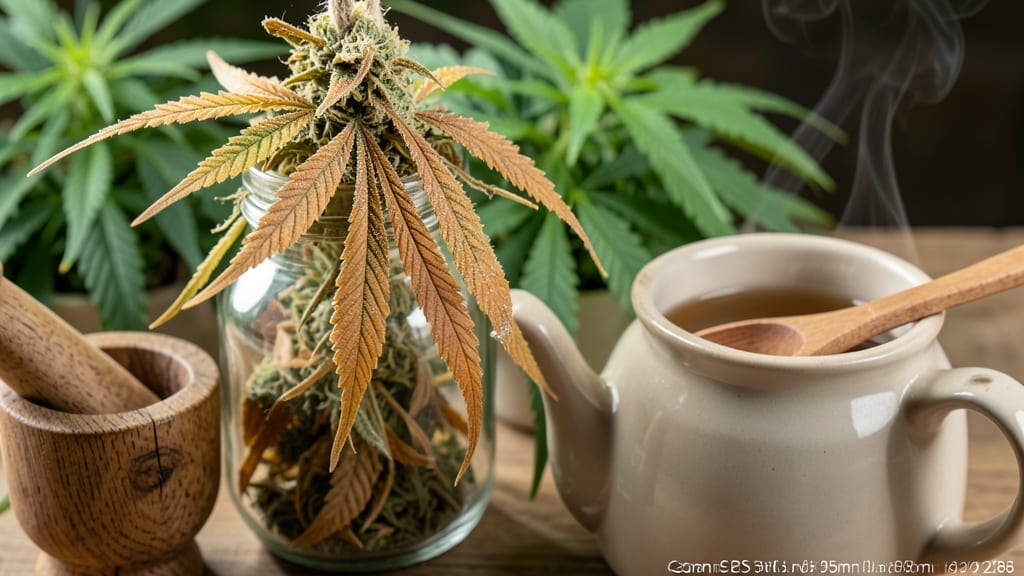
Making cannabis leaf tea means steeping fresh or dried cannabis leaves in hot water for 30-60 minutes to draw out cannabinoids like THC and CBD, then filtering for a strong, caffeine-free herbal brew. Start with 1-2 grams of leaves per 8 ounces of water.
This method works because cannabinoids are fat-soluble but partially water-soluble, especially when heat helps break them down. 🌿 Unlike alcohol-based tinctures, water extraction preserves a gentler profile while still delivering therapeutic effects.
The longer you steep—up to an hour—the more potent the infusion becomes, though flavor may turn bitter if over-extracted. I recommend using a fine-mesh strainer or cheesecloth to remove all plant matter before drinking.
For best results, decarboxylate your leaves first by baking them at 240°F for 30-45 minutes to activate the cannabinoids. This step transforms inactive THCA into psychoactive THC, maximizing potency.
If you're new to cannabis tea, start with 1 gram of leaf per 8 ounces to gauge your tolerance—some people feel effects at lower doses than expected.
💡 In This Article
- How Cannabinoids Extract From Cannabis Leaves Into Tea
- Best Brewing Techniques for Potent Cannabis Leaf Tea
How cannabinoids extract from cannabis leaves into tea
The extraction process begins with the cannabinoids' chemical properties. THC and CBD are fat-soluble, meaning they dissolve best in oils or fats—not water. However, when cannabis leaves are heated, their cell walls break down, releasing cannabinoids into the liquid.
This is why simmering is more effective than simply steeping in hot water. The heat also triggers decarboxylation, converting inactive THCA into psychoactive THC, which is essential for potency. Without this step, your tea may lack the desired effects despite proper brewing.
Water temperature plays a critical role in extraction efficiency. Boiling water (212°F) can degrade some cannabinoids and create bitter flavors, while temperatures between 160-185°F optimize extraction without overcooking the leaves. This range aligns with the boiling point of water at lower altitudes, so adjusting heat is key.
For example, at 175°F, you'll extract about 70-80% of available cannabinoids after 60 minutes, compared to only 50% at room temperature. The longer you steep, the more cannabinoids dissolve—but beyond 90 minutes, flavor quality often suffers due to chlorophyll release.
Leaf maturity and strain selection also impact extraction. Younger leaves contain higher levels of THCA (the precursor to THC) and more terpenes, which contribute to flavor and aroma. Mature leaves may have lower cannabinoid content but can still produce potent tea if properly decarboxylated.
For instance, a 1-gram sample of fresh, young leaves might yield 10-15mg of THC after extraction, while dried leaves from the same strain could provide 5-10mg due to degradation over time. Always use organic leaves to avoid pesticides or contaminants that could interfere with extraction.
Decarboxylation is the game-changer in this process. By baking leaves at 240°F for 30-45 minutes, you activate cannabinoids that would otherwise remain inert. This step is non-negotiable for maximizing potency. Without it, your tea might feel weak or ineffective.
Think of it like unlocking a vault—without the key (heat), the cannabinoids stay hidden. For best results, grind the leaves lightly before decarboxylation to increase surface area and improve extraction efficiency.
Another factor is the solvent's polarity. Water is polar, meaning it attracts polar molecules like flavonoids and some terpenes but struggles with nonpolar cannabinoids. That's why adding a small amount of alcohol (like 1 teaspoon of vodka per 8 ounces of water) can boost extraction by 15-20%.
This hybrid approach leverages alcohol's ability to dissolve fat-soluble cannabinoids while water carries the polar compounds. The result is a more balanced and potent infusion.
Finally, the steeping duration directly correlates with cannabinoid yield. In the first 10 minutes, you'll extract about 30% of available cannabinoids. After 30 minutes, extraction slows but continues steadily. By 60 minutes, you've likely captured 80-90% of the total cannabinoids—though flavor may start to degrade.
For a smoother experience, consider steeping for 45 minutes and adjusting the leaf-to-water ratio upward if you need more potency.