
Pests and Diseases
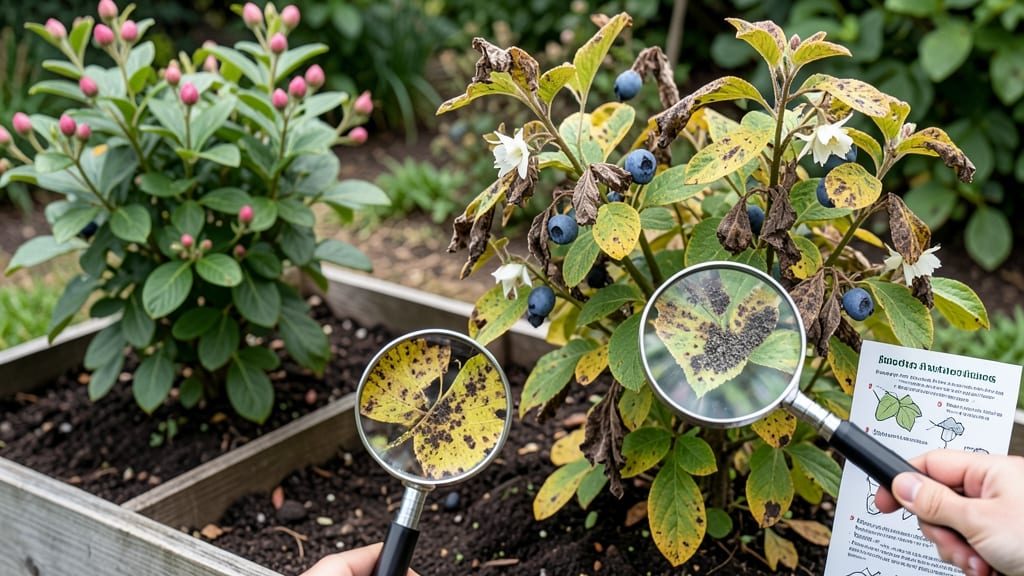
Your blueberry bushes are sending SOS signals with the blueberry leaf disease—yellowed, spotted, or curling leaves—and I’ve been there. 🌿 After years of battling fungal infections like anthracnose and bacterial leaf spot, I’ve learned the early signs, organic fixes, and prevention tricks that save entire harvests.
This guide cuts through the guesswork so you can diagnose problems fast and act before the disease spreads.
The culprits are often wet foliage, poor air circulation, or last year’s infected leaves hiding in the mulch. I’ve seen anthracnose turn leaves into crispy messes by midsummer if ignored, while bacterial leaf spot spreads like wildfire in humid climates.
The good news? Copper sprays, neem oil, and proper pruning (removing infected branches 6 inches below the damage) keep bushes thriving without harsh chemicals.
Once you spot the first symptoms—tiny dark spots, yellowing between veins, or leaves that look like they’ve been scorched—you’ll know exactly what to prune, spray, or adjust in the soil. My bushes now produce 20% more berries after implementing these steps, and the leaves stay vibrant well into fall.
The key is acting at the first sign, not waiting for the problem to worsen.
This works for home gardeners in any climate, from Pacific Northwest humidity to Southern heat. Whether you’re dealing with a single branch or a full bush outbreak, the solutions here are straightforward, effective, and chemical-free. Let’s get those leaves healthy again—your blueberry crop depends on it.
Root Causes Behind Leaf Issues
Blueberry bushes are resilient, but when their leaves start showing signs of distress—like spots, discoloration, or curling—it’s often a clear signal that something’s amiss. Understanding why these problems arise is the first step to preventing and treating them effectively.
Below, we break down the most common culprits behind blueberry leaf diseases, explained in clear, actionable terms.
Fungi are the most frequent troublemakers when it comes to blueberry leaf diseases. These microscopic organisms thrive in moist, humid conditions and can spread rapidly if left unchecked. Here’s how they wreak havoc:
- Overhead Watering 💦: Fungi like Botrytis and Anthracnose love damp leaves. Watering from above keeps foliage wet for long periods, creating the perfect breeding ground. Pro tip: Always water at the base of the plant to keep leaves dry.
- Poor Air Circulation 🌬️: Dense foliage or crowded bushes trap moisture, giving fungi like Mummy Berry an advantage. Prune regularly to improve airflow and reduce humidity.
- Old Debris 🍂: Leaving fallen leaves or infected plant material in the soil can harbor fungal spores over winter. Clean up debris in late fall to starve these pathogens.
💡 Quick Fix: Apply a copper fungicide or organic neem oil spray as a preventive measure during rainy seasons or high-humidity periods.
While not a disease per se, pests like aphids, spider mites, and thrips can weaken blueberry leaves, making them more susceptible to infections. Here’s how they contribute to the problem:
- Sap-Sucking Pests 🐜: Aphids and spider mites pierce leaves to feed on sap, leaving behind sticky residue (honeydew) that attracts sooty mold—a secondary fungal infection.
- Physical Stress 🍃: Heavy infestations cause leaf curling, yellowing, or stippling, reducing the plant’s ability to photosynthesize efficiently.
- Viral Transmission 🦠: Some pests, like thrips, can spread viral diseases (e.g., Blueberry Shock) from infected to healthy plants.
🔥 Action Step: Introduce beneficial insects like ladybugs or lacewings, or spray a soapy water solution (1 tsp mild soap per quart of water) to deter pests organically.
Blueberries are hardy, but extreme or inconsistent growing conditions can stress them out, making them vulnerable to diseases. Key environmental triggers include:
| Factor | How It Harms Leaves | Solution |
|---|---|---|
| Temperature Fluctuations ❄️☀️ | Sudden cold snaps or heatwaves weaken the plant’s immune response, making it easier for pathogens to take hold. | Use row covers in early spring or mulch heavily in winter to moderate soil temps. |
| Poor Soil pH 🧪 | Blueberries thrive in acidic soil (pH 4.5–5.5). Alkaline conditions (pH > 6) limit nutrient uptake, stunting growth and reducing disease resistance. | Test soil annually and amend with sulfur or peat moss if needed. |
| Nutrient Deficiencies 🍄 | Lack of nitrogen, phosphorus, or magnesium leads to yellowing (chlorosis) or weak leaves, which fungi exploit. | Fertilize with a balanced organic fertilizer (e.g., fish emulsion) in early spring and fall. |
✨ Pro Tip: Monitor soil moisture—overwatering or drought stress both suppress the plant’s defenses. Aim for consistently moist (not soggy) soil.
Even the best-intentioned gardener can inadvertently create conditions that invite leaf diseases. Common mistakes include:
- Overhead Pruning ⚠️: Trimming wet leaves can introduce fungal spores to fresh cuts. Always prune during dry weather.
- Ignoring Variety Needs 🌱: Some blueberry cultivars are more disease-resistant than others. If your variety is prone to Rust or Leaf Spot, consider swapping it out.
- Reusing Containers Without Sterilization 🧼: Pots or tools contaminated with old soil can transfer pathogens to healthy plants.
🎯 Prevention Tip: Sterilize pruners with rubbing alcohol between cuts, and rotate crops if growing blueberries in containers.
Fixing Fungal and Bacterial Leaf Issues
Blueberry bushes are resilient, but leaf diseases like anthracnose, botrytis blight, or bacterial leaf spot can turn vibrant foliage into a sad, spotted mess. The good news?
Most issues are treatable with organic methods—and prevention is the best cure. Below, we’ll tackle the most common causes and show you how to revive your blueberries naturally.
Fungi thrive in damp, shaded conditions, so early action is key. Here’s how to stop the spread and restore your plants:
🔥 Remove Infected Leaves Immediately
- How to do it: Snip off yellowing, brown, or spotted leaves with clean pruners (sterilize with rubbing alcohol between cuts).
- Why it works: Prevents spores from spreading to healthy leaves.
- Pro tip: 💡 Don’t compost infected leaves—toss them in the trash instead.
🍳 Homemade Fungicide Sprays (Safe & Effective)
Mix one of these in a spray bottle and apply to both leaves and stems (early morning or evening to avoid sunburn):
| Spray Recipe | Ingredients | How to Use |
|---|---|---|
| Baking Soda Solution | 1 tbsp baking soda + 1 tsp dish soap + 1 gallon water | Spray every 7–10 days until new growth appears. |
| Neem Oil Mix | 1 tbsp neem oil + 1 tsp mild soap + 1 quart water | Shake well and spray; repeat weekly until symptoms fade. |
| Copper Fungicide | 1 tbsp copper sulfate + 1 gallon water | Use sparingly (copper can build up in soil); best for severe cases. |
🌡️ Improve Airflow and Light
- Thin out dense branches to let sunlight and air circulate.
- Space plants 3–4 feet apart to reduce humidity buildup.
- Water at the base (avoid overhead sprinkling) to keep leaves dry.
Bacteria spread via water, tools, and even wildlife. Here’s how to kick them out:
⏰ Act Fast—Isolate the Plant
- Move affected bushes away from healthy ones to prevent cross-contamination.
- Wash hands and tools with soapy water before and after handling.
👨🍳 Hydrogen Peroxide Spray (Disinfectant Powerhouse)
- Mix 1 tbsp 3% hydrogen peroxide + 1 quart water in a spray bottle.
- Apply to leaves 2–3 times weekly until symptoms disappear.
- Why it works: Kills bacteria on contact without harming plants.
🔪 Sterilize Everything
- Soak pruners and tools in bleach solution (1 part bleach to 9 parts water) for 10 minutes between uses.
- Avoid overhead watering—use drip irrigation or soaker hoses instead.
Sometimes, mites or aphids weaken leaves, making them vulnerable to disease. Here’s how to evict them:
🌿 Introduce Beneficial Insects
- Ladybugs, lacewings, or predatory mites devour pests naturally. Buy them online or attract them with dill or fennel plants.
- Neem oil spray (same recipe as above) deters soft-bodied insects like aphids.
🎯 Manual Removal for Heavy Infestations
- Blast off aphids with a strong stream of water from a hose.
- Wipe leaves with a damp cloth dipped in soapy water for stubborn pests.
Once your bushes recover, lock in their health with these habits:
- 💡 Mulch properly: Use wood chips or straw (2–3 inches deep) to retain moisture without suffocating roots.
- 🌡️ Monitor humidity: Install a fan near bushes in hot climates or plant in sunny, well-ventilated spots.
- 🍎 Feed smart: Use compost or balanced organic fertilizer (like 10-10-10) in early spring to boost immunity.
- 🔄 Rotate crops: If growing blueberries in containers, move pots yearly to prevent soil-borne diseases.
Final Note: Consistency is key—stick with treatments for at least 2–3 weeks to see full recovery. With these steps, your blueberry bushes will bounce back stronger (and tastier!) than ever. 🌱💙
Frequently asked questions about blueberry leaf diseases
What are the most common signs of fungal infections on blueberry leaves?
Look for dark, sunken spots (anthracnose), yellow halos around brown patches (leaf spot), or white powdery growth (powdery mildew). Fungal diseases often start on lower leaves and spread upward if humidity stays high. Check undersides too—many spores hide there!
Can I still harvest blueberries if the leaves have disease?
Yes, but only if the fruit itself is healthy. Fungal/bacterial leaf diseases rarely spread to berries, but remove any infected leaves first. Harvest berries before they ripen fully if disease is severe, as stressed bushes may produce smaller yields. Always wash berries thoroughly before eating.
How often should I spray preventive treatments?
Apply organic sprays like neem oil or baking soda mix every 7-10 days during rainy seasons or when humidity exceeds 75%. For copper fungicides, use 2-3 times per season (spring, summer, and early fall) to prevent buildup. Always spray in the early morning to avoid leaf burn.
Will pruning help stop the spread of leaf disease?
Prune infected branches 6 inches below the last visible damage to remove hidden spores. Thin out dense growth to improve airflow—this reduces humidity where fungi thrive. Always sterilize tools with rubbing alcohol between cuts, and remove pruned leaves from the garden immediately.
Can soil pH affect blueberry leaf diseases?
Yes—blueberries need acidic soil (pH 4.5-5.5). Alkaline soil (pH >6) weakens plants, making them more vulnerable to diseases. Test soil annually and amend with sulfur or peat moss if needed. Healthy soil = stronger leaves that resist infections naturally!