
Pests and Diseases
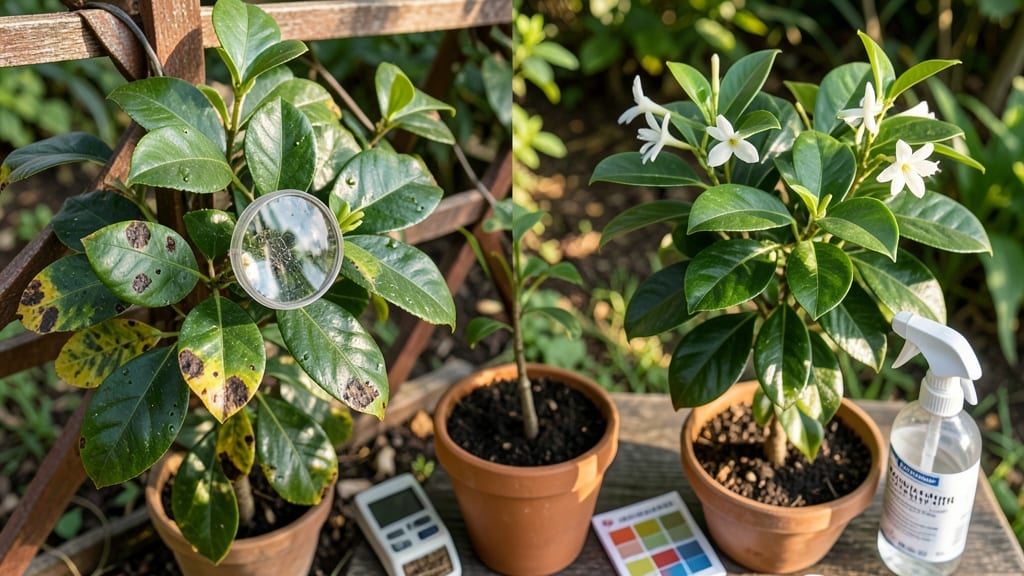
That brown, crinkled mess on your jasmine leaves isn’t just ugly—it’s jasmine leaf disease spreading faster than you think. 🌿 I've battled this exact problem with my star jasmine, and the key to saving your plant lies in acting within 48 hours of spotting those first dark spots.
The real culprit? Too much moisture on leaves combined with warm, humid air—your jasmine's worst nightmare. Overhead watering, dense foliage, or poor air circulation create the perfect fungal buffet.
I learned this the hard way when my entire bush turned into a leaf spot salad after a week of afternoon showers.
Here's the good news: with copper fungicide, pruning the worst leaves, and adjusting your watering routine, you can turn things around in just 2-3 weeks. The leaves will start looking fresh again, and those fragrant blooms will return stronger than ever.
This works for all jasmine varieties—whether you're dealing with star jasmine, Confederate jasmine, or even your climbing jasmine. The secret is catching it early and giving your plant the right care. Let's get those leaves healthy again!
Root Causes of Leaf Discoloration
Understanding why your jasmine leaves develop unsightly spots or discoloration starts with identifying the underlying triggers. These issues often stem from a mix of biological, environmental, and cultural factors. Below, we break down the most common culprits—so you can address them directly.
Fungal pathogens are the #1 cause of jasmine leaf disease, thriving in warm, humid conditions. These microscopic invaders exploit weak spots in leaves, creating unsightly lesions, powdery mildew, or dark spots with yellow halos. Common fungal culprits include:
- Anthracnose – Causes sunken, dark lesions with a reddish-brown border, often appearing after rain or overhead watering.
- Powdery Mildew – Leaves develop a white, powdery coating (like dust), which later turns brown and brittle.
- **Leaf Spot Diseases (e.g., Alternaria, Septoria) – Small, circular spots with dark edges that expand and merge over time.
Why it happens: Fungi spread via spores—invisible to the naked eye—that latch onto leaves through wounds, excess moisture, or poor air circulation. If your jasmine is stressed (from overwatering, nutrient deficiency, or compacted soil), it becomes an easy target.
Jasmine plants hate soggy roots.
When soil stays too wet—either from overwatering, heavy clay soil, or lack of drainage—roots suffocate, leading to: - Waterlogged stress → Leaves yellow, wilt, or develop edema (blistered, translucent spots from excess water pressure). - Root rot** → Fungi like Phytophthora or Pythium attack weakened roots, causing leaf spots as the plant struggles to absorb nutrients.
Why it happens:
- No drainage holes in pots → Water pools at the bottom.
- Compacted or water-retentive soil → Roots can’t breathe.
- Ignoring the "soak-and-dry" rule → Watering before the top 1–2 inches of soil dry out.
Jasmine leaves aren’t just vulnerable to pathogens—they’re also sensitive to physical and chemical damage:
- Sunburn – Sudden exposure to intense sunlight (especially after moving plants indoors/outdoors) causes bleached or crispy patches on leaves.
- Wind Scorch – Strong, dry winds dehydrate leaves, leading to brown, papery edges (common in coastal or open-air gardens).
- Air Pollution or Chemical Burn – Ozone, sulfur dioxide, or even over-fertilizing with synthetic salts can create necrotic (dead) spots on leaves.
Why it happens:
- Rapid climate changes (e.g., moving a shaded indoor jasmine outside on a hot day).
- Lack of windbreaks in exposed garden beds.
- Using harsh pesticides or tap water high in chlorine/fluoride.
While pests like spider mites or aphids don’t directly cause fungal spots, their feeding weakens leaves, making them prime targets for secondary infections.
Look for: - Stippled or skeletonized leaves (from mites/sawfly larvae). - Sticky residue (honeydew) → Fungi like sooty mold grow on this sticky film, turning leaves black and crusty.
Why it happens:
- Pests thrive in dry, dusty conditions (they suck plant sap, leaving wounds).
- Overuse of broad-spectrum pesticides kills beneficial insects that control pest populations.
Jasmine leaves may develop yellowing (chlorosis) or dark spots if they’re malnourished or overfed:
- Iron/Manganese Deficiency → Interveinal chlorosis (yellowing between veins).
- Magnesium Deficiency → Brown spots with yellow edges (common in alkaline soils).
- Excess Salt (from fertilizers) → Leaf tip burn or crispy brown patches.
Why it happens:
- Soil pH imbalance (jasmine prefers 6.0–7.0; alkaline soil locks out micronutrients).
- Using tap water high in salts over time.
- Over-fertilizing with nitrogen → Leads to soft, susceptible growth.
Jasmine is a tropical/subtropical plant—it struggles with:
- Cold drafts (<50°F/10°C) → Leaves develop purple-black spots or curl.
- High humidity + poor airflow → Fungi and bacteria multiply rapidly.
- Sudden temperature drops (e.g., nighttime frost) → Freeze damage (water-soaked, blackened spots).
Why it happens:
- Placing potted jasmine near AC vents or doors.
- Not acclimating plants before moving them outdoors in spring.
- Overcrowded plantings → Stagnant air traps moisture.
How to Fix Fungal Foliage Fails
Fungal leaf diseases like those affecting jasmine can feel overwhelming, but with the right approach, you can restore your plant’s health and prevent future outbreaks. Below, we’ve mapped common causes to practical fixes, along with proactive prevention tips to keep your jasmine thriving.
Cause: Fungal infections (e.g., powdery mildew, leaf spot) thrive in damp, shaded conditions. Fix:
- 🔪 Trim infected leaves immediately—cut off any yellow, brown, or spotted foliage with clean, sterilized scissors (dip in rubbing alcohol between cuts).
- 🌬️ Improve airflow by spacing plants 12–18 inches apart and pruning dense growth.
- ☀️ Boost sunlight—move jasmine to a sunnier spot (6+ hours of light daily) to dry leaves faster.
- 💦 Water wisely: Water at the base (not overhead) in the early morning so leaves dry by nightfall.
Prevention Tip: 💡 Apply a copper fungicide (like Bonide Copper Fungicide) every 2–3 weeks during humid months as a shield.
Cause: Soggy soil invites root rot and fungal growth. Fix:
- 📊 Check soil moisture—stick your finger 1–2 inches deep; water only if dry.
- ⏰ Space out waterings—jasmine prefers soil to dry slightly between drinks (usually every 1–2 weeks, depending on climate).
- 🚫 Drainage check: Ensure pots have holes and use well-draining soil (mix potting soil with perlite or sand).
Prevention Tip: 🌡️ Use a moisture meter to avoid guesswork—overwatering is the #1 killer of houseplants!
Cause: Spider mites, aphids, or whitefly damage weakens leaves, making them susceptible to fungi. Fix:
- 🔍 Inspect leaves for tiny webs, sticky residue (honeydew), or crawling bugs.
- 🛡️ Blast pests off with a strong spray of water, then treat with neem oil (mix 1 tsp neem oil + 1 tsp mild soap + 1 quart water; spray weekly).
- 🐞 Introduce beneficial insects like ladybugs or lacewings to eat pests naturally.
Prevention Tip: ✨ Isolate new plants for 2 weeks to spot hitchhiking pests before they spread.
Cause: Weak plants with poor nutrition can’t fight infections. Fix:
- 📊 Test soil pH—jasmine prefers 6.0–7.0; amend with lime (to raise pH) or sulfur (to lower it) if needed.
- 💪 Fertilize lightly: Use a balanced, water-soluble fertilizer (10-10-10) diluted to half strength every 4–6 weeks in spring/summer. Avoid fertilizing in fall/winter.
- 🍎 Boost immunity with compost tea (brewed from worm castings) for natural nutrients.
Prevention Tip: 🎯 Less is more—over-fertilizing burns roots and stresses plants, making them vulnerable.
Cause: High humidity (especially in greenhouses or bathrooms) fuels fungal spores. Fix:
- 🌬️ Use a fan on low setting near the plant to circulate air.
- 💦 Reduce humidity with a dehumidifier (aim for 40–60% humidity).
- 🌿 Reposition indoors—avoid basements or bathrooms; opt for kitchens or sunrooms instead.
Prevention Tip: 🔥 Baking soda spray (1 tsp baking soda + 1 quart water + drop of soap) can help suppress fungi in humid conditions.
Final Pro Tip: 🌱 Quarantine new plants and clean tools regularly to stop diseases in their tracks. With these steps, your jasmine will bounce back—and stay healthy!
Frequently asked questions about jasmine leaf disease
What do fungal spots on jasmine leaves look like?
Fungal spots typically appear as dark brown or black circular marks with yellow halos, or as a powdery white coating (powdery mildew). Look for sunken lesions with reddish-brown borders—these are classic signs of anthracnose. If spots merge and turn brown/brittle, it’s likely leaf spot disease.
Can I save a jasmine plant with severe leaf disease?
Yes, but act fast! Prune all infected leaves immediately, improve airflow, and apply copper fungicide every 2–3 weeks. For advanced cases, repot in fresh, well-draining soil and reduce humidity. With consistent care, most jasmine plants recover within 4–6 weeks. The key is catching it early!
Why does my jasmine get leaf disease even after treating it?
Persistent fungal issues usually mean underlying stress factors like overwatering, poor drainage, or compacted soil. Check for root rot (smelly, mushy roots) and ensure pots have drainage holes. Also, avoid overhead watering—always water at the base to keep leaves dry.
Is neem oil safe to use on jasmine with fungal spots?
Neem oil is not a fungicide, but it helps prevent secondary infections by boosting plant immunity. For active fungal diseases, use it alongside copper fungicide. Mix 1 tsp neem oil + 1 tsp mild soap + 1 quart water and spray weekly. Always test a small leaf first!
How can I prevent jasmine leaf disease in my garden?
Focus on three key habits:
- Space plants 12–18 inches apart for airflow,
- Water at the base in the morning (never overhead), and
- Prune regularly to remove crowded growth. Apply baking soda spray (1 tsp baking soda + 1 quart water) monthly in humid climates.