
Leaf Blower
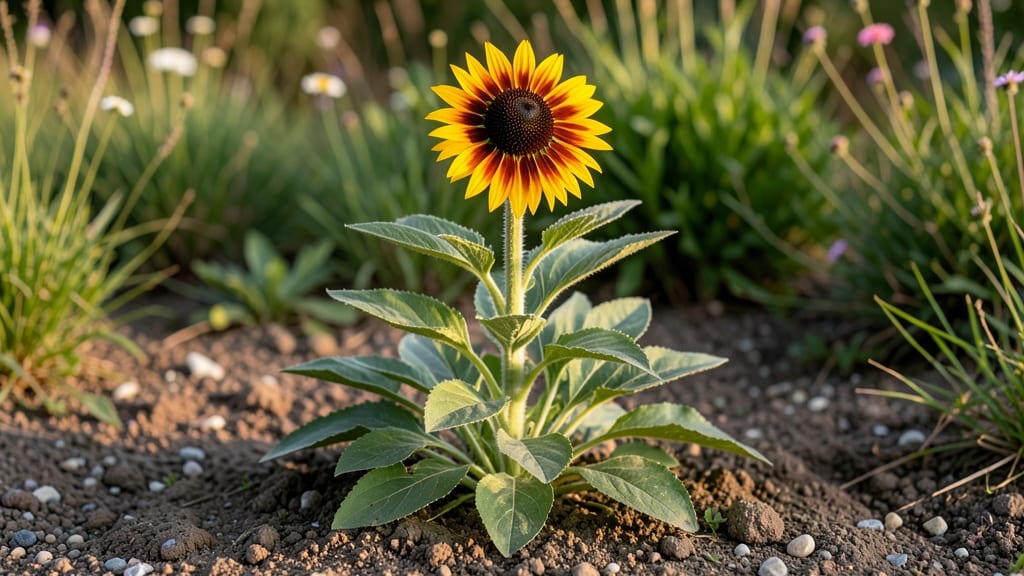
The leaf identification of a black-eyed Susan is your first clue to spotting this cheerful perennial. 🌻 The leaves are deep green, slightly fuzzy, and lance-shaped with jagged edges—nothing like the smooth petals of coneflowers or daisies.
Run your fingers over them, and you’ll feel that signature velvety texture that sets them apart.
But here’s the thing: those leaves can tell you more than just the plant’s identity. Yellowing edges might mean too much sun, while brown spots could signal leaf spot disease.
Compare them to healthy samples—if yours look dull or spotted, it’s time to adjust care. The key is catching issues early before they dim those golden blooms.
📚 In This Guide
- What you need
- Instructions
- Tips and common mistakes
- Wrapping up and next steps
What you need
- ● Black Eyed Susan plant (Rudbeckia hirta) – A live sample or high-quality reference photo for comparison.
- ● Hand lens or magnifying glass (10x magnification recommended) – For examining fine leaf details.
- ● Field guidebook or smartphone with plant identification app (e.g., iNaturalist, PlantNet, or PictureThis) – For cross-referencing features.
- ● Notebook & pen – To record leaf shape, vein patterns, and other key traits.
- ● Ruler or measuring tape – To note leaf length and width (inches or centimeters).
- ● Camera or smartphone with good camera – For capturing close-up shots of leaves and flowers.
- ○ Gloves (optional but recommended) – If handling plants in outdoor settings to avoid skin irritation.
- ● Pruning shears – For safely collecting leaf samples without damaging the plant.
- ● Pressing kit or herbarium paper – To preserve leaf samples for long-term study.
- ● UV flashlight – Some plant features (like vein patterns) are easier to see under UV light!
- ● Printed checklist of Black Eyed Susan traits – To tick off as you identify features (e.g., leaf serration, hairiness, flower structure).
How to identify Black Eyed Susan leaves with confidence
Here's how to spot these cheerful garden stars by their leaves alone—no flowers needed.
🌿 Step 1: Examine Leaf Shape and Arrangement
Black Eyed Susan (Rudbeckia hirta) leaves are deeply lobed, resembling rough-edged maple leaves but smaller—typically 2-4 inches long. Look for 3-5 rounded lobes along each leaf, with the edges slightly wavy but not jagged. The leaves grow in alternate patterns along the stem rather than in opposite pairs.
Run your fingers along a leaf's edge—you'll feel the subtle bumps where lobes meet. This texture distinguishes them from smooth-edged plants. Young leaves start out smoother but develop more pronounced lobes as they mature. Compare them to dandelion leaves (which are deeply divided all the way to the stem) to see the key difference.
🌿 Step 2: Check Leaf Surface and Color
Black Eyed Susan leaves have a slightly hairy texture when young, though they become smoother with age. Hold a leaf up to light—you'll see tiny hairs along the veins if viewed closely. The color is deep green above and often lighter green or slightly grayish underneath, a classic trait of this species.
Look for prominent veins that spread out like fingers from the central stem. These veins create a web-like pattern that's more pronounced than in similar-looking coneflowers. The leaves also tend to be broader at the base and taper toward the tip, forming an oval shape rather than a perfect circle.
🌿 Step 3: Observe Stem and Growth Habit
The stems are hairy and slightly rough to the touch, with a square cross-section when viewed from the end. This square shape is a dead giveaway—most wildflowers have round stems, but Black Eyed Susan stems are distinctly angular. The plant grows in clumps rather than spreading horizontally like creeping plants.
Notice how the leaves attach to the stem—each leaf has a short, broad base that wraps partially around the stem. This attachment point is wider than in many wildflowers, giving the plant a sturdy, upright appearance. When you find a plant with these square stems and broad leaf bases, you're likely looking at Black Eyed Susan.
🌿 Step 4: Compare With Common Look-Alikes
To rule out imposters, compare with Goldenrod (which has narrower, more willow-like leaves) and Sunflower (which has much larger, smoother leaves). Black Eyed Susan leaves are never perfectly smooth—they always have some texture or hairiness. Also check for milky sap—if you break a stem and see white sap, it's not Black Eyed Susan (that's a coneflower trait).
Pay attention to the leaf arrangement on the stem. Black Eyed Susan leaves spiral upward in a consistent pattern, while many wildflowers have random or opposite leaf placement. This spiral pattern continues all the way up the stem, even on flowering branches. Use this as your final confirmation before checking for the distinctive yellow blooms.
Tips & tricks for perfect Black Eyed Susan leaf identification
These simple tricks will help you confidently spot Black Eyed Susan leaves—even when flowers aren't in sight.
Lobe Count is Key: Focus on those 3-5 rounded lobes mentioned in Step 1. Count them carefully—they're never perfectly symmetrical but should resemble a rough maple leaf. I've found that counting lobes helps distinguish them from dandelion leaves, which have much deeper divisions all the way to the stem. The wavy edges are another dead giveaway that sets them apart from smoother wildflowers.
Texture Test: In Step 2, that hairy texture when young is your secret weapon. Run your thumb along the leaf's underside—you'll feel tiny hairs along the veins. This subtle fuzziness disappears as leaves mature, but it's a key identifier for young plants. I've used this trick to confirm Black Eyed Susan in spring when flowers haven't appeared yet.
Stem Shape Matters: The square stem cross-section in Step 3 is non-negotiable. Most wildflowers have round stems, but Black Eyed Susan's angular stems are distinctive. Hold the stem between your fingers—if it feels square rather than round, you're on the right track. This feature alone can help you identify plants even when leaves are damaged or missing.
Compare with Confidence: For Step 4 comparisons, I keep a reference photo of Goldenrod (narrow leaves) and Sunflower (large, smooth leaves) on my phone. The milky sap test is especially helpful—if you see white sap when breaking stems, it's definitely not Black Eyed Susan. This visual comparison method has helped me avoid misidentifying plants in my garden for years.
Pro Tips for Black Eyed Susan Leaf Identification
- These simple tricks will help you confidently spot Black Eyed Susan leaves—even when flowers aren't in sight.
- Lobe Count is Key: Focus on those 3-5 rounded lobes mentioned in Step 1.
- Texture Test: In Step 2, that hairy texture when young is your secret weapon.
Frequently asked questions
Got questions about Black Eyed Susan leaf identification? You’re not alone! Here are some of the most common queries—and their answers—to help you spot these cheerful blooms with confidence.
What do Black Eyed Susan leaves look like up close?
Black Eyed Susan leaves are hairy and lance-shaped, with jagged or serrated edges. They grow in a rosette at the base of the plant and are typically 1–3 inches long. The leaves are a deep green with a slightly rough texture—perfect for distinguishing them from lookalikes like coneflowers or sunflowers.
When is the best time to identify Black Eyed Susan leaves?
The ideal time to identify Black Eyed Susan foliage is early spring or late summer, before or after the blooming season. In spring, the leaves are fresh and easy to spot, while late summer offers a mix of mature leaves and fading flowers. Avoid mid-summer when heat stress can make leaves look wilted or distorted.
How can I tell the difference between Black Eyed Susan and other yellow flowers?
Black Eyed Susans (Rudbeckia hirta) have dark brown or black centers on their yellow petals, while sunflowers (Helianthus) have a single large brown center. Goldenrod (Solidago) has narrower leaves and feathery plumes. Check the leaf shape too—Black Eyed Susans have hairy, serrated edges, unlike the smooth leaves of many impatiens or marigolds.
What if my plant’s leaves look wrong—are they diseased?
If Black Eyed Susan leaves turn yellow, spotty, or wilted, it could signal powdery mildew, leaf spot, or aphid infestations. Prune affected leaves immediately and improve airflow. For prevention, water at the base (not overhead) and avoid overcrowding. A light spray of neem oil can also help keep pests at bay.
Can I grow Black Eyed Susans from just the leaves?
Nope! Black Eyed Susans won’t regrow from cut leaves alone—they need roots or seeds. If you’re propagating, dig up a small section of the root crown (with attached leaves) in early spring. Alternatively, collect seeds from the dried flower heads in fall and plant them the following spring for new plants.
Wrapping up and next steps
Identifying Black Eyed Susan leaves is easier than you think—just look for those deeply lobed, jagged edges and hairy stems paired with vibrant yellow blooms! 🌼 Whether you're a gardener, nature enthusiast, or simply curious, recognizing this plant helps you appreciate its beauty and even spot it in meadows or gardens.
Now that you’re armed with these key markers, why not take a walk outside and see if you can find one? Grab a notebook, snap a photo, or share your discovery with fellow plant lovers—every little exploration brings you closer to nature’s wonders!