
Aphids
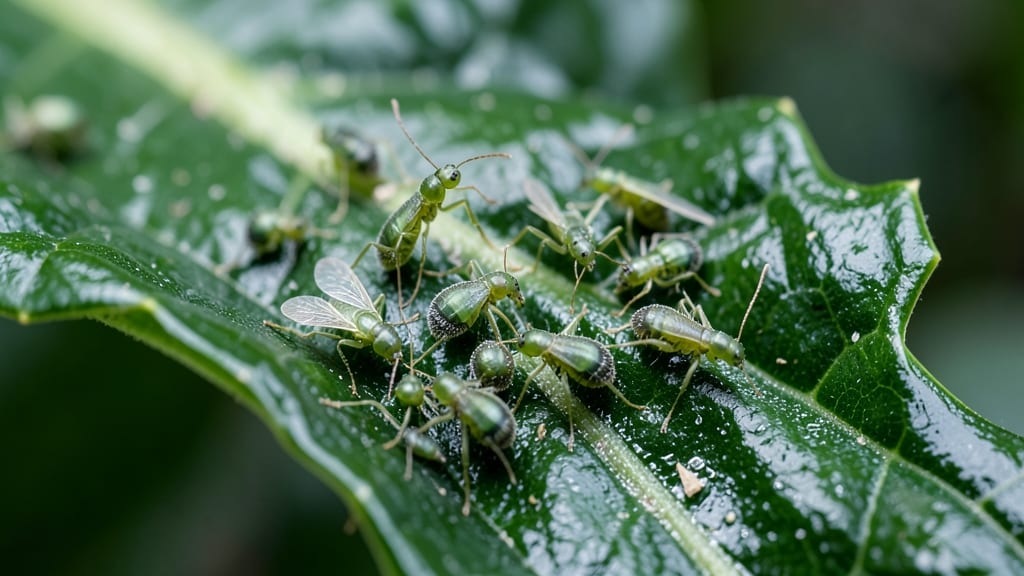
Aphids on fiddle leaf figs turn your glossy leaves into sticky, honeydew-covered messes. 🌿 I’ve battled these sap-sucking pests more times than I’d like to admit, but neem oil is the game-changer that finally worked for me—no harsh chemicals, just plant-safe results.
The problem starts small: tiny green or black bugs clustering on new growth, leaving behind a shiny residue that attracts ants and sooty mold. Most people grab the first spray they see, but that often backfires—your fiddle leaf fig needs gentle care, not chemical shock.
Neem oil disrupts their life cycle without harming the plant, and it’s safe enough to use even when pets are around.
Within 3-5 days of treatment, you’ll see fewer aphids, and new leaves will emerge clean and vibrant. The key is consistency—reapply every 7-10 days until the infestation disappears, then focus on keeping your plant strong.
Healthy fiddle leaf figs bounce back faster, and prevention (like wiping leaves with soapy water) cuts future outbreaks in half.
Works for other houseplants too—just adjust the dilution. Here’s the step-by-step rescue plan that saved my figs (and will save yours).
Root Causes of Fiddle Leaf Fig Aphids
Aphids don’t just randomly appear on your Ficus lyrata—they’re drawn to specific conditions that make your plant a prime buffet. Understanding these triggers is the first step to stopping their sticky invasion. Let’s break down the science behind why these sap-sucking pests target your fiddle leaf fig.
Aphids thrive when your fiddle leaf fig is stressed, much like a weakened immune system makes humans more susceptible to illness. Here’s why:
- Nutrient Deficiencies: Aphids detect plants low in nitrogen, phosphorus, or potassium through volatile organic compounds (VOCs) emitted by stressed leaves. A Ficus lyrata lacking these nutrients produces softer, more tender leaves—perfect for aphid feeding and egg-laying.
- Overwatering or Underwatering: Both extremes disrupt root health, reducing the plant’s ability to produce defensive compounds like phenolics and terpenoids. Aphids can smell the imbalance! Overwatering also creates a humid microclimate they adore.
- Poor Light Conditions: Insufficient light (below 10,000 lux) weakens photosynthesis, leaving your plant energy-depleted. Aphids exploit this by draining what little sap remains, further stressing the plant in a vicious cycle.
💡 Pro Tip: Test your soil’s pH (ideal: 6.1–6.5) and amend with compost or worm castings to boost natural defenses. Aphids avoid healthy, resilient plants!
Aphids are drawn to the sweetest, most nutrient-rich parts of your fiddle leaf fig—new shoots and tender leaves. Here’s the chemistry behind their craving:
- High Sugar Content: New growth contains elevated levels of sucrose and glucose, which aphids detect via their antennae. These sugars fuel their rapid reproduction (a single aphid can produce 80 offspring in a month!).
- Sticky Honeydew Production: As aphids feed, they excrete honeydew—a sugary waste product that attracts ants (which “farm” aphids for this nectar) and fosters sooty mold, blocking sunlight and further stressing the plant.
- Volatile Chemical Signals: Damaged leaves release green leaf volatiles (GLVs), which aphids interpret as a distress signal. Ironically, this “SOS” scent lures more aphids to the party.
🔥 Actionable Fix: Prune new growth aggressively (but not excessively) to remove aphid hotspots. Use sterile scissors to avoid spreading pests, and dispose of clippings in sealed bags.
If you’ve ever seen ants tending to aphids like livestock, you’re witnessing a mutualistic relationship that accelerates infestations. Here’s how it works:
- Ant-Aphid Symbiosis: Ants protect aphids from predators (like ladybugs) and herd them to fresh feeding sites. In return, they lap up the aphids’ honeydew, which contains amino acids and vitamins ants can’t synthesize.
- Pheromone Communication: Aphids release alarm pheromones when threatened, but they also emit aggregation pheromones to recruit more aphids. Ants amplify this by carrying aphids to new leaves, creating supercolonies.
- Indirect Spread: Ants don’t just move aphids—they transport aphid eggs on their bodies, ensuring infestations persist even after you’ve treated the plant.
🎯 Strategic Defense:
- Disrupt the ant-aphid bond with diatomaceous earth (food-grade) around the soil line—ants avoid crossing it.
- Use borax or soapy water sprays (1 tsp borax + 1 gallon water) to deter ants without harming the plant.
Aphids are cold-blooded and rely on external warmth and humidity to thrive. Your fiddle leaf fig’s environment might be accidentally creating a aphid paradise:
| Factor | Aphid-Preferred Range | How to Adjust |
|---|---|---|
| Temperature | 65–80°F (18–27°C) | Keep below 75°F (24°C) indoors; use fans or AC in summer. |
| Humidity | 50–70% | Drop to 40–50% with a dehumidifier or reduce watering. |
| CO₂ Levels | High (from poor ventilation) | Increase airflow with a gentle breeze (e.g., oscillating fan). |
✨ Key Insight: Aphids cannot survive below 50°F (10°C) or above 90°F (32°C). Create an inhospitable climate by adjusting these factors—nature’s pest control!
How to Fix Sticky Leaf Problems
Aphids might turn your fiddle leaf fig’s leaves into a sticky mess, but don’t worry—there are effective, plant-safe ways to tackle them. Below, we’ll break down solutions by cause and symptom, so you can act fast and prevent future infestations. Let’s get your fiddle leaf fig looking fresh again!
Aphids love weak, stressed plants—especially those with soft new growth or overcrowded leaves. If your fiddle leaf fig is struggling, it’s an all-you-can-eat buffet for these pests.
How to Fix It: ✅ Prune wisely – Trim yellow, damaged, or overly crowded leaves to improve airflow. Focus on new growth where aphids love to hide. ✅ Repot if needed – If roots are cramped, move your plant to a slightly larger pot with fresh, well-draining soil. ✅ Fertilize lightly – Use a balanced, water-soluble fertilizer (like 10-10-10) once a month in spring/summer to strengthen growth.
💡 Pro Tip: Avoid over-fertilizing—aphids thrive on rapid, tender new growth, so let your plant recover before feeding it again.
Aphids leave behind a sugary honeydew that coats leaves, attracting sooty mold and weakening your plant. A good cleaning session can remove both pests and residue.
How to Fix It: 🧼 Mix a gentle soap solution – Combine 1 tsp mild dish soap (like Dawn) with 1 quart of water in a spray bottle. 💦 Spray leaves thoroughly – Focus on undersides of leaves (aphid hotspots!) and new growth. Let it sit for 5-10 minutes, then rinse with water. 🧹 Wipe stubborn sticky spots – Use a damp microfiber cloth to remove residue from leaves and stems.
⚠️ Warning: Never use harsh chemicals (like bleach or vinegar) directly on leaves—they can burn your fiddle leaf fig!
If aphids have taken over, neem oil is your best natural weapon—it smothers eggs, larvae, and adults while being safe for plants when used correctly.
How to Fix It: 🌿 Mix neem oil solution – Combine:
- 1 tbsp neem oil
- 1 tsp mild dish soap (as an emulsifier)
- 1 quart of water
🌿 Spray all parts of the plant – Focus on leaf undersides, stems, and new growth. Reapply every 5-7 days until aphids disappear. 🌿 Reapply after rain – Neem oil washes off easily, so retreat if it rains within 24 hours.
💡 Pro Tip: For extra potency, add 1 tsp garlic oil (natural aphid repellent) to the mix!
If aphids are just starting, a hands-on approach can save you from stronger treatments.
How to Fix It: 🖐️ Squish them (yes, really!) – Wear gloves and crush clusters of aphids with your fingers. They’re soft and easy to squash! 🚰 Blast them off – Use a strong stream of water from a hose to dislodge aphids from leaves and stems. 🕷️ Introduce beneficial insects – Ladybugs, lacewings, and parasitic wasps (like Aphidius colemani) eat aphids naturally. Buy them online or attract them with companion plants like marigolds.
🌡️ Pro Tip: Do this early in the morning—aphids are lethargic in cool temps, making them easier to remove!
Once you’ve kicked aphids to the curb, prevent them from returning with these simple habits:
🌱 Inspect new plants – Always quarantine new additions for 2-4 weeks before introducing them to your fiddle leaf fig. 🌿 Encourage airflow – Avoid overcrowding plants and prune regularly to reduce hiding spots. 💧 Water wisely – Aphids love overwatered, soggy soil.
Let the top 1-2 inches dry out between waterings. 🌞 Boost sunlight – Fiddle leaf figs thrive in bright, indirect light. Weak, leggy growth = aphid magnet. 🛡️ Preventative sprays – Every 2-4 weeks, spray leaves with neem oil or insecticidal soap as a barrier treatment.
| Step | Action | Frequency |
|---|---|---|
| Prune & Clean | Remove sticky leaves, trim crowded growth | As needed |
| Soap Spray | Use mild soap solution to kill aphids | Weekly (if infested) |
| Neem Oil Treatment | Full-body spray for stubborn pests | Every 5-7 days until gone |
| Beneficial Insects | Release ladybugs/lacewings | Seasonally (spring/summer) |
| Preventative Care | Inspect plants, improve airflow, neem spray | Monthly |
With these targeted solutions, your fiddle leaf fig will be aphid-free in no time! 🌿✨ Stay vigilant, and your plant will reward you with lush, sticky-residue-free leaves for years.
Frequently asked questions
Why do ants keep coming back after I treat my fiddle leaf fig for aphids?
Ants form a protective relationship with aphids—they "farm" them for honeydew. Even after you eliminate aphids, ants may linger. Create a barrier with diatomaceous earth around the soil line or use borax spray (1 tsp/quart water) to deter them. Focus on removing aphids first, then address ants separately.
Can I use vinegar to treat aphids on my fiddle leaf fig?
White vinegar (1 part vinegar to 1 part water) can help as a quick rinse, but it's not a long-term solution. Vinegar can burn tender fiddle leaf fig leaves if overused. For better results, stick with neem oil or insecticidal soap, which are gentler and more effective against eggs and larvae.
How long does it take for neem oil to work on aphids?
You'll typically see noticeable improvement within 3-5 days of consistent treatment. Neem oil disrupts aphids' life cycle, so reapply every 5-7 days until the infestation disappears completely. For stubborn cases, combine with manual removal of visible clusters.
Will my fiddle leaf fig recover from severe aphid damage?
Yes, but it needs proper care. Remove heavily damaged leaves and focus on revitalizing the plant with balanced fertilizer and bright, indirect light. Avoid overwatering—aphid-stressed plants are more vulnerable. With consistent treatment and good conditions, your fiddle leaf fig can bounce back within 4-8 weeks.
Can I use the same neem oil solution on other houseplants?
The same neem oil mix (1 tbsp neem + 1 tsp soap + 1 quart water) works on most houseplants. However, always test a small leaf area first—some sensitive plants (like succulents) may react differently. Adjust dilution if needed (e.g., half-strength for delicate varieties).