
Pests and Diseases
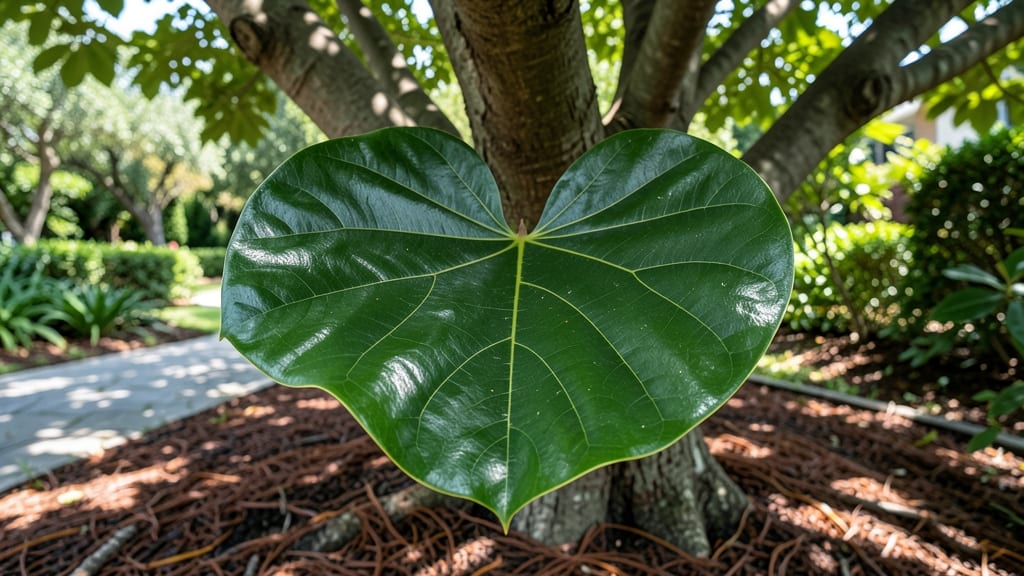
Foliar leaves are specialized leaf-like structures that function as temporary photosynthetic organs in plants, differing from true leaves by lacking vascular bundles and often appearing as modified stems or bracts, like those found in Spanish moss or poinsettias.
Foliar leaves might sound like a fancy term, but they're actually nature's way of giving plants a temporary boost in photosynthesis.
Unlike true leaves, which have a full vascular system, foliar leaves often lack veins and petioles, making them lightweight and disposable. 🌿 This adaptation helps plants like Spanish moss thrive in harsh conditions, where they can quickly shed damaged leaves without losing their core structure.
Think of them as the plant world's version of a disposable cup—useful for a short time but not meant to last.
What makes these structures fascinating is their role in plant survival. Many foliar leaves, such as those on poinsettias, serve as protective bracts that shield developing flowers or seeds.
They're also common in epiphytes (plants that grow on other plants) like orchids, where their lightweight design helps them conserve water and nutrients. In your garden, you might spot them on succulents or even some types of ferns, where they help the plant adapt to its environment without overcommitting resources.
💡 In This Article
- How Foliar Leaves Differ From True Leaves Structurally
- Identifying Foliar Leaves in Common Garden Plants
How foliar leaves differ from true leaves structurally
At first glance, foliar leaves might resemble true leaves, but their internal structure tells a different story.
True leaves have a complex anatomy with a clear petiole (the stalk connecting to the stem), a blade (the broad surface), and a network of vascular bundles (xylem and phloem) that transport water, nutrients, and sugars.
These bundles create the visible veins you see when you hold a leaf up to the light. Foliar leaves, however, often lack these features entirely—no petiole, no intricate vein pattern, and sometimes not even a true blade.
Instead, they may appear as flattened stems or bracts, which are modified leaves that protect flowers or buds.
The absence of vascular bundles is a game-changer. True leaves rely on these bundles to sustain long-term photosynthesis and nutrient transport, which is why they’re built to last. Foliar leaves, on the other hand, prioritize speed and adaptability.
For example, Spanish moss (Tillandsia usneoides) has foliar leaves that lack veins entirely, absorbing moisture and nutrients directly from the air through specialized cells called trichomes. This design allows the plant to thrive in dry, nutrient-poor environments where traditional leaves would struggle.
The trade-off? These structures are short-lived and often shed when conditions change, like during drought or extreme temperatures. 🌿
Another key difference lies in their evolutionary purpose. True leaves evolved to maximize photosynthesis over time, developing thick cuticles and complex internal structures to conserve water and energy. Foliar leaves, however, are often a temporary solution—think of them as the plant’s "emergency backup" system.
Poinsettias (Euphorbia pulcherrima) provide a perfect example: their vibrant red "leaves" are actually bracts, which are foliar leaves modified to attract pollinators and protect the tiny, inconspicuous flowers beneath.
These bracts don’t perform photosynthesis like true leaves; instead, they serve a protective and reproductive role, highlighting how foliar leaves can specialize for functions beyond basic energy production.
Size and texture also set them apart. True leaves tend to be larger and more robust, with a waxy or leathery texture to reduce water loss. Foliar leaves, however, are often smaller, thinner, and more delicate.
Take the case of succulent rosettes, where some "leaves" are actually modified stems (cladodes) that store water and perform photosynthesis. These structures lack the traditional leaf anatomy but fulfill the same surface-area-to-volume ratio needs, proving that foliar leaves can be just as efficient—just in different ways. 💫
Here’s a quick comparison to solidify the differences:
- True Leaves: Have petioles, blades, and vascular bundles; built for long-term photosynthesis (e.g., oak, maple).
- Foliar Leaves: Lack petioles or veins; often modified for protection or temporary photosynthesis (e.g., Spanish moss, poinsettia bracts).
- Function: True leaves = energy factories; foliar leaves = adaptable, disposable tools.
The bottom line? Foliar leaves are nature’s shortcuts—efficient, adaptable, and designed to get the job done without the long-term investment. Whether it’s a bract shielding a flower or a moss leaf absorbing dew, these structures prove that plants have more than one way to thrive. 🌱