
Planting
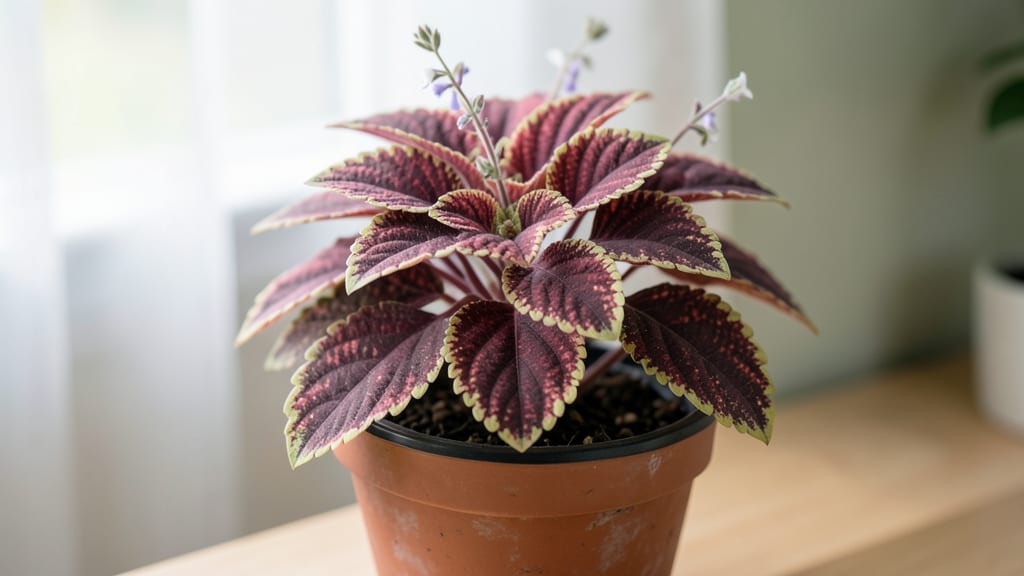
A small red leaf plant features bold foliage, compact growth habits, and thrives with minimal care under bright indirect light. Varieties like Coleus, Peperomia, or certain ferns typically stay between 6–12 inches tall.
These eye-catching plants get their striking color from anthocyanins, pigments that intensify under bright but diffused light. 🌿 The key to keeping their vibrant hue is avoiding direct sun, which can bleach the leaves, while ensuring they stay slightly moist but never soggy.
I've found that misting the leaves occasionally—especially in dry climates—helps maintain that rich crimson or burgundy shade year-round.
Most small red leaf plants also grow slowly, making them perfect for small spaces or as tabletop companions. Their compact size means they rarely need pruning, though a light trim of leggy stems can encourage bushier growth.
If you're choosing between varieties, Coleus tends to have larger, more dramatic leaves, while Peperomia offers smaller, waxy foliage with unique patterns.
💡 In This Article
- Identifying Key Traits of Small Red Leaf Plants
- Optimal Care Guide for Vibrant Red Leaf Growth
Identifying key traits of small red leaf plants
The most defining trait of these plants is their foliage, which contains high concentrations of anthocyanins—pigments that create those deep reds and purples. 🌿 Coleus varieties like 'Black Dragon' develop leaves that can reach 3-5 inches long with jagged edges, while Peperomia 'Watermelon' features smaller, waxy leaves patterned with green and red.
The color intensity actually shifts with light exposure: under bright indirect light, the reds become more vibrant, but direct sun can cause fading or even bleaching within 2-3 weeks.
Growth patterns vary by species but generally stay compact. Coleus typically grows 12-18 inches tall but can be pruned to maintain a 6-inch tabletop size, while Peperomia varieties rarely exceed 8 inches.
The leaf arrangement is another key identifier: Coleus has opposite leaf patterns (two leaves per node), while Peperomia often features alternate or spiral arrangements. 🌱 Fern varieties like 'Maidenhair' develop delicate, lacy fronds that can appear almost translucent when young, with red hues developing as they mature.
Texture plays a surprising role in identification too. Coleus leaves often feel slightly fuzzy or velvety to the touch due to fine hairs, while Peperomia leaves are smooth and waxy, almost like tiny succulent leaves.
This texture difference affects how they interact with humidity—Coleus benefits from higher moisture levels, while Peperomia thrives in drier conditions. The leaf edges also provide clues: serrated edges suggest Coleus, while smooth or slightly lobed edges point toward Peperomia varieties.
What most people overlook is how these plants change seasonally. In cooler months, many red-leafed varieties develop deeper, more intense colors as a natural response to reduced light. This is especially noticeable in Peperomia 'Hope' which can shift from pale green to rich burgundy when temperatures drop below 65°F.
The reverse happens in summer—if exposed to too much heat, the red pigments may fade to pink or even revert to green in extreme cases.
Consider these visual cues when identifying your plant:
- Leaf size: Large (3+ inches) = likely Coleus; small (1-2 inches) = likely Peperomia
- Edge texture: Serrated = Coleus; smooth = Peperomia/Fern
- Growth habit: Bushy and upright = Coleus; trailing or compact = Peperomia
- Light reaction: Color darkens in cooler light = natural seasonal change
The most reliable way to confirm identification is by examining the plant's underside. Coleus leaves often have prominent veins that continue into the stem, while Peperomia leaves typically have a smooth underside with visible wax coating.
This subtle detail can help distinguish between similar-looking varieties when color alone isn't enough. 🔍