
Planting
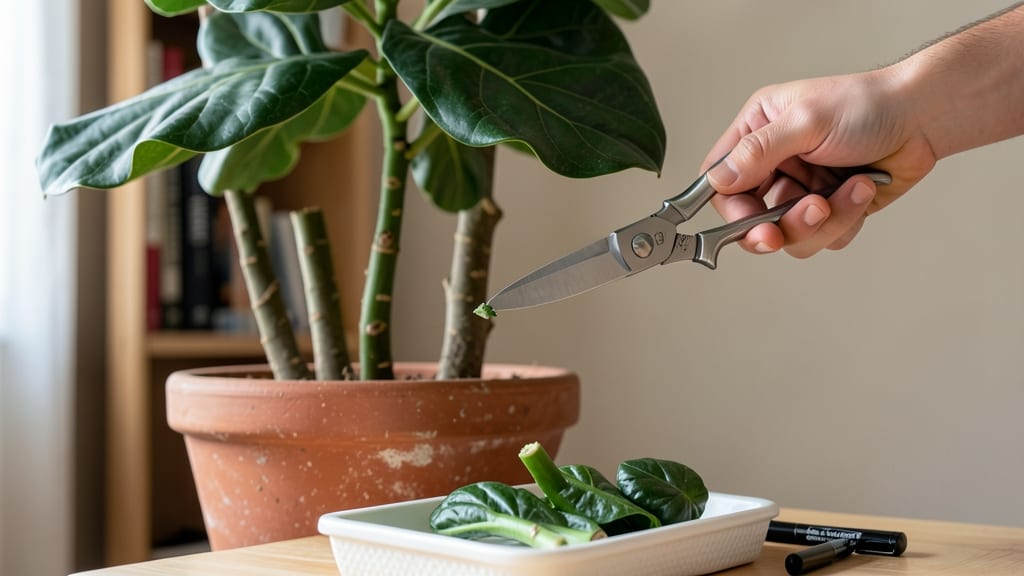
Cutting a fiddle leaf fig isn’t about hacking branches—it’s about unlocking bushier, fuller growth. ✂️ I’ve turned leggy, sparse plants into lush, multi-stemmed beauties with just a few strategic cuts, and you can too. The key? Timing, clean cuts, and knowing exactly where to snip for maximum regrowth.
Spring or early summer is prime time—your plant’s natural growth spurt means it’ll bounce back faster. Grab sharp, sterilized pruners (no dull scissors!) and target the spots just above leaf nodes, where new branches will sprout.
Aim for a third of the plant’s height max—less is more, and you’ll avoid shocking the fig.
After trimming, your plant will send out fresh shoots within 4-6 weeks, and those cuttings? Root them in water for new plants. Just keep the soil lightly moist (not soggy) and avoid moving it to a darker spot—consistent light keeps the recovery smooth.
This method works for mature plants, not babies—wait until your fig has at least 4-5 leaves before pruning. And if you’re nervous, start small: just one or two branches to test the waters. You’ll see the difference in just a few months!
Root Causes of Leaf Loss
Understanding why your fiddle leaf fig (Ficus lyrata) might need pruning—and why leaves drop—starts with recognizing the plant’s stress signals. While trimming is often a proactive step, leaf loss can happen due to environmental mismatches, biological responses, or even overzealous care.
Here’s a breakdown of the key triggers, explained in plant science terms with actionable insights.
Fiddle leaf figs are tropical natives, meaning they thrive in consistent humidity (40-60%), indirect light (medium to bright), and stable temperatures (65–80°F). When these conditions stray, the plant reacts by dropping leaves—a survival mechanism to conserve energy.
- Light Shock (Too Much or Too Little) - Why it happens: Fiddle leaf figs rely on photosynthesis, but excessive direct sun causes leaf scorch (brown, crispy edges), while low light weakens stems, leading to leaf abscission (natural leaf drop). - Actionable fix: Rotate the plant weekly for even light exposure.
Use sheer curtains to diffuse harsh sunlight, or supplement with a grow light 12 inches away for 6–8 hours daily.
- Temperature Fluctuations - Why it happens: Drafts (from AC vents, doors, or windows) or sudden temperature drops below 60°F disrupt cellular metabolism.
The plant prioritizes root survival over foliage, triggering abscission zones (weak points where leaves detach). - Actionable fix: Keep your fig away from cold drafts and heat sources (like radiators). Use a thermometer to monitor consistency—ideal temps should stay within 5°F of each other daily.
- Humidity Imbalance - Why it happens: Low humidity (<40%) causes transpiration stress, where leaves lose moisture faster than roots can absorb water. This leads to wilting and eventual leaf drop.
Conversely, overly humid conditions (above 70%) can promote fungal growth, weakening stems. - Actionable fix: Use a humidifier near the plant or place it on a pebble tray with water. Grouping plants together also raises ambient humidity. Aim for 50–60% RH (relative humidity).
Fiddle leaf figs are drought-tolerant but hate soggy roots. Poor drainage or excessive watering leads to anaerobic conditions (lack of oxygen in the soil), which suffocates roots and triggers leaf drop as a distress signal.
- Waterlogged Soil - Why it happens: When roots sit in water, they can’t absorb oxygen, leading to root rot (caused by Pythium or Phytophthora fungi).
The plant sheds leaves to reduce water demand and redirect energy to surviving roots. - Actionable fix: - Check soil moisture by sticking your finger 1–2 inches deep—water only when the top layer is dry. - Use a well-draining mix (60% potting soil, 30% perlite, 10% orchid bark). - Ensure pots have drainage holes and elevate them on feet to prevent water pooling.
- Compacted or Poor Soil - Why it happens: Dense, clay-heavy soil prevents oxygen from reaching roots, mimicking waterlogged conditions. Compacted soil also restricts root growth, weakening the plant’s structure. - Actionable fix: Repot every 2–3 years with aerated, chunky soil.
Add orchid bark or coco coir to improve airflow.
Fiddle leaf figs need balanced nutrients, but imbalances—whether from lack or excess—can cause leaf drop.
- Nitrogen Deficiency (Yellowing Leaves) - Why it happens: Nitrogen is crucial for chlorophyll production.
A deficiency (often from over-potting or poor soil) causes older leaves to yellow and drop as the plant redirects nutrients to new growth. - Actionable fix: Feed with a balanced liquid fertilizer (10-10-10 or 20-20-20) every 4–6 weeks during spring/summer. Avoid fertilizing in winter when growth slows.
- Overfertilization (Burnt Roots) - Why it happens: Excess salts from fertilizers disrupt osmosis, preventing roots from absorbing water.
This leads to leaf scorch and drop as the plant conserves energy. - Actionable fix: - Flush the soil every 2–3 months with water to leach out salts. - Reduce fertilizer strength to half the recommended dose if using a high-nitrogen blend.
- Calcium or Magnesium Deficiency - Why it happens: These minerals are vital for cell wall structure.
Deficiencies (often from acidic soil) cause leaf edges to brown or curl, followed by drop. - Actionable fix: Add crushed eggshells (for calcium) or Epsom salt (1 tsp per gallon of water, monthly) to remineralize the soil.
Pests and diseases don’t always kill a fiddle leaf fig outright—but they weaken it, making it more prone to leaf drop.
- Spider Mites or Mealybugs - Why it happens: These pests sap nutrients from leaves, causing yellowing, stippling, or webbing.
The plant sheds damaged leaves to limit energy loss. - Actionable fix: - Wipe leaves with neem oil (1 tsp per quart of water) weekly. - Isolate the plant and quarantine new plants for 2 weeks.
- Fungal Infections (e.g., Powdery Mildew) - Why it happens: High humidity + poor airflow = fungal spores that coat leaves in a white powder. Infected leaves drop to prevent spread. - Actionable fix: Improve air circulation with a small fan.
Treat with baking soda spray (1 tsp baking soda + 1 quart water + drop of dish soap).
- Bacterial Leaf Spot
- Why it happens: Bacteria (Xanthomonas spp.) create water-soaked spots that expand and cause leaves to drop prematurely.
- Actionable fix: Remove infected leaves immediately with sterilized scissors. Avoid overhead watering to prevent spread.
Even well-meaning pruning can stress a fiddle leaf fig if done incorrectly.
- Over-Pruning or Jagged Cuts - Why it happens: Removing more than 1/3 of the plant at once disrupts its photosynthetic balance.
Poor cuts (tearing instead of clean snips) expose the vascular system, leading to bleeding sap and stress responses like leaf drop. - Actionable fix: Use sterilized pruning shears and make cuts just above a leaf node (the bump where leaves grow).
Limit pruning to one-third of the plant per session.
- Transplant Shock - Why it happens: Repotting without root disturbance management (e.g., trimming circling roots) or using fresh, nutrient-dense soil can overwhelm the plant, causing it to shed leaves as it adjusts. - Actionable fix: Repot in spring/summer (active growth phase).
Gently loosen roots and trim any that are circling or mushy. Water lightly post-repot and avoid fertilizing for 4–6 weeks.
💡 Pro Tip: Keep a plant journal to track light, water, and temperature changes. Notice patterns? For example, if leaves drop after moving the plant near a window, you’ve found your culprit—light exposure!
Fixing Your Fiddle Leaf Fig
If your fiddle leaf fig (Ficus lyrata) is looking leggy, overgrown, or stressed, precise pruning can revive its health and encourage lush, bushier growth. Below are targeted solutions for common issues, paired with easy-to-follow fixes and prevention tips to keep your plant thriving.
Yellowing or wilting leaves often signal stress, overwatering, or root rot. The good news? Pruning can help redirect energy to healthier growth.
🔪 How to Fix It
- Identify the Problem Leaves 👀
- Remove yellow leaves (a sign of natural aging or overwatering) or drooping leaves (often a stress response).
- Cut 1–2 inches below the yellowed area using sterilized pruning shears (wipe with rubbing alcohol).
- Check for Root Rot 🌱💦
- If the soil smells sour or the leaves feel mushy, your plant may have root rot.
- Fix: Trim rotted roots (black/brown and mushy) and repot in fresh, well-draining soil. Avoid overwatering for 2–3 weeks.
- Encourage New Growth 🌱✨
- After pruning, place the plant in bright, indirect light (no direct sun).
- Mist leaves lightly to reduce stress, but avoid soggy soil.
💡 Prevention Tips
- Water only when the top 1–2 inches of soil are dry (stick your finger in to check!).
- Use a pot with drainage holes to prevent waterlogging.
- Wipe leaves monthly with a damp cloth to remove dust (helps with photosynthesis).
If your fiddle leaf fig has long, bare stems with sparse foliage, it’s time to encourage branching through strategic cuts.
✂️ How to Fix It
- Trim Just Above a Leaf Node 🍃🔪
- Cut above a leaf node (the bump where leaves grow) at a 45-degree angle to prevent water pooling.
- Aim for healthy, mature leaves—never cut into bare wood.
- Promote Branching 🌿🌱
- After pruning, your plant will focus energy on new side shoots.
- Rotate the pot every few weeks to ensure even light exposure.
- Propagate Cuttings (Optional!) 🌱💚
- Place cuttings in water or moist perlite to root. Once rooted, transplant into soil.
💡 Prevention Tips
- Pinch back new growth occasionally to encourage bushiness.
- Fertilize lightly (balanced liquid fertilizer, diluted to half strength) every 4–6 weeks in spring/summer.
- Avoid over-potting—too much space can lead to leggy growth.
If your fiddle leaf fig is too dense, it can trap humidity, leading to fungus or pest issues. Pruning improves airflow and light penetration.
🌬️ How to Fix It
- Remove Inner Leaves 🌿🚫
- Focus on leaves growing inward (blocking light from the center).
- Cut back to a healthy node to maintain shape.
- Thin Out Bottom Leaves 🍃⬇️
- If lower leaves are yellow or dead, trim them to clean up the plant’s silhouette.
- Shape the Canopy 🎨
- For a fuller look, trim select outer leaves to encourage inner growth.
💡 Prevention Tips
- Prune regularly (every 3–6 months) to maintain shape.
- Avoid over-fertilizing—too much nitrogen leads to rapid, weak growth.
- Check for pests (like spider mites) after pruning—remove any webs or infested leaves immediately.
If your fiddle leaf fig has black spots, holes, or sticky residue, pests or disease may be the culprit. Pruning helps contain the issue.
🐛 How to Fix It
- Remove Infested Leaves 🚨🍃
- Cut off leaves with holes, webbing, or sap (signs of pests like spider mites or mealybugs).
- Dispose of severely damaged leaves in a sealed bag (don’t compost!).
- Clean Tools & Plant 🧼🌿
- Wipe down tools with rubbing alcohol before and after pruning.
- Spray the plant with neem oil or insecticidal soap (follow product instructions).
- Isolate the Plant 🏠🚪
- Keep it away from other plants until the issue clears.
💡 Prevention Tips
- Inspect leaves weekly for early signs of pests.
- Keep humidity moderate (40–50%)—fiddle leaf figs dislike overly damp air.
- Use a fan lightly to improve airflow and deter pests.
With the right cuts and care, your fiddle leaf fig will bounce back stronger—and with a little patience, you’ll have a fuller, healthier plant in no time! 🌟
Frequently asked questions
Can I cut my fiddle leaf fig during winter?
Winter is not ideal for pruning—your plant is in its dormant phase and won't recover as quickly. Wait until spring or early summer when growth naturally speeds up. If you must trim in winter, keep it minimal (just removing dead/damaged leaves) and avoid major structural cuts.
How do I know where to cut on my fiddle leaf fig?
Look for leaf nodes—those small bumps where leaves attach. Cut just above a node at a 45-degree angle to prevent water from pooling. Avoid cutting into bare wood, and never trim more than 1/3 of the plant at once to prevent shock.
What should I do with the cuttings after pruning?
Place them in water or moist perlite to root! Change the water every 3-5 days and keep in bright, indirect light. Roots typically form in 2-4 weeks. Once established, transplant into soil with a well-draining mix.
Will pruning my fiddle leaf fig make it grow faster?
Not directly—pruning redirects energy to create bushier, fuller growth rather than long, leggy stems. The plant will focus on producing new branches from the cut points, but overall growth speed depends on light, water, and nutrients. Think of it as shaping rather than speeding up growth.
Can I use scissors instead of pruning shears?
Never use regular scissors—they can crush stems and create jagged cuts. Always use clean, sharp pruning shears (sterilized with rubbing alcohol) to make precise cuts that heal properly. Dull tools tear tissue, inviting disease and slowing recovery.