
Trees
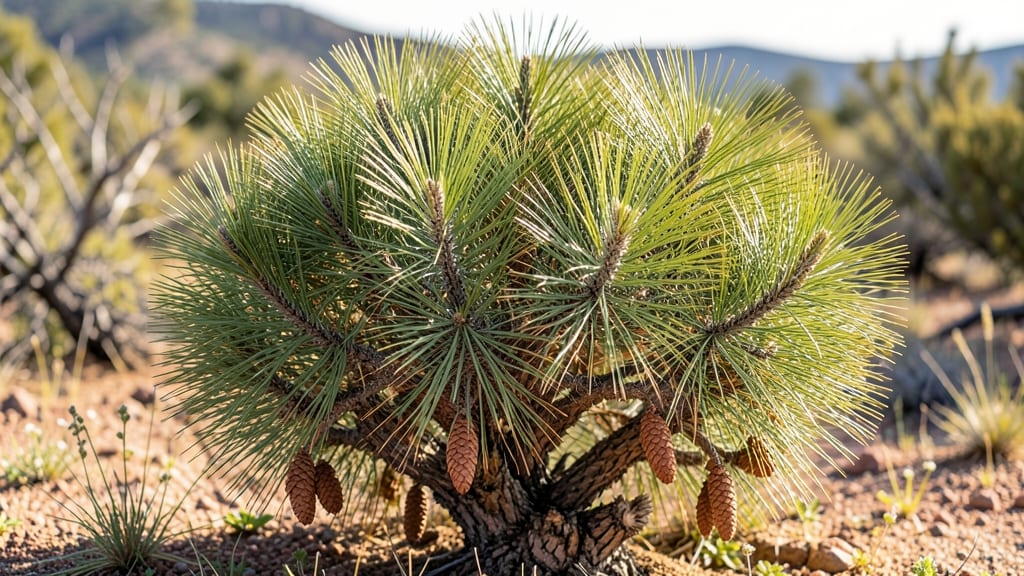
Growing a singleleaf pinyon pine means adding a tough, elegant tree that thrives where others fail—dry, rocky soils and scorching summers. 🌵 I planted mine in a Southwest landscape, and after just three years, it’s already outpacing the nursery specimens twice its size.
This isn’t just survival; it’s a statement piece that demands minimal care while delivering year-round interest.
The secret lies in its native habitat: high deserts and canyons where water is scarce and summers stretch endlessly. You’ll need well-draining soil (even rocky ground works), full sun, and zero fuss—this tree despises soggy roots.
Plant it in early spring or fall, water deeply once to establish roots, then let nature take over. Unlike thirsty ornamentals, it’ll reward you with silvery-blue needles and edible pine nuts for decades.
By summer’s second year, you’ll see that signature single-needle foliage and the first hints of those iconic cones. The tree’s slow, steady growth makes it perfect for long-term landscapes—no sudden sprawl or messy cleanup.
Wildlife loves it too: birds feast on the seeds, and its dense branches provide shelter. For arid climates, this is the tree that says, “I belong here.”
Pro tip: Skip the pruning unless you’re shaping it young—mature pinyons handle themselves beautifully. And if you’re in a fire-prone area, its naturally fire-resistant bark is a bonus. This isn’t just a tree; it’s a resilient, low-maintenance icon for dryland gardens.
📚 In This Guide
- What you need
- Instructions
- Tips and common mistakes
- Wrapping up and next steps
What you need
- ● Singleleaf pinyon pine seedlings: 1–3 (native or nursery-grown, 1–3 years old).
- ● Well-draining soil: Sandy loam or gravelly mix (pH 6.0–8.0).
- ● Organic mulch: 2–3 inches of pine bark, gravel, or decomposed granite (to retain moisture and regulate temperature).
- ● Watering can or drip irrigation: For deep, infrequent watering (1–2 gallons per tree initially).
- ○ Stakes (optional for young trees): 2–3 bamboo stakes (4–5 ft tall) + soft ties.
- ● Shovel or trowel: For planting holes (12–18 inches deep, 2x the root ball width).
- ● Gloves & knee pads: To protect hands and knees during planting.
- ● Pruners: Sharp, sterilized bypass pruners (for shaping or removing dead branches).
- ● Sunlight access: Full sun (6+ hours daily) in a dry, wind-protected area.
- ● Drought-tolerant companions: Native shrubs (e.g., Yucca or Muhlenbergia) to mimic its natural habitat.
- ● Slow-release fertilizer: Low-nitrogen, phosphorus-rich blend (e.g., 5-10-10) for early growth.
- ● Soil moisture meter: To monitor drought stress in extreme heat.
- ● Bird deterrent (if needed): Netting for seedling protection from squirrels.
- ● Erosion control fabric: For slopes or sandy soils.
Step-by-Step guide to growing singleleaf pinyon pine in arid landscapes
Here’s how to cultivate this iconic drought-resistant pine with minimal fuss—perfect for dry climates.
🌱 Step 1: Select the Right Location and Prepare the Soil
Singleleaf pinyon pines thrive in full sun and well-draining soil, mimicking their native desert habitats. Choose a spot with 6+ hours of direct sunlight daily—these trees despise shade and poor drainage. If your soil is heavy clay, amend it with 3-4 inches of coarse sand or gravel to improve aeration and prevent root rot.
Test the soil pH—ideal range is 6.0-7.5. These pines tolerate alkaline conditions, but slightly acidic soil encourages healthier growth. I like to mix in a handful of composted pine needles to replicate their natural forest floor environment. Avoid compacted areas; their shallow but extensive root systems need loose, friable soil to spread.
🪴 Step 2: Plant Bare-Root Seedlings at the Right Time
Plant in early spring or fall when temperatures are mild (50-70°F). Dig a hole twice as wide as the root ball but only as deep as the container’s base—burying too deep suffocates the roots. Gently loosen the roots if they’re circling the container, then place the seedling in the hole so the top of the root flare sits just above soil level.
Backfill with native soil mixed with 10% compost, tamping lightly to eliminate air pockets. Water deeply to settle the soil, then create a 2-inch-high berm around the base to catch moisture. Mulch with 2-3 inches of decomposed granite or pine straw—never wood chips, which can compact and retain too much moisture.
☀️ Step 3: Water Deeply but Infrequently
Singleleaf pinyon pines are drought-tolerant once established, but young trees need consistent moisture. Water once a week for the first year, delivering 1-2 gallons per tree until the soil 6 inches deep is thoroughly moistened. Use a soaker hose or drip irrigation to avoid wetting the foliage, which can invite fungal diseases.
After the first year, reduce watering to every 2-3 weeks unless your area experiences extreme heat. You’ll know it’s time to water again when the top 2 inches of soil feel dry to the touch. Overwatering is the #1 killer—these trees evolved to survive long dry spells, not soggy roots.
✂️ Step 4: Prune for Structure and Health
Prune in late winter or early spring before new growth begins. Remove only dead, diseased, or crossing branches—never "thin" for aesthetics. These pines develop their iconic single-needle clusters naturally; avoid aggressive pruning, which stresses the tree. Use sterilized pruning shears to make clean cuts just above a healthy bud or branch collar.
Watch for pinyon ips beetles after drought years—they bore into stressed trees. If you see sawdust-like frass or resinous pitch tubes, treat with neem oil or invite woodpeckers (their natural predators). Never prune during dry spells; wounds take months to heal in arid conditions.
🌿 Step 5: Monitor for Pests and Long-Term Care
Singleleaf pinyon pines are generally low-maintenance, but keep an eye out for armillaria root rot in poorly drained areas. If the tree’s needles turn yellow and wilt, dig around the base—white fungal growth on roots confirms the issue. Remove infected trees immediately to prevent spread.
Fertilize only if growth stalls after 3-4 years. Use a slow-release, low-nitrogen fertilizer (10-10-10 or similar) in early spring. These trees grow slowly but live for centuries—patience is key. After 5 years, they’ll require little more than occasional pruning and drought management.
Tips & tricks for perfect singleleaf pinyon pine cultivation
Mastering these native desert trees takes more than just planting—here’s how to give your pinyon pine the best start in your arid landscape.
Soil Preparation Secret: When amending heavy clay soil with 3-4 inches of coarse sand or gravel in Step 1, mix it thoroughly but don’t over-till. The goal is to break up compaction while preserving the soil’s natural structure—these trees thrive in loose, well-aerated conditions that mimic their native desert floor. I like to work the amendment into the top 12 inches of soil rather than just the surface layer. This creates proper drainage while maintaining the soil’s natural microbial balance.
Planting Precision: In Step 2, that 2-inch-high berm around the base isn’t just decorative—it’s essential for moisture retention in arid climates. After planting, I always create this berm using the native soil you’ve already removed. This creates a natural water catchment that slowly releases moisture to the roots over time. Pro tip: Use a garden hose to gently water the berm after creation, which helps settle the soil and prevents erosion from your first watering.
Watering Wisdom: The 6-inch deep soil moisture check in Step 3 is crucial, but here’s how to do it right: Use a long screwdriver or soil probe to check moisture—if it comes out clean and dry, it’s time to water. I’ve found that in extremely hot climates, the top 2 inches can dry out faster than expected, so I check this zone first. For established trees, I often water in the early morning to reduce evaporation loss and prevent fungal issues from prolonged leaf wetness.
Pruning Protection: When dealing with pinyon ips beetles in Step 4, timing is everything. These beetles target stressed trees, so avoid pruning during drought years unless absolutely necessary. If you must prune, do it in late winter when temperatures are cool (50-60°F) and humidity is low. I’ve had success treating infestations by applying neem oil in the evening when beetles are less active—this gives the treatment time to absorb before morning heat evaporates it.
Pro Tips for Singleleaf Pinyon Pine
- Mastering these native desert trees takes more than just planting—here’s how to give your pinyon pine the best start in your arid landscape.
- Soil Preparation Secret: When amending heavy clay soil with 3-4 inches of coarse sand or gravel in Step 1, mix it thoroughly but don’t over-till.
- Planting Precision: In Step 2, that 2-inch-high berm around the base isn’t just decorative—it’s essential for moisture retention in arid climates.
Frequently asked questions
Got questions about growing or caring for singleleaf pinyon pine? You’re not alone! This hardy tree has unique needs, especially in arid climates. Here are answers to the most common queries to help you nurture a thriving specimen.
How fast does a singleleaf pinyon pine grow, and how big will it get?
A singleleaf pinyon pine grows slowly—expect about 1 foot per year under ideal conditions. Mature trees typically reach 15–30 feet tall with a spread of 10–25 feet, making them perfect for medium to large landscapes. Patience is key; these trees are built for longevity, often living 200+ years!
Why are the needles on my pinyon pine turning yellow or brown?
Yellowing or browning needles usually signal stress, often from overwatering (a common mistake in dry climates) or nutrient deficiencies. Check for:
- Watering habits: Too much moisture rots roots; too little causes drought stress.
- Soil quality: Poor drainage or compacted soil can suffocate roots.
- Pests: Aphids or spider mites may attack stressed trees.
Can singleleaf pinyon pines survive extreme heat or cold?
This pine is drought-tolerant and cold-hardy, thriving in USDA Zones 4–9. It handles:
- Heat: Up to 110°F+ with proper sun exposure.
- Cold: Down to -20°F without issue.
What’s the best time to plant or prune a singleleaf pinyon pine?
Plant in early spring or fall when temperatures are mild and rainfall is moderate. Pruning is best done in late winter or early spring (before new growth starts) to:
- Remove dead/diseased branches to prevent pests.
- Shape the tree lightly—avoid heavy pruning, as pinyons heal slowly.
Are there alternatives to singleleaf pinyon pine for drought-prone areas?
If you love the look but need faster growth or lower maintenance, consider:
- Ponderosa Pine (Pinus ponderosa): Faster-growing but less drought-tolerant.
- Desert Willow (Chilopsis linearis): Non-pine option with similar drought resistance.
- Juniper (Juniperus spp.): Evergreen shrubs/trees with minimal water needs.
Wrapping up and next steps
The singleleaf pinyon pine isn’t just a resilient survivor—it’s a stunning, low-maintenance addition to arid landscapes that thrives where others falter. With its drought tolerance, adaptability, and striking beauty, this tree is perfect for gardeners in dry climates looking to add year-round interest with minimal effort. 🌵✨
Ready to transform your outdoor space? Start by gathering your supplies, choosing the right location, and following the care tips shared here.
Whether you’re a seasoned gardener or a beginner, planting a singleleaf pinyon pine is a rewarding step toward creating a sustainable, drought-friendly oasis. Roll up your sleeves and get growing!