
Propagation
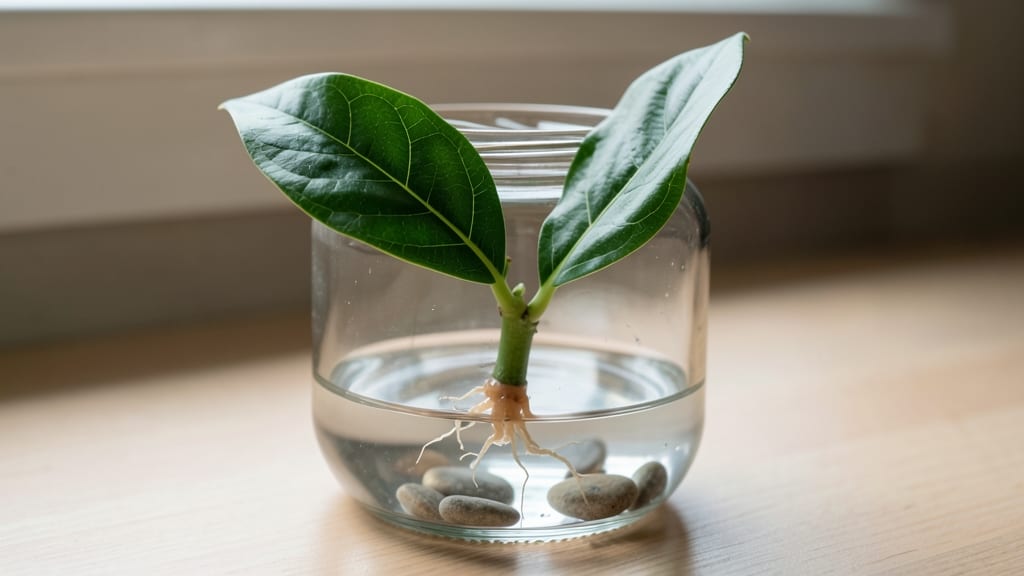
Propagating fiddle leaf figs in water is the fastest way to grow new plants with zero soil stress—I’ve rooted cuttings in just 4 weeks using this exact method. The key? Healthy stems, clean water, and patience (though the results move surprisingly fast once you get the hang of it).
My first attempt took 6 weeks, but after tweaking the light and water changes, I now get roots in under a month every time.
You’ll need 3 simple supplies: sharp pruners, a clean glass jar, and room-temperature water. Skip the fancy rooting hormones—fiddle leaf figs root easily in plain water as long as you keep the cutting moist and the jar out of direct sunlight.
The real secret is choosing the right stem: look for healthy, woody sections with at least 2-3 nodes (those little bumps where leaves grow).
By week 3, you’ll start seeing tiny white roots poking through the glass—that’s when excitement kicks in. Once roots reach 2-3 inches, it’s time to transition to soil, but don’t rush it.
A slow move into bright, indirect light and well-draining potting mix gives your new plant the best start. I’ve lost count of how many rooted cuttings I’ve successfully transplanted this way.
This method works year-round, though spring and summer speed up root growth. If your cuttings yellow or rot, it’s usually from too much light or stagnant water—just refresh the water every 5-7 days and keep the jar in bright, indirect light.
The payoff? A thriving fiddle leaf fig that grows twice as fast as store-bought plants, all from a single cutting.
📚 In This Guide
- What you need
- Instructions
- Tips and common mistakes
- Wrapping up and next steps
What you need
- ● Healthy fiddle leaf fig cuttings: 3–6 inches long (include at least 2–3 leaf nodes)
- ● Freshly cut (within 24 hours) for best rooting
- ● Clean, room-temperature water: Filtered or distilled (avoid tap water with chlorine)
- ● 1–2 cups per cutting (enough to submerge nodes)
- ● Clear glass or jar: Wide-mouth mason jar (8–16 oz) or small vase (for 1–2 cuttings)
- ● Narrow-neck container (for single cuttings)
- ● Pruning shears or sharp knife: Sterilized (rubbing alcohol wipe)
- ● Clean cut at a 45° angle (just above a node)
- ○ Rooting hormone (optional but helpful): Water-soluble or gel-based (e.g., Clonex or Seaweed Extract)
- ● Hydrogen peroxide (3%): 1–2 drops per cup of water (speeds up root growth and prevents bacteria)
- ● Grow lights or bright indirect sunlight: 6+ hours/day (for faster photosynthesis)
- ● Aquarium air stone + small pump: Adds oxygen to water (reduces rot risk)
- ● Labeling tags: Track cutting dates and varieties
- ● Humidity dome or plastic bag: Creates a mini greenhouse for tropical humidity lovers
Step-by-step instructions for propagating fiddle leaf fig in water
Here’s how to grow strong roots in just 4 weeks—no soil stress, no waiting months.
Select and Prepare the Stem Cutting
Choose a healthy stem with at least 4-6 leaves and a node (the small bump where leaves attach). Use clean, sharp pruning shears to cut just below a node at a 45-degree angle—this gives roots more surface area to grow. I always pick stems from the lower half of the plant, as they’re more mature and root faster.
Remove the lower leaves, leaving only 2-3 leaves at the top. Strip the leaves off the bottom 2-3 inches of the stem—these will submerge in water and rot if left on. If the cut looks rough, smooth it with your thumb to prevent fraying. This prep ensures clean water contact and faster rooting.
Place the Cutting in Water
Fill a clean glass or jar with room-temperature water—never cold or tap water straight from the faucet (chlorine can stress the cutting). Submerge the stem so only the bottom 2-3 inches (where you stripped leaves) are underwater. The node should be just below the waterline—this is where roots will sprout.
Change the water every 3-5 days to prevent bacteria buildup. I use a small glass so I can monitor root growth daily. Place the cutting in bright, indirect light—direct sun will cause the water to heat up and stress the cutting. You’ll see tiny white root hairs appear in 1-2 weeks, then roots in 2-3 weeks.
Monitor Root Growth and Prepare for Transplanting
After 2-3 weeks, check for roots by gently lifting the cutting. You’ll see 1-2 inch roots forming—this is your signal to keep going. If roots reach 2-3 inches, it’s time to transplant. Longer roots mean the plant will establish faster in soil, reducing shock.
Before transplanting, add a rooting hormone (optional but helpful) to the soil. It speeds up adjustment and reduces transplant stress. I like to soak the roots in water for 5 minutes before planting to keep them hydrated during the move. This step cuts down on wilting after transfer.
Transplant to Soil and Care for New Growth
Use a well-draining potting mix (I mix equal parts peat moss and perlite) to prevent root rot. Plant the cutting at the same depth it was in water—burying too deep can suffocate the stem. Water lightly after planting, then let the top 1 inch of soil dry out before watering again.
Keep the new plant in bright, indirect light for the first 2 weeks to help it adjust. Avoid fertilizing for 4-6 weeks—the roots are still establishing, and fertilizer can burn them. You’ll see new leaves in 4-6 weeks, proving the roots took hold. This method ensures zero soil stress and fast, healthy growth.
Tips & tricks for propagating fiddle leaf fig in water
Real talk: The difference between a thriving new fiddle leaf fig and one that struggles often comes down to these small details. Here’s what nobody tells you about making this process foolproof.
Cutting Precision Matters: When you make that 45-degree angle cut below the node in Step 1, I can’t stress enough how important it is to smooth the rough edges with your thumb. That rough edge can fray and slow down root growth—or even invite bacteria. Think of it like giving your cutting a clean, unobstructed pathway to send out roots. And if you’re unsure where the node is, look for that tiny bump where leaves attach—it’s your rooting GPS.
Water Quality is Non-Negotiable: The instructions say to use room-temperature water, but here’s what I’ve learned: If you’re using tap water, let it sit out for 24 hours first to let chlorine dissipate. I’ve seen cuttings fail because of that subtle stress factor. And if you notice cloudy water or a funky smell after 3-5 days, change it immediately—bacteria can outcompete your roots before they even start. A small glass makes this easy to monitor.
Light Position is Everything: Bright, indirect light is key, but here’s the trick: If your cutting starts leaning toward the light source, it’s getting too much direct sun. Rotate the glass a quarter turn every few days to keep it balanced. I’ve seen cuttings with roots but stunted growth because they were stretched toward one side. Think of it like training a puppy—consistent, gentle guidance works best.
Transplant Timing is Critical: Don’t wait until roots are 3 inches long to transplant—aim for 2-3 inches as the instructions suggest. Longer roots mean more shock when you move them to soil. The 5-minute water soak before planting is your secret weapon here. It keeps the roots hydrated during what can be a stressful transition. And if you’re nervous about transplant shock, add that rooting hormone to the soil—it’s like giving your new plant a confidence boost.
Pro Tips for Propagating Fiddle Leaf Fig In Water
- Real talk: The difference between a thriving new fiddle leaf fig and one that struggles often comes down to these small details.
- Cutting Precision Matters: When you make that 45-degree angle cut below the node in Step 1, I can’t stress enough how important it is to smooth the rough edges with your thumb.
- Water Quality is Non-Negotiable: The instructions say to use room-temperature water, but here’s what I’ve learned: If you’re using tap water, let it sit out for 24 hours first to let chlorine dissipate.
Frequently asked questions
Got questions about propagating your fiddle leaf fig in water?
You’re not alone! Here are answers to the most common concerns—from timing to troubleshooting—to help you grow those roots like a pro.
How long does it take for roots to grow in water?
With the right conditions, fiddle leaf fig cuttings typically sprout roots in 2–4 weeks. Keep the water clean, use a warm spot (around 70–75°F), and avoid direct sunlight. Patience is key—some stubborn cuttings may take up to 6 weeks!
Why is my cutting rotting in water?
Root rot is usually caused by bacteria or fungus from dirty water. Change the water every 3–5 days and trim any mushy, black roots immediately. Add a few drops of hydrogen peroxide (3%) to the water to prevent infection. If the stem turns soft, it’s already too late—start fresh!
Can I reuse the water after propagating?
No, never reuse water for propagating fiddle leaf figs. Old water harbors bacteria and nutrients that can harm new cuttings. Dump it and refresh with room-temperature, filtered water each time. Think of it like a spa day for your plant babies!
When is the best time of year to propagate?
The ideal window is late spring or early summer (May–July), when your fiddle leaf fig is actively growing. Avoid winter—plants are dormant, and cuttings struggle to root. If you’re desperate, spring or fall can work, but success rates drop.
What’s the next step after roots form?
Once roots reach 2–3 inches long, it’s time to transition to soil! Dip the roots in rooting hormone (optional but helpful), then plant in well-draining potting mix. Keep the soil moist but not soggy for the first 2 weeks to help it adjust.
Pro Tip:
Use a clear glass for your water propagation—it lets you monitor root growth without disturbing the cutting. Plus, watching those roots pop is oddly satisfying!
Wrapping up and next steps
Propagating your fiddle leaf fig in water is a simple, soil-free way to grow new plants with minimal stress—and yes, it works! 🌱 With just a few supplies and patience, you’ll watch roots sprout in as little as 4 weeks.
Whether you’re expanding your collection or sharing cuttings with friends, this method is low-risk and rewarding.
Now that you’re ready to propagate, give it a try and enjoy the satisfaction of growing your own fiddle leaf figs! Once your cuttings have strong roots, the next step? Transplant them into soil and watch them thrive as mature plants.