
Diseases
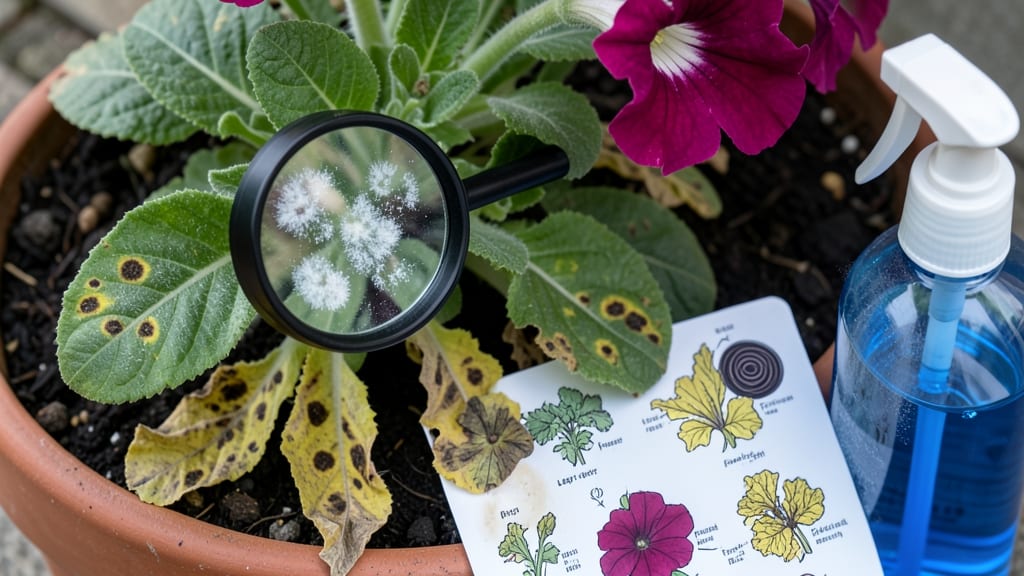
Petunia leaf diseases turn vibrant blooms into sad, spotted messes faster than you can say "summer heat." 🌿 I’ve seen powdery mildew choke petunias in a week, and leaf spots turn leaves into Swiss cheese—both preventable with the right moves.
The key is catching problems early, when a simple spray or tweak can save your plants instead of replacing them.
Most fungal spots start with too much moisture—either from overhead watering or crowded plants trapping humidity. Powdery mildew leaves a white, dusty film, while leaf spots show up as brown or black patches with yellow halos.
Bacterial wilt? Your stems will ooze when sliced open. The good news? All three respond to copper fungicide, neem oil, or baking soda sprays when caught early.
You’ll restore those leaves to lush green in 3-5 days with consistent care: water at the base, space plants for airflow, and remove infected leaves immediately. Prevent future outbreaks by rotating petunia varieties yearly (disease strains build up in soil) and choosing disease-resistant types like 'Wave' or 'Supertunia.'
This works for container gardens, window boxes, or in-ground beds—just adjust the spray coverage. The secret weapon? A weekly preventative spray in humid weather keeps diseases at bay without chemicals. Let’s get those petunias thriving again.
Root Causes of Petunia Leaf Troubles
Petunia leaves develop diseases for a mix of biological, environmental, and sometimes even human-error reasons. Understanding the why behind these issues is the first step to stopping them in their tracks.
Below, we break down the most common culprits—from sneaky pathogens to overlooked gardening habits—and explain how they trigger those unsightly (and often damaging) leaf spots.
Fungi are the #1 cause of petunia leaf diseases, thriving in damp, warm conditions. These microscopic organisms don’t just appear—they wait for the perfect moment to strike. Here’s how:
- Excess Moisture: Fungi like Botrytis cinerea (gray mold) and Alternaria solani (early blight) love humidity. Poor air circulation (e.g., crowded plants, overwatering, or dense foliage) creates a fungal paradise. Even morning dew can linger too long, giving spores a foothold.
- Wounded Leaves: Physical damage—from hail, pests (like aphids), or rough handling—opens doors for fungal entry. Septoria leaf spot, for example, exploits tiny cuts to infect tissues.
- Old Debris: Dead leaves, spent blooms, or mulch harbor fungal spores. If left on the soil, they rain down onto healthy leaves during watering or storms, spreading disease.
💡 Pro Tip: Fungi spread fastest when nights are warm (60–80°F) and days are humid. If your petunias are in a greenhouse or shaded area, you’re doubling the risk.
Petunias are tough, but they’re not immune to environmental extremes. These factors weaken leaves, making them vulnerable to secondary infections:
| Factor | How It Causes Damage | Example Diseases |
|---|---|---|
| 🌞 Too Much Sun | Intense UV rays scorch leaf edges, creating entry points for bacteria like Pseudomonas syringae (bacterial leaf spot). | Sunburn + bacterial infections |
| 💧 Overwatering | Waterlogged soil suffocates roots, starving leaves of nutrients. Weakened plants can’t fight off Phytophthora (root rot), which then spreads to foliage. | Root rot → leaf yellowing/dying |
| ❄️ Temperature Swings | Cold nights (<40°F) followed by warm days shock plants, reducing their disease resistance. Fungi like Powdery Mildew exploit this stress. | Powdery mildew (white, dusty patches) |
✨ Key Insight: Most environmental stress-related diseases start with physical symptoms (e.g., yellowing, wilting) before pathogens move in. Act early!
Pests don’t just eat leaves—they pave the way for diseases. Here’s how:
- Chewing Insects (e.g., slugs, caterpillars): Their bites create open wounds where bacteria or fungi can colonize. Erwinia (a bacterial soft rot) often hitches a ride this way.
- Sap-Suckers (e.g., aphids, whiteflies): These pests excrete honeydew, a sticky sugar residue that attracts sooty mold—a fungal growth that smothers leaves and blocks sunlight.
- Spider Mites: Their feeding weakens cell walls, making leaves more susceptible to fungal infections like Alternaria.
🔥 Warning: If you spot pests and leaf spots appearing simultaneously, the two are likely linked. Treat the pests first!
Even the best gardeners accidentally create conditions that invite disease. Common slip-ups include:
- Reusing Contaminated Tools: Pruners or trowels carrying fungal spores can transfer diseases between plants. Clean with 70% alcohol between uses!
- Planting Too Close Together: Crowded petunias trap moisture and reduce airflow, perfect for Botrytis (gray mold) to spread via spores.
- Ignoring Soil Health: Compacted or nutrient-poor soil stresses plants, making them less resilient to pathogens. A lack of potassium (a key nutrient for disease resistance) is a red flag.
- Watering at the Wrong Time: Splashing leaves with water (especially in the evening) spreads spores from soil to foliage. Water at the base instead.
🎯 Prevention Hack: Rotate your petunias’ location yearly to break the cycle of soil-borne diseases like Fusarium wilt.
Quick Fixes for Fungal Foes
Reviving your petunias starts with targeted action—whether you’re battling powdery mildew, bacterial leaf spot, or gray mold. Below are practical, step-by-step solutions tailored to each culprit, plus prevention tricks to keep your plants thriving. No green thumb required—just follow the plan!
Before treating, quarantine affected plants to stop the spread. Check for:
- White powder? → Likely powdery mildew.
- Dark, water-soaked spots? → Bacterial leaf spot.
- Fuzzy gray patches? → Gray mold (Botrytis).
Pro tip: 💡 Snap a photo before treatment—share it with a local nursery or gardening forum for a second opinion!
Remove infected leaves immediately—don’t compost them! Toss them in the trash (not the yard waste) to prevent reinfection.
- For powdery mildew: - Wipe leaves with a soapy water solution (1 tsp mild dish soap + 1 quart water).
Use a soft cloth or sponge. - Spray undersides (where mildew loves to hide) with a baking soda mix (1 tsp baking soda + 1 quart water + a drop of soap). Reapply every 7–10 days.
- For bacterial leaf spot:
- Prune infected foliage with sterilized scissors (wipe with rubbing alcohol between cuts).
- Disinfect tools after use to avoid spreading bacteria.
- For gray mold (Botrytis):
- Trim dead/dying flowers and leaves—this fungus thrives on decay.
- Improve airflow by spacing plants 12–18 inches apart.
A strong petunia fights diseases better! Focus on: - Watering: Morning only, at the base (avoid overhead sprinkling).
Wet leaves = fungus paradise! - Sunlight: Ensure 6+ hours of sun daily—shady spots invite mildew. - Fertilizer: Use a balanced, water-soluble fertilizer (10-10-10) every 2 weeks during blooming season.
| Disease | DIY Fix | Store-Bought Option |
|---|---|---|
| Powdery Mildew | Neem oil spray (1 tbsp + 1 quart water) | Sulfur-based fungicide (e.g., Bonide Copper Fungicide) |
| Bacterial Leaf Spot | Copper fungicide (follow label) | Fixed copper spray (e.g., Daconil) |
| Gray Mold | Hydrogen peroxide spray (1 tbsp 3% H₂O₂ + 1 quart water) | Fungicidal soap (e.g., Ortho Garden Disease Control) |
⚠️ Warning: Always test treatments on a small area first—some plants (like petunias) are sensitive to strong chemicals.
- Rotate crops—don’t plant petunias in the same spot yearly (fungus builds up in soil).
- Mulch properly—use straw or pine needles (not thick layers) to keep soil dry.
- Deadhead regularly—removing spent blooms reduces fungal food sources.
- Choose resistant varieties—look for petunias labeled "mildew-resistant" (e.g., ‘Wave’ or ‘Superbells’ series).
If 50%+ of leaves are gone, consider:
- Repotting into fresh, sterile soil (mix in perlite for drainage).
- Switching to containers if soil is heavily contaminated.
- Starting over with healthy cuttings (root in water + fungicide for 3 days).
Remember: Patience is key—some treatments take 1–2 weeks to show results. Keep monitoring, and your petunias will bounce back stronger than ever! 🌱💪
Frequently asked questions
Why do my petunia leaves develop white powdery spots?
That’s likely powdery mildew, a fungal disease that thrives in warm, humid conditions. The white dusty coating blocks sunlight, weakening leaves. It spreads fastest when plants are crowded or watered overhead. Prune affected leaves immediately and spray with a baking soda mix (1 tsp baking soda + 1 quart water + a drop of soap) every 7 days.
How can I tell if my petunia has bacterial leaf spot or fungal spots?
Check the edges: bacterial spots have yellow halos and water-soaked centers, while fungal spots appear dry with irregular shapes. Bacterial infections often ooze when leaves are wet, while fungal spots may have concentric rings. For bacterial issues, use copper fungicide; for fungal, try neem oil or hydrogen peroxide spray.
Can I save my petunias if half the leaves are diseased?
Yes, but act fast! Remove all infected leaves and stems down to healthy tissue. Repot in fresh, sterile soil with perlite for better drainage. Avoid overhead watering and apply a preventative fungicide (like sulfur-based spray) weekly. If the plant is severely weakened, propagate from healthy cuttings instead of trying to revive the original.
Will my petunias get diseases again next year if I plant them in the same spot?
Absolutely—fungal spores linger in the soil! Rotate crops yearly to break the disease cycle. Use resistant varieties like 'Wave' petunias and sterilize containers between seasons. If using in-ground beds, add compost and mulch with straw to improve soil health and reduce moisture retention.
Is it safe to use hydrogen peroxide on petunias?
Yes, but dilute it properly! Mix 1 tablespoon of 3% hydrogen peroxide with 1 quart of water and spray on leaves in the morning. This kills fungal spores without harming plants. For stubborn cases, repeat every 3-4 days until symptoms disappear. Always test a small leaf first to check for sensitivity.