
Watering
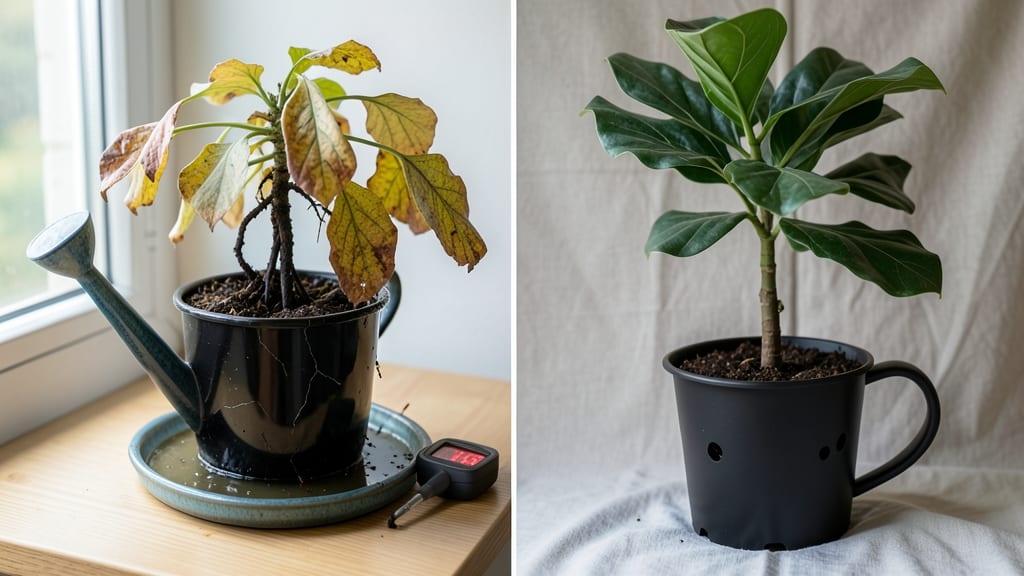
Your overwatered, unhealthy fiddle leaf fig isn’t beyond saving—it’s just waiting for a root revival. 🌱 I've nursed back more than my share of these leafy divas, and the secret lies in understanding what's really going on below the soil surface.
That yellowing foliage and mushy stems? Classic overwatering, but we're fixing it today with a foolproof plan that brings your plant back to life.
The problem starts when roots drown in soggy soil, cutting off oxygen and inviting rot. Most people water on a schedule, but fiddle leaf figs need their soil to dry out completely between drinks. That means checking with your fingers—if the top 2-3 inches feel damp, wait another week.
The good news? Once you reset the watering rhythm, new growth appears within 4-6 weeks, and those glossy leaves return faster than you'd expect.
Here's where the magic happens: we're talking a simple three-step process that works even for plants that looked beyond saving. First, we drain the excess moisture by letting the soil dry out completely. Then we adjust your watering routine to match the plant's actual needs, not your schedule.
Finally, we give the roots room to breathe by repotting into fresh, well-draining mix if needed. The result? A plant that thrives instead of just surviving.
This method works for both potted plants and those in containers, and it's the same approach we use for our own collection. The key is patience—your fig won't bounce back overnight, but with consistent care, you'll see those signature fiddle-shaped leaves reaching for the light again.
Let's get those roots breathing properly!
Root Causes Of Fiddle Leaf Fig Woes
Your fiddle leaf fig might be sending out distress signals like drooping leaves, yellowing foliage, or even crispy edges—not because it’s picky, but because its roots are drowning in a well-intentioned (but harmful) watering routine.
Let’s dig into the science behind why overwatering turns your leafy friend into a sad, unhealthy plant.
Fiddle leaf figs (Ficus lyrata) thrive in well-draining soil that mimics their native African woodland habitat. When planted in containers without proper drainage holes or heavy, compacted soil (like clay or peat-heavy mixes), excess water pools at the roots instead of draining away.
This creates an oxygen-deprived environment, where:
- Root suffocation: Roots need oxygen to respire (breathe). Waterlogged soil displaces oxygen, forcing roots to switch to anaerobic respiration—a process that produces toxic ethanol and ethylene, which poison the plant over time.
- Fungal infections: Stagnant water becomes a breeding ground for Phytophthora and Pythium, fungi that rot roots and block nutrient uptake. Look for mushy, blackened roots or a foul smell—classic signs of fungal overkill.
- Nutrient lockout: Waterlogged soil binds essential nutrients (like nitrogen and phosphorus) in forms the plant can’t access, even if you’re fertilizing. It’s like having a buffet table with a locked door.
Actionable fix: Repot into a container with drainage holes and a chunky, airy mix (e.g., 40% potting soil, 30% perlite, 20% orchid bark, 10% coconut coir). Avoid garden soil—it’s too dense and retains moisture like a sponge.
Many plant parents water based on a calendar ("Every Tuesday!") rather than the plant’s actual thirst level. Fiddle leaf figs are drought-tolerant and prefer to dry out between waterings. Overwatering on a schedule leads to:
- Chronic soggy roots: Even if the topsoil feels dry, the lower layers may still be saturated. Stick your finger 2–3 inches deep—if it’s damp, wait. A moisture meter is your best friend here.
- Salt buildup: Tap water contains minerals (like calcium and chlorine) that accumulate in the soil over time. Excess salts disrupt the plant’s ability to absorb water, causing osmotic stress—like trying to drink through a straw clogged with sugar.
- Root rot progression: Healthy roots recover from brief waterlogging, but consistent overwatering turns the damage irreversible. Roots turn brown, slimy, and die back, leaving the plant starved of water and nutrients.
Actionable fix: Water only when the top 1–2 inches of soil are bone-dry. In winter, reduce watering by 50%—growth slows, so roots need less hydration. Use filtered or distilled water to minimize salt buildup.
Terracotta pots are trendy, but their porous nature can be a double-edged sword. While they wick away moisture, they also dry out too quickly—leading to compensatory overwatering.
Plastic pots, on the other hand, trap moisture like a sauna, while glazed ceramic pots may look pretty but often lack drainage. The result?
- Root-bound stress: If roots circle the pot’s interior (a sign of being root-bound), they compete for oxygen and water, making the plant more susceptible to rot.
- Temperature swings: Plastic pots retain cold from drafts or heat from sunny windowsills, altering root zone temperatures. Fiddle leaf figs prefer 65–75°F—extremes slow root activity and increase rot risk.
- No room to breathe: Roots need space to expand and develop aeration channels. A pot that’s too small (less than 12 inches in diameter for mature plants) forces roots into a compacted, waterlogged mess.
Actionable fix: Choose pots with drainage holes and upgrade to a size 2–3 inches larger than the root ball. For plastic pots, add a layer of gravel or expanded clay pebbles at the bottom to improve drainage. Terracotta is ideal—just monitor soil moisture more closely.
💡 Pro Tip: If your plant’s roots are already rotting, don’t panic—revival is possible! Prune the damaged roots (snip black/mushy sections with sterilized scissors) and repot in fresh, dry soil. Reduce watering immediately to let the roots recover.
Revive Your Fiddle Leaf Fig Fast
If your fiddle leaf fig is looking sad and soggy, don’t panic—it’s time to drain, dry, and reset! Overwatering is the #1 killer of these tropical beauties, but with the right steps, you can bring it back to life.
Below is a cause-by-cause fix guide, so you can diagnose and treat your plant’s specific issues. Plus, we’ll share prevention tips to keep it thriving long-term.
If your fiddle leaf fig has yellow, mushy leaves or a foul smell from the soil, root rot is likely the culprit. Here’s how to save the roots and revive your plant:
🔥 Step 1: Remove the Plant Gently
- Carefully lift the plant from its pot to inspect the roots.
- If roots are black, mushy, or smell bad, they’re rotted—trim them with sterilized scissors (dip in rubbing alcohol).
🍳 Step 2: Disinfect & Repot
- Rinse the remaining roots with room-temperature water to remove old soil.
- Fill a clean pot (one size up) with fresh, well-draining soil (use a cactus/succulent mix or add perlite/pumice).
- Replant the fig, ensuring the base sits 1 inch above soil level (to prevent future waterlogging).
👨🍳 Step 3: Let It Dry Out
- Skip watering for 7–10 days to let roots recover.
- After the waiting period, water lightly only when the top 2 inches of soil feel dry.
💡 Pro Tip: If your plant is severely rotted, consider propagating healthy stems in water or soil while the roots heal.
If leaves are drooping but not yellow, your plant may be waterlogged but not yet rotted. Here’s how to revive it without killing it:
⏰ Step 1: Stop Watering Immediately
- Let the soil dry out completely—this could take 1–2 weeks depending on humidity.
🌡️ Step 2: Improve Airflow & Light
- Move your fiddle leaf fig to a bright, indirect spot (no harsh sun).
- Increase airflow with a small fan (2–3 hours daily) to speed up drying.
🎯 Step 3: Water Only When Necessary
- Stick your finger 2 inches deep into the soil—water only when dry.
- Use the "drip test": If water runs out the drainage hole within 10 minutes, you’re good. If it pools, keep drying.
💡 Pro Tip: If leaves stay droopy, they may be permanently damaged—trim them to encourage new growth.
Once your plant is back on track, follow these golden rules to avoid overwatering again:
| Do This ➡️ | Avoid This ❌ |
|---|---|
| ✅ Use a pot with drainage holes (terracotta is ideal). | ❌ Repot without checking roots or soil quality. |
| ✅ Water only when top 2–3 inches are dry (test with your finger!). | ❌ Water on a schedule (plants don’t need a calendar!). |
| ✅ Use well-draining soil (mix in perlite or orchid bark). | ❌ Use heavy garden soil (it holds too much moisture). |
| ✅ Mist leaves 2–3x weekly (fiddle leaf figs love humidity!). | ❌ Let leaves stay dry in low humidity (brown tips = stress). |
🔥 Bonus: Place a pebble tray under the pot to boost humidity without overwatering.
With these fixes, your fiddle leaf fig should bounce back in 4–6 weeks—just be patient and consistent! 🌿 If you’re unsure about root health, take a photo and ask a plant expert for a second opinion. Happy reviving!
Frequently asked questions
How do I know if my fiddle leaf fig is overwatered vs. underwatered?
Check the soil and leaves: Overwatered plants show yellowing leaves, mushy stems, and soil that smells foul or stays damp for days. Underwatered plants have crispy brown edges, dry soil pulling away from the pot, and drooping that recovers after watering. Stick your finger 2–3 inches deep—if it's damp, you're overwatering.
Can I save a fiddle leaf fig with completely black, mushy roots?
Yes, but you'll need to act fast! Trim all black/mushy roots with sterilized scissors, then repot in fresh, dry, well-draining soil. Skip watering for 7–10 days to let remaining roots recover. Healthy roots should be firm and white or tan. If 90%+ are rotted, propagation from healthy stems may be your best option.
Why does my fiddle leaf fig need so much less water in winter?
Fiddle leaf figs grow much slower in winter due to reduced light and cooler temperatures. Their roots become less active, so they need 50% less water than in spring/summer. Check soil moisture every 10–14 days—if the top 3 inches are dry, it's time to water. Move your plant to a brighter spot to encourage growth.
What's the best soil mix to prevent future overwatering?
A chunky, airy mix works best: combine 40% potting soil, 30% perlite, 20% orchid bark, and 10% coconut coir. This prevents compaction and improves drainage. Avoid garden soil—it compacts easily and holds too much moisture. For extra insurance, add a 1-inch layer of gravel at the pot's bottom.
How long does it take for a fiddle leaf fig to recover from overwatering?
With proper care, you'll see improvement in 4–6 weeks. New growth appears first, followed by restored leaf vibrancy. Severe cases may take 2–3 months to fully recover. During this time, focus on light, airflow, and consistent dry soil—these are your best tools for revival.