
Light Requirements
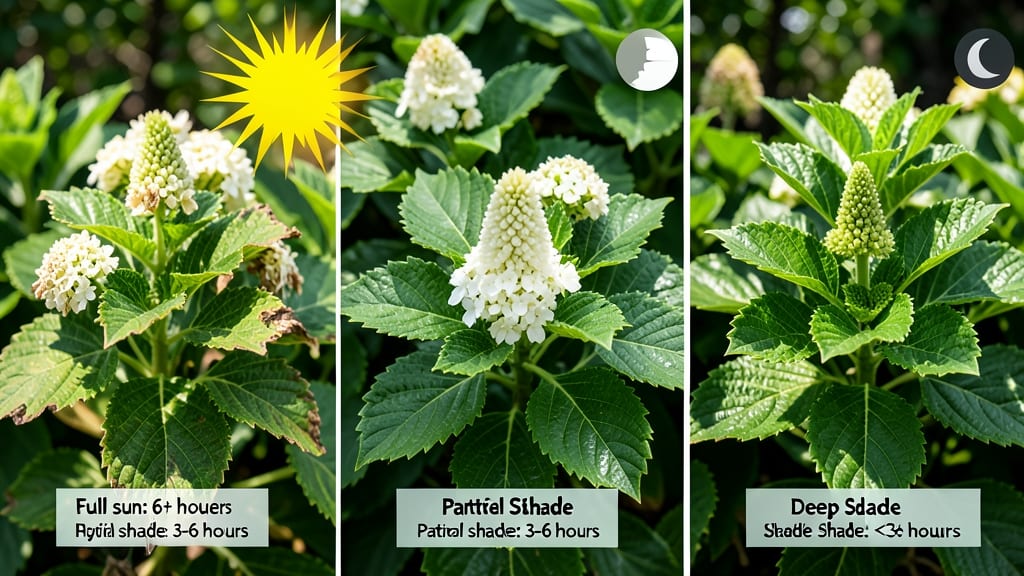
The oakleaf hydrangea light requirements are simple but critical—these plants thrive with morning sun and afternoon shade, the secret to their stunning foliage and abundant blooms.
If your 🌸 oakleaf hydrangea looks lackluster or struggles to bloom, it might be getting too much harsh afternoon light or not enough gentle morning rays. Too much sun fades their signature burgundy leaves, while too little shade keeps flowers sparse.
This guide breaks down the perfect light balance for your climate, from east-facing garden spots to urban balconies, and how to spot when adjustments are needed.
You’ll learn how to position your plant for year-round vibrancy, fix common light mistakes, and even work with your yard’s natural shade—no guesswork required.


Optimal morning sun and afternoon shade balance for oakleaf hydrangeas
Oakleaf hydrangeas (Hydrangea quercifolia) are prized for their stunning foliage and delicate blooms, but achieving that vibrant color and lush growth depends entirely on getting their light conditions right.
These shrubs thrive in partial shade, specifically morning sun with afternoon shade, which mimics their natural woodland habitat. Understanding this balance is key to preventing leaf scorch or leggy, weak growth.
The science behind their preference for partial shade is simple: oakleaf hydrangeas originate from the southeastern U.S., where they grow under the dappled light of tall trees. Morning sun provides the energy boost they need for photosynthesis, while afternoon shade protects their delicate foliage from intense, drying rays.
Without this balance, their leaves can turn crispy or pale, and their blooms may fail to develop properly.
Here’s the breakdown: 3 to 6 hours of morning sun is ideal, paired with 4 to 6 hours of filtered or dappled shade in the afternoon. This ratio ensures your hydrangea gets enough light for healthy growth without overheating.
In hotter climates, you might need to extend the shade period to 6 to 8 hours to prevent stress.
| Light Condition | Morning Sun Duration | Afternoon Shade Duration | Best For | Climate Adaptation |
|---|---|---|---|---|
| Partial Shade (Ideal) | 3-6 hours | 4-6 hours | Vibrant foliage, abundant blooms | Temperate zones (USDA 6-9) |
| Morning Sun Only | 4-5 hours | Full shade after 12 PM | Hot, dry climates | Southwestern U.S. |
| Dappled Light | 2-4 hours | 6-8 hours of filtered light | Cooler, humid climates | Pacific Northwest |
| Full Sun (Avoid) | 6+ hours | 0 hours (direct sun all day) | Leaf scorch, poor blooms | Avoid in most regions |
If you’re planting your oakleaf hydrangea in a south-facing location, use a light-colored fence or lattice to reflect some light away during peak afternoon hours. Alternatively, position it near deciduous trees that will provide shade as they leaf out in spring.
In containers, move them to a shadier spot after 12 PM if they’re exposed to direct sun.
Adjusting for your climate is crucial. In hot, dry regions, like Arizona or Texas, limit morning sun to 3 hours max and ensure afternoon shade is dense.
Conversely, in cooler climates, like the Pacific Northwest, they can tolerate up to 6 hours of morning sun with only light afternoon shade. Always monitor your plant’s response—yellowing leaves or crispy edges signal too much sun, while pale, sparse foliage means they need more light.
Pro tip: Prune strategically to shape your hydrangea for optimal light exposure. Remove overcrowded branches to improve airflow and light penetration to the center of the plant.
This also encourages larger, healthier blooms by reducing competition for resources. Aim to prune in late winter or early spring, just as new growth begins.
For container growers, choose a large pot with good drainage and place it on a movable stand or casters. This lets you rotate the plant for even light exposure and move it to shadier spots as needed.
Oakleaf hydrangeas in containers dry out faster, so ensure they get consistent moisture while protecting their roots from intense afternoon heat.
One common mistake is assuming that any shade is good shade. Avoid planting under evergreen trees, which block all light year-round. Instead, opt for deciduous trees or structures that allow filtered light to reach your hydrangea.
If you’re unsure about your yard’s light conditions, use a light meter app to track sunlight exposure for a few days before planting.
Remember, oakleaf hydrangeas reward patience. With the right morning sun and afternoon shade balance, they’ll thrive for decades, offering seasonal interest from their exfoliating bark in winter to their vibrant fall foliage.
Start with the ideal conditions, then fine-tune based on how your plant responds—your hydrangea will thank you with lush, healthy growth year after year. 🌿
Signs your oakleaf hydrangea isn’t getting the right light (and how to fix it)
Your oakleaf hydrangea might be silently begging for better light conditions. If its leaves are turning yellow or brown at the edges, or if the vibrant fall colors are dulling to pale green, light exposure is likely the culprit.
These plants thrive in morning sun with afternoon shade, but too much direct sun or insufficient light can derail their growth.
Another red flag? Sparse or no blooms despite proper care. Oakleaf hydrangeas need balanced light to produce their signature cone-shaped flowers. Without it, they’ll focus energy on foliage instead. Even the leaf shape—which resembles oak leaves—can become distorted if light conditions are off.
🌿 Warning: Oakleaf Hydrangea Light Stress Signs
Too much sun: Leaf scorch (brown crispy edges), bleached foliage, and dropped buds before blooming. Afternoon sun after 2 PM is the biggest culprit.
Too little light: Pale, leggy growth, small leaves, and fewer flowers. The plant stretches toward any available light, creating a weak structure.
To fix over-exposure, move your hydrangea to a spot with dappled shade—like under a tree canopy or near a north-facing wall. If your yard lacks natural shade, use a lightweight shade cloth (30-50% coverage) during peak afternoon hours.
Prune nearby trees or shrubs that cast harsh shadows in summer.
For under-exposed plants, gradually introduce more light over 2-3 weeks to avoid shocking the foliage. Place it near an east-facing window if indoors or transplant to a sunnier border outdoors. Avoid south-facing spots, which bake the leaves in afternoon sun.
Seasonal adjustments matter too. In summer, provide extra afternoon shade, while in winter, let it enjoy more sunlight to boost spring blooms. Mulch around the base to regulate soil temperature and reduce stress from fluctuating light conditions.
Pro tip: Monitor your hydrangea’s leaf color weekly. Deep green with rich fall hues means ideal light. Adjust placement if you notice unusual color shifts or stunted growth—these are early warnings before symptoms worsen.