
Trees
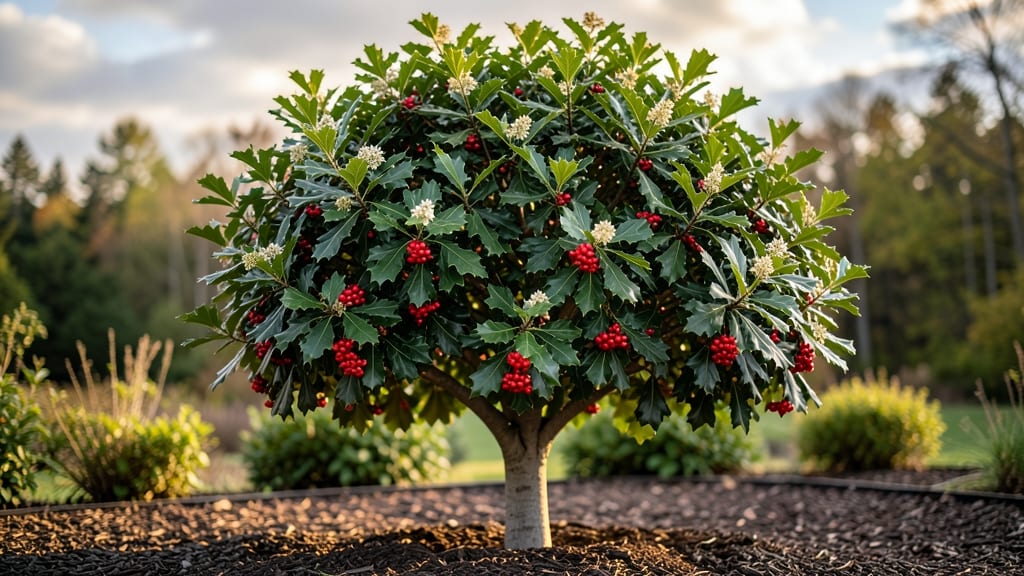
Oakleaf holly trees deliver year-round structure and color with almost no fuss. 🌿 I planted mine last spring, and the glossy leaves and bright red berries already make my yard stand out—no dead zones, no messy cleanup, just reliable beauty that lasts.
These trees thrive in partial shade to full sun, making them perfect for problem spots where other evergreens fail. The soil doesn’t need to be fancy—just well-draining—and once established, they barely need watering. Even better?
They resist deer and most pests, so you won’t be chasing off critters every season. By winter, you’ll have bold red berries that birds adore (and neighbors envy), while the leaves stay evergreen through snow and frost.
Pruning is optional—just shape lightly in late winter if needed—and fertilization is a one-time annual boost for maximum drama. Works for foundation plantings, privacy screens, or as a striking focal point. Here’s how to keep yours thriving with minimal effort.
📚 In This Guide
- What you need
- Instructions
- Tips and common mistakes
- Wrapping up and next steps
What you need
- ● Oakleaf Holly Trees: 1–3 nursery-grown saplings (3–6 ft tall, containerized for easier transplanting). Choose male and female varieties (e.g., 'Carolina Gem' and 'Carolina Beauty') for berries!
- ● High-quality potting soil or native soil mix: 5–10 bags (50 lb each), amended with compost (2–3 bags) for drainage and nutrients.
- ● Organic mulch: 1–2 cubic yards (pine bark or shredded hardwood) to retain moisture and suppress weeds.
- ● Slow-release fertilizer: 10–20 lb of 10-10-10 or 8-3-9 (balanced NPK ratio) for initial planting.
- ○ Tree stakes (optional but helpful): 2–4 wooden or metal stakes (4–6 ft tall) + tree ties (5–10 pieces) for support.
- ● Shovel: Round-point or digging shovel for planting holes (18–24" wide/deep).
- ● Pruning shears: Bypass pruners (for shaping) + loppers (for thicker branches).
- ● Garden hose or watering can: With a soaker hose attachment (for deep watering).
- ● Wheelbarrow: For hauling soil, mulch, or tools.
- ● Gloves and knee pads: Heavy-duty gardening gloves + knee pads for comfort.
- ● Measuring tape: To ensure proper spacing (15–25 ft apart for mature trees).
- ● Site selection: Choose a sunny to partially shaded spot with well-draining soil (Oakleaf Holly hates soggy roots!).
- ● Timing: Plant in early spring or fall (avoid extreme heat/cold).
- ○ Soil test (optional but recommended): Check pH (ideal: 5.0–6.0) and amend if needed (sulfur for acidity).
- ● Water source nearby: Oakleaf Holly needs 1–2 inches of water weekly (more in drought).
- ● Pest control (preventative): Neem oil or insecticidal soap (for aphids/spider mites).
How to plant and care for oakleaf holly trees
Here's the straightforward approach I've used for years—healthy, vibrant hollies with almost no fuss.
🪴 Step 1: Choose the Perfect Planting Spot
Oakleaf hollies thrive in partial shade to full sun, but they tolerate more shade than other hollies. Pick a location with morning sun and afternoon shade—this prevents leaf scorch while keeping their stunning foliage vibrant. The soil should drain well, but hollies aren’t picky about pH, so test yours if you suspect issues.
Dig a hole twice as wide as the root ball but only as deep. This encourages roots to spread horizontally instead of settling too deep, which can suffocate them. Gently loosen the edges of the hole with a shovel to avoid compacting the soil when you backfill. I always add a handful of compost to the bottom of the hole—just enough to blend with the native soil.
🌱 Step 2: Plant with Care for Long-Term Health
Remove the holly from its container and loosen the roots if they’re circling tightly. This prevents girdling as the tree matures. Place the root ball in the hole so the top sits 1-2 inches above ground level—settling will occur over time, so don’t bury it too deep. Backfill with the native soil you removed, tamping lightly to eliminate air pockets.
Water deeply right after planting to settle the soil around the roots. You’ll know it’s right when the top inch feels moist but not soggy. Mulch with 2-3 inches of organic mulch (like pine straw or shredded bark) to retain moisture and regulate soil temperature. Keep the mulch 6 inches away from the trunk to prevent rot.
☀️ Step 3: Water and Feed for Year-Round Beauty
Water once a week during the first growing season, giving 1-2 gallons per tree unless rainfall provides enough. After the first year, hollies are drought-tolerant, but deep watering every 2-3 weeks keeps them lush. Check soil moisture by sticking your finger 2 inches deep—if it’s dry, water thoroughly. Overwatering is the biggest mistake; soggy roots lead to root rot.
Fertilize once in early spring with a balanced, slow-release fertilizer (like 10-10-10). Follow package instructions for application rates—too much nitrogen encourages leafy growth over berries. I skip fertilizer after the first year unless the tree looks stressed. Oakleaf hollies are low-maintenance once established.
✂️ Step 4: Prune for Shape and Health
Prune late winter or early spring before new growth starts. Remove dead, diseased, or crossing branches first—these are the easiest to spot. Thin out interior branches to improve airflow, which reduces fungal issues. Never prune more than 25% of the tree in one season; hollies handle pruning poorly and may not recover well.
Shape the tree by cutting just above a bud or side branch to encourage fuller growth. Avoid "topping" (cutting the main stem back drastically)—this creates weak, leggy growth. After pruning, clean your tools with rubbing alcohol to prevent spreading disease between cuts.
🌿 Step 5: Enjoy the Year-Round Drama
Oakleaf hollies deliver four seasons of interest: glossy leaves in spring, white flowers in summer, bright red berries in fall, and evergreen foliage in winter. The berries attract birds, so protect them if you want to keep them on the tree—just cover with netting if needed. These trees are slow-growing but long-lived, so once planted, they’ll reward you for decades.
Watch for holly leaf miner (tiny white larvae in leaves) or scale insects (sticky residue on branches). Treat with neem oil if you spot these pests—it’s organic and effective. With minimal care, your oakleaf holly will become the star of your landscape, offering structure, color, and texture all year.
Tips & tricks for perfect oakleaf holly trees
These simple strategies will help your oakleaf hollies thrive with minimal effort—once you know the secrets.
Soil Prep Secret: Before planting, test your soil's drainage by digging a small hole and filling it with water. If it drains within 30 minutes, you're good to go. If water pools after an hour, amend with coarse sand or gravel to improve drainage. Oakleaf hollies hate soggy roots, so this simple test prevents future problems. I've seen hollies fail within months because of poor drainage—don't make that mistake.
Root Care Technique: When loosening circling roots in Step 2, use your fingers—not a knife. You just want to gently separate the roots without cutting them. Think of it like untangling headphones: you're creating space, not making incisions. This prevents damage that could stress the tree during its first critical weeks. The goal is to encourage outward root growth, not create wounds.
Mulching Wisdom: That 2-3 inch layer of organic mulch isn't just decoration—it's a moisture regulator. But here's the trick: refresh the mulch every spring, removing any that's broken down completely. This maintains the proper insulation while preventing the mulch from becoming compacted and waterlogged. I make it a habit to fluff the mulch around the base while I'm checking soil moisture in Step 3.
Pruning Insight: For shaping cuts in Step 4, look for the small bump where a side branch meets the main stem—that's your target. Cutting just above this "bud" encourages new growth in the right direction. If you're unsure, make your cut at a 45-degree angle about 1/4 inch above the bud. This technique gives you control over the tree's shape without sacrificing its health. I always prune on a dry day when the tools are clean—this reduces disease risk dramatically.
Pro Tips for Oakleaf Holly Trees
- These simple strategies will help your oakleaf hollies thrive with minimal effort—once you know the secrets.
- Soil Prep Secret: Before planting, test your soil's drainage by digging a small hole and filling it with water.
- Root Care Technique: When loosening circling roots in Step 2, use your fingers—not a knife.
Frequently asked questions
Got questions about keeping your oakleaf holly thriving? You’re not alone—these stunning evergreens are low-maintenance but still spark curiosity! Here are answers to the most common queries to help you grow with confidence.
How fast do oakleaf holly trees grow?
Oakleaf hollies grow at a moderate pace, averaging 12–24 inches per year. In ideal conditions (full sun to partial shade, well-drained soil), they can reach 20–30 feet tall over 10–15 years. Patience pays off—these trees are worth the wait for their glossy foliage and dramatic winter structure!
Can oakleaf hollies survive in cold climates?
Yes! These trees are hardy in USDA Zones 7–10, tolerating winters down to 0°F (-18°C). For colder regions (Zone 6 or below), plant in sheltered spots or mulch heavily to protect roots. Young trees may need winter wraps for extra insulation during harsh freezes.
Do oakleaf hollies produce berries? If so, how do I encourage them?
Both male and female flowers are needed for bright red berries (a bird magnet!). Plant at least one male tree per 5–6 female trees for pollination. Female trees thrive in full sun and acidic, moist soil—fertilize lightly in spring with an azalea/camellia mix for extra fruit production.
Why are my oakleaf holly leaves turning yellow or brown?
Yellowing leaves often signal overwatering or poor drainage, while brown edges may mean underwatering or salt buildup (from tap water). Check soil moisture—water deeply but infrequently (1–1.5 inches per week). If leaves curl or drop, it could be spider mites or scale insects; treat with neem oil or insecticidal soap.
What are some low-maintenance alternatives to oakleaf hollies?
If oakleaf hollies seem too high-maintenance, try these evergreen workhorses:
- Inkberry Holly (Ilex glabra) – Thrives in shade, drought-tolerant, and berry-producing.
- Dwarf Yaupon (Ilex vomitoria ‘Nana’) – Compact, salt-tolerant, and great for containers.
- Leucothoe (Leucothoe axillaris) – Lush foliage, loves wet soil, and handles partial shade.
- Boxwood (Buxus spp.) – Classic hedge with minimal upkeep (but prone to pests).
All offer year-round interest with less fuss!
Wrapping up and next steps
Oakleaf holly trees are the perfect blend of beauty and ease—offering year-round color, wildlife support, and low-maintenance charm. Whether you're drawn to their glossy leaves, striking berries, or adaptable nature, these trees bring drama to any landscape with minimal fuss. 🌿✨
Ready to transform your outdoor space? Start by choosing the right variety for your climate and soil, then plant with confidence—your future evergreen star is just a shovel’s throw away!