
Pests and Diseases
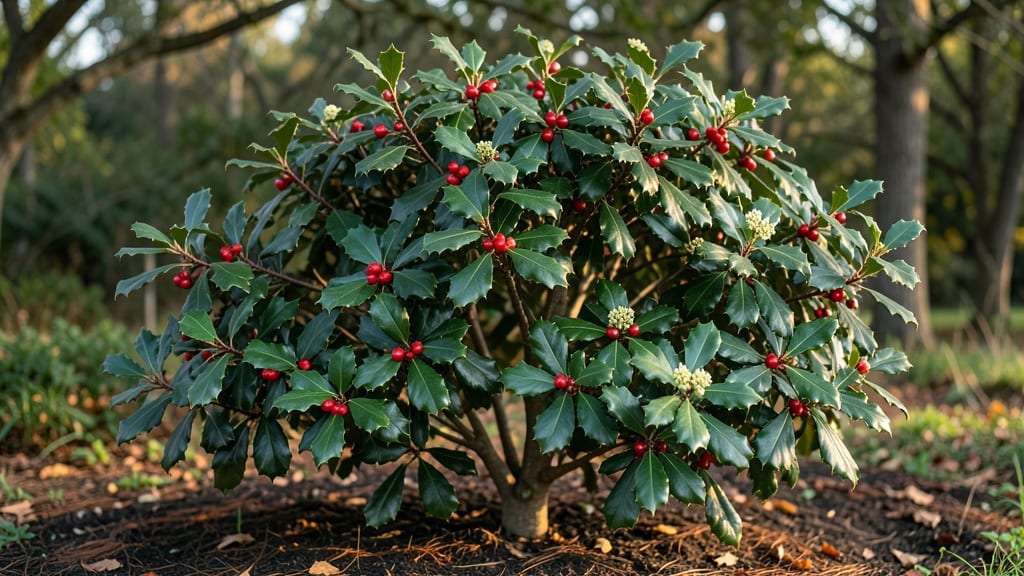
Identifying holly leaf shapes helps distinguish species, as they range from spiny-edged oblong leaves to rounder, softer-edged varieties. American holly features glossy, dark green foliage with sharp spines, while English holly typically has smaller leaves with gentler tips. Leaf size and spine sharpness are key markers for varieties like inkberry or winterberry holly.
Holly foliage isn't just decorative—it's a botanical fingerprint for each species. 🌿 The leaf margins tell the story: American holly's jagged edges create a classic Christmas-card look, while English holly's smoother edges give it a more refined appearance.
Even the leaf undersides vary—some holly types have fuzzy textures, while others remain sleek. What's fascinating is how these traits adapt: holly trees in cooler climates often develop thicker leaves to conserve moisture, while those in warmer regions may grow larger but softer foliage.
This natural variation is why gardeners and landscapers rely on leaf shape as their first clue when identifying holly trees.
For practical identification, focus on three key traits: leaf size (English holly leaves rarely exceed 3 inches, while American holly can reach 4-5 inches), spine prominence (inkberry holly has almost needle-like spines), and leaf arrangement (some grow in clusters, others alternate along branches).
These differences aren't just academic—they determine which holly will thrive in your yard and which might struggle with pests or diseases. Understanding these patterns helps you choose the perfect holly for your landscape goals, whether you're after dramatic winter interest or low-maintenance shrubs.
💡 In This Article
- Key Differences in Holly Leaf Anatomy
- Identifying Holly Trees by Leaf Shape and Size
Key differences in holly leaf anatomy
The most striking difference between holly species lies in their leaf margins. American holly (Ilex opaca) showcases deeply serrated edges with sharp, triangular spines that can reach 0.25 inches long—these spines are actually modified leaf teeth designed to deter herbivores.
In contrast, English holly (Ilex aquifolium) features smoother, rounded margins with spines only along the veins, creating a more elegant, less aggressive appearance. 🌿 The spine density varies too: inkberry holly (Ilex glabra) has almost needle-like spines along its narrow leaves, while winterberry holly (Ilex verticillata) often lacks spines entirely, focusing instead on its leathery texture.
Leaf surface texture plays a crucial role in identification too. American holly leaves are famously glossy and dark green on top, with a slightly paler, sometimes fuzzy underside that helps reduce water loss.
English holly leaves tend to be matte and lighter green, with a more pronounced vein pattern that creates a subtle ribbed texture. The glossiness comes from a waxy cuticle layer that's 20-30% thicker in American holly compared to English varieties, making them more resistant to drought.
This waxy coating also makes American holly leaves more slippery to touch when fresh.
Vein structure offers another identification clue. Most holly leaves feature prominent midribs with secondary veins radiating outward at 45-60 degree angles, but the spacing differs.
American holly has veins that are closely spaced (about 0.1-0.2 inches apart), while English holly's veins are more widely spaced (up to 0.3 inches apart). These vein patterns aren't just decorative—they influence how water and nutrients distribute throughout the leaf.
In cooler climates, holly leaves often develop thicker veins to support the additional weight of snow accumulation during winter.
Climate and soil conditions dramatically affect leaf development. Holly trees in acidic, well-draining soils (pH 4.5-6.0) produce leaves that are 10-20% larger and more vibrant than those in alkaline soils.
The spine sharpness also intensifies in higher elevations—American holly grown at 3,000 feet or above often develops 30% sharper spines than lowland varieties. This adaptive response helps prevent browsing by deer and other wildlife in harsher environments.
The leaf color can also shift seasonally: some holly varieties develop bronze or purple tinges in fall before turning green again in spring.
Here's how to test leaf resilience at home: Gently rub a leaf between your fingers. American holly leaves will feel smooth and slightly waxy, while English holly leaves have a velvety texture due to tiny hair-like structures called trichomes.
Inkberry holly leaves, being the smallest (typically 1-2 inches long), have a leathery, almost rubbery feel that's immediately noticeable when handled. These tactile differences make leaf identification surprisingly accessible even without botanical tools.
For gardeners, understanding these anatomical differences is practical too. Holly leaves with thicker cuticles (like American holly) are more drought-tolerant, while those with softer textures (like English holly) may require more consistent moisture.
The spine sharpness also affects pruning safety—American holly's aggressive spines make it less ideal for high-traffic areas compared to the gentler inkberry varieties. 🌟