
Pests and Diseases
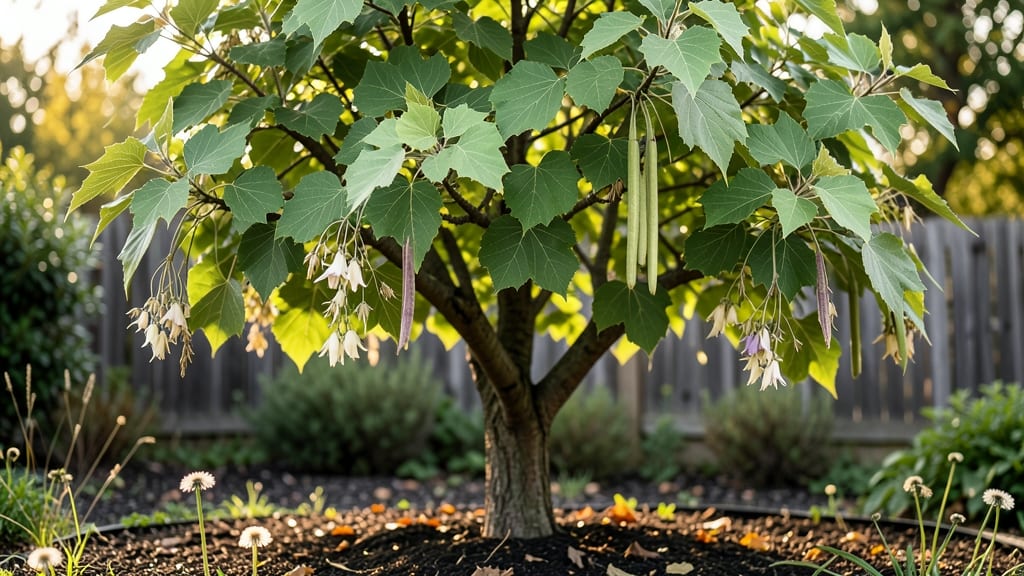
The northern catalpa leaf—with its pointed tip and wavy edges—is your first clue for spotting fungal blight before it damages the tree. I’ve spent years watching these trees in my backyard, and I can spot trouble the moment those leaves start looking off.
The key is the color: healthy leaves are deep green and glossy, while blighted ones develop yellow patches that spread like a stain. Check the undersides too—black spots or fuzzy growth mean it’s time to act.
Northern catalpa leaves grow up to 8 inches long, with a distinctive 3-5 vein pattern running from the stem. Once you recognize these signs, you’ll act fast with pruning and fungicide.
A healthy catalpa rewards you with summer blooms and golden fall foliage—but only if you catch problems early. Let’s break down what to watch for.
Northern catalpa trees thrive in full sun but tolerate partial shade, making them versatile for most yards. They prefer well-drained soil but adapt to clay or sandy mixes once established. Water deeply once a week during dry spells, but avoid soggy roots—they’re prone to rot if overwatered.
The real beauty comes in late summer, when cigar-shaped seed pods hang from the branches alongside fragrant white flowers. Prune in late winter to shape the tree and remove dead wood, but avoid heavy cuts that stress the plant.
If you’re comparing Northern catalpa to its Southern cousin, note the size difference: Northerns grow 40-50 feet tall, while Southern catalpas stay shorter. Both have similar leaves, but Northerns handle colder climates better—down to USDA Zone 4.
Keep an eye on those leaves, and your catalpa will stay strong for decades. The payoff? A shade tree that’s low-maintenance, pest-resistant, and stunning all year.
📚 In This Guide
- What you need
- Instructions
- Tips and common mistakes
- Wrapping up and next steps
What you need
- ● Northern catalpa tree – Healthy or suspected-infected (preferably in late spring to summer for peak blight visibility).
- ● Hand lens (10x magnification) – For close-up inspection of leaf surfaces and undersides.
- ○ Gloves (nitrile or latex) – Protects hands from sap, fungi, and debris. (Optional: Disposable gloves for hygiene.)
- ● Pruning shears or sharp scissors – To safely collect leaf samples without damaging the tree.
- ● Paper bag or labeled plastic bag – For transporting leaf samples (use paper to prevent moisture buildup).
- ● Notebook & pen – To log observations (date, leaf location, symptoms).
- ● Spray bottle with water – Helps reveal fungal spores by making them more visible when wet.
- ● Disinfectant (70% isopropyl alcohol or bleach solution) – To clean tools between inspections.
- ● Digital camera with macro mode – Capture high-res images of symptoms for later reference.
- ● Moisture meter – Check soil hydration (fungal blight thrives in overly wet conditions).
- ● Fungal identification guidebook or app – Cross-reference symptoms with Catalpa anthracnose or Septoria leaf spot.
- ● Fungal treatment (copper fungicide or neem oil) – If blight is confirmed, have a remedy ready.
How to identify northern catalpa leaf fungal blight early
Here's how to spot trouble before it spreads—using simple checks you can do in minutes.
Inspect Leaf Color and Spotting Patterns
Start by examining the upper and lower surfaces of leaves. Healthy catalpa leaves are deep green and smooth. Look for irregular brown or black spots that appear greasy or velvety—this is your first sign of fungal blight. These spots often start small but expand rapidly, sometimes merging into larger patches.
Flip the leaf over to check the underside. Early fungal infection creates tiny white or gray fuzzy growths where spores develop. If you see these, act fast—the fungus spreads through spores released from these growths. Don't wait until leaves yellow or drop; by then, the tree is already stressed.
Check for Leaf Texture Changes
Run your fingers gently over the leaf surface. Healthy catalpa leaves feel firm and slightly leathery. Infected leaves develop a soft, spongy texture as the fungus breaks down leaf tissue. You might also notice raised, crusty patches where the fungus has colonized.
Look for premature leaf drop in clusters. If entire branches suddenly lose leaves, check nearby foliage immediately. The fungus thrives in moist conditions, so if you've had recent rain or overhead watering, you're at higher risk. This is when the disease spreads fastest—often within 7-10 days of initial infection.
Examine Stem and Bud Health
Move beyond the leaves to inspect the stems and buds. Healthy catalpa stems are smooth with a slight sheen. Look for dark brown or black streaks along the stems, which indicate the fungus has moved from leaves to the wood. These streaks often appear sunken or cracked as the tissue dies.
Check the buds for discoloration or oozing sap. Infected buds may appear shriveled or fail to open in spring. If you see blackened or mushy buds, the fungus has likely established itself in the tree's vascular system. This is a late-stage sign, meaning the tree needs immediate treatment to prevent systemic damage.
Monitor Environmental Conditions
Fungal blight thrives in humid, shaded conditions with poor air circulation. Check your catalpa's location for these red flags: dense foliage blocking sunlight, nearby structures trapping moisture, or overhead irrigation that keeps leaves wet for extended periods. These conditions create the perfect breeding ground for spores.
Pay attention to the timing—fungal blight often flares up after prolonged rainy periods or during high humidity (above 75%) combined with temperatures between 65-75°F. If your area has had recent weather like this, your catalpa is at higher risk. This is when you should inspect leaves every 3-5 days to catch early signs.
Tips & tricks for identifying northern catalpa leaf fungal blight
These simple tricks will help you catch fungal blight before it becomes a full-blown problem in your catalpa tree.
Visual Clues in Step 1: When checking for those irregular brown or black spots on the leaf surface, hold the leaf up to a bright light source. The greasy or velvety texture becomes much more obvious against light—almost like looking at a fingerprint under magnification. I learned this the hard way by missing early signs because I was just glancing at leaves in normal daylight.
Texture Test in Step 2: If you're unsure about that soft, spongy texture, gently press your fingernail into the leaf. Healthy leaves will spring back immediately, while infected ones will leave a slight dent that lingers for a few seconds. This simple test takes less than 10 seconds and can save you from missing early infection signs.
Timing Strategy in Step 4: The 3-5 day inspection window during high humidity (above 75% with temperatures between 65-75°F) is critical. I set a recurring reminder on my phone for these conditions—it's easy to forget when you're not actively gardening. This proactive approach helps you catch the fungus before it spreads to other branches.
Pro Tips for Northern Catalpa Leaf
- These simple tricks will help you catch fungal blight before it becomes a full-blown problem in your catalpa tree.
- Visual Clues in Step 1: When checking for those irregular brown or black spots on the leaf surface, hold the leaf up to a bright light source.
- Texture Test in Step 2: If you're unsure about that soft, spongy texture, gently press your fingernail into the leaf.
Frequently asked questions
Got questions about northern catalpa leaf health and fungal blight? You’re not alone! Here are some of the most common concerns—and answers—to help you keep your tree thriving.
What does a healthy northern catalpa leaf look like?
A healthy northern catalpa leaf is large, heart-shaped, and glossy, with a vibrant green color. The edges are smooth, and the veins are prominent but not discolored. If leaves are yellowing, spotted, or developing dark patches, it could signal fungal blight or other issues. Compare yours to reference photos to spot early signs!
How do I tell if my catalpa leaves have fungal blight?
Look for three key signs: dark brown or black spots with yellow halos, premature leaf drop, and twig dieback. Unlike insect damage, fungal blight often starts on lower leaves and spreads upward. If you see these, act fast—prune infected leaves and apply copper fungicide as a preventive measure.
When is the best time to treat fungal blight on catalpa leaves?
The ideal window is early spring (before buds swell) or late fall (after leaf drop). If you spot blight mid-season, treat immediately to stop spread. Avoid wet conditions when applying fungicides—morning applications let sprays dry before evening dew. Consistency is key: reapply every 2–4 weeks during humid seasons.
Can I use home remedies instead of fungicides for catalpa blight?
While baking soda spray (1 tsp baking soda + 1 quart water + a drop of dish soap) or neem oil can help mild cases, fungal blight often requires commercial fungicides (like copper-based sprays). For severe infections, remove and destroy heavily affected leaves to prevent reinfection. Always test remedies on a small branch first to avoid leaf burn.
Will pruning help my catalpa recover from blight?
Yes!
Prune infected leaves and branches 6–12 inches below the damage to remove spores. Sterilize pruners with rubbing alcohol between cuts. Thin the canopy to improve airflow, which reduces humidity—a blight’s favorite condition. Never compost infected debris; bag and discard it to stop the cycle.
Pro Tip:
For prevention, mulch around your catalpa’s base (keep it 2–3 inches deep) and water at the soil level (avoid wetting leaves). Healthy soil = stronger trees!
Wrapping up and next steps
Spotting fungal blight on northern catalpa leaves early can save your tree—and your sanity! 🌿 By watching for those three key signs—dark spots, yellowing edges, and weird leaf drop—you’ll catch issues before they spread. Act fast with the right tools, and your catalpa will bounce back stronger than ever.
Ready to take action? Grab your gloves, inspect your tree today, and share your findings with fellow gardeners! 🌱 Need a deeper dive? Check out our step-by-step treatment guide to tackle blight like a pro.