
Pruning
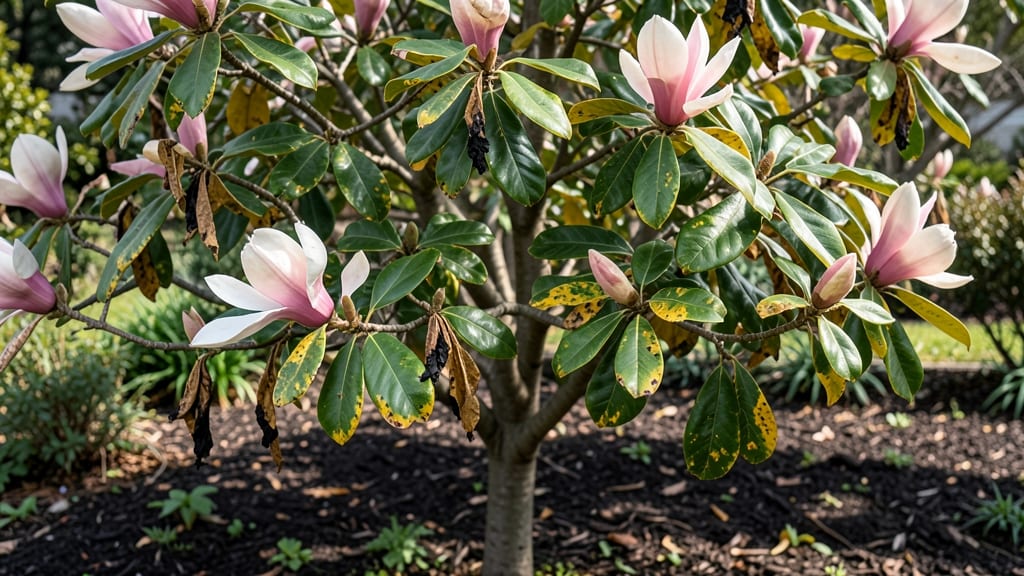
Your magnolia’s crispy leaf edges and fungal spots are screaming for a copper spray cure. 🌿 I’ve seen this exact problem turn a once-lush tree into a sad, spotted mess—until I discovered how a simple copper treatment stops the damage in its tracks.
The culprits? Fungal diseases like anthracnose or bacterial leaf spot, often triggered by wet spring weather or poor airflow. Those brown, crispy edges and black spots aren’t just ugly—they’re signs your tree is struggling to fight back.
Copper spray works because it creates a protective shield before the fungi get a foothold. By next spring, you’ll see fresh, vibrant leaves pushing out without a single crispy edge in sight.
The key is timing: apply the spray in early spring and again after heavy rains, and your magnolia will bounce back stronger than ever. This fix works for all magnolia types—southern, saucer, or star—so you can finally enjoy that fragrant spring bloom without the leaf drama.
Root Causes of Leaf Struggles
Understanding why your magnolia’s leaves develop crispy edges, fungal spots, or other distress signals starts with identifying the underlying triggers. These issues rarely appear out of nowhere—they’re your tree’s way of signaling an imbalance.
Below, we break down the key culprits behind magnolia leaf problems, explained in scientific terms with actionable insights.
Magnolias are sensitive to rapid temperature shifts, especially when combined with low humidity. Here’s how it happens:
- Cold Snaps & Frost Damage 🥶 Magnolias thrive in USDA Zones 4–9, but sudden drops below 20°F (-7°C) can cause cellular damage in leaves, leading to crispy, brown edges. This occurs because water in leaf cells freezes and expands, rupturing cell walls.
- Heat Stress & Drought When temperatures rise above 90°F (32°C) and soil moisture drops, magnolias transpire excessively, causing leaf edges to desiccate (dry out). The tree prioritizes root survival over foliage, leading to necrotic (dead) margins.
- Wind Burn Strong, dry winds strip moisture from leaves faster than roots can replenish it. The result? Browning tips and curling—a classic sign of osmotic stress.
💡 Pro Tip: Mulch with 3–4 inches of organic matter (like shredded bark) to regulate soil temperature and retain moisture. Water deeply 1–2 times per week during heatwaves, aiming for 1–1.5 inches of water per week.
Fungi like anthracnose, powdery mildew, and leaf spot diseases thrive in humid, stagnant conditions. Here’s how they infiltrate your magnolia:
- Anthracnose (Colletotrichum spp.) This fungus infects through stomata (leaf pores) when leaves stay wet for >12 hours. Symptoms include dark, sunken spots with yellow halos, often appearing in spring or fall—peak fungal activity seasons.
- Powdery Mildew (Podosphaera spp.) A white, talcum-like coating on leaves? That’s hyphae (fungal threads) sucking nutrients. It spreads fastest in 60–80°F (15–27°C) temps with high humidity (70%+).
- Bacterial Leaf Spot (Xanthomonas spp.) Unlike fungi, bacteria enter through wounds or rain splashes, causing greasy, water-soaked spots that turn brown. Overhead watering accelerates spread.
✨ Prevention Hack: Apply copper fungicide (1–2 tbsp per gallon of water) every 2–3 weeks during wet seasons. Space waterings to early morning to allow leaves to dry by nightfall.
Magnolias are heavy feeders and demand balanced nutrients. Deficiencies trigger yellowing, spotting, or stunted growth:
| Symptom | Likely Deficiency | Why It Happens | Fix It Fast |
|---|---|---|---|
| Yellow between veins | Iron (Chlorosis) | Alkaline soil (pH >7.0) blocks iron uptake, even if it’s present. | Apply chelated iron or sulfur to lower pH. |
| Purple/red leaves | Phosphorus (P) | Poor root development = less energy for foliage. Common in sandy soils. | Use bone meal or compost tea. |
| Brown spots + weak stems | Magnesium (Mg) | Acidic soil (pH <5.5) leaches magnesium, causing interveinal chlorosis. | Sprinkle Epsom salt (1 tbsp/gal water). |
| Small, pale leaves | Nitrogen (N) | Over-pruning or poor soil depletes nitrogen, the growth fuel for leaves. | Top-dress with aged compost or slow-release fertilizer. |
🔥 Warning: Over-fertilizing with high-nitrogen products (like lawn fertilizer) can burn roots, worsening leaf problems. Test your soil first!
Pests sap nutrients or transmit diseases, leading to leaf discoloration and deformation. Watch for:
- Scale Insects 🐛 These sap-sucking bugs (armored or soft-bodied) excrete honeydew, which fosters sooty mold (a black fungal growth). Infested leaves yellow and drop prematurely.
- Spider Mites 🕷️ In dry, hot conditions, these microscopic pests pierce cells, causing stippling (tiny white/yellow dots). Severe cases lead to bronzing (reddish-brown leaves).
- Japanese Beetles 🐞 Adult beetles skeletonize leaves (eat tissue between veins), leaving a lace-like pattern. Larvae (grubs) munch on roots, starving the tree.
🎯 Quick Fix: Blast pests off with a strong hose spray, then apply neem oil or insecticidal soap for 3–4 weeks. Beneficial nematodes (for grubs) work underground.
Even well-meaning gardeners can accidentally stress magnolias. Common offenders:
- Over-Pruning Cutting too late in the season (after June) removes next year’s flower buds. Over-pruning also exposes the tree to sun scald, causing brown, crispy patches.
- Improper Watering Drowning roots (from poor drainage) or shallow watering (encouraging weak roots) both starve leaves of moisture. Magnolias need deep, infrequent watering—1–2 inches per week.
- Wrong Soil pH Magnolias hate alkaline soil (pH >6.5). In such conditions, micronutrients like iron and manganese become locked, leading to yellowing despite healthy soil.
💡 Soil Test Tip: Use a home pH kit or send a sample to a local extension office. Aim for pH 5.5–6.5—add elemental sulfur to lower pH or lime to raise it.
Sometimes, one problem opens the door for another. For example:
- Physical leaf damage (from hail or pruning) creates entry points for fungi/bacteria.
- Weakened trees (due to drought or poor soil) can’t fight off pathogens as effectively.
Preventative Strategy:
- Remove fallen leaves (where fungi overwinter).
- Space trees 10–15 ft apart for airflow (reduces humidity).
- Sanitize pruners with rubbing alcohol between cuts to prevent spreading diseases.
Fixing Your Magnolia’s Leaf Woes
Got crispy-edged leaves, unsightly spots, or other leaf troubles? Don’t panic—most magnolia tree leaf problems have simple, effective fixes. Below, we’ll break down cause-specific solutions to restore your tree’s lush, healthy foliage.
And the best part? Many of these fixes are preventable with a little proactive care. Let’s get your magnolia thriving again!
Fix: Boost copper levels and adjust care habits.
1️⃣ Apply Copper Fungicide Spray
🔥 Copper deficiency often leads to those telltale brown edges, but a copper-based fungicide (like copper sulfate or copper hydroxide) can correct it.
Here’s how: - Mix it right: Follow label instructions—typically 1–2 tbsp per gallon of water. - Spray thoroughly: Focus on both sides of leaves and the tree’s canopy.
Early morning or late evening works best to avoid leaf burn. - Reapply as needed: If the problem persists, spray every 2–4 weeks until new growth appears healthy.
2️⃣ Improve Soil Drainage 💧 Poor drainage can stress roots, leading to leaf edge burn.
Test your soil’s pH (ideal: 5.0–6.5 for magnolias) and amend if needed: - Add organic matter: Mix in compost or peat moss to improve water retention and drainage. - Raise the soil level: If your tree sits in a low spot, mound soil around the base to prevent waterlogging.
3️⃣ Adjust Watering Practices 🌧️
Overwatering or underwatering can cause stress. Magnolias prefer:
- Deep, infrequent watering (1–2 inches per week).
- Well-draining soil—never let roots sit in soggy conditions.
Fix: Fungicides + better airflow = fewer spots.
1️⃣ Spray with Fungicide 🍄
Copper fungicides work here too, but neem oil or baking soda spray (1 tbsp baking soda + 1 tsp dish soap + 1 gallon water) are gentler options:
- Neem oil: Spray every 7–10 days until the issue clears.
- Baking soda mix: Reapply weekly during wet seasons.
2️⃣ Prune for Airflow 🌬️
Fungal spores thrive in humid, shaded conditions. Thin out dense branches to:
- Increase sunlight penetration (aim for 6–8 hours of sun/day).
- Remove infected leaves (sterilize pruners with rubbing alcohol between cuts).
3️⃣ Mulch Properly 🌿
- Use 2–3 inches of mulch (wood chips or pine straw) but keep it 6 inches away from the trunk to prevent rot.
- Replenish annually to maintain soil health.
Fix: Targeted treatments + natural predators.
1️⃣ Blast Off Pests with Water 💦
For scale insects or spider mites:
- Hose down the tree with a strong spray (use a nozzle for pressure).
- Repeat weekly until pests disappear.
2️⃣ Introduce Beneficial Insects 🐞
- Ladybugs eat aphids and mites.
- Parasitic wasps attack sawfly larvae.
- Buy them online or attract them with native plants like dill or yarrow.
3️⃣ Apply Horticultural Oil 🛡️
- Spray in early spring (before buds open) to suffocate overwintering pests.
- Reapply every 7–10 days if infestations persist.
Fix: Shield your tree from extremes.
1️⃣ Provide Temporary Shade ☀️
- Use shade cloth (30–50% coverage) during peak summer heat (10 AM–4 PM).
- Avoid plastic sheets—they trap heat and can burn leaves.
2️⃣ Mulch Heavily in Winter ❄️
- Apply 4–6 inches of mulch around the base (but not touching the trunk).
- Cover young trees with burlap wraps if your area gets below 10°F.
3️⃣ Water Deeply Before Freezes 💧
- Soak the root zone 1–2 weeks before the first frost to hydrate roots for winter.
✅ Fertilize lightly in early spring with a balanced, slow-release fertilizer (10-10-10). ✅ Avoid heavy pruning in late summer—it stresses the tree before winter. ✅ Monitor regularly—catch problems early when they’re easiest to fix! ✅ Test your soil every 2–3 years to check for deficiencies.
Final Thought: Most magnolia leaf problems are fixable with the right care. Start with copper sprays for crispy edges and fungicides for spots, then tweak your watering, mulching, and pruning habits. Before you know it, your tree will be back to its glorious, glossy-green self! 🌿✨
Frequently asked questions
Why are my magnolia leaves turning brown at the edges first?
Those crispy brown edges usually signal environmental stress—often from heat, drought, or wind burn. Magnolias lose moisture faster than roots can replace it, causing leaf margins to dry out. Check soil moisture and mulch with 3-4 inches of organic matter to retain moisture. Water deeply 1-2 times per week during heatwaves.
What causes black spots on magnolia leaves?
Black spots typically mean fungal infections like anthracnose or bacterial leaf spot. These thrive in humid conditions (leaves staying wet >12 hours). Remove infected leaves immediately and apply copper fungicide (1-2 tbsp/gallon water) every 2-3 weeks during wet seasons. Prune for better airflow to dry leaves faster.
How do I know if my magnolia has a nutrient deficiency?
Check the leaf pattern: yellow between veins = iron deficiency (common in alkaline soil), purple-red leaves = phosphorus deficiency, or small pale leaves = nitrogen deficiency. Test your soil (ideal pH 5.5-6.5) and amend with chelated iron, bone meal, or compost as needed.
Can I use household items to treat magnolia leaf problems?
Yes! For fungal spots, mix 1 tbsp baking soda + 1 tsp dish soap + 1 gallon water and spray weekly. For pests, neem oil (2 tbsp/gallon) works well. However, avoid vinegar or bleach—these can burn leaves. For severe issues, use commercial copper fungicides or insecticides labeled for magnolias.
Will my magnolia recover if I fix the leaf problems now?
Magnolias are resilient. New growth will push out healthy if you address the root cause (fungus, pests, or stress). Focus on prevention: remove fallen leaves (fungal overwintering sites), mulch properly, and monitor regularly. With proper care, your tree should bounce back with glossy new leaves within 2-3 months.