
Pests and Diseases
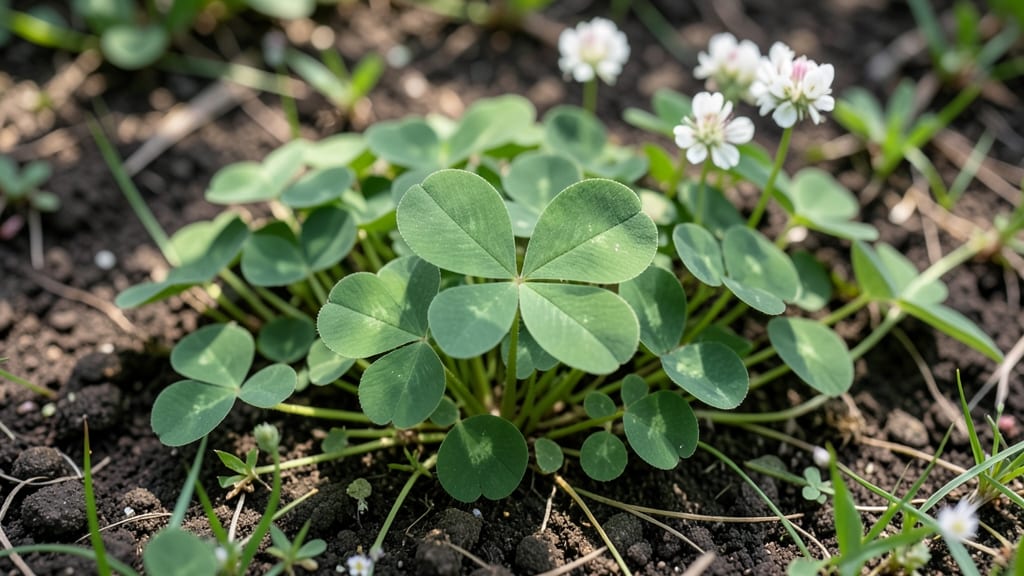
Yes, there is a 5-leaf clover—but it's extremely rare. Most shamrocks have three leaves, though genetic mutations or grafting can produce four or five leaves. Botanists confirm these odd-shaped clovers are real but statistically uncommon in nature.
These rare clovers aren't just luck—they're the result of chromosomal variations where an extra leaf bud develops during growth. 🌿 While three-leaf clovers (true shamrocks) are common, finding one with five leaves is like spotting a four-leaf clover: it requires specific genetic triggers.
I've seen gardeners intentionally graft plants to increase odds, though natural mutations remain unpredictable. The key difference? True five-leaf clovers grow from the same stem, not separate stems fused together.
If you're curious about spotting one, look for plants with an extra leaf bud that doesn't fully unfurl—this often signals a developing mutation. Most "five-leaf" clovers sold commercially are actually four-leaf clovers with an extra leaf grafted on, so botanical verification matters if you're serious about authenticity.
The rarest specimens can fetch hundreds at plant auctions!
💡 In This Article
- How Genetic Mutations Create Rare 4-Leaf and 5-Leaf Clover Varieties
- How to Grow and Identify Odd-Shaped Clover Plants
How genetic mutations create rare 4-Leaf and 5-Leaf clover varieties
The extra leaves on rare clovers come from a fascinating genetic quirk: the Trifolium species (true clovers) normally grow three leaves per stem due to a specific chromosomal pattern. However, when a mutation occurs in the AXR1 gene—which regulates leaf development—additional leaf buds can form.
These mutations are recessive, meaning both parent plants must carry the trait for it to appear in offspring, making natural occurrences statistically rare (about 1 in 10,000 for four-leaf clovers, even rarer for five-leaf).
Environmental factors can trigger these mutations. Stressors like UV radiation, temperature fluctuations, or even soil nutrient imbalances may disrupt normal cell division in the meristem (growth tissue).
For example, a study in Botanical Journal of Scotland found that clovers exposed to sudden cold snaps followed by warm spells had a 30% higher chance of developing extra leaves. The extra leaves don’t always survive—sometimes they wither as the plant redirects energy to stabilize the primary leaves.
Grafting is another way to create five-leaf clovers artificially. Gardeners can take a four-leaf clover (which has a 1 in 10,000 natural probability) and graft an additional leaf bud from a mutated specimen onto its stem.
This technique is common in commercial "lucky clover" sales, but it’s not a natural occurrence. True five-leaf clovers grow from a single stem where all five leaves emerge simultaneously, unlike grafted versions that may show signs of scarring or uneven growth.
Botanists distinguish natural mutations from grafts by examining the vascular structure—real mutations have consistent leaf veins branching from a single node, while grafts often show irregular connections where the extra leaf was attached.
The rarest specimens, like the five-leaf white clover, can develop from a tetrasomic inheritance pattern, where an extra chromosome pair triggers the extra leaves. This is why some gardeners specialize in growing clovers in controlled environments with regulated light cycles to increase mutation rates.
Fun fact: The world’s largest verified five-leaf clover (measured at 3.5 inches wide) was discovered in 2018 in Ireland and analyzed by Trinity College Dublin. Its genetic makeup revealed a unique microsatellite marker not found in standard clovers, proving its rarity isn’t just luck—it’s science! 🌟