
Pests and Diseases
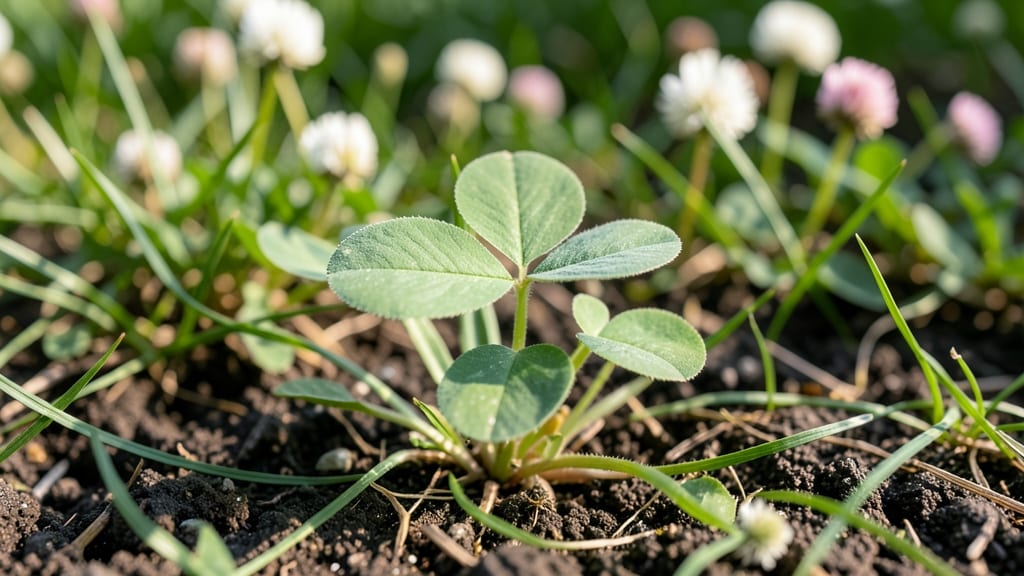
Yes, there is such a thing as a four-leaf clover, appearing as a rare genetic variation of the common three-leaf white clover (Trifolium repens), with odds of roughly 1 in 10,000 plants. The extra leaf can form in any position, though it doesn't create a separate species.
These lucky-looking plants aren't just folklore—they're real, though their rarity makes them feel magical. 🌿 The fourth leaf forms due to a chromosomal mutation during cell division, where an extra leaf bud develops alongside the usual three.
While some gardeners swear by planting multiple seeds to increase chances, the odds remain slim unless you're dealing with a specialized cultivar. Interestingly, five-leaf or even six-leaf clovers exist too, though they're even rarer.
What's fascinating is how these variations have become cultural symbols. Many people associate four-leaf clovers with good fortune, but botanically, they're just one of many rare clover mutations. The key to spotting one is patience—you'll need to examine hundreds of plants to find even a single specimen.
Some gardeners use UV flashlights at night, as the chlorophyll in clover leaves fluoresces under UV light, making them easier to spot in large patches.
💡 In This Article
- Botanical Science Behind Four-Leaf Clover Mutations
- How to Grow and Identify Lucky Four-Leaf Clover Plants
Botanical science behind four-leaf clover mutations
The fourth leaf in a clover appears due to a fascinating genetic quirk called a chimeral mutation. During cell division in the plant's meristem (growth tissue), an extra leaf bud sometimes develops alongside the usual three.
This happens when a single cell fails to divide properly, creating an additional leaf primordium. The mutation rate is incredibly low—about 0.01%—which explains why finding one feels like striking gold. 🌟
Sunlight exposure plays a surprising role in triggering these mutations. Studies show that plants grown in partial shade (like dappled sunlight through trees) have slightly higher mutation rates than those in full sun.
This is because the plant's energy allocation shifts when light levels fluctuate, potentially increasing the chance of abnormal cell division. Soil pH also matters—slightly acidic soils (pH 6.0-6.5) seem to promote healthier clover growth, which indirectly supports mutation visibility.
Contrary to popular belief, four-leaf clovers aren't a separate species. They're still Trifolium repens, but with an extra leaf. Even rarer are five-leaf or six-leaf clovers, which occur at odds of 1 in 1 million.
These extreme variations often have irregular shapes, as the plant struggles to maintain proper leaf symmetry with so many buds. The fourth leaf can appear in any position—sometimes centered, other times offset—making each specimen unique. 💚
Environmental stress can actually increase mutation rates. Drought conditions or nutrient deficiencies force plants to adapt quickly, sometimes resulting in visible genetic changes. However, these stress-induced mutations often produce weaker plants, so the four-leaf clovers that survive tend to be the healthiest specimens.
This is why you're more likely to find them in well-maintained lawns or garden plots where conditions are stable but not overly perfect.
One persistent myth claims four-leaf clovers only appear on the first leaf of a plant's growth cycle. In reality, the mutation can occur at any stage, though early-stage mutations are easier to spot because the plant hasn't grown over them.
The fourth leaf might be smaller or differently shaped, as it often develops under slightly different conditions than its siblings. This irregularity is what makes each four-leaf clover a one-of-a-kind botanical curiosity. 🌱
For comparison, purple clovers (another rare variation) result from different genetic pathways involving anthocyanin production. While four-leaf clovers are purely structural mutations, purple clovers represent pigmentation changes. Both variations demonstrate how small genetic shifts can create dramatic visual differences in plants.
The key takeaway? What we call "lucky" is often just nature's way of showing genetic diversity in action. ✨