
Companion Plants
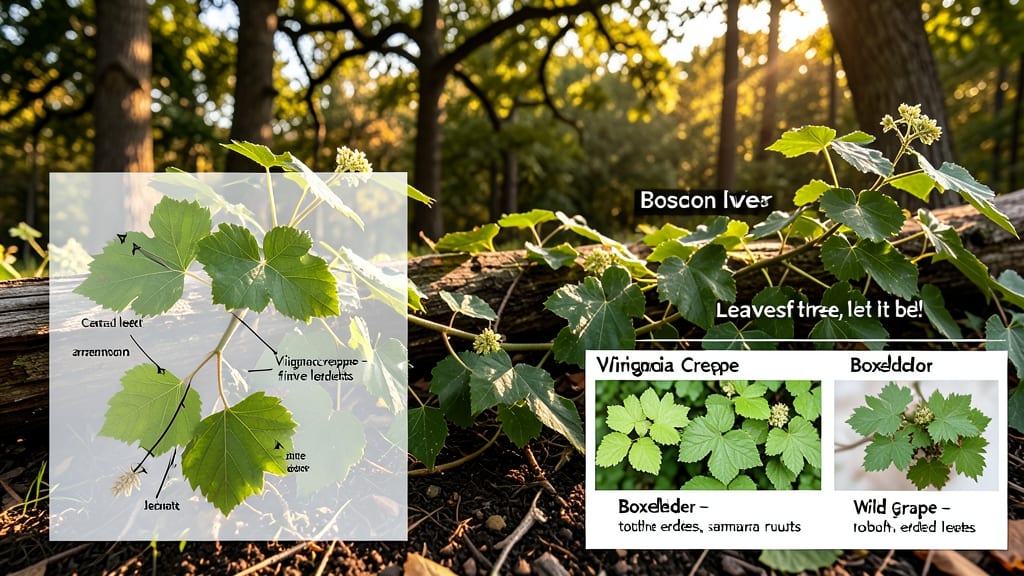
Identifying 3-leaf plants is where the real story begins in your garden. 🌿 Three-leaf plants can be garden treasures or sneaky invaders—poison ivy, clover, or your first tomato seedlings all share this stage. The trick isn't counting leaves but understanding the shape, texture, and where they grow.
Start by examining the leaf arrangement: poison ivy's leaves grow in clusters of three with smooth edges and a glossy sheen, while clover's trifoliate leaves are rounded with a fuzzy texture.
Young vegetable seedlings like tomatoes have jagged edges and a slightly hairy stem. Safety first—never touch anything until you're sure.
You'll quickly spot the differences once you know what to look for: the smoothness of poison ivy, the fuzzy roundness of clover, or the sturdy stems of your veggie starts. A magnifying glass helps with tricky cases, and a simple field guide (or phone app) keeps you from guessing.
Next steps depend on what you find: pull the weeds, nurture the seedlings, or admire the clover's resilience. The key is observation—those three leaves hold the secret to what grows in your garden.
📚 In This Guide
- What you need
- Instructions
- Tips and common mistakes
- Wrapping up and next steps
What you need
- ○ Magnifying glass (3x–10x magnification) – For close-up leaf inspection (optional but helpful for fine details).
- ● Hand lens or loupe – A budget-friendly alternative to a magnifying glass.
- ● Notebook & pen – To jot down observations (leaf shape, vein patterns, texture).
- ● Ruler or measuring tape – To record leaf size (in inches or centimeters).
- ● Camera or smartphone – For capturing leaf details (natural light works best!).
- ● Field guide or plant ID app (e.g., PlantNet, iNaturalist) – Digital or printed references for cross-checking.
- ○ Gloves (optional, for prickly or toxic plants) – Safety first!
- ● Leaf press kit – Preserves samples for later study (great for herbariums!).
- ● UV flashlight – Reveals hidden vein patterns or fluorescence in leaves.
- ● Field journal with illustrations – Sketching helps reinforce memory of key features.
- ● Pruning shears – For safely collecting small leaf samples (if needed).
How to identify common 3-Leaf plants by shape
Master these leaf patterns and you'll recognize garden favorites instantly—no botanist degree required.
🌿 Step 1: Learn the Classic Triangular Pattern
Most 3-leaf plants you'll encounter share a simple triangular shape where all three leaves radiate from a central point. Think of a perfect Mercedes-Benz logo—this is your baseline. Look for plants like tomato seedlings or shamrock clover where the leaves form an equilateral triangle when viewed from above.
Hold the stem between your thumb and forefinger to see the leaf arrangement. When all three leaves spread evenly at about 120 degrees from each other, you're dealing with a classic trifoliate pattern. This is your starting point for identification—most garden plants with three leaves follow this basic structure.
🌱 Step 2: Examine Leaflet Arrangement and Edges
Now focus on the individual leaflets (the smaller segments that make up the three-leaf structure). Notice whether the edges are smooth or serrated. Tomato leaves typically have jagged, saw-toothed edges, while parsley exhibits finely divided, almost feather-like leaflets. Run your fingers along the edges—you'll feel the difference instantly.
Count the veins too. Most trifoliate leaves have one prominent central vein with smaller side veins branching out. If you see more than three veins per leaflet or a completely different pattern, you're likely looking at a different plant family altogether. This is where most gardeners get confused—stick with the simple rule: three main leaflets, one central stem.
☀️ Step 3: Check the Stem and Growth Habit
Look at how the leaves attach to the stem. In true trifoliate plants, the three leaves should emerge from a single point on the stem (called a "node"). Hold the plant near a bright light—you'll see the three leaves radiating outward like spokes on a wheel. This is different from plants with compound leaves that have multiple leaflets along a single stem.
Observe the plant's overall growth habit. Tomato plants grow upright with sturdy stems, while clover spreads low to the ground. The way the leaves attach and the plant's growth direction will help you narrow down your options. Pay attention to whether the leaves are arranged alternately or in clusters—this gives you major clues about the plant family.
🌿 Step 4: Compare with Known Garden Favorites
Now that you've examined the basic structure, compare what you see with these common garden plants. Tomato seedlings have rough, hairy stems and deeply serrated leaves. Parsley has finely divided, almost lacy leaves that smell strongly when crushed. Shamrock clover has smooth, rounded leaflets with a distinctive three-leaf clover pattern.
Here's the trick: crush a leaf between your fingers. The scent will often reveal the plant. Tomato leaves smell slightly bitter, parsley has a fresh, aromatic scent, and clover has a mild, slightly sweet fragrance. This sensory check is your secret weapon for quick identification in the garden.
⏰ Step 5: Verify with Secondary Characteristics
For absolute certainty, look at the plant's secondary features. Check for flowers—tomato plants develop yellow blooms, while clover produces small white or purple flower clusters. Observe the plant's overall size and growth pattern. Tomato seedlings grow quickly upward, while parsley stays more compact.
If you're still unsure, wait a day and observe the plant's behavior. Does it grow toward light? Does it spread outward? Does it have a strong scent when disturbed? These secondary characteristics often provide the final clues you need to make a confident identification. Most gardeners I know keep a small notebook with drawings of their plants—this builds your visual library over time.
Tips & tricks for mastering 3-Leaf plant identification
These simple tricks will help you spot the subtle differences that make all the difference in your garden.
Angle Check: That 120-degree angle between leaves in Step 1 is your golden rule. Hold the stem up to a bright window—if the three leaves form a perfect Mercedes-Benz logo shape, you're on the right track. I've found that using a protractor app on your phone can help you verify this angle quickly, especially with younger plants where the leaves might not be fully spread.
Texture Test: In Step 2, don't just look at the edges—feel them! Tomato leaves should feel rough like sandpaper, while parsley leaves are almost silky smooth. I've ruined more than a few garden parties by mistaking tomato seedlings for parsley because I skipped this tactile check. The difference in texture is like comparing a file to a satin pillowcase.
Light Trick: For Step 3, natural light is your best friend. Place the plant near a south-facing window or take it outside on a sunny day. The way light passes through the leaves reveals their structure more clearly than artificial light. I've seen gardeners use a simple magnifying glass to examine the leaf attachment points—it makes the node (where leaves meet the stem) much easier to identify.
Scent Training: Develop your nose for this! Crush a leaf between your fingers in Step 4 and take a deep breath. Tomato leaves smell slightly bitter, parsley has that fresh, almost citrusy aroma, and clover gives off a faintly sweet, hay-like scent. I keep a small notebook where I record the scents of different plants—I've found that scent memory becomes surprisingly reliable after just a few weeks of practice.
Pro Tips for Identifying 3 Leaf Plants
- These simple tricks will help you spot the subtle differences that make all the difference in your garden.
- Angle Check: That 120-degree angle between leaves in Step 1 is your golden rule.
- Texture Test: In Step 2, don't just look at the edges—feel them!
Frequently asked questions
What are the most common 3-leaf plants I should know?
Classic examples include shamrock clover (Trifolium repens), white clover (Trifolium repens var. albiflorum), and red clover (Trifolium pratense). Other garden favorites like alfalfa sprouts or some young tomato seedlings may also show this pattern early on. Always check leaf arrangement as they mature!
How do I tell if a 3-leaf plant is edible or toxic?
Never assume! Shamrock clover is safe for humans and livestock, but poison hemlock (which can mimic 3-leaf shapes) is deadly. When in doubt, research the plant’s full growth pattern, location, and consult a local botanist or gardening forum. When unsure, don’t eat it!
Why does my plant suddenly have 3 leaves instead of the usual 5?
Young plants often start with 3 leaves before developing their mature leaf shape. For example, tomato or pepper seedlings may show 3 leaves before transitioning to compound or lobed leaves. If it’s a mature plant, check for stress (like nutrient deficiency) or disease—consult a plant ID app if needed!
Can I use a magnifying glass or app to identify 3-leaf plants?
Tools like PlantNet or iNaturalist let you upload photos for instant ID. For a closer look, a 10x magnifying glass helps spot vein patterns, leaf texture, and subtle details that apps might miss. Pair tech with hands-on observation for the best results!
What should I do if I find a 3-leaf plant I can’t identify?
Start a plant journal! Note its location, soil type, sunlight exposure, and take weekly photos. Share details on forums like Reddit’s r/whatsthisplant or tag experts on social media. If it’s in your garden, consider transplanting it to a "mystery plant" section for safe observation.
Wrapping up and next steps
Mastering the art of identifying 3-leaf plants unlocks a world of gardening confidence! 🌿 Whether it’s the bold trifoliate leaves of clematis or the delicate charm of hostas, recognizing these patterns helps you curate a thriving garden with ease.
Start by practicing with a few common varieties—your green thumb is just a few observations away!
Next step: Grab a notebook and sketch the leaf shapes you spot in your garden or local park. Compare them to your newfound knowledge, and soon, you’ll be spotting these plants like a pro! 🌱