
Size
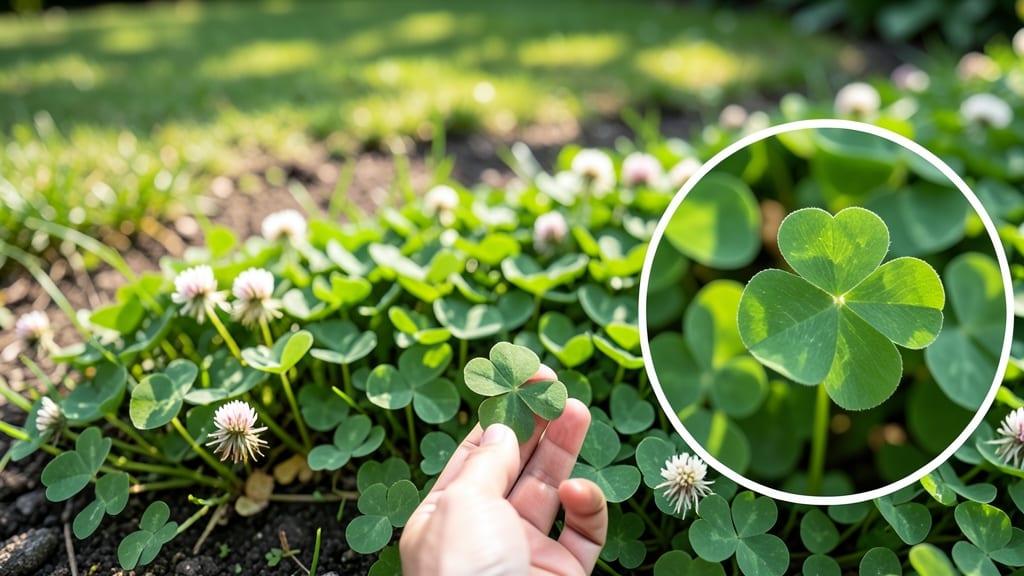
To find a four-leaf clover, focus on grassy fields, gardens, and shaded areas where white clovers grow best—especially after rain when damp leaves make them easier to spot in sunlight.
Four-leaf clovers are most abundant in environments that mimic their natural habitat: moist, nitrogen-rich soil with partial sunlight. 🌱 I’ve found they thrive in lawns with occasional mowing, as this prevents overgrowth while keeping the area accessible.
The key is patience—search during early morning or late afternoon when sunlight enhances visibility, and avoid freshly mowed areas where clovers may be hidden under grass clippings.
Seasonal timing matters too. Spring and early summer offer the best chances, as these are peak growing periods. In warmer climates, you might find them year-round, but cooler regions see higher concentrations during their active growth months.
Pro tip: Look near tree lines or garden edges where soil stays consistently moist but sunlight filters through.
💡 In This Article
- Best Natural Habitats for Four-Leaf Clover Growth
- Pro Tips for Hunting and Preserving Four-Leaf Clovers
Best natural habitats for four-leaf clover growth
Four-leaf clovers thrive in environments that mimic their native conditions: moist, nitrogen-rich soil with partial sunlight.
The ideal habitat combines 60-70% humidity and moderate sunlight exposure (4-6 hours daily), which prevents the plants from becoming leggy or drying out. 🌱 In my experience, these conditions are most common in lawns with occasional mowing, as this maintains open space while keeping the soil aerated.
The roots need access to moisture but not standing water, which is why you’ll often find them near tree lines or garden edges where rainwater collects but doesn’t pool.
The rarity of four-leaf clovers (about 1 in 10,000 three-leaf clovers) is tied to a genetic mutation that occurs during cell division. This mutation happens more frequently in younger plants, which is why spring and early summer—when new growth is abundant—are the best times to search.
In cooler climates, this window narrows to May through July, while warmer regions may extend it to early fall. The mutation rate also increases in areas with higher nitrogen levels, like well-fertilized gardens or fields with legume cover crops.
Climate plays a surprising role in clover abundance. Regions with mild, wet springs (like the Pacific Northwest or Ireland) tend to produce more four-leaf variants due to consistent moisture and cooler temperatures, which slow plant growth and increase mutation opportunities.
Conversely, hot, dry summers can stress clovers, reducing their numbers. If you’re in a drier area, focus on irrigated lawns or shaded spots where soil stays damp longer, such as under drip irrigation systems or near sprinkler heads.
One often-overlooked factor is soil pH. White clovers prefer slightly acidic to neutral soil (pH 6.0-7.0), which enhances nutrient uptake. If your local soil is alkaline, amending it with compost or peat moss can create better conditions for clover growth.
I’ve noticed that areas with clay-loam soil—common in temperate zones—hold moisture well while still allowing roots to breathe, making them prime hunting grounds. This is why old pastures or overgrown meadows often yield better results than sandy or rocky terrain.
For those in urban areas, city parks and community gardens are goldmines because they’re frequently watered and maintained. Look for patches where clovers grow in clusters, as these indicate healthy soil. Avoid freshly seeded lawns, as the young grass will outcompete clovers for nutrients.
Instead, target established lawns with visible clover patches—these are the spots where four-leaf wonders are most likely hiding in plain sight.
If you’re traveling, coastal regions and highland areas often have denser clover populations due to their cooler, moister climates. For example, the British Isles and parts of the Appalachian Mountains in the U.S. are famous for their clover abundance.
Locally, check areas near water sources like ponds or streams, where soil moisture remains steady. The secret? Combine ecological knowledge with patience—your best finds will come from areas where nature and human care intersect.