
Trees
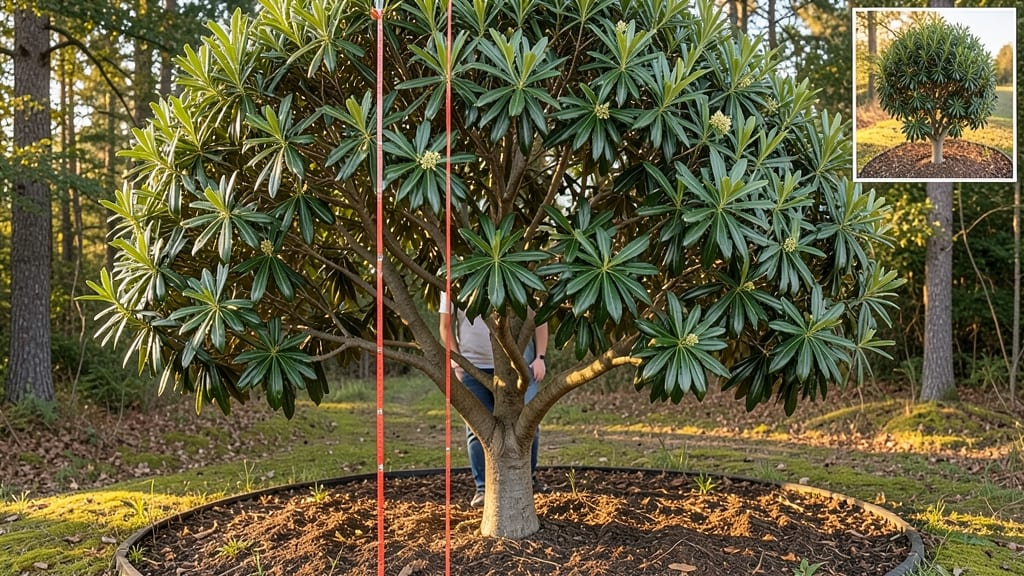
A bay leaf tree can grow anywhere from 8 feet to a towering 40 feet tall, depending on the variety and how you prune it.
If you’re dreaming of a fragrant bay leaf tree in your garden but wondering whether it’ll dwarf your patio or blend seamlessly into your landscape, you’re not alone.
The size of a bay leaf tree at maturity can vary dramatically—from a compact shrub to a towering small tree—depending on the variety and growing conditions.
For example, the classic Sweet Bay (Laurus nobilis) often reaches 20-30 feet in height, while dwarf varieties like ‘Tiny Tim’ stay under 8 feet, making them perfect for containers or small spaces. Understanding these differences is key to choosing the right tree for your yard.
Below, I’ll break down the mature sizes of popular varieties, how to control growth through pruning, and whether a bay leaf tree is the right fit for your garden—whether you have a sprawling backyard or just a sunny windowsill.


Bay leaf tree mature height by variety: a complete size comparison
Choosing a bay leaf tree for your garden means considering more than just its fragrant leaves—mature height and growth habits play a huge role in placement.
The Sweet Bay Laurel (Laurus nobilis) is the classic variety most gardeners recognize, but other regional types like California Bay and Texas Bay offer different sizes and shapes.
Understanding these differences helps you pick the perfect fit for your space, whether it's a small container garden or a large landscape backdrop.
Most bay leaf trees grow as evergreen shrubs or small trees, with heights ranging from 8 feet to over 40 feet at maturity. The key difference lies in the variety: dwarf varieties stay under 12 feet, while standard types can reach tree-like proportions.
Knowing these dimensions upfront prevents surprises—like realizing your patio-sized bay tree needs more space than you allocated!
Here’s how the most popular bay leaf tree varieties compare in terms of mature height, spread, and ideal spacing for healthy growth:
The Sweet Bay Laurel is the most versatile, making it a favorite for both landscape hedges and solitary specimen plants. Its pyramidal shape allows for creative pruning, but give it room—20 feet of space is ideal to avoid overcrowding nearby plants.
If you’re working with limited space, the dwarf varieties like ‘Tiny Tim’ are game-changers, fitting perfectly in containers or small yards.
For those in coastal climates, the California Bay is a stunning but ambitious choice. Its spreading canopy can reach 60 feet wide, making it better suited for large properties or parks.
Plant it 30+ feet away from structures to prevent root competition and allow its branches to spread naturally. In contrast, the Texas Bay is a shrub-like variety that thrives in USDA Zones 6–9, offering a multi-stemmed look perfect for shrub borders or foundation plantings.
When planning your bay leaf tree’s location, consider its growth rate too. Most varieties grow 1–2 feet per year, but pruning in late winter can slow growth and encourage bushier habits.
For example, if you plant a 10-foot Texas Bay near your patio, it’ll likely stay manageable for years—unless you skip pruning, which can lead to overgrowth and leggy branches.
If you’re growing bay leaf trees in containers, opt for dwarf varieties or prune aggressively to control size. A 5-gallon pot works well for ‘Tiny Tim’, while larger containers (15+ gallons) can accommodate standard Sweet Bay for a few years before transplanting.
Remember, container-grown trees need regular pruning to prevent root-bound stress and maintain compact growth.
For hedge planting, space bay leaf trees 3–5 feet apart to create a dense, fragrant barrier. Their evergreen foliage provides year-round interest, and their aromatic leaves deter pests naturally.
Just be patient—hedges take 2–3 years to fill in completely, so plan accordingly if you’re aiming for a quick privacy screen.
No matter which variety you choose, well-draining soil and full sun exposure are non-negotiable for healthy growth. Amend
How to control bay leaf tree size: pruning and growth tips
Bay leaf trees (Laurus nobilis) can grow into impressive specimens, reaching 15 to 40 feet tall if left unchecked. But with the right pruning techniques, you can shape them into a compact shrub or manage their size for container gardening.
The key is understanding when and how to prune, as well as avoiding common mistakes that lead to overgrowth. Let’s break down the essential steps to keep your bay leaf tree at your desired size.
Pruning isn’t just about cutting back branches—it’s about encouraging healthy growth patterns and maintaining the tree’s structure. For bay leaf trees, the best time to prune is in late winter or early spring, just before new growth begins.
This timing allows the tree to heal quickly and promotes vigorous foliage production. Avoid heavy pruning in fall or winter, as this can stress the tree and leave it vulnerable to cold damage.
Step-by-Step Guide to Pruning Your Bay Leaf Tree
- Step 1: Gather the right tools
- Sharp bypass pruners for small branches
- Loppers for medium-sized branches
- Sterilized pruning saw for thick growth
- Gloves and disinfectant (rubbing alcohol)
- Step 2: Assess the tree’s structure
- Identify dead or diseased branches (remove first)
- Look for crossing or rubbing branches (prune to prevent damage)
- Check for overcrowded growth (thin out as needed)
- Step 3: Prune for shape and size
- Cut back overgrown branches to desired height
- Use the thirds rule: Never remove more than 1/3 of foliage at once
- Encourage compact growth by trimming new shoots in summer
- Step 4: Encourage bushier growth
- Pinch back tips of new growth in early summer
- Prune inner branches to allow light penetration
- Avoid top-heavy cuts (prune evenly around the tree)
- Step 5: Clean up and maintain
- Remove all pruned debris from the area
- Disinfect tools with rubbing alcohol between cuts
- Apply mulch around the base to retain moisture
If you’re growing a bay leaf tree in a container, regular pruning is even more critical to prevent root-bound growth. Use dwarf varieties like ‘Tiny Tim’ and prune aggressively in spring and summer to maintain a manageable size.
For container-grown trees, also ensure the pot has adequate drainage and is large enough to accommodate the tree’s root system.
One of the biggest mistakes gardeners make is over-pruning in a single session. Bay leaf trees respond poorly to drastic cuts, which can lead to stunted growth or even death. Instead, space out pruning sessions over the growing season and focus on gradual shaping.
Another common error is pruning at the wrong time—avoid heavy cuts in fall or winter, as this can expose the tree to cold stress.
For a fragrant, well-shaped bay leaf tree, combine pruning with proper care. Ensure your tree gets 6+ hours of sunlight daily and well-draining soil. Water deeply but infrequently, allowing the top 2-3 inches of soil to dry out between waterings.
With consistent pruning and care, you can enjoy a bay leaf tree that fits perfectly in your garden—whether as a compact shrub or a tall, elegant specimen. 🌿