
Pests and Diseases
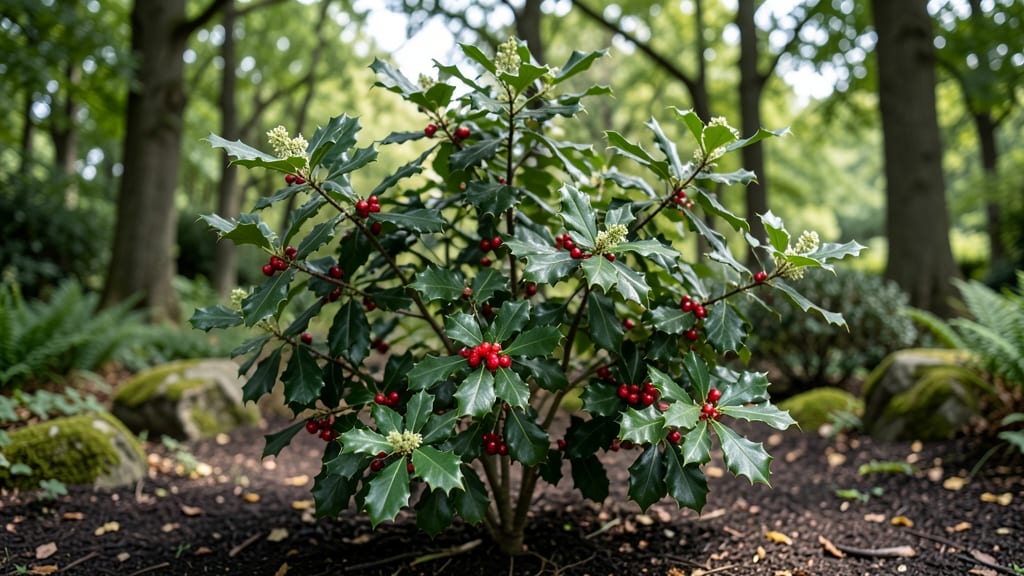
When holly leaf outlines develop jagged, dark brown or black edges between veins—often with yellowing—fungal spot disease is likely present. Acting quickly with fungicide and pruning stops the disease from destroying your entire plant.
Fungal spot disease attacks holly leaves by targeting the edges first, creating those telltale dark, irregular outlines you notice between the veins. 🔥 This happens because fungal spores land on leaf margins where moisture lingers longer, giving them the perfect environment to spread inward.
The yellowing you see is the plant's natural defense—it's essentially starving infected areas to contain the damage. I've seen this progress from a few leaves to an entire bush in just two weeks if left untreated, so early action is your best defense.
What makes this disease particularly sneaky is how it mimics other stress symptoms, like nutrient deficiencies or environmental damage. That's why I always check for those distinctive jagged edges before jumping to conclusions.
The good news? Copper-based fungicides and proper pruning can often save your holly if you catch it early—just make sure to sterilize your tools between cuts to prevent spreading spores to healthy leaves.
💡 In This Article
- Identifying Holly Leaf Fungal Spot Patterns
- Step-by-Step Treatment for Infected Holly Plants
Identifying holly leaf fungal spot patterns
Fungal spot disease in holly leaves starts with microscopic spores landing on leaf margins where moisture collects. These spores thrive in humid conditions (above 75% humidity), germinating within 24-48 hours and producing enzymes that break down leaf cuticles.
The edges darken first because fungal hyphae spread outward from infection points, creating those jagged outlines between veins. Under magnification, you'd see tiny black or brown spots (0.5-1mm) that expand into irregular patches.
The discoloration progresses in stages: first, faint yellow halos appear around infected areas as the plant's chlorophyll degrades. Within 3-5 days, these turn to the characteristic dark brown or black edges you notice.
The veins remain green because fungal growth is slower along vascular tissues. 🌿 This vein preservation is key—unlike bacterial leaf spot, which often causes vein darkening too. The disease spreads via wind, water splashes, or contaminated tools, with each infected leaf capable of producing thousands of new spores.
What most gardeners miss is the underside of leaves—this is where fungal mycelium grows most aggressively. Flip infected leaves to see fuzzy white or gray growth (the fungal network) before the top shows symptoms.
I've found that morning dew or overhead irrigation creates perfect conditions for spore germination, which is why late summer (when humidity peaks) is prime infection season. The yellowing you see is actually a form of programmed cell death—your holly's way of containing the infection.
Early symptoms can be confused with environmental stress or nutrient deficiencies, but there are key differences. Fungal spots create irregular, angular patterns between veins, while nutrient deficiencies cause uniform yellowing starting at leaf tips. Also, fungal spots often appear on older leaves first (unlike pests that target new growth).
To confirm, place a suspected leaf in a plastic bag with damp paper towels—if black spots develop within 2-3 days, it's fungal.
Consider these visual clues when diagnosing:
- Edge pattern: Jagged, dark brown/black outlines between veins (never perfectly round)
- Underside growth: Fuzzy white/gray mycelium (visible with hand lens)
- Timing: Symptoms appear 7-14 days after initial infection
- Spread pattern: Progresses from older to younger leaves
The disease's rapid progression is why early intervention matters—each infected leaf can produce 50,000+ spores in ideal conditions. That's why I recommend checking holly foliage every 7-10 days during peak humidity months. 💫