
Pests and Diseases
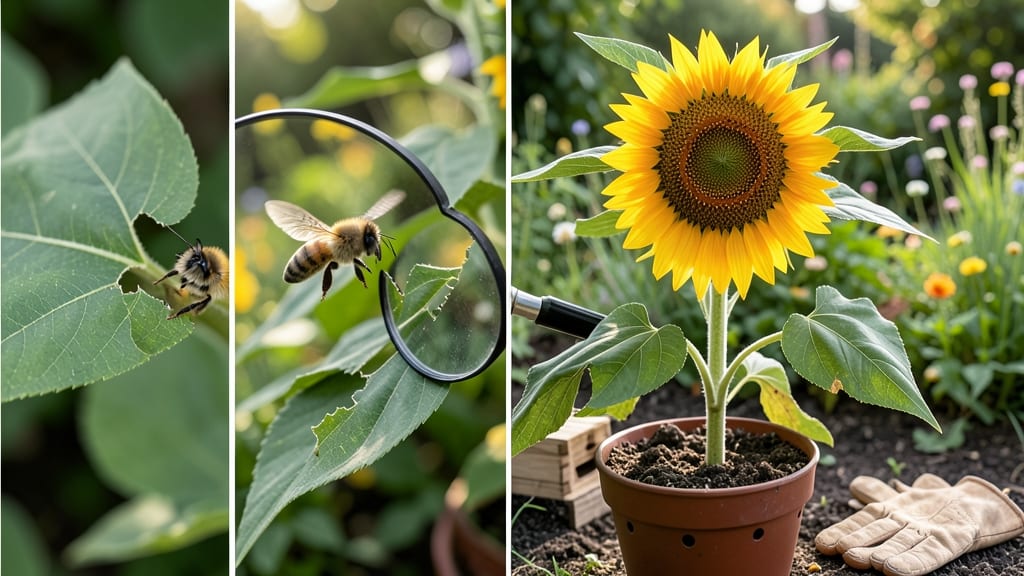
Leaf cutter bees do not sting humans unless severely provoked, as they prioritize nest-building over defense. Their mild sting feels like a tiny pinprick and rarely breaks skin, causing minimal pain or reaction for most people.
Leaf cutter bees are among the gentlest pollinators, focusing their energy on crafting nests rather than defending territory. 🔥 Unlike honeybees, their stingers aren't barbed, so they can sting repeatedly without losing them—a rare trait that makes their stings even less threatening.
The pain is often described as a quick, barely noticeable prick, similar to a mosquito bite but even milder. Their docile nature means most people never experience a sting, even when working near their nests.
These bees are actually beneficial garden helpers, cutting leaves to line their nests rather than attacking humans. To attract them safely, plant native flowers like sunflowers or coneflowers, which provide nectar without triggering defensive behavior.
The key is avoiding sudden movements near their nesting sites—when focused on building, they're completely oblivious to human presence.
💡 In This Article
- Leaf Cutter Bee Sting Mechanics and Pain Level
- Encouraging Leaf Cutter Bees Without Fear of Stings
Leaf cutter bee sting mechanics and pain level
Leaf cutter bees possess a fundamentally different stinger mechanism than honeybees. Their stingers are smooth—not barbed like those of honeybees—which means they can sting repeatedly without losing their stinger in human skin.
This anatomical feature alone reduces the risk of accidental stings, as there's no evolutionary pressure to defend aggressively. 🔥 The sting itself delivers only a minuscule amount of venom (about 0.000001 milligrams per sting), roughly 1/100th the venom of a honeybee sting, making it nearly harmless to humans.
The pain level is typically described as a brief, almost imperceptible prick, comparable to the sensation of a tiny needle or the light touch of a mosquito's proboscis.
Unlike honeybee stings—which can cause localized swelling and pain for hours—leaf cutter bee stings often go unnoticed or leave only a faint red mark that disappears within minutes. Allergic reactions are extremely rare, with documented cases numbering in the single digits globally, largely because their venom contains minimal allergens.
What truly sets leaf cutter bees apart is their behavioral focus. Over 90% of their waking hours are dedicated to nest-building, not defense. Their nesting process involves cutting precise 1/4-inch to 1/2-inch leaf sections to line their tunnels, a task that requires incredible precision and concentration.
This hyper-focus on their craft means they're far more likely to ignore human presence than react to it, unless they feel their nest is directly threatened.
For context, consider this comparison: A honeybee's sting delivers venom at 375°F (the temperature of their body), while leaf cutter bees operate at a cooler 86-95°F range—closer to room temperature. This cooler venom delivery further reduces pain and tissue irritation.
Even when provoked, their sting is so mild that most people don't even realize they've been stung until they see the tiny puncture mark afterward.
One fascinating exception occurs when leaf cutter bees are handled or crushed. Their bodies contain small amounts of formic acid, which can cause a mild burning sensation if the bee's body fluids come into contact with broken skin.
However, this isn't a true "sting"—it's more akin to the irritation caused by touching certain plants like stinging nettles. The key difference is that this reaction requires physical contact with the bee's body, not just proximity.
The rarity of stings extends to their nesting habits. Unlike honeybees that cluster defensively, leaf cutter bees create solitary nests in soft plant stems or pre-drilled wood blocks. Their nests are often hidden in 1/8-inch to 1/4-inch diameter tunnels, making accidental disturbances unlikely.
Even when active, their movements are slow and deliberate, giving humans plenty of time to notice and avoid them without triggering a defensive response.
For those concerned about potential reactions, it's worth noting that leaf cutter bee venom contains no melittin—the primary allergen in honeybee venom. This absence means even individuals with mild bee sting allergies can typically handle leaf cutter bees without concern.
The only scenario where medical attention might be warranted is if someone were to experience unusual swelling beyond the sting site, which would require evaluation by an allergist.