
Planting
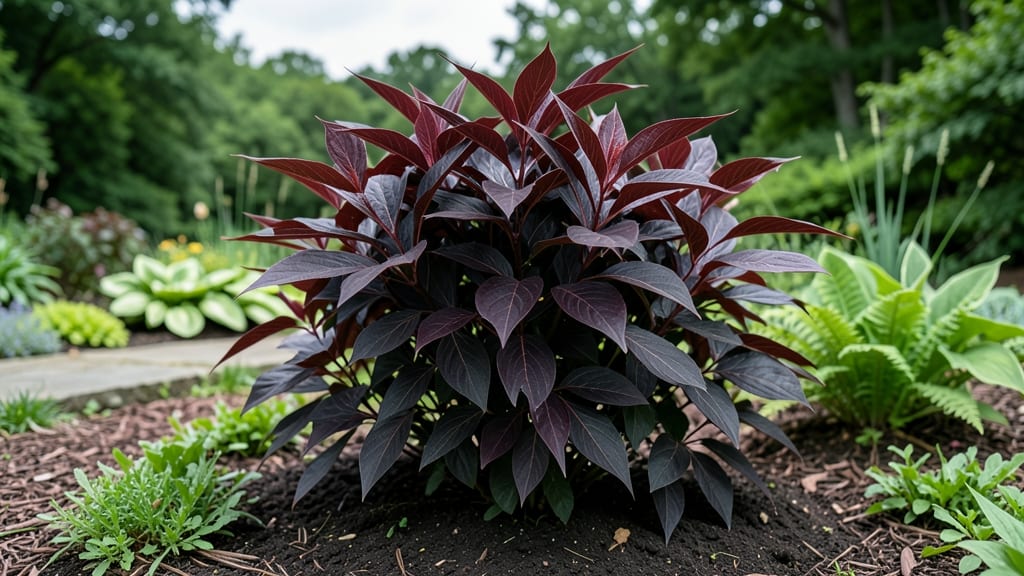
That dark red leaf plant identification isn’t just about spotting a bold hue—it’s about uncovering the hidden secrets in its veins. 🌿 Whether it’s the bold veins of a Coleus or the delicate lobes of a Heuchera, these leaf patterns hold the key to accurate ID.
I’ve spent years tracking down mystery plants, and the first step is always comparing those telltale vein structures to known species.
Common suspects include Coleus (thick, textured leaves with contrasting veins), Heuchera (palmate veins radiating from the center), or Japanese Maple (lobed edges with fine red veins). Snap a clear photo of the leaf underside, stems, and growth habit—these details narrow it down faster than any app.
Pro tip: Check for hairiness, serration, or glossiness—tiny traits that separate lookalikes.
Once you’ve matched the leaf to a species, you’ll know if it’s ornamental (like Heuchera), edible (rare, but some Coleus varieties are safe), or toxic (many aren’t). Care tips vary wildly: Coleus thrives in shade, while Japanese Maple needs dappled light.
A quick search of the confirmed name reveals its quirks—like why your plant’s edges might be curling.
For stubborn IDs, try the PlantNet app or iNaturalist—upload your photo, and the community often spots what you miss. Bookmark this guide next time you’re holding a leaf up to the light, wondering if it’s the real deal or just another red imposter.
Root Causes Behind Leaf Discoloration
When your plant’s leaves turn an unexpected dark red, it’s rarely a coincidence—it’s a cry for help (or a sign of something fascinating happening!). Understanding the why behind this color shift is the first step to solving the mystery.
Below, we break down the most common culprits, from environmental stress to biological quirks, with clear explanations and actionable insights.
Plants are sensitive to their environment, and extreme heat, cold, or light fluctuations can trigger dark red pigmentation. This is often due to the production of anthocyanins, antioxidant compounds that act like sunscreen for leaves.
- Too Much Sun (Sunburn Risk):
- Why it happens: Intense sunlight—especially in hot climates or during summer—can scorch leaves, causing them to produce anthocyanins as a protective response. This is common in Coleus, Begonias, or Impatiens, which naturally deepen in color under stress.
- Actionable fix: Gradually acclimate plants to full sun (a process called "hardening off") or provide afternoon shade with sheer curtains or lattice screens.
- Cold Snaps or Drafts:
- Why it happens: Sudden temperature drops (below 50°F/10°C for tropical plants) can disrupt chlorophyll production, revealing or intensifying red pigments. Frost damage also causes cell rupture, leading to dark, bruised-looking spots.
- Actionable fix: Move potted plants indoors or to a sheltered spot before frost. Use frost cloths for outdoor plants, and avoid placing them near drafty windows or AC vents.
- Inconsistent Light:
- Why it happens: Plants grown under low light (e.g., north-facing windows) may develop elongated, pale leaves, while sudden exposure to bright light can cause reddening as they scramble to adapt.
- Actionable fix: Rotate plants weekly for even light exposure, or supplement with a full-spectrum grow light (12–16 hours/day).
Water is the lifeblood of plants, and imbalances—whether drought or overwatering—can trigger dark red leaves as a distress signal or a sign of root-related issues.
- Underwatering (Drought Stress):
- Why it happens: When soil dries out, roots struggle to transport water and nutrients, causing wilting and oxidative stress. The plant ramps up anthocyanin production to protect cells from damage.
- Visual clues: Leaves may also feel crispy or curl at the edges.
- Actionable fix:
- Check soil moisture: Stick your finger 1–2 inches into the soil. If dry, water deeply until it drains from the bottom.
- Adjust watering schedule: Most houseplants prefer top-down watering every 1–2 weeks (less in winter). Use a moisture meter for accuracy.
- Overwatering (Root Rot Risk):
- Why it happens: Soggy soil cuts off oxygen to roots, leading to anaerobic conditions and the release of toxic compounds like ethylene. This triggers dark red or purple discoloration as the plant tries to detoxify.
- Visual clues: Yellowing leaves, mushy stems, or a foul odor from the soil.
- Actionable fix:
- Repot immediately: Remove the plant, trim blackened roots with sterilized scissors, and repot in well-draining soil (add perlite or orchid bark).
- Fix drainage: Ensure pots have drainage holes and use saucers to catch excess water.
Plants "speak" through their leaves, and dark red hues often signal a hunger for specific nutrients—or a poisoning from too much of something else.
| Nutrient Issue | Why It Causes Red Leaves | Actionable Fix |
|---|---|---|
| Phosphorus Deficiency | Phosphorus is crucial for energy transfer in plants. Without it, leaves may develop dark red or purple veins, especially in younger foliage. | Apply a balanced fertilizer (e.g., 10-10-10) or bone meal. Avoid over-fertilizing, which can burn roots. |
| Potassium Deficiency | Potassium regulates water and nutrient flow. A deficiency causes reddish-brown leaf margins and weak stems. | Use a potassium-rich fertilizer (like banana peel tea or Epsom salt solution: 1 tbsp per gallon of water). |
| Nitrogen Toxicity | Too much nitrogen (common with heavy-handed fertilizing) can burn roots and cause dark red or blackened leaf tips. | Flush the soil with water to leach excess salts. Reduce fertilizer to half-strength for 2–3 weeks. |
| Magnesium Deficiency | Magnesium is central to chlorophyll. A lack of it causes interveinal red or purple patches (veins stay green). | Apply Epsom salt (1 tbsp per gallon of water) every 4–6 weeks or use a magnesium-rich soil amendment. |
Pro Tip: 💡 Always test your soil’s pH (ideal: 6.0–7.0 for most plants) before adding amendments. Locked-out nutrients (e.g., iron) can’t be absorbed if the pH is off!
Sometimes, dark red leaves are a side effect of an unseen battle—pests or pathogens sapping your plant’s vitality.
- Sap-Sucking Pests (Aphids, Spider Mites, Scale):
- Why it happens: These pests inject toxins or weaken the plant, causing stunted growth and reddish, crinkled leaves. They also excrete honeydew, which fosters sooty mold (a black fungal film).
- Actionable fix:
- Isolate the plant to prevent spread.
- Blast off pests: Use a strong stream of water or dab cotton swabs dipped in rubbing alcohol (70%+) on infested areas.
- Introduce predators: Ladybugs or lacewings eat aphids naturally.
- Fungal or Bacterial Infections:
- Why it happens: Pathogens like Phytophthora (root rot) or Alternaria (leaf spot) can cause dark red or purple lesions as they disrupt cell function.
- Visual clues: Yellow halos around spots, wilting, or slimy stems.
- Actionable fix:
- Remove infected leaves with sterilized pruners.
- Apply copper fungicide or a baking soda spray (1 tsp baking soda + 1 quart water + a drop of dish soap).
- Improve airflow by spacing plants and avoiding overhead watering.
Remember: If the redness is uniform (e.g., deep red veins in a Coleus) and the plant looks healthy otherwise, it might be natural pigmentation—no action needed! But if paired with wilting, spots, or pests,
Quick Fixes for Red-Leafed Plant Problems
If your plant’s leaves have turned a striking dark red—whether it’s a natural trait or a sign of stress—don’t panic! The right approach depends on the root cause.
Below, we’ve mapped common issues to practical solutions, so you can restore your plant’s health (or embrace its bold new look) with ease.
If the dark red leaves are soggy, yellowing, or accompanied by wilting, your plant may be drowning in excess moisture. Root rot is a silent killer, and overwatering is the usual culprit.
🔥 How to Fix It:
- 👨🍳 Step 1: Check the Soil Stick your finger 1–2 inches into the soil. If it’s damp (not just moist), hold off on watering. If it smells foul or looks mushy, root rot may already be setting in.
- 🥘 Step 2: Adjust Your Watering Routine
- Let the top 1–2 inches of soil dry out completely before watering again.
- Use a pot with drainage holes (if it doesn’t have them, repot ASAP).
- Water only when the soil is dry—this might mean watering once every 1–2 weeks (varies by plant type).
- 🔪 Step 3: Treat Root Rot (If Needed) If root rot is confirmed, trim away mushy, black roots with sterilized scissors. Repot in fresh, well-draining soil with perlite or sand to improve aeration.
🌡️ Prevention Tips:
- Use a moisture meter for accuracy.
- Choose pots with terracotta or ceramic (they dry faster than plastic).
- Group plants with similar water needs together.
Scorching red leaves (often with crispy edges) mean your plant is getting more sun than it can handle. This is common in variegated or tropical plants suddenly exposed to harsh light.
🍳 How to Fix It:
- 🌿 Step 1: Move It to Indirect Light
- Low-light plants (e.g., snake plants, pothos): Shift to a north-facing window or a few feet away from a south/west window.
- Medium-light plants (e.g., ferns, calatheas): Filter light with a sheer curtain or place 3–6 feet from a window.
- High-light plants (e.g., succulents, jade plants): Gradually acclimate them to brighter conditions over 1–2 weeks.
- 🌡️ Step 2: Protect from Heat Spikes
- Avoid placing plants near radiators, ovens, or drafty windows in summer.
- Mist leaves lightly in dry climates (but avoid soggy soil).
- Use a pebble tray under the pot to increase humidity slightly.
✨ Prevention Tips:
- Research your plant’s light requirements before buying.
- Rotate pots occasionally for even growth (prevents one-sided sun exposure).
- Watch for leaf burn (brown, papery edges)—this is a red flag for too much sun.
Dry, crispy red leaves (often with brown edges) signal thirst—or a desperate cry for humidity. Many houseplants native to tropical climates (like calatheas or ferns) wilt dramatically in dry air.
🔥 How to Fix It:
- 💧 Step 1: Water Deeply and Consistently
- Water until it drains from the bottom, then empty the saucer.
- For thirsty plants (e.g., monstera, philodendron), water when the top 1 inch of soil is dry.
- Group plants together to create a microclimate with higher humidity.
- 🌬️ Step 2: Boost Humidity
- Mist leaves 2–3 times a week (use room-temperature water).
- Place the pot on a humidity tray (pebbles + water + plant stand).
- Use a humidifier near the plant (ideal for 40–60% humidity).
- Wipe leaves with a damp cloth to remove dust (helps them absorb moisture).
🎯 Prevention Tips:
- Use a spray bottle for a quick humidity boost between waterings.
- Avoid placing plants near AC vents or heaters.
- Try a glass cloche (temporary cover) for sensitive plants like ferns.
Dark red veins or purplish leaves can also mean your plant is starving for nutrients (like nitrogen, phosphorus, or magnesium) or burned by too many fertilizers.
🥗 How to Fix It:
- 📊 Step 1: Test Your Soil Use a DIY soil test kit (available at garden centers) to check pH and nutrient levels. Most houseplants prefer slightly acidic soil (6.0–7.0 pH).
- 💪 Step 2: Adjust Fertilizer Use - If under-fertilized: Use a balanced liquid fertilizer (10-10-10 or 20-20-20) every 4–6 weeks in spring/summer. Dilute to half-strength for sensitive plants. - If over-fertilized: Flush the soil with water for 15–20 minutes to leach out excess salts.
Repot if roots look brown or gummy.
- 🍎 Step 3: Feed Smart
- Slow-release granules (like osmocote) are great for forgetful plant parents.
- Organic options (compost tea, worm castings) gently replenish nutrients.
- Avoid fertilizing in winter—most plants rest then.
🌱 Prevention Tips:
- Follow the "less is more" rule—fertilizer burns are easier to fix than over-fertilized soil.
- Use rainwater or distilled water for fertilizing to avoid mineral buildup.
- Rotate plants occasionally to ensure even nutrient distribution.
If red leaves are paired with sticky residue, holes, or white webbing, pests (like spider mites or aphids) or fungal infections (like powdery mildew) could be the culprit.
🔪 How to Fix It:
- 🐜 Step 1: Identify the Problem
- Pests: Check undersides of leaves for tiny bugs, webs, or honeydew.
- Fungus: Look for white powdery spots (mildew) or black mold on soil.
- 🚿 Step 2: Treat It
- For pests:
- Wipe leaves with soapy water (1 tsp mild soap per quart of water).
- Use neem oil spray (1 tsp neem oil + 1 quart water + drop of dish soap).
- Introduce beneficial insects (like ladybugs) for natural control.
- For fungus:
- Remove infected leaves immediately.
- Spray with baking soda solution (1 tsp baking soda + 1 quart water + drop of soap).
- Improve air circulation (space plants out, avoid overcrowding).
- For pests:
🛡️ Prevention Tips:
- Inspect new plants for pests before bringing them home.
- Quarantine new additions for 2–3 weeks.
- Avoid overhead watering (use a watering can with a narrow spout).
Most red-leafed plants can bounce back with the right care—or even thrive with their new hue! Start with the solution that matches your plant’s symptoms, and don’t forget: observation is key. Keep an eye on progress, and adjust as needed. Happy gardening! 🌿✨
Frequently asked questions
What are the most common plants with naturally dark red leaves?
The top contenders include Coleus (bold veins and textured leaves), Heuchera (palmate veins radiating from the center), and Japanese Maple (lobed edges with fine red veins). Other standouts are Begonias, Impatiens, and Coral Bells (Heuchera), which often feature deep red hues as their signature trait.
How can I tell if dark red leaves are natural or a sign of stress?
Check for uniform color (like deep veins in Coleus) and overall plant health. If leaves are crispy, yellowing, or paired with wilting, it’s likely stress from sunburn, underwatering, or nutrient issues. Healthy plants with vibrant red leaves (like Heuchera) often thrive in these colors naturally.
Are there any toxic plants with dark red leaves I should avoid?
Yes! Poinsettias (with their iconic red bracts) and Angel’s Trumpet (dark red flowers) are highly toxic if ingested. Even some Coleus varieties can be mildly toxic, so keep them away from pets and children. Always research before bringing a new plant home.
What’s the best way to take photos for plant identification?
Capture close-ups of leaves (front and back), stems, and growth habit in natural light. Include a coin or ruler for scale, and avoid shadows. Apps like PlantNet or iNaturalist work best with clear, high-resolution images showing these details.
Can I propagate plants with dark red leaves?
Many Coleus and Heuchera varieties root easily in water or soil. Snip a healthy stem, remove lower leaves, and place it in water or moist soil until roots form (usually 2-4 weeks). Just ensure the parent plant is healthy—stressed plants may not propagate well.