
Tools
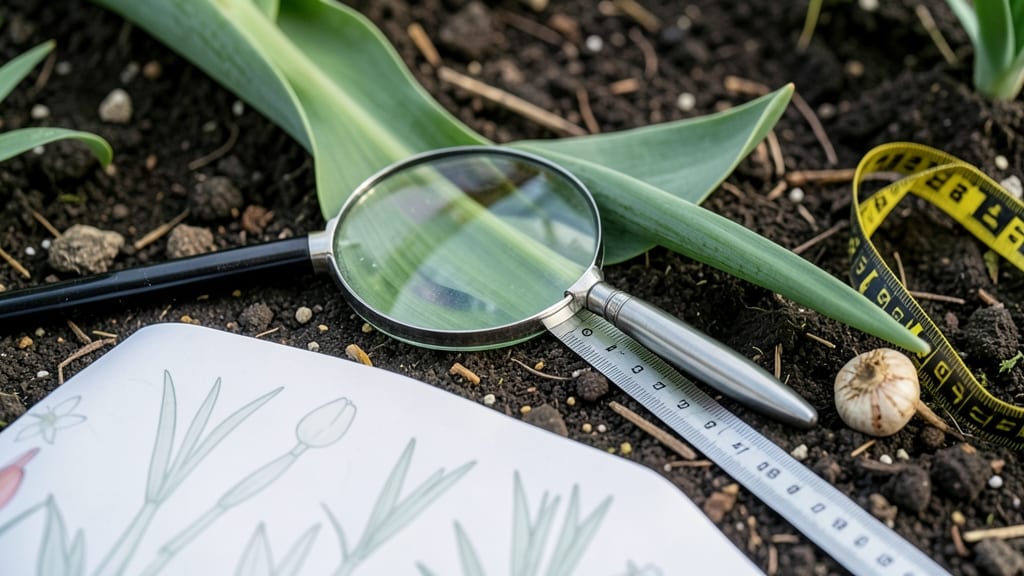
Mastering bulb identification by leaf saves you from digging up every clump in spring. 🌱 I used to guess wrong—planting daffodils where tulips should go—until I learned these simple visual clues. Leaf shape, color, and arrangement reveal everything you need to know before the flowers even appear.
The first step is comparing leaf width: narrow, strap-like leaves mean alliums or fritillaries, while broad, sword-shaped leaves signal tulips. Daffodils have smooth, deep green leaves with a slight channel down the middle, while hyacinths grow in clusters of long, grassy blades.
Pay attention to leaf edges too—some have serrated edges, others are perfectly smooth.
Once you recognize these patterns, you'll spot problems early—like yellowing leaves signaling rot or pests. You'll also know exactly which bulbs to divide or replant each fall. The confidence comes from matching what you see above ground to what you'll plant below it.
This method works for every spring-blooming bulb, from crocuses to snowdrops. Start with just three types—tulips, daffodils, and hyacinths—and soon you'll be identifying them all by leaf alone. Your garden planning will get easier, and your spring blooms will always match your vision.
📚 In This Guide
- What you need
- Instructions
- Tips and common mistakes
- Wrapping up and next steps
What you need
- ● Fresh or dried bulb leaves: At least 3–5 healthy leaves per bulb type (collected from your garden or a trusted source).
- ○ Magnifying glass (optional but helpful): A 10x magnification handheld lens for examining fine details like vein patterns or leaf edges.
- ● Ruler or measuring tape: A 6-inch (15 cm) ruler for measuring leaf length, width, and spacing between veins.
- ● Notebook or digital device: For recording observations (leaf shape, color, texture, and size).
- ● Camera (phone or DSLR): To capture close-ups of leaf undersides, edges, and vein structures. Pro tip: Use natural light! 🌞
- ● Field guide or bulb identification app: Apps like PictureThis or PlantNet (free options) for cross-referencing your findings.
- ● Leaf press: A DIY or store-bought press to flatten and preserve leaves for long-term reference.
- ● Color chart or swatches: For comparing leaf hues (e.g., Pantone guides or a phone app like Color Grab).
- ● Gloves: If handling prickly or toxic leaves (e.g., Daffodil or Squill varieties).
- ● Field notebook with grid paper: For sketching leaf shapes and vein patterns to scale.
- ● UV flashlight: To check for hidden patterns or fluorescence in leaves under blacklight (some bulbs, like Allium, glow!).
How to identify garden bulbs by leaf shape and color
Mastering these visual clues transforms guesswork into confident identification—no digging required.
🌱 Step 1: Observe Leaf Arrangement and Base Structure
Start by examining how leaves emerge from the bulb. Fan-shaped bases with smooth, parallel veins are classic for tulips and daffodils. Tulip leaves appear in a spiral pattern from the bulb, while daffodil leaves grow in a fan-like cluster. Press gently on the soil surface—if you see a round, papery sheath at the base, it’s likely a narcissus (daffodil) family member.
For bulbs like alliums, look for long, strap-like leaves that grow directly from the bulb in a semi-circle. These leaves often have a bluish-green tint and a hollow, cylindrical shape when sliced open. The key is to notice whether leaves grow from the sides (like tulips) or directly upward (like alliums)—this narrows it down immediately.
🌿 Step 2: Examine Leaf Edges and Surface Texture
Run your fingers along the leaf edges—smooth, waxy edges often indicate hyacinths, while slightly serrated or scalloped edges point to crocus or grape hyacinth. Hyacinth leaves are narrow and grass-like, with a slightly ribbed texture that feels firm to the touch. Crocus leaves, in contrast, are thin, flat, and almost papery, with a soft, velvety surface that folds easily.
Watch for hair-like fuzz on leaves—this is a dead giveaway for fritillaria (like the crown imperial). Their leaves often have a distinctive zigzag pattern along the midrib, and the edges may have a slightly wavy or ruffled appearance. If you spot blue-green leaves with white stripes, you’re likely dealing with a bluebell (hyacinthoides non-scripta).
☀️ Step 3: Compare Leaf Color and Seasonal Timing
Leaf color is your next clue—bright, lime-green leaves appearing in early spring almost always belong to tulips or daffodils. Tulip leaves tend to be narrower and more pointed, while daffodil leaves are broader and more rounded. Pay attention to yellowing patterns: if leaves turn yellow from the tips downward, it’s likely a nutrient deficiency (common in tulips), whereas yellowing from the base upward suggests root rot (often seen in overwatered hyacinths).
Dark green, leathery leaves that emerge in late winter are typical of snowdrops (galanthus). Their leaves have a slightly curved, boat-like shape and often appear before the flowers. If you see long, sword-shaped leaves with a deep green center and pale green edges, you’re probably looking at a lily bulb—these leaves are thick and fleshy, storing energy for the plant.
✂️ Step 4: Check for Distinctive Leaf Markings or Patterns
Some bulbs have unique leaf patterns that act as fingerprints. Bluebonnet (lupinus) leaves, for example, have palmate leaflets (all leaflets radiate from a single point) with a silvery-blue underside. Rain lilies (zephyranthes) produce long, grass-like leaves with a prominent midrib and slightly rolled edges, often appearing after rain. If you spot leaves with white or cream stripes, it’s likely striped squill (puschkinia).
For bulbs like amaryllis, look for wide, strap-like leaves that grow in a rosette pattern from the base. These leaves are thick and succulent, almost like a small aloe plant. Crinum lilies have long, arching leaves with a pleated texture and a deep green color that often develops purple or red tinges in cold weather. The more you handle these leaves, the more their unique textures reveal themselves.
📝 Step 5: Cross-Reference with Flower Shape (When Available)
If flowers are present, combine leaf clues with bloom structure for absolute certainty. Tulips have cup-shaped flowers with 6 petals, while daffodils feature a trumpet-shaped corona surrounded by 6 petal-like tepals. Hyacinths produce dense clusters of small, tubular flowers on a single stem, with leaves that emerge before the flowers. If you see star-shaped flowers with 6 petals and leaves that grow in a fan, it’s almost certainly a grape hyacinth (muscari).
For bulbs like alliums, the spherical flower head (often purple or white) grows atop long, hollow leaves that feel cool to the touch. Crocus leaves are thin and grass-like, while their cup-shaped flowers often point downward. The combination of leaf texture and flower orientation eliminates most guesswork—once you’ve memorized these pairings, identification becomes second nature.
Tips & tricks for mastering bulb identification by leaf
These visual clues become second nature with practice—here's how to sharpen your eye for the details that matter most.
Texture is Your Secret Weapon: The difference between a smooth, waxy leaf (like hyacinths) and a velvety, papery one (like crocus) can't be overstated. I always run my thumb along the leaf edge first—this tactile check reveals more than visual inspection alone. For example, fritillaria leaves have that distinctive hair-like fuzz that feels almost silky, while lily leaves are thick and succulent like aloe. This sensory approach eliminates half the guesswork before you even look at the flowers.
Seasonal Timing Reveals Hidden Clues: Pay attention to when leaves appear—bright lime-green leaves in early spring are almost always tulips or daffodils, while dark green, leathery leaves in late winter scream snowdrops. I've caught myself misidentifying bulbs because I ignored this timing. For instance, those sword-shaped leaves with deep green centers appearing in late winter? That's your lily bulb right there, storing energy for summer blooms. The calendar gives you a free first pass at identification.
Leaf Arrangement Solves the Biggest Confusions: The spiral pattern of tulip leaves versus the fan-like cluster of daffodils is one of the most reliable distinctions. I learned this the hard way after digging up what I thought were daffodils only to discover tulips—until I noticed the leaves grew from the sides rather than directly upward. This single observation can separate common garden favorites from lookalikes. For alliums, their semi-circular arrangement with bluish-green tint is unmistakable once you know what to look for.
Cross-Reference with Flowers When Possible: If flowers are present, combine leaf clues with bloom structure for absolute certainty. Tulip's cup-shaped flowers with six petals pair perfectly with their spiral leaves, while daffodil's trumpet-shaped corona matches their fan arrangement. I keep a small field guide in my gardening bag just for these cross-checks—it's saved me from multiple embarrassing misidentifications at garden clubs. The combination of leaf texture and flower orientation is where identification becomes foolproof.
Pro Tips for Bulb Identification By Leaf
- These visual clues become second nature with practice—here's how to sharpen your eye for the details that matter most.
- Texture is Your Secret Weapon: The difference between a smooth, waxy leaf (like hyacinths) and a velvety, papery one (like crocus) can't be overstated.
- Seasonal Timing Reveals Hidden Clues: Pay attention to when leaves appear—bright lime-green leaves in early spring are almost always tulips or daffodils, while dark green, leathery leaves in late winter scream snowdrops.
Frequently asked questions
Can I identify a bulb from a leaf if it’s already bloomed?
Yes! Even after blooming, leaves often retain key traits like shape, texture, or venation patterns. Compare your leaf to a reference guide or use apps like PictureThis to match it to common bulb types. Just avoid relying solely on color—it can fade or change with age.
What’s the best time of year to check leaves for bulb ID?
Late spring to early summer is ideal, when leaves are fully mature but before they yellow or die back. If you’re working with dormant bulbs (like tulips or daffodils), dig up a sample bulb in fall or early spring to examine its foliage up close.
What if my leaf doesn’t match any bulb in my guide?
Start by checking for hybrids or less common varieties (e.g., Allium or Fritillaria). If the leaf is damaged or diseased, try comparing it to healthy samples. If all else fails, share a clear photo in gardening forums—experts often spot subtle clues!
Are there toxic bulbs with leaves that look like edible ones?
Death camas (toxic) and garlic (edible) leaves can look similar. Always double-check with a reliable source like the American Society for Horticultural Science. When in doubt, avoid ingesting any plant you haven’t confirmed.
How can I take the best photos for bulb leaf ID?
Use natural light and include a reference object (like a coin) for scale. Capture both the leaf’s top and underside, as venation patterns are unique. Apps like PlantNet or Google Lens work best with high-res, well-lit shots.
Wrapping up and next steps
Mastering bulb identification by leaf turns gardening into an exciting detective game! 🌱 By paying attention to shape, color, and texture, you’ll unlock the secrets of your favorite blooms—whether it’s the bold stripes of a tiger lily or the delicate fronds of a grape hyacinth.
Your garden’s mysteries are now within reach, and with practice, you’ll become a pro at spotting these clues.
Ready to put your skills to the test? Next, grab a notebook and sketch a few leaves from your garden—then match them to the profiles you’ve learned. Happy identifying! 🌟