
Leaf Blower
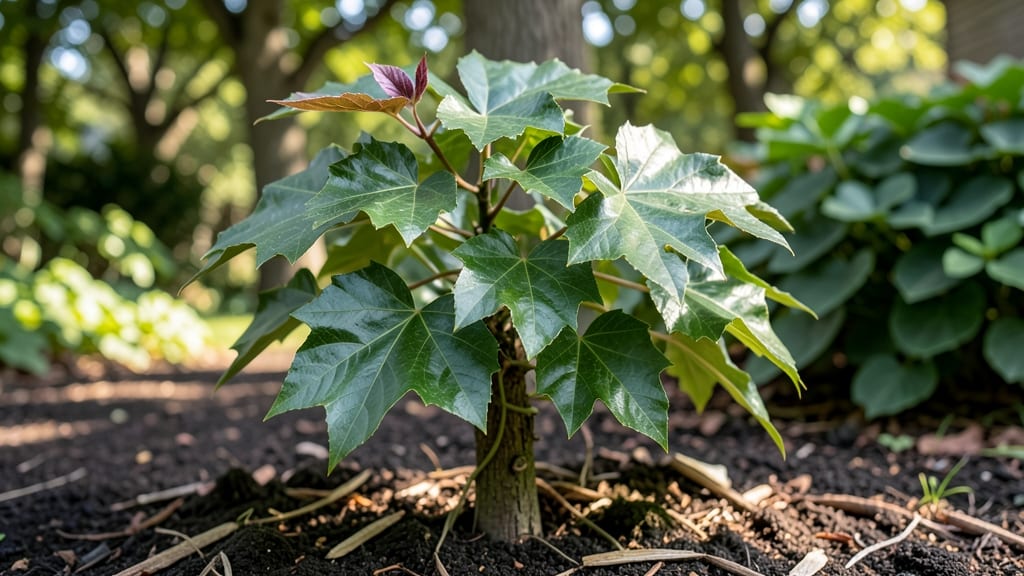
💥 The Boston ivy leaf is recognizable by its glossy, dark green foliage with three to five pointed lobes and crispy edges when overwatered or stressed. You can identify them by their deep purple fall color and strong adhesive roots, and revive them by adjusting watering and improving airflow.
The Boston ivy leaf stands out with its distinctive three-lobed shape and vibrant seasonal changes. 🌿 The crispy edges you're seeing often signal overwatering or poor airflow, which stresses the plant. I've found that reducing watering and trimming nearby foliage to boost circulation works wonders.
These leaves also develop a striking purple hue in autumn, making them a favorite for ornamental planting. The adhesive roots help them cling to walls, but they still need proper care to thrive.
What sets Boston ivy apart from similar plants is its resilience and adaptability. Unlike poison ivy, which has smooth edges and three leaflets with a single stem, Boston ivy's leaves grow in clusters and have a more pronounced glossy finish.
This makes identification straightforward once you know what to look for.
💡 In This Article
- Identifying Boston Ivy Leaves vs. Poison Ivy
- Natural Fixes for Crispy Boston Ivy Edges
Identifying Boston ivy leaves vs. poison ivy
Boston ivy (Parthenocissus tricuspidata) leaves have three to five pointed lobes with smooth, serrated edges, while poison ivy (Toxicodendron radicans) leaves feature three leaflets with a single stem and rougher edges.
The key difference lies in the leaf arrangement: Boston ivy leaves grow in clusters along the stem, creating a more uniform pattern, whereas poison ivy leaves grow in alternating pairs on a single stem. 🌿
The glossy, dark green foliage of Boston ivy also distinguishes it from poison ivy, which often appears duller and more matte. In autumn, Boston ivy transforms into a stunning deep purple, while poison ivy turns a more muted yellow or orange.
Another visual clue is the adhesive roots: Boston ivy develops strong, suction-cup-like tendrils to cling to surfaces, whereas poison ivy has hairy rootlets for climbing.
When examining the leaf structure closely, Boston ivy's lobes typically have a more pronounced, almost triangular shape, while poison ivy's leaflets are more elongated and oval. The veins in Boston ivy leaves are more prominent and create a network pattern, whereas poison ivy's veins are finer and less noticeable.
These botanical differences make identification straightforward for experienced gardeners.
One common mistake is confusing Boston ivy with Virginia creeper (Parthenocissus quinquefolia), which has five leaflets instead of three to five lobes. Virginia creeper leaves also have a more delicate, almost feather-like appearance, while Boston ivy's leaves are broader and more robust.
The fall color of Virginia creeper is typically a brighter red, whereas Boston ivy's deep purple hue is unmistakable. 🍂
If you're still unsure, consider the plant's growth habit. Boston ivy climbs by clinging to walls with its adhesive roots, while poison ivy climbs using hairy tendrils that wrap around surfaces.
This difference in climbing mechanisms can be a game-changer in identifying the plant, especially in urban or garden settings where both may grow.
For a hands-on approach, gently touch the leaves. Boston ivy leaves are smooth and slightly waxy, while poison ivy leaves can feel slightly rough or hairy, especially along the stems. Always exercise caution when handling unknown plants, as poison ivy can cause severe allergic reactions in sensitive individuals.
Understanding these distinctions not only helps in proper plant care but also ensures you avoid accidental exposure to poison ivy. Boston ivy's resilience and ornamental value make it a popular choice for gardens and walls, but accurate identification is the first step in enjoying its beauty safely. ✨