
Shrubs
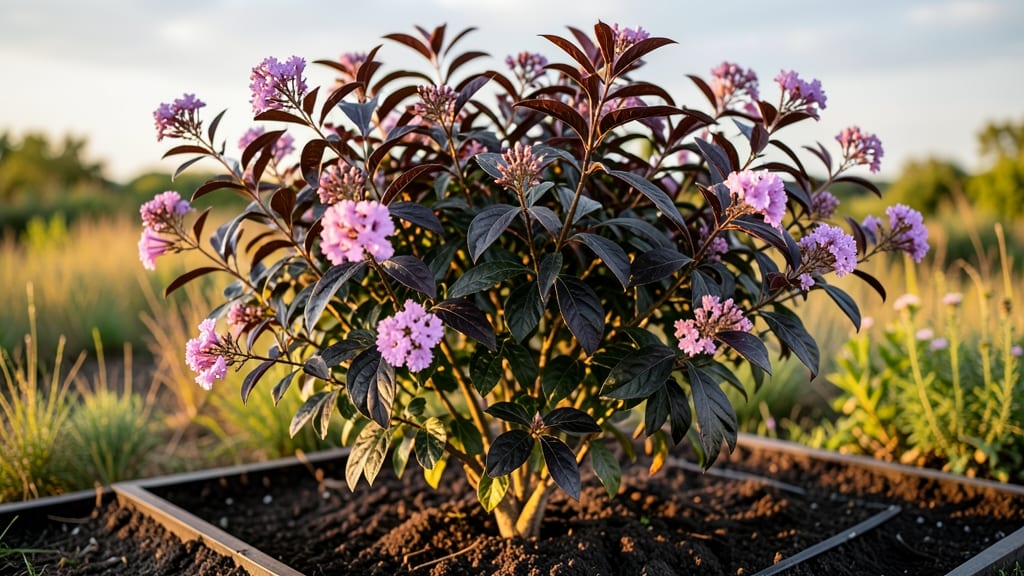
Growing black leaf crepe myrtle means year-round drama with deep purple-black foliage that steals the show—no matter the season. 🌿 I’ve watched mine transform from spring’s fresh green to fall’s fiery red, and even winter brings subtle texture.
The key? Matching its love for sun, well-draining soil, and a pruning schedule that keeps it compact and showy.
This shrub thrives in full sun (at least 6-8 hours daily) and tolerates heat like a champ, but its roots need room to breathe—amend heavy clay with compost or sand.
Water deeply once established, but never let it sit soggy; crepe myrtles hate wet feet. The rich foliage darkens as temperatures drop, creating that moody, velvety look gardeners crave.
Prune in late winter to shape it and remove dead wood, but avoid heavy cuts—this shrub blooms on new growth. With minimal fuss, you’ll end up with a low-maintenance star that outshines ordinary shrubs.
Just watch for leaf scorch in hot climates and keep an eye out for aphids (they love the tender new shoots).
Perfect for borders, foundation plantings, or as a standalone specimen—it’s the kind of plant that makes neighbors ask, “What’s that?” Then you get to brag about your black leaf crepe myrtle. Let’s get it growing!
Root Causes Of Blackened Foliage
Understanding why your crepe myrtle’s leaves turn black is the first step to saving it. This unsightly issue usually stems from a mix of environmental stressors, fungal infections, or cultural mismanagement.
Below, we break down the key culprits—each with a clear scientific explanation and actionable insights to tackle the problem head-on.
Crepe myrtles (Lagerstroemia spp.) thrive in well-draining soil, and excess moisture triggers root rot—a fungal infection that cuts off oxygen to roots, causing leaves to wilt, yellow, and eventually blacken. Overwatering also creates a soggy soil environment, perfect for pathogens like Phytophthora or Pythium.
Why it happens:
- Compacted or clay-heavy soil holds water like a sponge, suffocating roots.
- Frequent light waterings (e.g., daily sprinklers) keep soil perpetually damp.
- Improper planting depth buries the trunk too deep, trapping moisture against the stem.
💡 Pro Tip: Test your soil’s drainage by digging a 6-inch hole, filling it with water, and timing how long it takes to drain. If it takes more than 4 hours, amend with compost or sand to improve aeration.
Blackened leaves often signal fungal diseases like anthracnose (Colletotrichum) or target spot (Corynespora), which thrive in humid, wet conditions. These fungi clog leaf stomata (pores), blocking nutrient uptake and causing necrotic (dead) spots that expand until the entire leaf turns black.
Why it happens:
- High humidity + poor airflow (e.g., dense plantings or shaded areas) slows evaporation, keeping leaves damp.
- Old or stressed leaves are easier targets for fungal spores.
- Splashing water from overhead irrigation spreads spores from soil to foliage.
🔍 Watch For:
- Dark, sunken lesions with yellow halos (anthracnose).
- Bullseye-like spots (target spot).
- Black, crusty growth on stems (sooty mold, often a secondary issue from sap-sucking pests).
✨ Solution: Prune 10–15% of the plant annually to improve airflow. Apply copper fungicide (like Copper Soap) at the first sign of spots, and water at the base (not overhead) to reduce spore spread.
Crepe myrtles are heat-tolerant, but sudden temperature swings—especially late spring frosts or early fall freezes—can shock the plant. Cold damage disrupts cell membranes, causing leaves to blacken and crisp (a condition called freeze burn).
Even high daytime heat (above 95°F) paired with low humidity can scorch leaves.
Why it happens:
- Late frosts (<28°F) kill new growth, leading to blackened, mushy leaves.
- Poor acclimation in container-grown plants (e.g., nursery stock) makes them more vulnerable.
- Drought stress weakens the plant’s ability to recover from heat spikes.
🌡️ Quick Fixes:
- Mulch heavily (3–4 inches of wood chips) to protect roots from temperature extremes.
- Use frost cloth on young plants if a late frost is forecast.
- Water deeply in early morning to help leaves retain moisture during heatwaves.
While pests rarely directly cause black leaves, sap-sucking insects (like aphids, scale, or spider mites) weaken the plant, making it susceptible to sooty mold—a black, fuzzy fungus that grows on their honeydew secretions. Over time, this blocks sunlight, stunting growth and turning leaves dark.
Why it happens:
- Drought-stressed plants attract pests, which then invite sooty mold.
- Over-fertilizing with nitrogen promotes soft, pest-friendly growth.
- Plants near other infected species (e.g., roses, fruit trees) can cross-contaminate.
🕵️ Pest Patrol: Inspect undersides of leaves for:
- Sticky residue (honeydew).
- White cottony masses (scale).
- Fine webbing (spider mites).
🔥 Treatment: Blast pests off with a strong spray of water, then apply neem oil or insecticidal soap (repeat every 5–7 days). Prune and dispose of heavily infested branches to break the cycle.
Too much synthetic fertilizer—especially high-salt or high-nitrogen blends—can burn roots and foliage, causing blackened, curled leaves. Even overuse of herbicides (like glyphosate drift) or hard water buildup (from tap water) can lead to toxicity.
Why it happens:
- Freshly planted trees are most vulnerable to fertilizer shock.
- Slow-release granules applied too close to the trunk can concentrate salts.
- Chlorine or fluoride in tap water accumulates in soil over time.
💧 Fix It Fast:
- Flush the soil with 2–3 times the plant’s normal water volume to leach out salts.
- Switch to organic fertilizer (like fish emulsion or compost tea) for a gentler nutrient boost.
- Test your water for hardness—if it’s >150 ppm, use rainwater or distilled water for irrigation.
Quick Fixes for Leaf Trouble
When your crepe myrtle’s leaves turn black, it’s like a distress signal from your plant—time to roll up your sleeves! The good news? Most issues have straightforward solutions, whether you’re dealing with fungal infections, pests, or environmental stress.
Below, we’ll map out the root cause to the right fix, plus pro tips to keep your shrub thriving long-term.
Signs: Dark, greasy spots; fuzzy white patches; leaves curling or dropping prematurely.
🔥 Step 1: Prune the Problem
- 👨🍳 Snip off infected leaves with clean, sharp pruners (sterilize with rubbing alcohol between cuts).
- Remove entire branches if more than 50% of the leaves are blackened—don’t leave them hanging; they’ll spread spores.
- ⏰ Best time: Early morning (when humidity is lower) or overcast days.
🥘 Step 2: Fungicide Treatment
- Store-bought options: Use a copper-based fungicide (like Bonide Copper Fungicide) or a neem oil solution (1 tbsp neem oil + 1 tsp mild soap per quart of water).
Spray both sides of leaves and the stems. - DIY remedy: Mix 1 tsp baking soda + 1 quart water + a few drops of dish soap (test on a small leaf first). - 🎯 Frequency: Apply every 7–10 days until new growth appears.
💡 Prevention Tips
- ✨ Improve airflow: Thin out dense foliage and space plants 3–6 feet apart.
- 🌡️ Water wisely: Water early in the day (before 10 AM) to let leaves dry quickly.
Avoid overhead sprinklers. - 🔥 Sanitize tools: Clean pruners after each use to prevent cross-contamination.
Signs: Sticky residue (honeydew), tiny webs, or blackened leaves with tiny bugs clinging to stems.
🔪 Step 1: Blast Off Pests
- 🍳 High-pressure hose: Spray infested areas with a strong stream of water to dislodge pests (do this in the early morning).
- 🥘 Soapy water spray: Mix 1 tsp mild dish soap + 1 quart water and spray directly on pests (avoid healthy leaves).
Reapply every 3–5 days.
💡 Prevention Tips
- 🔥 Introduce predators: Ladybugs and lacewings love aphids—buy them online or attract them with neem oil sprays.
- 🎯 Monitor regularly: Check undersides of leaves weekly, especially after rain or heatwaves.
- 🌿 Keep it healthy: Strong plants resist pests better—fertilize lightly in spring with a balanced 10-10-10 formula.
Signs: Uniform blackening (not spotty), wilting, or yellowing between veins.
🌿 Step 1: Adjust Care Routine
| Issue | Fix |
|---|---|
| Overwatering | Let soil dry 2–3 inches deep between waterings. Use a moisture meter if unsure. |
| Underwatering | Water deeply 1–2 times per week (more in extreme heat). Mulch 2–3 inches to retain moisture. |
| Frost Damage | Prune blackened branches in early spring. Wrap young trees in burlap if frost is forecasted. |
| Heat Stress | Provide afternoon shade (use shade cloth if needed). Mulch heavily to cool roots. |
💡 Prevention Tips
- 🔥 Plant in the right spot: Crepe myrtles thrive in full sun (6+ hours/day) but need afternoon shade in Zone 9+.
- 🌡️ Acclimate gradually: If moving a plant, harden it off over 2 weeks before exposing to full sun.
- 🎯 Soil test: Amend heavy clay or sandy soil with compost to improve drainage and nutrient retention.
If your crepe myrtle:
- Loses more than 50% of its leaves in a short time.
- Shows blackened bark (not just leaves)—this could signal bacterial infections or canker disease, which may need professional fungicides.
Remember: Most black leaf issues are reversible with quick action. Start with pruning + fungicide/pest control, then adjust water and sunlight. Your crepe myrtle will bounce back—and next season, it’ll put on a showstopping floral display with minimal fuss! 🌸
Frequently asked questions
How do I make my black leaf crepe myrtle’s foliage even darker?
To deepen that rich, velvety color, plant in full sun (6+ hours daily) and use well-draining soil with a touch of organic matter. Avoid nitrogen-heavy fertilizers—stick to a balanced 10-10-10 formula in early spring. Mulch with pine needles or shredded bark to lower soil pH slightly, which enhances the deep purple-black hues.
Can black leaf crepe myrtle grow in containers?
Choose a large container (at least 18 inches wide) with drainage holes and use a fast-draining potting mix (add perlite or sand). Water when the top 2 inches of soil dry out, and move the pot to a sunny spot. Just be ready to repot every 2–3 years—these shrubs grow quickly and need room for their roots.
Why are my crepe myrtle leaves turning black but not dropping?
This often signals fungal disease (like anthracnose) or pest damage. Check for dark spots with yellow halos or sticky residue (honeydew). Prune affected branches immediately, then treat with copper fungicide or neem oil. Avoid overhead watering to prevent spore spread.
How cold can black leaf crepe myrtle tolerate?
Most varieties handle down to 10°F without issues, but young plants or newly planted shrubs may need protection. Mulch heavily (3–4 inches) and wrap the trunk with burlap if below 20°F is forecasted. Prune blackened branches in early spring once new growth appears.
Does black leaf crepe myrtle attract butterflies?
Yes! While it’s prized for its foliage, the summer blooms (in shades of pink, white, or lavender) are a magnet for swallowtails, monarchs, and other pollinators. Plant it near milkweed or coneflowers to create a butterfly garden hotspot. The deep foliage also provides shelter for caterpillars.