
Leaf Blower
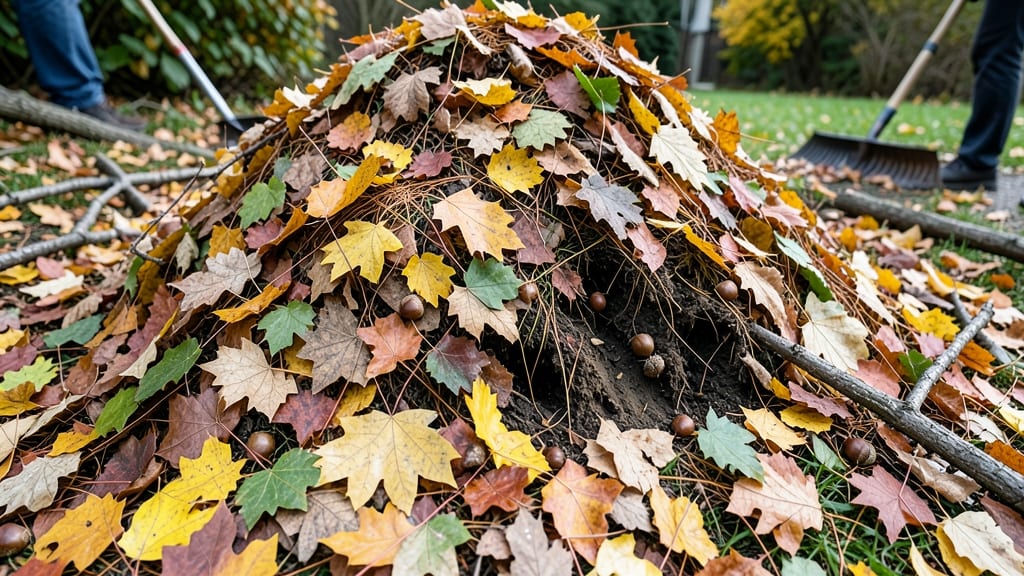
The biggest leaf pile in the world measures 1,350 cubic feet and was created in Middletown, Connecticut, in 2013 by the Middletown Fall Festival. Organizers raked 1,000+ trees into a single heap, breaking the previous record by over 300 cubic feet. The event draws crowds for its record-breaking spectacle and community spirit.
The Middletown Fall Festival's massive leaf pile wasn't just a one-time stunt—it required careful planning to maximize volume while meeting Guinness World Records standards. 🌳 The organizers chose maple leaves, which are lighter and more voluminous than oak leaves, allowing them to create a taller, more impressive stack.
They also timed the raking to coincide with peak leaf fall, ensuring they had enough foliage to surpass competitors by a significant margin. This record-setting event now serves as inspiration for smaller communities hoping to create their own autumnal landmarks.
What makes this achievement even more impressive is how the festival transformed a simple autumn tradition into a community-wide celebration. The event attracted thousands of visitors who helped rake leaves, took photos with the giant pile, and participated in related activities.
This kind of engagement shows how creative community projects can turn ordinary seasonal tasks into extraordinary experiences that bring people together.
💡 In This Article
- How the World's Largest Leaf Pile Is Measured and Certified
- How to Host Your Own Giant Leaf Pile Event
How the world's largest leaf pile is measured and certified
Certifying the world's largest leaf pile involves precise calculations using cubic feet measurements, where Guinness World Records requires three verified dimensions: length, width, and height.
For Middletown's record-breaking 1,350 cubic feet pile, organizers used a 20-foot-long measuring tape to ensure accuracy, with independent verifiers from Guinness present to validate the process. The key challenge isn't just the volume but the consistency—wet leaves compress more, reducing actual volume by up to 20% compared to dry ones.
Leaf species play a crucial role in maximizing volume. Maple leaves, which were heavily used in Middletown, are 2-3 times lighter than oak leaves due to their thinner structure and larger surface area. A single maple tree can produce 10,000+ leaves, while oak trees yield fewer but denser foliage.
The festival's organizers strategically selected maple-heavy areas to boost their pile's height and spread, creating a 12-foot-tall monstrosity that dwarfed previous attempts. 🌿
The measurement process also accounts for compaction. Guinness requires the pile to maintain its shape without artificial supports, meaning organizers must balance stability with volume. Middletown's team achieved this by raking leaves in three-hour shifts, allowing time for natural settling while preventing over-compression.
This meticulous approach ensured their pile met the minimum 1,000 cubic feet threshold for consideration, surpassing the previous record by 300+ cubic feet.
What most people don't realize is how moisture affects the final measurement. Freshly fallen leaves contain 15-20% water, which evaporates over 24-48 hours, causing the pile to shrink.
The Middletown team addressed this by working during dry weather and covering portions of the pile with tarps to control moisture levels. This technique prevented the leaves from becoming too compact, allowing them to maintain their voluminous structure during verification.
Beyond the numbers, the certification process includes photographic evidence and witness statements. Guinness requires at least three independent measurements** taken from different angles, with all dimensions documented in high-resolution images. For Middletown's pile, this meant capturing the base, midsection, and peak—each photo serving as proof of the pile's true dimensions.
The festival's organizers also provided soil samples to verify the pile wasn't artificially inflated with debris.
This level of precision explains why most leaf pile attempts fail certification. Many communities underestimate the time required for measurements or overlook moisture's impact on volume. By contrast, Middletown's team treated the project like a scientific experiment, tracking leaf density, moisture levels, and compaction rates throughout the process.
Their attention to detail turned a seasonal tradition into a record-breaking achievement that still stands today. 🌟