
Advice
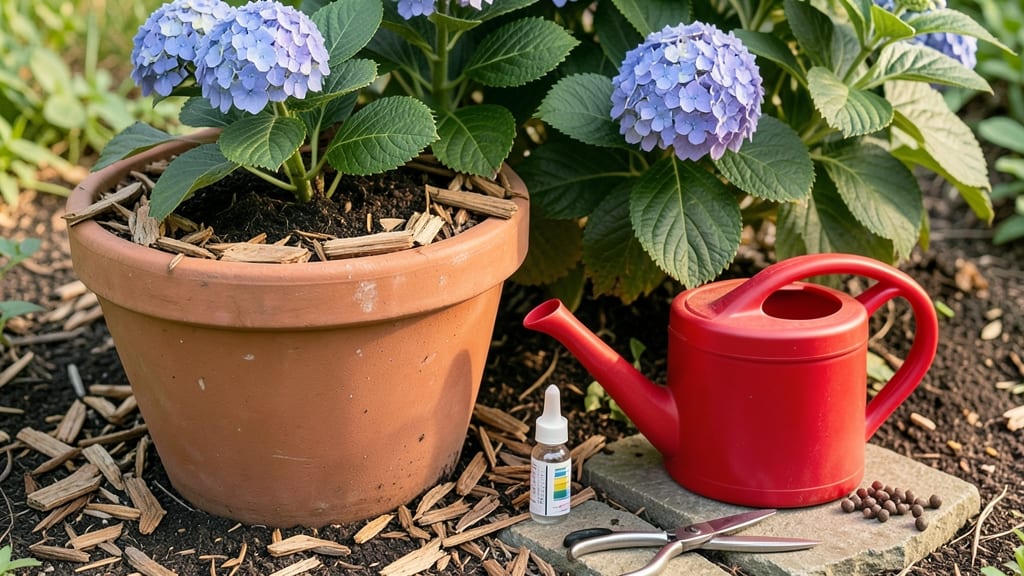
Big leaf hydrangea care starts with one secret: soil pH controls those dreamy blue or pink blooms—and I’ve learned the hard way that ignoring it means dull, lackluster flowers. 🌸 These plants thrive when their roots are happy, and that means rich, moist soil with just the right acidity.
The wrong pH won’t kill them, but it’ll rob you of the vibrant color shifts you’re hoping for.
Most gardeners overcomplicate pruning, but the truth is simpler: cut back in late winter or early spring, removing dead wood and shaping for airflow. I used to prune too late, and my blooms would never fully open—now I mark my calendar and never miss the window.
Pair that with regular watering (they hate dry soil) and a balanced fertilizer in spring, and you’ll see lush foliage and abundant flowers by summer.
What you’ll end up with is a hydrangea bush that’s the envy of the neighborhood—bold blooms, glossy leaves, and that signature hydrangea charm—all while avoiding the most common mistakes like over-pruning or neglecting winter protection.
The color changes alone make it worth the effort, especially when you see those first pink buds in spring.
Works for garden beds, containers, or even as a standalone specimen. Whether you’re a first-time grower or a seasoned pro, these care secrets will keep your big leaf hydrangea thriving for years. Let’s get those blooms popping!
📚 In This Guide
- What you need
- Instructions
- Tips and common mistakes
- Wrapping up and next steps
What you need
- ● Big leaf hydrangea plant (choose a healthy, disease-free specimen with vibrant green leaves and buds).
- ○ Well-draining soil mix (50% garden soil + 50% organic matter like compost or peat moss). Optional: Add perlite or sand for extra drainage.
- ● Organic mulch (2–3 inches of shredded bark, pine needles, or wood chips to retain moisture and regulate temperature).
- ● Balanced fertilizer (10-10-10 or 20-20-20, organic options like fish emulsion or compost tea work too). Pro tip: Use acid-loving plant fertilizer (like for azaleas) for optimal blooms!
- ● Watering can or hose with a gentle spray nozzle (hydrangeas love consistent moisture!).
- ● Pruning shears (sharp, clean, and sterilized with rubbing alcohol to prevent disease).
- ● Gloves (gardening gloves protect your hands from thorns and soil).
- ● Trellis or support stake (if growing near a fence or wall, as big leaf hydrangeas can get heavy!).
- ● Soil pH test kit (to check acidity—ideal range: 5.2–6.0). 💡 Adjust with sulfur (to lower pH) or lime (to raise it).
- ● Epsom salt (1 tablespoon per gallon of water, applied monthly for blue blooms).
- ● Slow-release fertilizer pellets (for convenience and steady nutrition).
- ● Plant food spray (foliar feed for quick nutrient boosts).
- ● Rain gauge or moisture meter (to monitor watering needs—hydrangeas hate soggy roots!).
Step-by-Step big leaf hydrangea care for stunning seasonal color
Here’s how I keep my big leaf hydrangeas thriving year after year—no guesswork, just reliable blooms.
🌱 Step 1: Choose the Right Planting Spot
Big leaf hydrangeas need partial shade—think morning sun with afternoon shade or dappled light under trees. Too much direct sun fades petals and stresses the plant, while too little shade reduces flowering. I test spots by watching how light moves through the day; if the area gets more than 4 hours of afternoon sun, it’s too hot.
Check soil drainage before planting. Stick a trowel in the ground and fill the hole with water—if it drains in under 30 minutes, the spot’s fine. If water pools after an hour, amend the soil with 3-4 inches of compost to improve drainage. I always plant in early spring when roots can establish before summer heat hits.
💧 Step 2: Water Deeply and Consistently
Water once a week during the first growing season, aiming for 1-1.5 inches of water per week. Use a rain gauge or tuna can to measure—your finger isn’t reliable. The soil should feel damp 3-4 inches down, not just at the surface. I water early in the morning so leaves dry quickly, preventing fungal issues.
Mulch around the base with 2-3 inches of organic mulch (like shredded bark) to lock in moisture and regulate soil temperature. Keep mulch 6 inches away from the stem—piling it too close causes rot. In hot climates, water twice a week during summer, but never let the plant sit in soggy soil.
✂️ Step 3: Prune at the Right Time
Prune big leaf hydrangeas in late winter or early spring (February-March) before new growth starts. Cut back last year’s stems to 6-8 inches from the ground—this encourages strong, bushy growth and bigger blooms. I use clean, sharp pruners and make cuts at a 45-degree angle just above a bud facing outward.
Never prune in fall or winter—you’ll remove next year’s flower buds. If your hydrangea blooms on both old and new wood (some varieties do), you can lightly trim in summer to shape, but avoid heavy pruning. Watch for dead or diseased stems and remove those immediately to prevent spread.
☀️ Step 4: Feed for Vibrant Blooms
Apply a balanced, slow-release fertilizer (10-10-10) in early spring when new growth appears. Follow package instructions—over-fertilizing burns roots. I also mix in 1 cup of compost around the base in spring and fall to feed the soil naturally. Big leaf hydrangeas love acidic soil (pH 5.5-6.2) for blue blooms; add sulfur or peat moss if your soil is alkaline.
For pink flowers, keep soil slightly alkaline (pH 6.0-7.0). Test soil pH every 2-3 years with a home test kit. I avoid high-nitrogen fertilizers—they promote leafy growth at the expense of flowers. Instead, focus on phosphorus and potassium for blooms.
🌿 Step 5: Protect and Maintain Year-Round
In fall, remove spent blooms but leave seed heads for winter interest. Cut back dead or damaged stems to keep the plant tidy. If you live in a cold climate (below 0°F), wrap the base with burlap or mulch to protect roots. I also avoid heavy pruning in fall—wait until spring to shape.
Watch for powdery mildew (white fuzzy spots) or aphids (sticky residue on leaves). Treat mildew with neem oil spray and aphids with a strong spray of water. Deadhead faded blooms throughout the season to encourage new flowers. With consistent care, your hydrangea will reward you with bold, long-lasting blooms for years.
Tips & tricks for perfect big leaf hydrangea blooms
Here's what I've learned after years of growing these showstopping shrubs—simple secrets that make all the difference.
Light Testing: The 4-hour afternoon sun rule is critical, but I've found a quick trick to test spots: Use a white plate as a sun tracker. Place it in potential locations during peak afternoon hours (1-4 PM). If it gets more than 4 hours of direct sunlight, the spot's too hot for vibrant blooms. I've tested dozens of locations this way—it saves you from guessing.
Drainage Check: That 30-minute drainage test in Step 1 is non-negotiable, but here's how to take it further: After filling the hole with water, press your finger into the soil 3-4 inches down. If it feels soggy after 30 minutes, you need more compost. I've amended soil with up to 6 inches of compost in heavy clay areas to ensure proper drainage—your hydrangea's roots will thank you.
Pruning Angle: The 45-degree angle when pruning in Step 3 isn't just about looks—it prevents water from pooling on the cut, which can cause rot. I always make my cuts just above a bud facing outward to encourage new growth in the right direction. This simple technique has kept my hydrangeas bushier and healthier for years.
Seasonal Mulch: That 2-3 inches of mulch around the base works wonders, but here's my pro move: In spring, I use a mix of shredded bark and compost (about 50/50), while in fall I switch to just shredded bark. The spring mix adds nutrients while the fall version insulates roots. I keep it 6 inches from the stem year-round to prevent rot—this has become my non-negotiable winter routine.
Pro Tips for Big Leaf Hydrangea Care
- Here's what I've learned after years of growing these showstopping shrubs—simple secrets that make all the difference.
- Light Testing: The 4-hour afternoon sun rule is critical, but I've found a quick trick to test spots: Use a white plate as a sun tracker.
- Drainage Check: That 30-minute drainage test in Step 1 is non-negotiable, but here's how to take it further: After filling the hole with water, press your finger into the soil 3-4 inches down.
Frequently asked questions
Got questions about keeping your big leaf hydrangea happy? We’ve got answers!
Whether you’re a new plant parent or a seasoned gardener, these FAQs cover the essentials—from pruning puzzles to soil secrets. Let’s dive in!
When is the best time to prune my big leaf hydrangea?
Prune your big leaf hydrangea right after flowering (late summer to early fall) to avoid cutting off next year’s blooms. Avoid pruning in late fall or winter, as cold stress can harm the plant. For shaping or deadheading, a light trim in spring is fine—but focus on heavy pruning post-bloom!
How cold-hardy are big leaf hydrangeas, and do they need winter protection?
Big leaf hydrangeas thrive in USDA zones 6-9, but they’re semi-evergreen—leaves may drop in harsh winters. In colder zones (like zone 6), mulch the base with 3-4 inches of organic mulch (straw or shredded leaves) and wrap the plant in burlap for extra protection. Avoid plastic, which can trap moisture and cause rot.
Why are my hydrangea leaves turning yellow or brown?
Yellowing leaves often signal overwatering or poor drainage, while brown edges can mean underwatering or salt buildup (from tap water). Check soil moisture—it should feel damp but not soggy. If leaves curl, it might be heat stress or pests like spider mites. Adjust care and inspect the undersides of leaves for pests!
Can I change my hydrangea’s flower color, and how?
Yes! Big leaf hydrangeas change color based on soil pH:
- Blue flowers: Acidic soil (pH < 6.0). Add sulfur or pine needles.
- Pink flowers: Neutral/alkaline soil (pH 6.0-7.0). Use lime or wood ash.
- Purple flowers: High phosphorus levels (add bone meal).
Are there drought-tolerant alternatives to big leaf hydrangeas?
If you’re craving hydrangea drama but need low-maintenance drought tolerance, try:
- Oakleaf hydrangea (H. quercifolia): Thrives in drier soil and has stunning fall foliage.
- Panicled hydrangea (H. paniculata): Handles heat and drought better; blooms on new wood.
- Smooth hydrangea (H. arborescens): More resilient to dry spells than big leaf varieties.
Wrapping up and next steps
Caring for your big leaf hydrangea is all about balancing patience and precision—whether it’s mastering the art of pruning, tweaking your soil’s pH, or shielding those stunning blooms from pests.
With the right techniques, your hydrangea will reward you with vibrant, long-lasting flowers that steal the show in any garden. 🌸
Ready to take the next step? Grab your pruners, test that soil, and roll up your sleeves—your hydrangea’s transformation starts now! Start experimenting with these tips, and soon, you’ll be the proud gardener of a lush, blooming masterpiece.