
Diseases
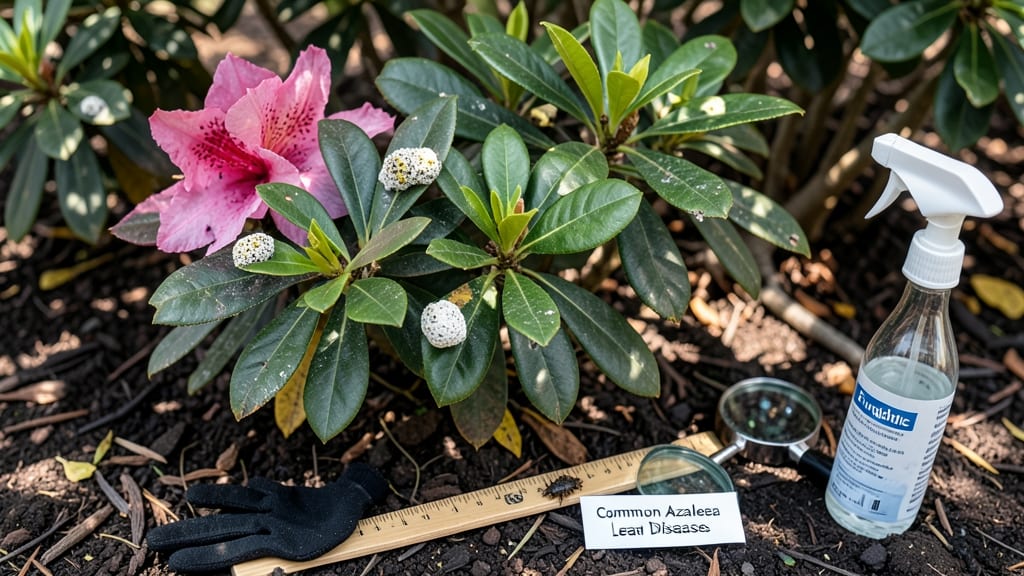
Azalea leaf diseases turn your prized shrubs into sad, brown-edged shadows of their former selves. 🌿 I’ve watched lace bugs and fungal spots transform vibrant azaleas into crispy messes—and I’m here to help you spot the problem before it’s too late.
The worst offenders are lace bugs (those tiny white bugs that leave black speckles), petal blight (gray fuzzy patches on leaves), and fungal leaf spots (irregular brown spots with yellow halos). Each one steals your azalea’s beauty in a different way, but early action can save your plants.
You’ll learn to diagnose the issue in minutes, then treat it with organic sprays or targeted fungicides. The key is acting fast—once those brown edges spread, recovery gets harder. I’ll show you how to bring your azaleas back to life without harsh chemicals.
This isn’t just about fixing the damage; it’s about preventing it next season. With the right care, your azaleas will stay lush and blooming for years. Let’s get started!
Root Causes of Leaf Trouble
Azalea leaves develop unsightly brown edges and spots for reasons that often boil down to environmental stress, fungal infections, or nutrient imbalances. Understanding these triggers is the first step toward prevention and treatment.
Below, we break down the most common culprits—each with a clear scientific explanation—and how they disrupt your azalea’s health.
Azaleas thrive in cool, moist conditions, and when exposed to intense heat or improper watering, their leaves react defensively. Here’s why:
- Overheating (Sun Scorch): Direct afternoon sun (especially in hot climates) causes excessive transpiration, where water evaporates faster than roots can absorb it.
This leads to oxidative stress in leaf cells, causing edges to crisp and turn brown. 🌞 - Actionable clue: Brown edges that appear only on sun-exposed sides are classic sun scorch.
- Underwatering (Drought Stress): Azaleas need consistently moist (not soggy) soil.
When roots dry out, the plant closes stomata (pores) to conserve water, but this disrupts nutrient transport. Potassium and magnesium deficiencies often follow, manifesting as brown, brittle edges. - Pro tip: 💡 Stick your finger 2 inches into the soil—if it’s dry, water deeply.
Mulch with pine bark to retain moisture.
- Overwatering (Root Rot Risk): Poor drainage or excessive watering leads to anaerobic conditions in the soil, where roots suffocate.
Fungal pathogens like Phytophthora exploit this, causing necrotic (dead) tissue that spreads inward from the edges. - Warning sign: Yellowing leaves paired with brown edges + mushy stems = root rot.
Fungi thrive in humid, shady conditions—perfect for azaleas. Three key pathogens target leaves:
| Disease | Cause | Leaf Symptoms | Trigger Conditions |
|---|---|---|---|
| Leaf Spot (e.g., Elsinoë azaleae) | Fungal spores spread via wind/rain, infecting through stomata. | Small, circular brown spots with yellow halos. | Wet foliage + temps 60–80°F. |
| Powdery Mildew | Oidium or Erysiphe fungi form white, powdery colonies on leaf surfaces. | Brown, papery patches (later stages). | Poor air circulation + high humidity. |
| Petiole Blight | Dothiorella or Phomopsis infect leaf stems, cutting off water flow. | Brown edges + blackened petioles. | Rainy seasons + wounded leaves. |
- Prevention: 🌡️ Space plants for airflow, avoid overhead watering, and prune to improve sunlight penetration.
Azaleas are acid-loving (pH 4.5–5.5) and sensitive to imbalances. Brown edges often signal:
- Potassium (K) Deficiency:
- Why? K regulates water and nutrient movement. Without it, cells lose turgor pressure, leading to scorched, brittle edges.
- Fix: Apply potassium sulfate or wood ash (sparingly) to acidic soil.
- Magnesium (Mg) Deficiency:
- Why? Mg is central to chlorophyll production. Brown edges with interveinal yellowing (between veins) indicate a lack.
- Fix: Use Epsom salt (magnesium sulfate) in water every 4–6 weeks.
- Nitrogen (N) Burn:
- Why? Too much synthetic N (e.g., urea) disrupts pH balance, causing oxidative damage to leaf edges.
- Fix: Switch to organic matter (compost, pine needles) and test soil pH annually.
While less common, insects and mechanical harm can mimic disease symptoms:
- Spider Mites (🕷️): These tiny pests pierce cells, causing stippling (tiny brown dots) that expand into edges. They thrive in dry, dusty conditions.
- Solution: Blast leaves with water or use neem oil.
- Thrips (🪰): Their feeding scars disrupt cell walls, leading to silvered or brownened edges.
- Solution: Apply insecticidal soap and yellow sticky traps.
- Wind or Hail: Physical trauma ruptures cell membranes, triggering browning as the plant seals off damaged areas.
- Fix: Protect plants with burlap screens during storms.
Fixing Faded Azalea Foliage
Reviving your azaleas starts with pinpointing the exact cause of their distress—whether it’s fungal infections, environmental stress, or nutrient deficiencies. Below is a step-by-step guide to treating each issue while keeping your plants thriving. Prevention tips are included to stop future outbreaks before they start!
Fungal diseases thrive in damp, shaded conditions, turning vibrant leaves into a sad, spotted mess. Here’s how to banish them for good:
🔥 Step 1: Prune the Problem Areas
- 👨🍳 Remove infected leaves with clean, sharp pruners (sterilize with rubbing alcohol between cuts).
- 🗑️ Dispose of debris in the trash (not compost)—fungi can survive and reinfect.
- ✂️ Thin out dense foliage to improve airflow, a fungal enemy’s worst nightmare.
🥘 Step 2: Apply Fungicidal Treatments
- 💡 Organic option: Mix 1 tsp baking soda + 1 tbsp horticultural oil + 1 quart water + a drop of dish soap (as a surfactant).
Spray every 7–10 days until new growth appears. - 🔥 Chemical option: Use a copper-based fungicide (like copper sulfate) or a systemic fungicide (e.g., chlorothalonil). Follow label instructions precisely. - 🌡️ For rust: Apply a sulfur-based fungicide (like lime sulfur) in early spring before spores spread.
🎯 Prevention Tips
- 🌧️ Water early in the day so leaves dry before nightfall.
- 🌿 Space plants 3–4 feet apart to reduce humidity pockets.
- 🍂 Clean up fallen leaves regularly—fungi love hiding there!
Azaleas despise soggy roots or bone-dry soil. Fix the balance with these quick adjustments:
🔥 Step 1: Check Soil Moisture
- 👩🌾 Stick your finger 1–2 inches into the soil—if it’s dry, water deeply. If it’s muddy, hold off until the top 1–2 inches feel slightly damp.
- 📊 Use a moisture meter for precision (especially in clay or sandy soils).
🍳 Step 2: Adjust Your Watering Routine
- 💧 For drought stress: Water slowly and deeply (1–2 inches per week, more in extreme heat).
Use drip irrigation or soaker hoses to avoid wetting leaves. - 🌧️ For overwatering: Improve drainage by adding 1–2 inches of organic mulch (pine bark or shredded leaves) and amend heavy clay soil with perlite or sand. - ⏰ Water in the morning to reduce evaporation and fungal risk.
🎯 Prevention Tips
- 🌱 Plant in well-draining soil (azaleas love acidic, loamy soil with a pH of 4.5–6.0).
- 🌿 Group azaleas with rhododendrons—they share similar care needs!
- 🌡️ Monitor humidity—if your area is prone to heatwaves, mist leaves lightly in the early morning.
Brown edges and yellowing leaves often signal iron, magnesium, or nitrogen shortages. Boost your azalea’s diet with these targeted fixes:
🔥 Step 1: Test Your Soil
- 📊 Grab a soil test kit (or send a sample to a local extension office).
Azaleas need: - pH 4.5–6.0 (use sulfur or peat moss to lower pH if needed). - Iron chelate (for chlorosis—apply every 2–3 months). - Epsom salt (magnesium sulfate)—mix 1 tbsp per gallon of water and spray foliage monthly.
🍳 Step 2: Fertilize Correctly
- 🌿 Use an acid-loving plant fertilizer (like 10-10-10 or 8-3-9) in early spring and mid-summer.
- ✨ Avoid high-nitrogen fertilizers (like lawn food)—they can burn roots and worsen deficiencies.
- 🍂 Top-dress with compost in fall to replenish organic matter.
🎯 Prevention Tips
- 🌱 Mulch annually with pine needles or oak leaves to slowly release nutrients.
- 🚫 Skip fertilizing in winter—azaleas rest then!
- 💡 Watch for micronutrient signs:
- Purple stems? → Phosphorus deficiency (bone meal helps).
Once you’ve treated the issue, keep these habits to prevent future problems:
- 🌿 Prune in late winter/early spring to encourage airflow and shape.
- 🍂 Feed lightly in fall with a slow-release fertilizer.
- 🌧️ Avoid overhead watering—use drip systems or water at the base.
- 🔍 Inspect leaves weekly for early signs of stress or pests.
Pro Tip: 💡 If brown edges persist after treatment, consider root rot—transplant the azalea to a larger, well-draining pot or garden bed if needed.
Frequently asked questions
Why do my azalea leaves have brown edges but no other obvious symptoms?
Brown edges without other signs often mean environmental stress like sun scorch or underwatering. Check if the browning appears only on sun-exposed sides (scorch) or if the soil is bone-dry 2 inches deep. Azaleas need consistent moisture and morning shade in hot climates. Try watering deeply at the base and mulching with pine bark.
Can I use the same fungicide for all azalea leaf diseases?
No—different fungi need different treatments. Copper-based fungicides work for leaf spots, while sulfur targets rust. For powdery mildew, a baking soda spray (1 tsp baking soda + 1 tbsp oil + 1 quart water) is organic-friendly. Always rotate treatments to prevent resistance. Check the label for the specific pathogen you're treating.
How do I know if my azalea has lace bugs or just a fungal infection?
Lace bugs leave tiny white bugs on the underside of leaves and black speckles (frass) on top—fungal spots are usually irregular brown patches with yellow halos. For lace bugs, blast leaves with water or use neem oil. Fungal issues need copper fungicide or baking soda spray. Test both sides of leaves!
Is it safe to prune azaleas when they have leaf diseases?
Yes, but only remove infected leaves—never prune healthy growth. Sterilize your shears with rubbing alcohol between cuts to avoid spreading spores. Dispose of diseased leaves in the trash (not compost) and thin out dense foliage to improve airflow. Prune in late winter/early spring for best results.
Will my azalea recover if I treat it late in the season?
Partial recovery is possible, but act fast! Late-season treatments focus on preventing spread rather than full revival. Prune infected areas, apply fungicide, and reduce stress (water consistently, mulch). Next spring, your azalea should bounce back with new, healthy growth. Severe cases may need soil testing for nutrient deficiencies.