
Trees
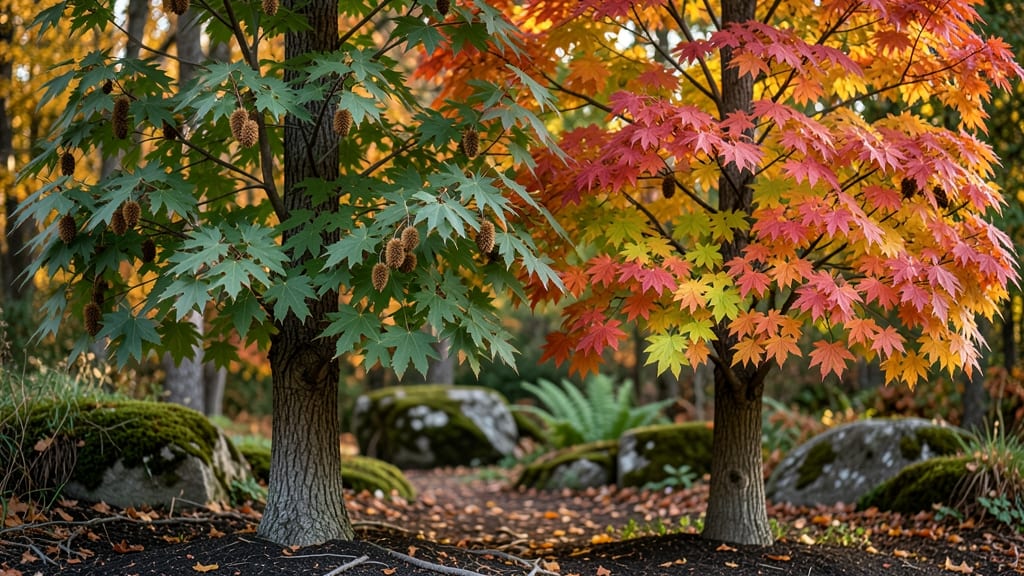
Stuck choosing between a sweetgum vs maple leaf for your yard? 🌳 The decision will shape your landscape’s character—one with jagged star-shaped leaves and fiery autumn drama, the other with delicate lobed foliage and golden fall splendor. Both deliver shade and seasonal flair, but their vibes couldn’t be more distinct.
Sweetgums grow 30-50 feet tall with a broad, rounded canopy, while sugar maples typically reach 40-70 feet but with a more graceful, layered silhouette. The sweetgum’s bark is rough and deeply furrowed, while maples boast smoother, more elegant bark that adds winter interest.
Both thrive in moist, well-drained soil, but sweetgums tolerate urban pollution better—making them ideal for city landscapes.
Fall brings the real showdown: sweetgums burst into crimson, orange, and purple, while maples lean toward gold and fiery red. However, sweetgums drop spiky seed pods (called "gumballs") that can become a nuisance, while maples offer cleaner, quieter foliage.
Allergies? Sweetgums win here—they’re less likely to trigger reactions than some maple varieties.
For a bold statement, sweetgum shines as a focal point or street tree, while maples excel in layered plantings or as shade providers for patios.
Need a low-maintenance champion? Sweetgum handles heat and drought better, but maples reward patience with stunning fall colors. Choose based on your yard’s vibe—dramatic or serene.
The first product explained
Meet the Sweetgum (Liquidambar styraciflua)—a bold, multi-season star that’s stealing the spotlight in modern landscape design! 🌳🔥 With its striking star-shaped leaves and vibrant fall hues of purple, red, and orange, this tree is a showstopper from spring to winter. But what makes it truly special? Let’s break it down.
📏 Key Specs & Features
- Height: 50–75 ft (at maturity), with a sprawling, rounded canopy (30–50 ft wide). Perfect for mid-to-large yards!
- Growth Rate: Moderate (1–2 ft per year). Ideal for planners who want long-term impact without impatient waiting.
- Leaf Drama:
- 🌿 Spring: Bright green, glossy foliage that pops against any backdrop.
- 🍂 Fall: Unmatched color explosion—think deep crimson, golden yellow, and even pinkish tones.
- ❄️ Winter: Persistent seed pods (aka "gumballs") add texture and interest when most trees go dormant.
- Sunlight Needs: Thrives in full sun to partial shade—versatile enough for urban gardens or woodland edges.
- Soil Tolerance: Adaptable to clay, sandy, or loamy soils, even with occasional drought. Low-maintenance hero!
- Wildlife Magnet: Attracts birds, squirrels, and pollinators with its seeds and nectar-rich flowers.
🎯 Who’s It For?
Sweetgum is the ultimate crowd-pleaser for:
- 🏡 Homeowners who want a low-fuss tree with year-round visual appeal.
- 🌆 Urban planners needing shade + fall color in tight spaces (its compact growth habit helps!).
- 🎨 Landscape designers craving texture contrast—pair it with evergreens or maples for drama.
- 🐦 Wildlife enthusiasts eager to boost biodiversity in their yard.
💰 Price Point & Availability
Sweetgum trees are affordable and widely available, typically priced between $50–$150 for:
- 🌱 1–3 ft balled-and-burlapped (B&B) saplings (great for DIY planting).
- 🌳 Larger specimens (5+ ft) for instant impact ($150–$300+).
💡 Pro Tip: Buy from local nurseries in early spring for the best selection—and ask about disease-resistant cultivars like 'Purpureux' for even deeper fall colors!
The second product explained
Meet the Maple Leaf—the elegant, classic contender in your landscape design lineup! 🌿✨ If the bold, textured drama of Sweetgum caught your eye, the Maple Leaf offers a refined, timeless alternative that’s as versatile as it is beautiful. Let’s break down why this tree might just steal the spotlight in your outdoor space.
🌳 Specs & Features
The Maple Leaf is a hardwood tree known for its stunning foliage, smooth bark, and graceful form. Here’s what sets it apart:
- Height & Spread: Matures between 40–60 feet tall and 30–40 feet wide, making it ideal for medium to large yards or as a focal point.
- Foliage: Vibrant green leaves that turn spectacular shades of orange, red, or yellow in fall—a seasonal showstopper!
- Bark: Smooth, grayish-brown bark that adds texture and visual interest year-round.
- Growth Rate: Moderate (12–24 inches per year), so it’s a patient but rewarding investment.
- Shade: Provides moderate to dense shade, perfect for creating cozy outdoor retreats.
- Lifespan: Can live for 100+ years with proper care—talk about a legacy tree!
🎯 Who’s It For?
The Maple Leaf is a crowd-pleaser, but it’s especially loved by:
- Homeowners who want a low-maintenance yet high-impact tree with year-round appeal.
- Landscape designers seeking a structured, symmetrical tree for formal gardens or urban spaces.
- Nature enthusiasts who adore fall foliage and wildlife-friendly features (it attracts birds and butterflies!).
- Eco-conscious gardeners—Maples are native to many regions and support local ecosystems.
💰 Price Point & Value
Pricing varies based on size and supplier, but here’s a general idea:
| Size | Price Range (USD) |
|---|---|
| Small (5–10 ft) | $150–$300 |
| Medium (10–20 ft) | $300–$600 |
| Large (20+ ft, mature) | $800–$1,500+ |
💡 Pro Tip: Investing in a young, well-rooted Maple Leaf may cost less upfront but saves you money (and hassle) on long-term maintenance like pruning or disease treatment.
Whether you’re drawn to its autumnal splendor, versatile form, or timeless charm, the Maple Leaf is a tree that delivers beauty, function, and lasting value. Ready to plant a piece of elegance in your landscape? 🌺
Head-to-head comparison
🌳 Performance & Growth Habits: Who Takes the Lead?
When it comes to how these trees behave in your yard, the Sweetgum (Liquidambar styraciflua) and Maple Leaf (Acer spp.) offer distinct vibes—like choosing between a high-energy athlete and a graceful dancer. Let’s break it down:
- Growth Speed: Sweetgums are the fast-track champions—they can shoot up 3–5 feet per year under ideal conditions, making them perfect if you want quick shade or privacy. Maple Leaf varieties, like the Norway Maple or Silver Maple, grow at a moderate pace (1–2 feet annually), offering a more measured, elegant progression.
- Mature Size:
- Sweetgum: Stands tall at 50–75 feet with a 30–50-foot spread, making it a bold statement tree. Its pyramid shape when young opens into a rounded canopy—great for large properties.
- Maple Leaf: Typically 40–60 feet tall with a 30–40-foot spread, but varieties like the Japanese Maple stay compact (10–25 feet), offering versatility for smaller spaces.
- Seasonal Interest:
- Sweetgum: 🍂 Fall fireworks! Its star-shaped leaves turn deep purple, red, or orange in autumn, and its spiky seed pods (called "gumballs") add winter texture. Downside: Those pods can be a nuisance if you hate raking.
- Maple Leaf: 🍁 The classic fall showstopper. Leaves blaze in gold, red, or crimson, and some varieties (like the Sugar Maple) hold their color longer. Maples also offer early spring color with vibrant foliage.
- Shade Provision: Both deliver dense, dappled shade, but Sweetgums win for full sun tolerance and faster canopy closure. Maples thrive in partial shade and may struggle in extreme heat.
💡 Pro Tip: If you’re planting near a sidewalk or driveway, Sweetgums might need more space for their aggressive roots, while Maples (especially Japanese Maples) are more compact and urban-friendly.
🌿 Features & Aesthetics: Form, Foliage, and Flair
Your yard isn’t just a functional space—it’s a canvas. Let’s see how these trees bring their A-game to the design:
| Feature | Sweetgum | Maple Leaf |
|---|---|---|
| Leaf Shape | ✅ Unique star-shaped leaves (3–6 lobes) with a textured, almost sculptural look. | ✅ Classic lobed or serrated edges (3–7 points). Some varieties (like Japanese Maple) have delicate, lace-like foliage. |
| Bark Texture | 🌲 Ridged, furrowed, and dark gray—adds winter interest but isn’t as visually striking as Maples. | 🌲 Smooth, mottled, or exfoliating (especially in Silver Maple or Norway Maple). Some varieties, like Paper Bark Maple, have peeling cinnamon-colored bark that’s stunning in winter. |
| Fruit/Seed | ⚠️ Spiky "gumballs"—adorable but messy. They don’t feed wildlife and can litter lawns. | ✅ Samaras (helicopter seeds)—light, whimsical, and great for kids to play with. Some varieties produce edible seeds (like Sugar Maple). |
| Wildlife Appeal | 🐦 Moderate: Birds eat the seeds (if they’re not too spiky), and squirrels may snack on the sap. | 🐝 High: Maples attract butterflies, bees, and birds (especially with samaras). Some varieties provide spring nectar for pollinators. |
| Best For... | 🌆 Bold statements, large yards, or urban canopies. Ideal for southern landscapes where heat tolerance matters. | 🏡 Elegant gardens, small spaces, or mixed borders. Perfect for New England, Asia-inspired gardens, or formal landscapes. |
🎯 Design Tip: Pair a Sweetgum with evergreens for year-round structure, while a Maple (especially a dwarf variety) can anchor a perennial bed or Japanese garden.
💰 Price & Planting Costs: Budget Breakdown
Your wallet will thank (or groan at) you based on your choice. Here’s the lowdown on upfront and long-term costs:
- Initial Purchase Price:
- Sweetgum: $50–$150 for a 1–3 gallon container. Larger specimens (15+ gallons) can hit $300–$600.
- Maple Leaf:
- Common varieties (Norway, Silver): $40–$120 for 1–3 gallons.
- Specialty Maples (Japanese, Bloodgood, Autumn Blaze): $80–$250+ for 1–3 gallons.
- Dwarf or rare cultivars: $100–$400+.
- Planting & Maintenance:
- Sweetgum: Lower upfront labor but may need professional pruning ($150–$400) to manage gumballs and aggressive branches.
- Maple Leaf: Easier to prune (especially dwarf varieties), but Norway Maples can be invasive and may require root barrier installation ($500–$1,500).
- Long-T
Which one should you choose?
So, you’ve weighed the pros and cons, compared the leaves, and even considered the pollen drama—now it’s time to decide: sweetgum vs. maple leaf? The right choice depends on your priorities, whether it’s aesthetic flair, low-maintenance living, or wildlife-friendly vibes.
Here’s your tailored verdict to help you plant with confidence!
🌳 Pick Sweetgum If...
- You crave dramatic foliage: Sweetgum’s star-shaped leaves and fiery fall colors (think crimson and gold) will steal the show in your yard. 🎨
- You want year-round interest: Its spiky seed pods add texture even after the leaves fall, and the bark develops character with age.
- You’re okay with moderate upkeep: Prune those seed pods regularly to avoid a “hedgehog lawn,” but otherwise, it’s a tough, resilient tree.
- You love wildlife: Birds and squirrels adore its seeds, and the dense canopy provides shade for critters (and your picnic blanket!).
🍁 Pick Maple Leaf If...
- You prefer classic elegance: Maple leaves are the poster child of autumn—bright reds, oranges, and yellows that scream “fall.” Plus, the smooth bark is pure Instagram gold. 📸
- You’re in a smaller space: Dwarf varieties like ‘Autumn Fantasy’ fit urban yards or tight landscapes without overpowering.
- You prioritize low mess: No spiky pods here—just tidy leaf drop (though those leaves do stick to everything).
- You’re a DIYer or crafter: Maple wood is prized for furniture and syrup, and the leaves inspire everything from wreaths to pressed art.
🌿 Pro Tip for Undecided Plant Parents:
Why not both? Create a layered landscape with a maple as a focal point (e.g., near a patio or driveway) and a sweetgum as a backdrop for height and texture. Just space them out—sweetgum’s roots and branches can get ambitious! 💡
Final Thought: There’s no “wrong” choice—just the one that fits your style, space, and patience level. Sweetgum for bold drama, maple for timeless charm. Now grab your gloves and let the landscaping begin! 🌱