
Shrubs
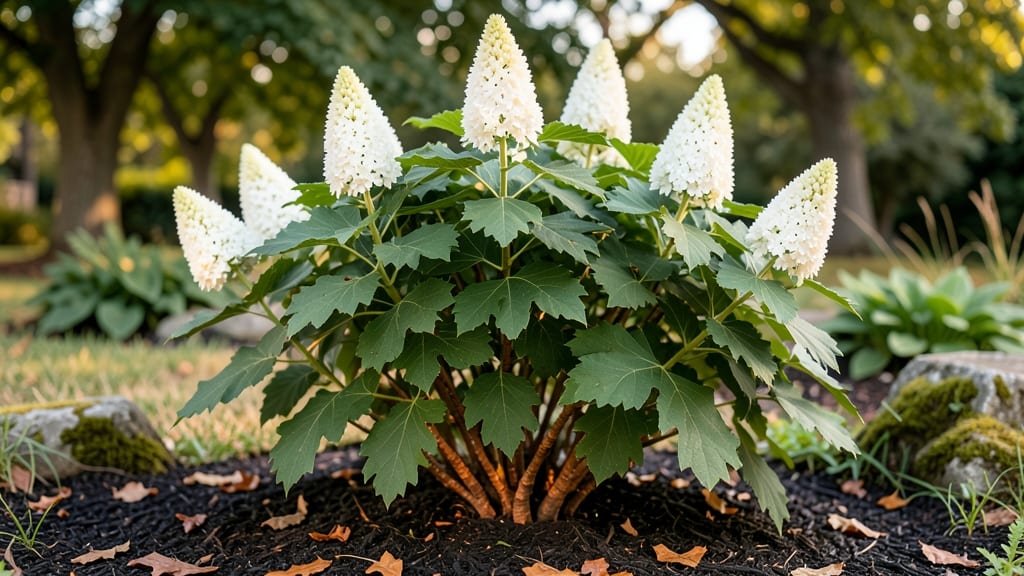
The red oak leaf hydrangea steals the show in shady corners with its bold foliage and dramatic seasonal changes. 🌿 I fell for this shrub the first time I saw its deep red leaves unfurl in spring—it’s like a living work of art that keeps evolving through the seasons.
This hydrangea thrives where others fail: partial shade to full shade, rich but well-draining soil, and consistent moisture. Unlike its sun-loving cousins, it rewards patience with year-round interest—lush summer blooms, fiery fall foliage, and even winter bark that adds texture. The secret?
Plant it where it gets morning sun and afternoon shade, and watch it grow into a 6-8 foot statement plant. You’ll love how it transforms your garden: creamy white summer flowers turn pinkish as they age, while the leaves shift from bronze-red to deep burgundy by fall.
Prune lightly after blooming to shape it, and avoid over-fertilizing—this plant prefers to show off its natural drama over forced growth. Perfect for under trees, along fences, or as a focal point in woodland gardens. Here’s how to make it thrive in your space!
📚 In This Guide
- What you need
- Instructions
- Tips and common mistakes
- Wrapping up and next steps
What you need
- ● Red Oak Leaf Hydrangea plant (1-2 nursery-grown specimens, 3-5 ft tall, in a 5-7 gallon container)
- ● Well-draining potting mix (50% peat moss, 30% perlite, 20% compost) – ~5 gallons per plant
- ● Garden soil amendment (organic compost or aged manure, ~2-3 gallons)
- ● Slow-release fertilizer (10-10-10 or acid-loving plant formula, ~1 lb per plant)
- ● Garden trowel or transplant spade (for digging)
- ● Watering can or hose with a gentle spray nozzle
- ● Mulch (pine bark or shredded leaves) (2-3 inches, ~1 cubic yard per 10 plants)
- ● Pruning shears (for shaping after flowering)
- ● Epsom salt (for magnesium boost, ~1 tbsp per gallon of water)
- ● Soil pH test kit (ideal range: 5.0–6.0)
- ● Container or raised bed (if not planting in-ground)
- ● Plant support stakes (for young, top-heavy plants)
Step-by-step guide to planting and caring for red oak leaf hydrangea
This shade-lover thrives with minimal fuss—just follow these simple steps for bold foliage all season.
🌱 Step 1: Choose the Perfect Planting Spot
Red oak leaf hydrangea adores partial to full shade, ideally with 4-6 hours of dappled sunlight daily. Look for spots where other shade plants already thrive—this variety tolerates 4-8 hours of shade without losing its dramatic foliage. Avoid deep, dark corners where moisture lingers, as soggy soil invites root rot.
Test your spot by observing how sunlight moves through the area at different times of day. The ideal location will have bright but indirect light filtering through tree canopies or under eaves. If your yard has only deep shade, don't worry—this hydrangea will still deliver stunning burgundy leaves, just with slightly slower growth.
🪴 Step 2: Prepare the Soil and Plant
Amend your native soil with 3-4 inches of organic matter like compost or well-rotted leaf mold before planting. This hydrangea prefers moist, well-draining soil with a slightly acidic pH (5.5-6.5). If your soil is heavy clay, mix in pearlite or sand to improve drainage—waterlogged roots will stunt growth.
Dig a hole twice as wide as the root ball but only as deep as the container it came in. Gently remove the plant, loosen any circling roots, and place it in the hole so the top of the root ball sits level with the surrounding soil. Backfill with native soil mixed with your amendments, pressing lightly to eliminate air pockets. Water deeply to settle everything.
💧 Step 3: Water Consistently for Establishment
Keep the soil evenly moist (not soggy) for the first 6-8 weeks after planting—this is critical for root establishment. Water 1-2 times per week, depending on rainfall, until new growth appears. You'll know moisture is right when the top 2 inches of soil feel damp but not waterlogged. Mulch with 2-3 inches of shredded bark to retain moisture and suppress weeds.
After the initial establishment period, reduce watering to once weekly during dry spells. This hydrangea develops deep roots over time and becomes quite drought-tolerant once mature. Watch for wilting leaves—this is your signal to water deeply. Once established, it handles brief dry spells better than most hydrangeas.
☀️ Step 4: Prune for Shape and Health
Prune in late winter or early spring before new growth begins. Remove dead, diseased, or crossing branches first, then shape by cutting back 1/3 of the oldest stems to encourage fresh growth. This hydrangea blooms on new wood, so you won't sacrifice flowers by pruning—just focus on maintaining an open, airy shape.
For dramatic foliage, avoid heavy pruning after mid-summer. The burgundy leaves develop their richest color when exposed to fall sunlight. If you notice leggy growth, simply trim back the longest stems by 1/4 in early spring. Always use clean, sharp pruners and make cuts just above a leaf node or outward-facing bud.
✂️ Step 5: Feed and Maintain Through Seasons
Apply a balanced, slow-release fertilizer (10-10-10) in early spring when new shoots emerge. Use half the recommended dose—this hydrangea prefers light feeding over heavy applications. For extra foliage drama, add a handful of compost around the base each fall to build soil fertility naturally.
Monitor for powdery mildew in humid climates—this variety is more resistant than others, but crowded plants with poor airflow can still develop it. Improve airflow by pruning strategically and avoid overhead watering. If you see white powder on leaves, treat with neem oil and improve spacing between plants.
Tips & tricks for perfect red oak leaf hydrangea planting
Here's what nobody tells you about growing this stunning shade plant—simple tweaks that make all the difference.
Lighting Insight: That 4-6 hours of dappled sunlight is your sweet spot, but here's the trick: morning sun is your friend. Position your hydrangea to catch those gentle morning rays first—it builds resilience for the fuller shade it'll get later in the day. If you're working with only deep shade, don't stress—this variety will still thrive, though you might see slightly slower growth. The key is avoiding those dark, damp corners where roots can rot.
Soil Prep Secret: When amending your soil with that 3-4 inches of organic matter, mix in a handful of sulfur if your soil tests neutral or alkaline. This helps maintain that ideal 5.5-6.5 pH range without over-acidifying. I've seen dramatic color improvements when the soil chemistry is just right—those burgundy leaves really pop when the plant is happy. For clay soils, add perlite instead of sand—it improves drainage better without compacting like sand does.
Watering Wisdom: During those critical first 6-8 weeks, I check soil moisture by pushing my finger 2 inches deep—if it feels dry, it's time to water. The goal is consistently damp, not soggy. Pro tip: water at the base rather than overhead to prevent fungal issues. Once established, you'll notice the plant's deep roots make it surprisingly drought-tolerant, but wilting leaves are your clear signal to water deeply. I've learned to water in the morning so the foliage has all day to dry out.
Pruning Precision: When cutting back that 1/3 of oldest stems in late winter, make your cuts just above a leaf node where you can see a small bump. This is where new growth will emerge. For those leggy stems you might notice in spring, trim back by 1/4 but always leave at least 2-3 buds—this encourages bushier growth. And here's a game-changer: if you see any stems with powdery mildew, prune them out immediately and sterilize your pruners with rubbing alcohol between cuts.
Pro Tips for Red Oak Leaf Hydrangea
- Here's what nobody tells you about growing this stunning shade plant—simple tweaks that make all the difference.
- Lighting Insight: That 4-6 hours of dappled sunlight is your sweet spot, but here's the trick: morning sun is your friend.
- Soil Prep Secret: When amending your soil with that 3-4 inches of organic matter, mix in a handful of sulfur if your soil tests neutral or alkaline.
Frequently asked questions
Got questions about Red Oak Leaf Hydrangea? You’re not alone—this stunning shrub raises curiosity! Here are answers to the most common queries to help you grow with confidence.
How fast does Red Oak Leaf Hydrangea grow?
Expect moderate growth: Hydrangea quercifolia typically adds 12–24 inches per year under ideal conditions. In the first few years, focus on establishing roots before pruning. Patience pays off—its dramatic foliage and blooms are worth the wait!
When is the best time to plant Red Oak Leaf Hydrangea?
Plant in early spring or fall for optimal root establishment. Avoid extreme heat or frost, which can stress young shrubs. If planting in summer, water deeply and mulch to retain moisture. Pro tip: Amend soil with compost for a nutrient boost!
Does Red Oak Leaf Hydrangea tolerate full sun?
While it thrives in partial shade (morning sun + afternoon shade), it can handle dappled sun or even full sun in cooler climates (Zones 5–9). In hotter regions, protect it from harsh afternoon rays to prevent leaf scorch. Monitor for stress signs like wilting or brown edges.
Why aren’t my hydrangea leaves turning red in fall?
Red foliage depends on cool nights and sunlight exposure. If leaves stay green, check for:
- Insufficient sunlight (move to a sunnier spot).
- Over-fertilizing with nitrogen (use balanced fertilizer).
- Young plants (older shrubs >3 years show better color).
What’s a good alternative if I can’t grow Red Oak Leaf Hydrangea?
If your climate or space is tricky, try these shade-loving shrubs with year-round interest:
- Dwarf Fothergilla – Fragrant spring blooms + fiery fall foliage.
- Inkberry Holly – Evergreen with glossy leaves (great for privacy).
- Oakleaf Cotoneaster – Similar texture, drought-tolerant.
Wrapping up and next steps
The Red Oak Leaf Hydrangea is a standout choice for gardeners craving year-round interest with its fiery foliage and bold blooms. Its shade tolerance, low-maintenance nature, and vibrant colors make it a versatile star for any landscape—whether you’re a seasoned pro or just starting your gardening journey. 🌿
Ready to transform your garden? Start by selecting the perfect spot, gathering your supplies, and planting with confidence. Dig in, get creative, and enjoy the drama this shrub brings!